
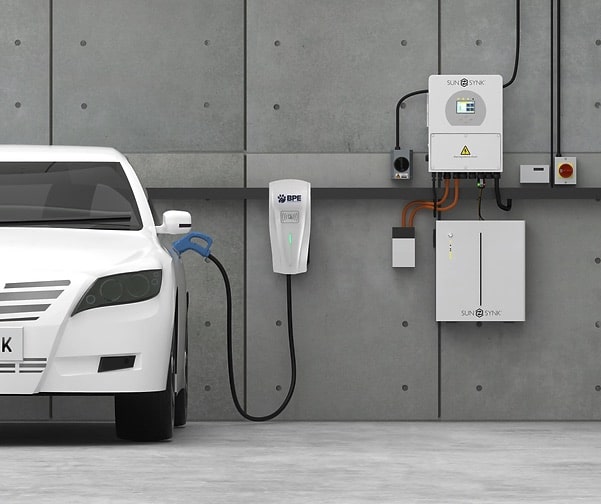
The myenergi zappi GLO is a screenless, single-phase home EV charger with app control, RFID access and the ability to use surplus solar generation. It is available with an attached 6.5 m Type 2 cable or a Type 2 socket, giving households a choice between everyday convenience and a removable EV charging cable.
GLO takes a different approach from the screen-equipped zappi: its main controls are in the myenergi app, and Smart Charging replaces the older Fast, Eco and Eco+ mode selection. Its appeal is therefore about how it fits your home, parking space and energy setup, as well as its rated 7 kW output.
We at e-zoomed encourage electric car owners to install solar panels and battery storage. It is a win for the household wallet and the environment!
Sign up to the e-zoomed Electric Living newsletter
Table of Contents
myenergi zappi GLO at a Glance
| Feature | What to know |
|---|---|
| Charging power | Rated 7 kW, single-phase; adjustable 6–32 A |
| Cable options | 6.5 m tethered Type 2 cable or untethered Type 2 socket with locking system |
| Everyday controls | myenergi app, multicolour status LED and RFID Access Key |
| Solar charging | Uses surplus generation with correctly installed grid sensing and suitable settings |
| Grid sensor | Supplied Grid CT must be fitted unless an appropriate shared ecosystem Grid CT is already in place |
| Connectivity | 2.4 GHz Wi-Fi, Bluetooth Low Energy and proprietary 868 MHz radio |
| Firmware updates | GLO needs its own direct Wi-Fi connection; updates are not relayed to it over the ecosystem radio link |
| UK protection | Integrated PEN-fault protection on -G models; 6 mA DC residual-current protection |
| Outdoor ratings | IP65 and IK10 |
| Manufacturer warranty | Three years as standard; optional extension to five years, subject to eligibility |
| UK hardware price | From £539 |
zappi GLO Pros and Cons
| Pros | Cons / considerations |
|---|---|
| Choice of tethered or socket format, with RFID access and a simple screenless design | Owners who prefer an on-unit screen will need to consider the app-led interface |
| Can combine surplus-generation charging, schedules and household load management | Correct CT placement and commissioning are essential; battery priorities need careful setup |
| UK -G models include PEN-fault protection, with IP65 and IK10 ratings | Direct Wi-Fi is needed for firmware updates |
zappi GLO Design and Everyday Charging
Tethered or untethered?
The tethered GLO has a permanently attached 6.5 m Type 2 cable. It is convenient if you park in a regular position and want to plug in without retrieving a cable from the boot. Check the distance to the car’s charging inlet, allowing for the route around the vehicle and space to store the cable safely.
The untethered version has a locking Type 2 socket and needs a separate charging cable. It can look tidier when disconnected and lets you choose a suitable cable length. Confirm whether a cable is included in the quotation. For an older vehicle with a Type 1 inlet, ask the supplier about a properly rated Type 2-to-Type 1 EV charging cable for the socket model; do not use an adapter to convert the attached Type 2 plug.
Both versions have a published enclosure size of 350 × 170 × 160 mm. The tethered unit weighs approximately 4.1 kg and the untethered unit 3.1 kg. Leave space for connector access, cable handling and the mounting arrangement, rather than judging suitability from the enclosure dimensions alone.
A status light instead of a screen
GLO uses a multicolour LED and buzzer to communicate its state. The installation manual identifies solid green as ready, blue as charging, and yellow as waiting for surplus, a schedule or a smart-charge delay. A waiting light does not necessarily indicate a fault. Use the app and the model-specific status guide for the full explanation.
Ask the installer to demonstrate the app and Access Key before handover. A screenless charger works best when everyone who uses it understands how to start an immediate session and recognise normal waiting behaviour.
myenergi zappi GLO UK Price and Installation Costs
Prices for the zappi GLO start from £539 (including VAT). Do compare complete installation quotations. A lower charger price can be outweighed by a long cable route, electrical alterations or extra communications work. Solar panels do not need to be installed at the same time, but tell the installer about future solar or battery plans so the sensing and cable routes can be considered together.
| Cost element | What the quotation should specify |
|---|---|
| Charger | Exact GLO model code, tethered or socket format, VAT and delivery |
| Electrical installation | Cable route, mounting, protective devices, testing and commissioning |
| Grid and additional CTs | Supplied Grid CT, any shared existing measurement, extra generation or battery sensors and wiring |
| Wireless CT link | Whether harvi is needed, its suitability and any additional cost |
| Socket charging cable | Connector types, length, current rating and whether included |
| Connectivity | Reliable 2.4 GHz Wi-Fi at the charger and any improvements required |
| Aftercare | Workmanship cover, manufacturer warranty and optional extended cover |
For an EV charging enquiry, email [email protected] with your electric vehicle (EV), postcode, parking arrangement and details of existing solar panels or battery storage.
zappi GLO Charging Speed and Running Costs
A 7 kW single-phase charger
myenergi rates GLO at 7 kW with a maximum current of 32 A. This guide follows that published rating. Although 230 V multiplied by 32 A gives approximately 7.36 kW, actual output depends on supply voltage, configured limits, other household demand and the vehicle’s onboard AC charger.
The GLO model is single-phase. Do not transfer a 22 kW rating or three-phase switching feature from another zappi model to GLO. An EV’s high DC rapid-charging figure also does not determine how quickly it charges from this AC home charger.
| Energy delivered | Calculated time at a constant 7 kW |
|---|---|
| 20 kWh | 2 hours 51 minutes |
| 40 kWh | 5 hours 43 minutes |
| 60 kWh | 8 hours 34 minutes |
These calculations show energy supplied before EV charging losses; they are not measured charging times. For a car with 60 kWh of usable battery capacity, moving from 20% to 80% adds approximately 36 kWh. At a constant 7 kW this takes around 5 hours 9 minutes before losses and variations in charging power.
Electricity cost depends on your tariff
As an illustration, drawing 20 kWh from the grid costs £2 at 10p/kWh, £5 at 25p/kWh or £7 at 35p/kWh. These are assumed rates, not current tariff recommendations, and exclude standing charges and other fees. The energy drawn from the supply generally exceeds the energy stored in the electric vehicle because of charging losses.
Evaluate an EV tariff using the whole home’s consumption, daytime price and standing charge. Solar charging also has an opportunity cost if the electricity could otherwise earn an export payment. The cheapest choice depends on your import and export rates, vehicle availability and household demand.
Smart Charging, Schedules and Charge Now
GLO’s controls differ from the familiar Fast, Eco and Eco+ modes on older screen-equipped zappi units. Its main choice is Smart Charging on or off, with Charge Now available when you need an immediate session. Use the GLO instructions and current app rather than following an older model’s button sequence.
| Control | How it works |
|---|---|
| Smart Charging on | Uses surplus generation, follows configured schedules and can respond to supported dynamic-tariff or demand-response services |
| Smart Charging off | Charges immediately at the available power until the electric vehicle stops requesting energy, subject to installation and vehicle limits |
| Charge Now | Starts an immediate charge without changing the normal schedule; available through the app or paired Access Key |
The customer handover pack describes a default Monday-to-Friday schedule from midnight to 8 am. That is a factory starting point, not proof that those hours match your tariff. Review the schedule after installation, including weekends, and ensure it delivers the energy you need before departure.
Immediate charging can draw grid electricity even when solar output is low. It can still use renewable generation available at the property, but it does not wait exclusively for surplus. Coordinate any electric vehicle, charger and energy-supplier schedules so they do not block one another.
A manually scheduled off-peak session and supplier-managed charging are different arrangements. Before changing supplier, confirm current eligibility for your exact charger or electric vehicle integration, account and firmware. Marketing about tariff compatibility should not be read as a guarantee that every supplier service is available automatically.
zappi GLO Solar Charging and Home Battery Storage
How surplus solar charging works
GLO can operate without solar panels, using grid electricity. With generation installed, the system measures power flowing into and out of the property and can adjust EV charging to use available surplus. Household appliances consume part of the generation first, so a 4 kW solar array does not necessarily provide 4 kW for the car.
The Grid CT is central to this measurement. The handover guidance says the supplied sensor must be fitted unless the ecosystem already has an appropriate Grid CT. Its position must capture the property’s complete import and export. Additional CTs can provide generation or battery measurements, depending on the installation; ask which measurements and app displays your quotation includes.
The specified charging-current range starts at 6 A. At a nominal 230 V that is approximately 1.38 kW. Small or intermittent surplus may therefore be insufficient for sustained surplus-only charging. Actual starting and pausing behaviour also depends on the configured controls and the vehicle. Scheduled or immediate charging can use grid energy, so Smart Charging should not be understood as a promise that every session is entirely solar-powered.
Prevent unwanted home-battery discharge
A home battery may see EV charging as another household load and discharge to support it. Decide whether you want to preserve stored energy for the evening, prioritise charging the car, or export electricity. Tell the installer your preference and ask them to demonstrate how the complete system behaves.
A separately connected AC battery can sometimes be measured independently. Where solar and battery share a hybrid inverter, a CT on its AC output cannot by itself distinguish solar production from battery discharge. Appropriate inverter controls, charging settings and export-margin configuration may be needed. Compatibility with battery storage does not mean GLO can directly control every battery brand.
If you already use myenergi libbi or eddi, ask how priorities will be shared between the electric car, battery and hot water. Multiple products need a coordinated design. Do not assume that adding GLO guarantees a particular priority order or that all available generation can serve every device simultaneously.
Battery and solar integration also does not establish vehicle-to-home (V2H) or vehicle-to-grid (V2G) capability.
Load Management, CT Sensors and Connectivity
Dynamic load management needs commissioning
Dynamic load balancing can reduce EV charging when other appliances increase household demand. It differs from a fixed charger-current limit, which sets a ceiling but does not itself react to changing consumption. Load balancing is an optional feature; have the required sensing and import limits included in the installation scope.
GLO supports up to two external CT inputs. myenergi’s CT guidance allows a harvi wireless link where suitable, but the installer must assess radio performance and the requirements of any import-limitation scheme. A wireless sensor link is not a substitute for checking the actual electrical design.
Only one Grid CT is configured in the relevant single-phase ecosystem, with its readings shared between devices. Adding equipment should not create duplicate or conflicting grid measurements. At properties with more complex supplies, ask for a model-specific sensing design; the general CT guide’s three-phase diagrams do not turn GLO into a three-phase charger.
Wi-Fi, Bluetooth and radio serve different purposes
The specification lists 2.4 GHz Wi-Fi, Bluetooth Low Energy and a proprietary 868 MHz radio link. Bluetooth supports nearby interaction; it is not remote internet access. The radio link supports ecosystem communication. Ethernet and an integrated cellular connection are not listed in the published specification.
Basic charging does not require Wi-Fi, according to the handover pack. However, GLO needs its own direct Wi-Fi connection for firmware updates: having another myenergi product online does not relay updates to GLO over radio. Check coverage at the final mounting position. Internet-dependent remote features and tariff services also need a working connection.
OCPP 1.6J is supported through the myenergi backend. The datasheet explicitly excludes offline or local OCPP operation. If third-party management is important, confirm the supported backend, service terms and enabled functions before purchase rather than assuming any local controller can connect directly.
RFID Access, Installation and Warranty
Set up the Access Key deliberately
An RFID card is supplied, and the system supports up to 126 users. The paired Access Key can authorise charging when Charging Lock is enabled and trigger an immediate charge. Additional keys can be managed through myaccount, using the same login as the app, and named to help distinguish sessions.
Charging Lock is disabled by default in the handover guide. The presence of an RFID reader therefore does not mean unauthorised charging is blocked from the outset. Have the installer pair the card, demonstrate its actions and enable the access settings you want. Session tracking also does not by itself establish certified billing or reimbursement compliance.
UK protection and professional installation
The UK models are ZAPPI-3AS07T-G and ZAPPI-3AS07U-G. The -G suffix identifies integrated PEN-fault protection. Both product documentation specify 6 mA DC residual-current protection with RDC-DD characteristics under EN 62955.
This must not be confused with a claim that every protective device is built in. The manual notes that local rules may require upstream 30 mA Type A RCD protection. A qualified electrician must assess earthing, circuit protection, supply capacity and cable sizing, and install, test and commission the charger against current requirements and the exact model instructions.
The enclosure has IP65 ingress protection and IK10 impact resistance, and is intended for fixed indoor or outdoor mounting. The stated ambient operating range is −25°C to +40°C. Follow that range; the separate datasheet note about current derating at 50°C does not extend the approved ambient operating limit.
Before handover, request confirmation of the grid-power direction, current limits, Wi-Fi connection and a successful charging test. Keep the serial number, registration details, invoice, electrical installation documents and paired Access Key. Manufacturer claims about quick commissioning do not describe the time required for every complete installation.
Three-year standard warranty
myenergi offers a three-year standard warranty for zappi GLO, with an optional extension to five years in total. Confirm current pricing, registration or activation requirements, exclusions and the separate workmanship cover supplied by your installer.
The published extension conditions include eligibility tied to the original warranty expiry date and prohibit duplicate or stacked extensions. Check your serial number and eligibility with myenergi before purchasing.
myenergi zappi GLO Technical Specifications
| Specification | Published UK specification |
|---|---|
| Models | ZAPPI-3AS07T-G (tethered); ZAPPI-3AS07U-G (untethered) |
| Charging type | Mode 3 AC; single-phase |
| Rated power / current | 7 kW; 32 A maximum, adjustable 6–32 A |
| Supply | 230 V AC ±10%; 50 Hz |
| Tethered connector | Type 2 plug on a 6.5 m cable |
| Untethered connector | Type 2 socket with locking system |
| Dimensions | 350 × 170 × 160 mm |
| Weight | 4.1 kg tethered; 3.1 kg untethered |
| Enclosure | Polycarbonate; IP65; IK10 |
| Ambient operating range | −25°C to +40°C |
| Connectivity | 2.4 GHz Wi-Fi 802.11 b/g/n; BLE v4.2; proprietary 868 MHz radio |
| Identification | 13.56 MHz ISO/IEC 14443 Mifare Classic RFID reader; card supplied |
| External CT inputs | Up to two; specified grid sensor 100 A maximum primary current |
| Internal / CT measurement | Designed in accordance with Class B (1%) of EN 50470; this does not establish MID certification |
| DC residual-current protection | 6 mA RDC-DD characteristics under EN 62955 |
| PEN-fault protection | Integrated on -G models only |
| Standby power | 3 W |
| OCPP | 1.6J through myenergi backend; not offline/local |
| Status indication | Multicolour LED and buzzer |
zappi GLO Frequently Asked Questions
| Question | Answer |
|---|---|
| Does zappi GLO need solar panels? | No. It can charge from the grid; suitable generation and correct sensing enable surplus-generation charging |
| Is GLO a 22 kW charger? | No. The documented range is single-phase and rated at 7 kW |
| How long is the attached cable? | The tethered version has a 6.5 m Type 2 cable |
| Is there an untethered GLO? | Yes. It has a locking Type 2 socket and requires a separate suitable cable |
| Does GLO have a screen? | No. Use the app, status LED and RFID Access Key for everyday interaction |
| Does it use Fast, Eco and Eco+ modes? | GLO uses Smart Charging on/off and Charge Now. Follow its own instructions rather than the older zappi menu guide |
| Can it charge without Wi-Fi? | Basic charging can operate without Wi-Fi, but direct Wi-Fi is needed for firmware updates and connectivity is needed for internet-dependent features |
| Is RFID charging lock enabled by default? | No. The handover pack says Charging Lock starts disabled; enable and test it if required |
| Can it work with battery storage? | Yes, with suitable design and settings. Avoiding unwanted battery discharge requires attention to battery controls and sensing |
| Does it support local OCPP? | No. The datasheet specifies OCPP 1.6J through the myenergi backend and excludes offline/local operation. |
| Does GLO provide V2H or V2G? | A supported bidirectional system is not established by the GLO documentation. Solar and battery compatibility should not be interpreted as that capability |
| What is the standard warranty? | Three years, with an optional extension to five years in total, subject to the manufacturer’s terms |
e-zoomed Verdict: Who Should Consider zappi GLO?
Some of you may already be familiar with myenegi, givens its UK heritage. The zappi GLO is worth considering for households wanting a single-phase EV charger with a choice of cable format, RFID access and app-based energy controls. It can serve a home without solar now and form part of a more developed energy setup later, provided the sensing and commissioning are planned properly. Its strongest fit is for drivers comfortable managing charging through an app and able to provide reliable Wi-Fi at the parking space.
Choose the format that suits your parking position, compare the complete installed cost and agree the charging priorities for any solar panels or home battery. A successful handover should leave you able to start an immediate charge, understand normal waiting behaviour and verify that the system follows your intended schedule.
Featured Articles
What Is Home Battery Storage? Benefits and How It Works
The myenergi zappi GLO is a screenless, single-phase home EV charger with app control, RFID access and the ability to use surplus solar generation. It is available with an…
What Is EV Smart Charging? A Complete Guide to Home Charging and Cost Savings
The myenergi zappi GLO is a screenless, single-phase home EV charger with app control, RFID access and the ability to use surplus solar generation. It is available with an…

What Is Vehicle-to-Home (V2H) Charging? Powering Your House With Your EV
The myenergi zappi GLO is a screenless, single-phase home EV charger with app control, RFID access and the ability to use surplus solar generation. It is available with an…
What Is Vehicle-to-Load (V2L) Technology? Powering Appliances With Your EV
The myenergi zappi GLO is a screenless, single-phase home EV charger with app control, RFID access and the ability to use surplus solar generation. It is available with an…
What Is Vehicle-to-Grid (V2G) Technology? How Your EV Can Earn You Money
The myenergi zappi GLO is a screenless, single-phase home EV charger with app control, RFID access and the ability to use surplus solar generation. It is available with an…
Featured Products
-
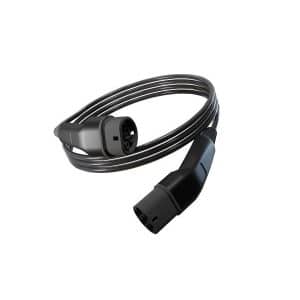
Custom-Made Single-Phase EV Charging Cable Type 2 to Type 2 (2m to 50m, 7.4 kW, 32 amp, Black)
Price range: £99.95 through £670.95 (Including VAT)
Category:CablesType:Type 2Length (m):5 m7.5 m10 m3.5 m12.5 m15 m20 m17.5 m2 m22.5 m25 m30 m35 m40 m45 m50 mCurrent (amp):32 ampPhase:Single Phase (7.2kW)
This product has multiple variants. The options may be chosen on the product page -
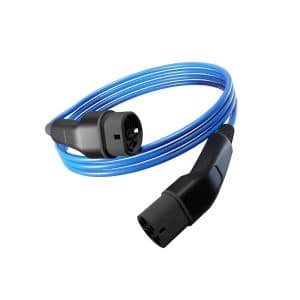
Custom-Made Single-Phase EV Charging Cable Type 2 to Type 2 (2m to 50m, 7.4 kW, 32 amp, Blue)
Price range: £99.95 through £670.95 (Including VAT)
Category:CablesType:Type 2Length (m):5 m7.5 m10 m3.5 m12.5 m15 m20 m17.5 m2 m22.5 m25 m30 m35 m40 m45 m50 mCurrent (amp):32 ampPhase:Single Phase (7.2kW)
This product has multiple variants. The options may be chosen on the product page -
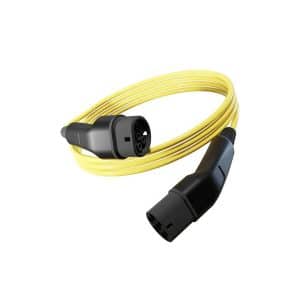
Custom-Made Single-Phase EV Charging Cable Type 2 to Type 2 (2m to 50m, 7.4 kW, 32 amp, Yellow)
Price range: £99.95 through £670.95 (Including VAT)
Category:CablesType:Type 2Length (m):5 m7.5 m10 m3.5 m12.5 m15 m20 m17.5 m2 m22.5 m25 m30 m35 m40 m45 m50 mCurrent (amp):32 ampPhase:Single Phase (7.2kW)
This product has multiple variants. The options may be chosen on the product page -
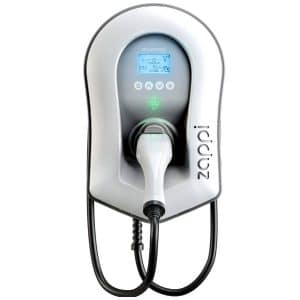
Tethered myenergi eco-smart zappi Home Smart EV Charger (7kW, 6.5m): price includes product only
£810.95 (Including VAT)
Brand:zappi EV Charge PointCategory:EV Charging PointsCustomer type:ResidentialPower:7 kWType:Type 2Cable:TetheredPhase:Single Phase -
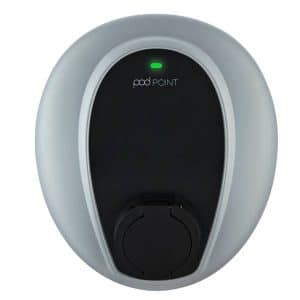
Untethered pod POINT Solo 3 Home Smart EV Charger (7kW): price includes product only
£750.95 (Including VAT)
Brand:pod POINT EV Charge PointCategory:EV Charging PointsCustomer type:ResidentialPower:7 kWType:Type 1Type 2Cable:UntetheredPhase:Single Phase -
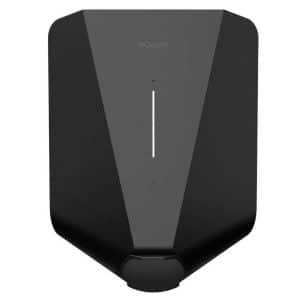
Untethered Easee Charge Commercial Smart EV Charger (22 kW): price includes product only
£945.95 (Including VAT)
Brand:easeeCategory:EV Charging PointsCustomer type:BusinessPower:22 kWType:Type 2Cable:UntetheredPhase:Three Phase
This product has multiple variants. The options may be chosen on the product page
The post myenergi zappi GLO EV Charger: UK Price, Specifications & Solar Charging Guide appeared first on Ezoomed.