
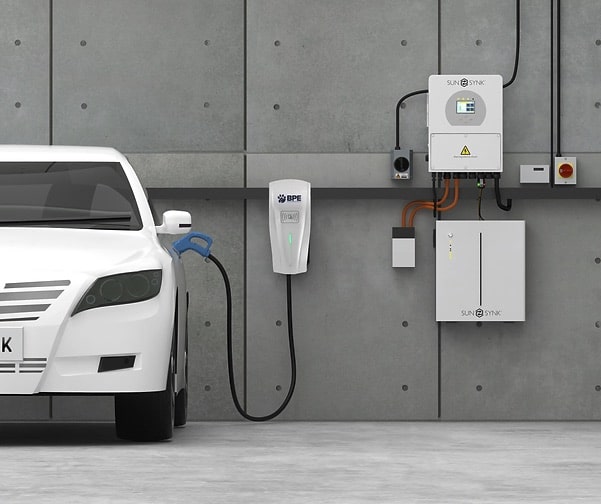
Fox ESS EQ5000 is a modular high-voltage home battery system using lithium iron phosphate (LFP) cells. Each module has 4.92 kWh nominal energy, with approximately 4.43 kWh available within the stated 90% depth-of-discharge window, before allowing for inverter conversion losses.
This UK guide covers the EQ5000-M master and EQ5000-S slave battery arrangement. A complete stack uses one master and at least one slave, with up to six modules in the documented range. A separate compatible inverter is required. We at e-zoomed encourage electric car owners to leverage the substantial benefits of a home energy storage system. A win for the household wallet!
Table of Contents
Sign up to the e-zoomed Electric Living newsletter
Benefits of residential battery storage
| Benefits | What it means for your household |
|---|---|
| Use more solar electricity | Store surplus generation for household use later |
| Shift electricity purchases | Use a suitable inverter configuration and tariff to charge during cheaper periods |
| Support selected backup loads | Supply approved circuits where the inverter and installation support backup |
| Contribute to EV charging | Provide energy to a separate, suitably connected home charger through the battery inverter |
Benefits depend on consumption, solar generation, tariffs, conversion losses and system design.
Fox ESS EQ5000 at a glance
| Specification | EQ5000 master/slave battery system |
|---|---|
| Battery modules | EQ5000-M master and EQ5000-S slave |
| Chemistry | Lithium iron phosphate (LFP) |
| Nominal energy per module | 4.92 kWh |
| Depth of discharge | 90% |
| Calculated energy within the 90% window | 4.428 kWh per module; approximately 4.43 kWh, before inverter losses |
| Documented stack range | Two to six modules; inverter-specific limits apply |
| Nominal stack capacity | 9.84–29.52 kWh |
| Nominal voltage per module | 64 V |
| Nominal stack voltage | 128–384 V, depending on module count |
| Maximum charge/discharge current | 50 A; subject to operating and inverter limits |
| Peak discharge current | 65 A for 60 seconds; subject to operating and inverter limits |
| Published battery-pack round-trip efficiency | Greater than 95%; not a complete AC system efficiency figure |
| Communication | CAN |
| Ingress protection | IP65 |
| Mounting | Floor-standing stack, subject to installation instructions |
| Operating temperature without warming | Charging: 0°C to 55°C; discharging: −10°C to 55°C |
| Battery product warranty | 12 years from installation, capped at 149 months from manufacture; whichever comes first, subject to terms |
The range above describes the separate master/slave battery arrangement. Confirm exact module versions, permitted quantities and compatible inverter firmware before ordering. Heating capability must also be checked for the supplied hardware.
What is the Fox ESS EQ5000?
The master battery manages the stack’s connection and communication with the compatible inverter, while additional slave modules increase stored energy. The battery system does not include a household AC inverter or an EV charging point. Fox also offers PowerQ equipment using EQ5000-S batteries in a different system arrangement. It must not be treated as interchangeable with the separate EQ5000-M/EQ5000-S stack covered here.
Pros and cons
| Pros | Cons and limitations |
|---|---|
| Modular storage can be sized using two to six modules within the approved configuration | The master/slave range starts at 9.84 kWh nominal, which may exceed some households’ needs |
| Supports compatible Fox ESS inverter installations | AC output, solar integration and backup depend on the chosen inverter and electrical design |
| LFP chemistry and a twelve-year battery product warranty, subject to terms | Heating is version-dependent, and performance cover has throughput and temperature conditions |
Battery capacity and power explained
| Modules in stack | Arrangement | Nominal energy | Calculated energy at 90% DoD |
|---|---|---|---|
| 2 | 1 master + 1 slave | 9.84 kWh | 8.86 kWh |
| 3 | 1 master + 2 slaves | 14.76 kWh | 13.28 kWh |
| 4 | 1 master + 3 slaves | 19.68 kWh | 17.71 kWh |
| 5 | 1 master + 4 slaves | 24.60 kWh | 22.14 kWh |
| 6 | 1 master + 5 slaves | 29.52 kWh | 26.57 kWh |
The final column is calculated from nominal energy multiplied by 90%, rounded to two decimal places. Actual AC energy available also depends on inverter efficiency, reserve settings, temperature and battery condition.
Capacity in kWh describes stored energy. Power in kW describes how quickly it can be supplied. EQ5000 modules connect in series, increasing stack voltage while the published current rating remains 50 A. There is therefore no single household AC power rating that applies to every EQ5000 stack. The inverter and installed configuration determine the approved output.
Solar and inverter compatibility
EQ5000 works with compatible Fox ESS hybrid or AC-coupled inverter configurations. A hybrid installation can manage suitable solar panels and battery storage, while an approved AC-coupled arrangement can add storage alongside existing solar equipment.
Compatibility is model-specific. Fox’s UK sizing information lists two to six EQ5000 modules for H1-G2/K Series and H3 Smart configurations, and three to six per stack for H3 Pro. The H3 Pro has two battery inputs, but any dual-stack installation requires a separate design check.
Your installer should verify the latest sizing guidance, inverter firmware, battery voltage range, solar string limits, metering and network requirements. Do not transfer the PowerQ inverter’s PV input, MPPT count or output specifications to an EQ5000 battery-only quotation.
Backup during power cuts
The battery can support backup through a suitable inverter and correctly designed installation. Buying EQ5000 modules alone does not provide household AC backup or establish that all circuits will remain powered during a power cut.
Ask the installer to specify protected circuits, required switching or backup equipment, reserve settings and supported starting loads. Backup transfer time and output must be taken from the selected inverter system, rather than assumed from the battery model.
Duration depends on stored energy and connected demand. Larger storage can extend runtime, but it does not remove inverter output limits or guarantee that every appliance can run simultaneously.
Expanding your storage
The documented master/slave range extends to six modules in series: one master and five slaves. The inverter may require a higher minimum module count than the smallest two-module stack. Plan expansion with the installer before purchase. Hardware version, firmware, age, voltage matching, accessories and available space must all be assessed professionally. Do not mix battery types or assume that every legacy ECS, EQ or PowerQ arrangement supports the same expansion procedure or heating functions.
EV charging and household demand
Stored energy can contribute to a suitably connected home EV charger through the inverter. The charger remains separate equipment, and the electric car’s onboard charger, household supply and other loads also affect charging power.
A large battery capacity does not establish that the system can run a 7 kW charger at full power. Check the chosen inverter’s continuous output and the battery stack’s available power. During normal grid-connected operation, the grid may supply the balance; backup operation requires a separate assessment.
Compare direct off-peak car charging with charging through household battery storage. Passing electricity through the battery adds losses and may not be the cheapest arrangement.
Monitoring and electricity tariffs
Fox Cloud and the compatible inverter provide system monitoring and supported controls. Available scheduling, tariff integrations and third-party services depend on the exact inverter, communications equipment, firmware and region.
A suitable time-of-use tariff may allow cheaper grid charging followed by discharge during more expensive periods. Savings depend on the price difference, losses, household demand and the export payment forgone when solar electricity is stored. Confirm the intended tariff integration before purchase.
UK pricing and quotation inclusions
Compare a complete installed quotation rather than a master or slave module price. Specify battery versions and quantities, the inverter, mounting components, cables, metering, electrical protection and commissioning.
Backup switching equipment and circuit work should be identified separately. Ask the installer to state nominal storage, estimated usable energy, approved AC output, warranty documents, delivery and any applicable tax charges.
Installation and maintenance
EQ5000 is a floor-standing, IP65-rated battery system suitable for indoor or outdoor installation under the manual’s requirements. Outdoor rating does not remove the need for protection from direct sunlight, rain, snow accumulation and unsuitable environmental exposure.
Use an appropriately qualified, accredited installer. Keep the equipment accessible and unobstructed, monitor alerts and arrange professional checks. Before prolonged shutdown or storage, obtain instructions on maintaining charge; Fox warns that delayed recharging at very low state of charge can cause permanent damage.
Warranty and support
The product cover runs for 144 months from installation, but no more than 149 months from manufacture, whichever comes first. It is subject to the policy’s installation, operation and other conditions.
Performance cover specifies at least 70% of nominal energy for twelve years from initial installation or until the applicable warranted energy throughput is reached, whichever comes first. The performance-warranty conditions specify an ambient operating range of −10°C to 50°C. This is narrower than some technical operating ranges, including heated operation. Ask the supplier to confirm warranty treatment in writing if planning operation outside that range.
The supplier also states that online registration is required for its advertised twelve-year cover. Ask the installer to complete applicable registration and retain proof of purchase, serial numbers and commissioning records. Inverter cover is governed by a separate policy; do not assume the battery’s warranty applies to the whole installation.
Is Fox ESS EQ5000 right for your home?
EQ5000 may suit households wanting modular high-voltage storage with a compatible Fox ESS inverter. The two-module starting configuration provides 9.84 kWh nominal energy, while larger approved stacks can accommodate greater demand.
Select battery quantity and inverter output together. Consider solar generation, overnight consumption, tariff opportunities, backup priorities and future expansion. A good match to household use matters more than simply choosing the largest stack.
Frequently Asked Questions
| Question | Answer |
|---|---|
| Is each EQ5000 module 4.43 kWh or 4.92 kWh? | Nominal energy is 4.92 kWh. Applying the stated 90% depth of discharge gives 4.428 kWh, approximately 4.43 kWh, before inverter conversion losses |
| Can I use one module alone? | The documented separate master/slave system starts with one EQ5000-M and one EQ5000-S. Inverter-specific requirements may call for more modules |
| What is the maximum stack capacity? | Six modules provide 29.52 kWh nominal energy in the documented master/slave range, subject to the compatible inverter |
| Does the battery include a solar inverter? | No. A separate compatible inverter is required. PowerQ uses a different system arrangement |
| Is heating standard on every EQ5000? | Do not assume so. The manual distinguishes warm-up “(w)” versions; confirm supplied hardware and supported settings |
| Does it provide backup automatically? | No. Backup depends on the chosen inverter, required equipment and approved circuit design |
| Can it contribute to EV charging? | Yes, through a suitable inverter and separate charger. Charging power and backup use need installer assessment |
| What warranty applies? | The supplied policy provides twelve-year battery product cover with a manufacturing-date cap. Performance cover also has throughput, temperature and other conditions; inverter cover is separate. |
Explore home battery storage with e-zoomed
Consider household electricity use, solar generation and EV charging together. Compare usable storage, battery power, controller output, backup equipment and the complete installed cost before choosing a system. Other home energy storage brands to consider are myenergi, EcoFlow, Enphase, AlphaESS, BYD and Tesla. Write to [email protected] to enquire further.
While e-zoomed uses reasonable efforts to provide accurate and up-to-date information, some of the information provided is gathered from third parties and has not been independently verified by e-zoomed. While the information from the third party sources is believed to be reliable, no warranty, express or implied, is made by e-zoomed regarding the accuracy, adequacy, completeness, legality, reliability or usefulness of any information. This disclaimer applies to both isolated and aggregate uses of this information.
Featured Articles
What Is Home Battery Storage? Benefits and How It Works
Fox ESS EQ5000 is a modular high-voltage home battery system using lithium iron phosphate (LFP) cells. Each module has 4.92 kWh nominal energy, with approximately 4.43 kWh available within…
What Is EV Smart Charging? A Complete Guide to Home Charging and Cost Savings
Fox ESS EQ5000 is a modular high-voltage home battery system using lithium iron phosphate (LFP) cells. Each module has 4.92 kWh nominal energy, with approximately 4.43 kWh available within…
What Is Vehicle-to-Home (V2H) Charging? Powering Your House With Your EV
Fox ESS EQ5000 is a modular high-voltage home battery system using lithium iron phosphate (LFP) cells. Each module has 4.92 kWh nominal energy, with approximately 4.43 kWh available within…
What Is Vehicle-to-Load (V2L) Technology? Powering Appliances With Your EV
Fox ESS EQ5000 is a modular high-voltage home battery system using lithium iron phosphate (LFP) cells. Each module has 4.92 kWh nominal energy, with approximately 4.43 kWh available within…
What Is Vehicle-to-Grid (V2G) Technology? How Your EV Can Earn You Money
Fox ESS EQ5000 is a modular high-voltage home battery system using lithium iron phosphate (LFP) cells. Each module has 4.92 kWh nominal energy, with approximately 4.43 kWh available within…
Featured Products
-
Custom-Made Single-Phase EV Charging Cable Type 2 to Type 2 (2m to 50m, 7.4 kW, 32 amp, Black)
Price range: £99.95 through £670.95 (Including VAT)
Category:CablesType:Type 2Length (m):5 m7.5 m10 m3.5 m12.5 m15 m20 m17.5 m2 m22.5 m25 m30 m35 m40 m45 m50 mCurrent (amp):32 ampPhase:Single Phase (7.2kW)
This product has multiple variants. The options may be chosen on the product page -
Custom-Made Single-Phase EV Charging Cable Type 2 to Type 2 (2m to 50m, 7.4 kW, 32 amp, Blue)
Price range: £99.95 through £670.95 (Including VAT)
Category:CablesType:Type 2Length (m):5 m7.5 m10 m3.5 m12.5 m15 m20 m17.5 m2 m22.5 m25 m30 m35 m40 m45 m50 mCurrent (amp):32 ampPhase:Single Phase (7.2kW)
This product has multiple variants. The options may be chosen on the product page -
Custom-Made Single-Phase EV Charging Cable Type 2 to Type 2 (2m to 50m, 7.4 kW, 32 amp, Yellow)
Price range: £99.95 through £670.95 (Including VAT)
Category:CablesType:Type 2Length (m):5 m7.5 m10 m3.5 m12.5 m15 m20 m17.5 m2 m22.5 m25 m30 m35 m40 m45 m50 mCurrent (amp):32 ampPhase:Single Phase (7.2kW)
This product has multiple variants. The options may be chosen on the product page -
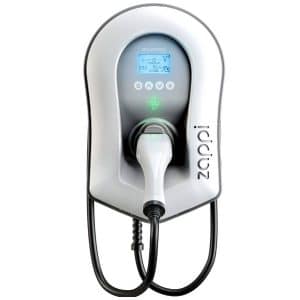
Tethered myenergi eco-smart zappi Home Smart EV Charger (7kW, 6.5m): price includes product only
£810.95 (Including VAT)
Brand:zappi EV Charge PointCategory:EV Charging PointsCustomer type:ResidentialPower:7 kWType:Type 2Cable:TetheredPhase:Single Phase -
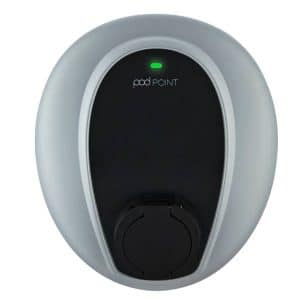
Untethered pod POINT Solo 3 Home Smart EV Charger (7kW): price includes product only
£750.95 (Including VAT)
Brand:pod POINT EV Charge PointCategory:EV Charging PointsCustomer type:ResidentialPower:7 kWType:Type 1Type 2Cable:UntetheredPhase:Single Phase -
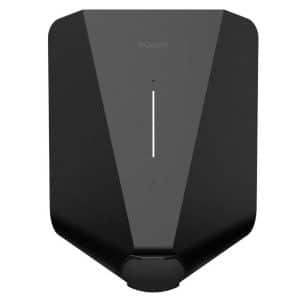
Untethered Easee Charge Commercial Smart EV Charger (22 kW): price includes product only
£945.95 (Including VAT)
Brand:easeeCategory:EV Charging PointsCustomer type:BusinessPower:22 kWType:Type 2Cable:UntetheredPhase:Three Phase
This product has multiple variants. The options may be chosen on the product page
The post Fox ESS EQ5000: UK Price, Specifications, Solar & EV Charging Guide appeared first on Ezoomed.