
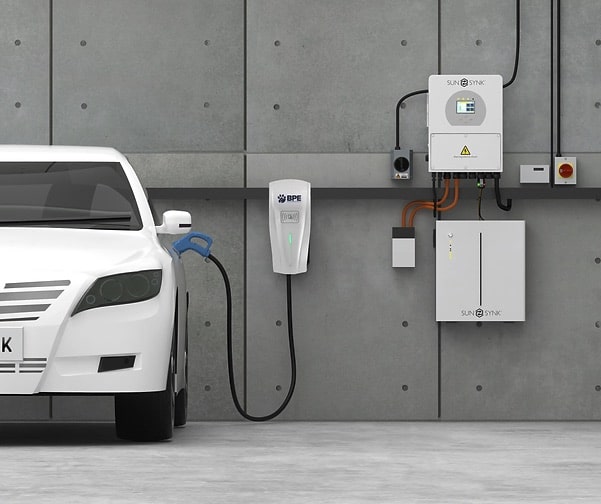
BYD Battery-Box HVB is a modular high-voltage home battery system using lithium iron phosphate (LFP) cells. The range combines battery modules with a battery control unit and base, and requires a separately specified compatible inverter to supply household AC electricity. The exact tower size, inverter, backup equipment and installed price should be confirmed with a qualified installer.
Table of Contents
Sign up to the e-zoomed Electric Living newsletter
Benefits of residential battery storage
| Benefits | What it means for your household |
|---|---|
| Use more solar electricity | Store surplus solar generation for use later |
| Shift electricity purchases | Use compatible inverter controls and a suitable tariff to charge during cheaper periods |
| Support backup loads | Supply approved circuits when the chosen inverter and additional equipment support backup |
| Contribute to EV charging | Provide energy through the home’s electrical system to a separate, suitably connected charger |
Benefits depend on household demand, solar generation, tariffs, conversion losses and system design. Battery storage does not guarantee savings or remove reliance on the grid.
BYD Battery-Box HVB at a glance
| Specification | BYD Battery-Box HVB |
|---|---|
| Battery chemistry | Lithium iron phosphate (LFP), cobalt-free |
| Module designation | HVB Module; 2.97 kWh initial designed capacity |
| Modules per tower | Two to ten, subject to inverter compatibility |
| Published DC usable energy per tower | 5.94–29.69 kWh, depending on configuration |
| Maximum parallel arrangement | Up to three towers; maximum published capacity 89.07 kWh, subject to approved design |
| Maximum output current | 50 A; temperature, state of charge and inverter limits apply |
| Peak output current | 98 A for 15 seconds; operating and inverter limits apply |
| Published round-trip efficiency | At least 95%; do not assume this is whole-system AC efficiency |
| Operating temperature | −20°C to +50°C |
| Ingress protection | IP55 |
| Installation | Floor installation; indoor or outdoor under manual requirements |
| Communication | CAN / RS485; Smart WiFi/LAN module for connectivity |
| Inverter | Separate BYD-approved compatible inverter required |
| Product warranty | 15 years from the defined Warranty Start Date, subject to terms |
Pros and cons
| Pros | Cons and limitations |
|---|---|
| Modular towers offer a broad choice of storage capacities | An individual module is not a complete home battery system; the documented smallest tower uses two modules |
| LFP chemistry and published DC usable-energy figures support clear comparisons | Household AC output and backup depend on the separate inverter and complete installation |
| Expansion and parallel towers are supported within approved configurations | Warranty start-date, throughput and installation conditions require attention |
Battery configurations and usable capacity
The 2.97 kWh module is a building block. Complete HVB towers contain two to ten modules, plus the appropriate battery control unit and base. Model names are rounded labels; use the detailed published energy figures when comparing systems.
| Tower model | Modules | Published DC usable energy |
|---|---|---|
| HVB 5.9 | 2 | 5.94 kWh |
| HVB 8.9 | 3 | 8.91 kWh |
| HVB 11.8 | 4 | 11.88 kWh |
| HVB 14.8 | 5 | 14.85 kWh |
| HVB 17.8 | 6 | 17.82 kWh |
| HVB 20.7 | 7 | 20.79 kWh |
| HVB 23.7 | 8 | 23.76 kWh |
| HVB 26.7 | 9 | 26.72 kWh |
| HVB 29.6 | 10 | 29.69 kWh |
BYD measures DC usable energy at 100% depth of discharge, a 0.2C charge/discharge rate and +25°C. Energy available at household sockets also depends on inverter losses, reserve settings and operating conditions. The nine- and ten-module figures above follow the datasheet rather than multiplication of the rounded 2.97 kWh module figure.
Inverter compatibility, solar and power output
HVB is a DC battery system. A compatible inverter performs power conversion and manages how the battery interacts with solar generation and the home. Solar panels do not become a complete solar installation merely by purchasing the battery.
The installer must check the latest BYD compatible inverter list, including the exact inverter model, firmware and permitted module count. The user manual and warranty require an approved inverter; compatibility should not be assumed from voltage ratings or brand alone.
Battery capacity in kWh is different from output power in kW. Tower voltage changes with module count, and the inverter also imposes limits. The published 50 A output-current figure should therefore not be presented as one fixed AC power rating for every HVB tower. Existing solar equipment needs an individual design assessment.
Backup during power cuts
BYD lists on-grid, on-grid with backup and off-grid applications. These depend on the compatible inverter and supporting equipment. The battery alone does not provide grid isolation, a household AC output or a guaranteed switchover time.
Ask which circuits can receive backup, what reserve is maintained, whether solar can recharge the system during an outage and how starting loads are handled. Available charge, battery and inverter power limits, and connected demand determine duration. Whole-home backup should only be described where the complete installation supports it.
Expanding your storage
The datasheet supports up to three towers in parallel, with a maximum published DC usable energy of 89.07 kWh. This is a platform maximum, rather than a configuration automatically approved with every inverter or suitable for every home.
Expansion must follow BYD’s current instructions. The supplied user manual requires the existing battery and new modules to have similar states of charge before expansion. Ask the installer to confirm firmware, module compatibility, parallel-tower requirements and available space before ordering additions.
EV charging and energy management
HVB can contribute stored electricity to a separately installed home EV charger through a suitable inverter and electrical installation. It is not itself an EV charging point. Charging speed depends on the vehicle, charger, available inverter output and other household loads.
Monitoring, charging schedules and tariff optimisation depend on the complete system’s controls. BYD documents connectivity, firmware updates and diagnostic functions, but a specific inverter app, tariff integration or automatic surplus-solar EV charging feature should be verified before purchase.
Compare direct off-peak EV charging with charging through stored battery energy. Additional conversion losses and the value of exported solar affect the economics.
UK pricing and quotation inclusions
Compare a complete installed quotation, including the chosen HVB tower, control unit, base, compatible inverter, metering, protection, cables and commissioning. Any backup switching equipment and circuit work should be identified separately. A module listing is not an installed-system price or confirmation of current stock. Ask the supplier and installer to identify exact quantities, accessories, delivery, tax treatment and installation scope.
Installation and maintenance
The system is floor-installed and IP55-rated. Indoor and outdoor use are supported under the manual’s siting conditions. A qualified installer must assess ventilation, clearances, mounting restraint, environmental exposure and local electrical requirements.
Tower dimensions and weight vary with module count. The smallest configuration is listed at 479 × 610 × 282 mm and 68.7 kg; the largest at 1,327 × 610 × 282 mm and 287.1 kg. Dimensions are height × width × depth. Follow these configuration-specific figures when planning space.
Operating temperature is −20°C to +50°C, but available current can vary with temperature, state of charge and inverter limits. Keep the equipment accessible and arrange maintenance through qualified personnel. Consult the installer before prolonged shutdown or storage; the warranty excludes deterioration resulting from the product not being operated for six months or more.
Warranty and support
The supplied European warranty, September 2025 version 1.3, applies to HVB products purchased in Europe on or after 1 September 2025. It provides a fifteen-year limited product warranty from its defined Warranty Start Date, subject to conditions.
The start date is generally the first day after six months from production. With written proof of delivery to the initial installation site, the original buyer can instead choose the first day after thirty days from that delivery date. Do not describe the warranty as automatically fifteen years from purchase or commissioning.
Performance cover promises 70% usable-energy retention for fifteen years or until the model-specific minimum throughput energy is reached, whichever comes first. For example, the throughput figure is 18.41 MWh for HVB 5.9 and 92.03 MWh for HVB 29.6. This differs from the product-defect warranty.
Conditions include approved inverter use, installation within one month of the Warranty Start Date, compliant operation and maintenance, and prompt fault reporting. BYD also requires access to performance data over the internet upon request after a claim. Confirm the applicable terms with the supplier and retain delivery, purchase and commissioning records.
Is BYD Battery-Box HVB right for your home?
HVB may suit households seeking modular DC storage with a choice of compatible inverters. Select storage capacity and inverter power together, based on household demand, solar generation, tariff opportunities and backup needs.
A larger tower does not automatically produce greater savings. Compare the complete installed cost, usable energy, approved power output and support arrangements with other systems.
Frequently Asked Questions
| Question | Answer |
|---|---|
| Can I use one 2.97 kWh module on its own? | No. The documented HVB range starts with two modules, plus the control unit, base and an approved compatible inverter |
| How much energy does the smallest tower provide? | HVB 5.9 has 5.94 kWh of published DC usable energy under BYD’s test conditions |
| Does HVB include a household solar inverter? | No. A separately specified compatible inverter is required |
| Will every inverter work with HVB? | No. Check the exact model, firmware and battery configuration against BYD’s current compatibility list |
| Does buying HVB automatically provide backup? | No. Backup depends on the inverter, required additional equipment and installation design |
| Can it supply an EV charger? | It can contribute energy through an appropriate inverter to a separate charger. Available power and backup use need installer assessment |
| What is the maximum storage capacity? | BYD publishes up to 89.07 kWh with three maximum-size towers in parallel, subject to the approved configuration |
| Is the warranty an unconditional fifteen years? | No. The product warranty has a defined start date and conditions; performance cover also has model-specific throughput limits |
While e-zoomed uses reasonable efforts to provide accurate and up-to-date information, some of the information provided is gathered from third parties and has not been independently verified by e-zoomed. While the information from the third party sources is believed to be reliable, no warranty, express or implied, is made by e-zoomed regarding the accuracy, adequacy, completeness, legality, reliability or usefulness of any information. This disclaimer applies to both isolated and aggregate uses of this information.
Featured Articles
What Is Home Battery Storage? Benefits and How It Works
BYD Battery-Box HVB is a modular high-voltage home battery system using lithium iron phosphate (LFP) cells. The range combines battery modules with a battery control unit and base, and…
What Is EV Smart Charging? A Complete Guide to Home Charging and Cost Savings
BYD Battery-Box HVB is a modular high-voltage home battery system using lithium iron phosphate (LFP) cells. The range combines battery modules with a battery control unit and base, and…

What Is Vehicle-to-Home (V2H) Charging? Powering Your House With Your EV
BYD Battery-Box HVB is a modular high-voltage home battery system using lithium iron phosphate (LFP) cells. The range combines battery modules with a battery control unit and base, and…
What Is Vehicle-to-Load (V2L) Technology? Powering Appliances With Your EV
BYD Battery-Box HVB is a modular high-voltage home battery system using lithium iron phosphate (LFP) cells. The range combines battery modules with a battery control unit and base, and…
What Is Vehicle-to-Grid (V2G) Technology? How Your EV Can Earn You Money
BYD Battery-Box HVB is a modular high-voltage home battery system using lithium iron phosphate (LFP) cells. The range combines battery modules with a battery control unit and base, and…
Featured Products
-
Custom-Made Single-Phase EV Charging Cable Type 2 to Type 2 (2m to 50m, 7.4 kW, 32 amp, Black)
Price range: £99.95 through £670.95 (Including VAT)
Category:CablesType:Type 2Length (m):5 m7.5 m10 m3.5 m12.5 m15 m20 m17.5 m2 m22.5 m25 m30 m35 m40 m45 m50 mCurrent (amp):32 ampPhase:Single Phase (7.2kW)
This product has multiple variants. The options may be chosen on the product page -
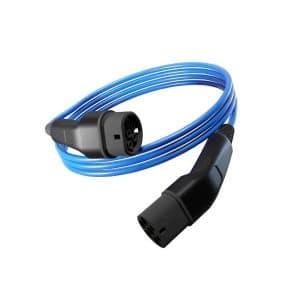
Custom-Made Single-Phase EV Charging Cable Type 2 to Type 2 (2m to 50m, 7.4 kW, 32 amp, Blue)
Price range: £99.95 through £670.95 (Including VAT)
Category:CablesType:Type 2Length (m):5 m7.5 m10 m3.5 m12.5 m15 m20 m17.5 m2 m22.5 m25 m30 m35 m40 m45 m50 mCurrent (amp):32 ampPhase:Single Phase (7.2kW)
This product has multiple variants. The options may be chosen on the product page -
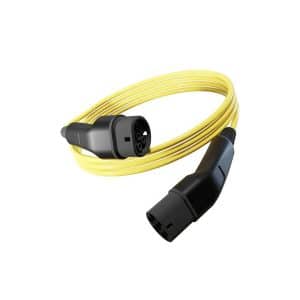
Custom-Made Single-Phase EV Charging Cable Type 2 to Type 2 (2m to 50m, 7.4 kW, 32 amp, Yellow)
Price range: £99.95 through £670.95 (Including VAT)
Category:CablesType:Type 2Length (m):5 m7.5 m10 m3.5 m12.5 m15 m20 m17.5 m2 m22.5 m25 m30 m35 m40 m45 m50 mCurrent (amp):32 ampPhase:Single Phase (7.2kW)
This product has multiple variants. The options may be chosen on the product page -
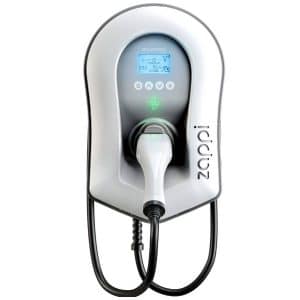
Tethered myenergi eco-smart zappi Home Smart EV Charger (7kW, 6.5m): price includes product only
£810.95 (Including VAT)
Brand:zappi EV Charge PointCategory:EV Charging PointsCustomer type:ResidentialPower:7 kWType:Type 2Cable:TetheredPhase:Single Phase -
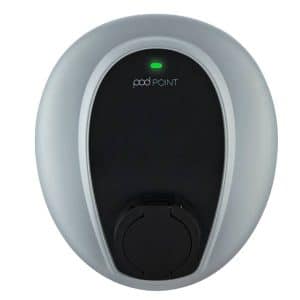
Untethered pod POINT Solo 3 Home Smart EV Charger (7kW): price includes product only
£750.95 (Including VAT)
Brand:pod POINT EV Charge PointCategory:EV Charging PointsCustomer type:ResidentialPower:7 kWType:Type 1Type 2Cable:UntetheredPhase:Single Phase -
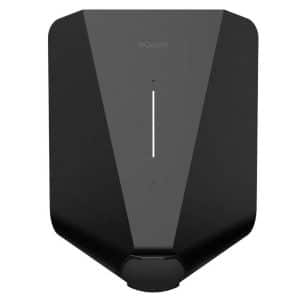
Untethered Easee Charge Commercial Smart EV Charger (22 kW): price includes product only
£945.95 (Including VAT)
Brand:easeeCategory:EV Charging PointsCustomer type:BusinessPower:22 kWType:Type 2Cable:UntetheredPhase:Three Phase
This product has multiple variants. The options may be chosen on the product page
The post BYD Battery-Box HVB: UK Price, Specifications, Solar & EV Charging Guide appeared first on Ezoomed.