
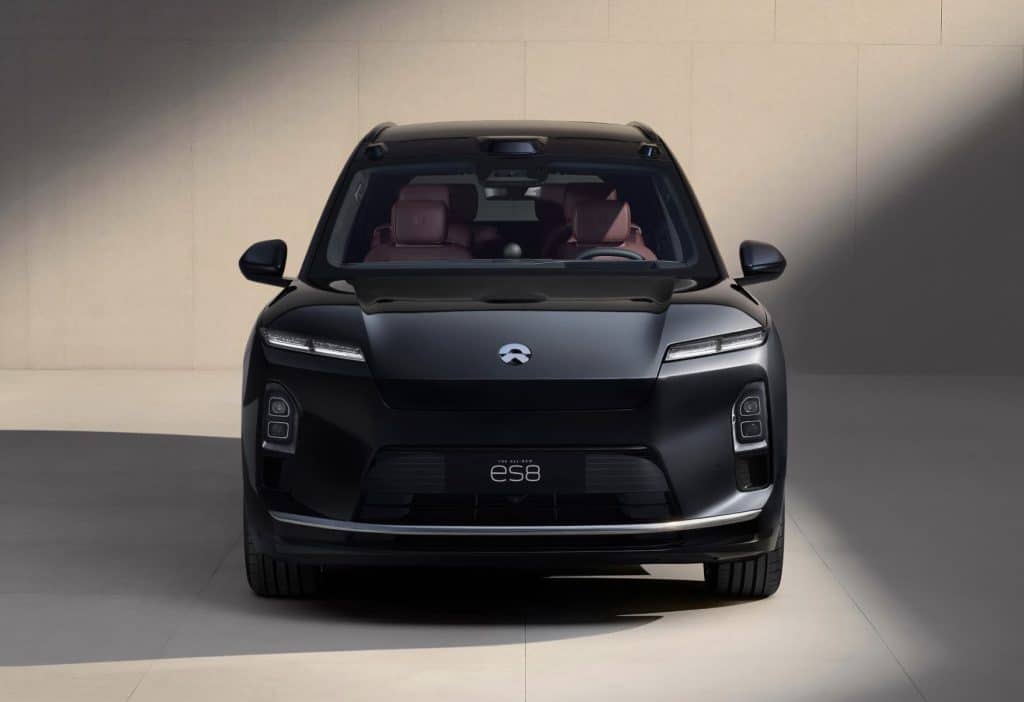
The third-generation NIO ES8 is an ambitious all-electric luxury SUV aimed at buyers who place equal value on passenger space, digital technology and effortless performance. First launched in China in September 2025, the latest vehicle is much larger and more advanced than the earlier NIO ES8 generations, and its appeal rests on both family accommodation and executive-level comfort. This guide assesses the 2026 range from a UK buyer’s perspective without suggesting it is already available in British showrooms.
There is a crucial market distinction. As of 28 November 2026, NIO has not confirmed UK retail availability, an official UK on-the-road price, a right-hand-drive specification or a certified UK WLTP figure for this third-generation NIO ES8. Its published headline range is measured under China’s CLTC testing cycle and cannot legitimately be relabelled WLTP. The figures below therefore identify Chinese-market specifications explicitly and avoid converting them into a fictional UK offer.
The choice of interior is unusually broad. A three-row six- or seven-seat version arrived first, followed by a substantial five-seat edition in July 2026 that prioritises rear passenger comfort and luggage capacity. Across the range, the standard Chinese-market configuration combines a 102 kWh-labelled battery, dual-motor all-wheel drive and 900 V architecture. The vehicle also supports NIO’s battery-swapping concept where compatible stations and commercial arrangements exist, which is not evidence of a UK swapping service.
A possible British comparison set would include the Kia EV9 and Volvo EX90, both more directly relevant to UK households seeking substantial electric family SUVs. The NIO ES8 emphasises exceptionally generous cabin space, premium seating and advanced software, but it would need a credible local sales, service and charging proposition before the comparison could become a straightforward purchasing decision.
This is consequently a forward-looking UK buying guide rather than a recommendation to place an unverified UK order. We examine what is established about the Chinese five-, six- and seven-seat versions, explain the limitations of the performance and charging figures, and distinguish documented equipment from features that would require British homologation. e-zoomed will reassess price, warranty, charging interfaces and safety eligibility if NIO announces a formal UK-market model.
At a glance
| Key information | Third-generation NIO ES8 (2026) |
|---|---|
| UK price and availability | Not announced; China-market model only in verified sources |
| Type of electric vehicle | Battery-Electric Vehicle (BEV) |
| Body style and seating | Large five-door SUV; five, six or seven seats in China |
| Powertrain | Dual motor, all-wheel drive; 520 kW and 700 Nm (China) |
| Battery | 102 kWh manufacturer-labelled capacity; gross/usable basis not verified |
| China-market range | Up to 655 km five-seat or 635 km three-row (CLTC, not WLTP) |
| UK WLTP range | Not certified / not announced |
| Charging and swapping | 900 V system; reported China-market 420 kW DC peak; UK compatibility not established |
| Tailpipe emissions | 0 g CO₂/km while driving |
Important: the 2026 NIO ES8 is not the same vehicle as the older European NIO EL8. The supplied manufacturer URL may resolve to that earlier model in some regions; its 100 kWh battery, older dimensions, European WLTP statements and charging specifications must not be copied into this third-generation guide. Published CLTC ranges are indicative of China-market homologation, not UK driving range.
Table of Contents
Pros & cons
| PROS | CONS |
|---|---|
| 1. Outstanding cabin flexibility: Five-, six- and seven-seat Chinese layouts address very different family and executive requirements. | 1. No verified UK sale: Pricing, local aftersales, right-hand drive and registration remain unconfirmed. |
| 2. Powerful standard drivetrain: The 520 kW twin-motor system is impressive for such a large SUV. | 2. No UK WLTP evidence: The attractive 635–655 km figures are Chinese CLTC results, not UK range claims. |
| 3. Ambitious luxury technology: Advanced seat adjustment, digital displays and intelligent chassis features distinguish the cabin. | 3. Ecosystem dependence: Battery swapping, software features and high-peak DC charging require local infrastructure and compatibility. |
Sign up to the e-zoomed Electric Living newsletter
About NIO: The company behind the ES8
NIO was established in 2014 and built its reputation around premium battery-electric cars, connected services and a distinctive ownership experience. Readers can review the history of the NIO ES8 for additional model-generation context. Its Chinese portfolio now spans executive saloons and a wide variety of SUVs, while the company also operates the ONVO and firefly brands. The original NIO ES8 was among its earliest production vehicles, making the third-generation model an important statement about how the business sees the future of large premium electric family transport.
A central difference from conventional EV makers is NIO’s battery-swapping approach, in which compatible cars can exchange depleted battery packs at dedicated sites rather than waiting for a normal charging session. This service is integrated with the company’s Battery-as-a-Service subscription proposition in some markets. Its existence in China does not mean a UK buyer can obtain equivalent access, pricing, service cover or battery ownership terms; those depend on country-specific infrastructure and contracts.
Meet the NIO ES8
Overview
The newest NIO ES8 is a substantial five-door SUV measuring 5,280 mm in length and 2,010 mm in body width, excluding the mirrors. Compared with a more conventional crossover, those dimensions promise an imposing road presence but also raise practical questions for narrow British lanes and multistorey car parks. The design uses a restrained front end, distinctive split lighting and extensive glazing rather than attempting to disguise the body’s considerable size.
Chinese customers can choose a spacious five-seat layout or a more flexible three-row arrangement for six or seven occupants. The five-seat derivative reserves more of the cabin and floor area for second-row comfort and luggage, whereas the three-row models balance passenger access with a less generous boot when every seat is used. This distinction matters more in everyday family ownership than simply comparing the headline power and battery numbers.
NIO launched the third-generation three-row vehicle in September 2025 and added the five-seat version in July 2026. A Mirror Black Edition 2.0 with five- and six-seat options was subsequently announced in China on 27 November 2026. These are Chinese-market body and trim configurations, not an authorised UK specification list, and equipment supplied in any future British model could differ significantly from the launch versions described here.
Battery & range
According to the manufacturer’s data, the current Chinese-market NIO ES8 range uses a battery labelled 102 kWh and a full-domain 900 V electrical architecture. The manufacturer material reviewed does not establish whether 102 kWh is the gross installed capacity or the net usable energy available to the driver, so this guide does not equate the figure with either basis. A genuinely comparable UK range analysis would first require the usable capacity and formal vehicle-specific WLTP homologation.
NIO’s five-seat edition is advertised with a maximum 655 km CLTC result, approximately 407 miles on a simple distance conversion, while its original three-row version quotes up to 635 km CLTC, approximately 395 miles. Converting kilometres to miles does not convert the underlying test from CLTC into WLTP. Official UK electric range is consequently recorded as not certified, and no unsupported percentage discount has been applied to manufacture a plausible-sounding British figure.
Real-world range would depend on motorway speed, ambient temperature, precipitation, tyres, passenger load and climate-control use, all particularly relevant to a large SUV. It would also vary with whether a future local car uses the same battery and equipment as the Chinese versions. Buyers comparing published, UK-certified alternatives such as the BMW iX3 should remember that the ES8’s CLTC number is not a like-for-like range benchmark.
Charging
The third-generation NIO ES8 was engineered around a high-voltage system intended to support rapid charging and battery swapping. Specialist China-market reporting describes a potential DC peak of up to 420 kW on suitable high-power equipment, but that is not a certified British charging figure or a promise that a conventional 350 kW UK station would deliver the same result. Charger power, battery temperature, state of charge and the full charging curve all govern the time a driver actually spends plugged in.
A verified UK specification for the onboard AC charger, charge connector and 10–80% DC charging window is not available for this third-generation vehicle. In particular, the 11 kW AC and European CCS information published for the older NIO EL8 cannot safely be carried across. Readers unfamiliar with the difference between vehicle-side DC acceptance and the rating of a public charger may find our DC charging guide and CCS connector explainer useful before comparing manufacturers’ peak claims.
Battery swapping is a genuine part of the Chinese ownership proposition, where the appropriate hardware, compatible pack and a participating station are available. A quoted swap duration of around three minutes describes a controlled service operation, not the time required to reach, queue for or access a site. There is no verified British NIO ES8 swap subscription or station network to include in a UK total-cost-of-ownership calculation.
For an ordinary UK household, home charging costs would need to be based on a confirmed onboard AC rate, usable battery capacity and current energy tariff. Until those details exist, a responsible calculation can only illustrate a chosen partial top-up rather than claim a real 0–100% NIO ES8 charging time. The worked example in Specifications makes its assumptions explicit and keeps hypothetical electricity prices separate from any future charging contract.
Practicality
Practicality is a persuasive aspect of the NIO ES8. The five-seat car has a manufacturer-stated 230-litre powered front compartment and an unusually generous 1,334-litre rear luggage area, with up to 3,084 litres reported when the second row is folded. Those are China-market measuring conventions, however, and a UK-spec capacity would need to clarify whether figures include underfloor storage and which seats are in their normal positions.
For the three-row SUV, NIO’s current model page describes a 547-litre rear boot that includes a 132-litre underfloor compartment, alongside a separate 230-litre front compartment. An earlier manufacturer announcement describes the underfloor space as additional, so we have retained the current page’s inclusive figure rather than combining the numbers. In the seven-seat arrangement, folding both rear rows can provide up to 3,230 litres on the Chinese specification. These figures cannot be treated as directly interchangeable with the five-seat measurements, and neither a UK towing limit nor local roof-load rating has been certified.
Second-row comfort is a major priority. The six-seat arrangement offers captain-style seats and a passage towards the back, while the seven-seat car uses a more traditional family layout; the five-seat version prioritises reclining rear seats and luggage capacity. That makes the model relevant to readers considering the Mercedes-Benz EQS SUV, although British buyers will need to check seat and luggage requirements against a vehicle they can actually inspect and order locally.
The turning-radius claim is around 5.7 metres, helped by substantial front-wheel steering angle and chassis management, but the length and width still demand care in confined spaces. Parking sensors and a sophisticated camera system cannot change the physical size of a vehicle. A UK launch would also need to establish tow-bar certification, child-seat fitting details and insurance or repair support before a buyer could judge its full family suitability. The Volvo EX60 offers a smaller UK-market reference point for households weighing manoeuvrability against maximum cabin space.
Technology & equipment
The NIO ES8 is designed to feel technologically distinctive rather than merely equipped with a large central touchscreen. Chinese specifications include a wide Skyline information display, a 15.6-inch central OLED screen, a 21.4-inch overhead rear entertainment display and an immersive 27-speaker audio system. The cabin technology is aimed at reducing the divide between a comfortable lounge and a functional family vehicle, although the final equipment allocation varies with trim and seating layout.
NIO’s NT.Cedar software environment, NOMI digital assistant and NX9031 computing hardware support its wider connected-vehicle proposition. The driving-assistance sensor suite is described with multiple LiDAR devices and sophisticated environmental perception, but marketing descriptions do not confer hands-free or autonomous driving authority on UK roads. Any eventual British vehicle would need country-specific approved features, clear driver-supervision rules, working local navigation and dependable software support.
Comfort equipment can include multiple electrically adjustable seats, ventilated and massaging surfaces, configurable ambient lighting, a cabin refrigerator and active noise management. The five-seat version puts particular emphasis on front zero-gravity seating and reclining rear chairs. Readers interested in how other premium EV makers package comfort and digital controls might also review the BMW iX; the key difference here is that ES8 equipment is verified for China, not yet for a UK order.
Performance
The third-generation Chinese-market NIO ES8 uses two electric motors with a combined quoted output of 520 kW and 700 Nm, driving all four wheels. NIO quotes 0–100 km/h in around 3.97 seconds for the original three-row vehicle, with a 3.9-second figure for the five-seat version. Because 100 km/h is about 62 mph, these are useful orientation points for British readers, but they are not separate UK-tested 0–62 mph certification figures.
Headline acceleration is remarkable for such a large family vehicle, although the benefit in ordinary driving is more about responsive overtaking and carrying a full load without strain. The China-market suspension includes adaptive damping and dual-chamber air suspension, intended to reconcile body control with passenger comfort. These are engineering claims rather than the results of an independent e-zoomed road test, and British ride-quality judgement must await a locally representative car.
China-market listings report a maximum speed of 220 km/h, approximately 137 mph, but neither this speed nor any high-performance driving mode should be mistaken for a UK-road recommendation. Potential owners may compare the specification with more established UK electric SUVs, yet acceleration alone says little about brake feel, steering feedback or efficiency at motorway speeds. The best version would ultimately depend on the manufacturer’s local suspension calibration, wheel choice and equipment allocation.
Safety
The third-generation NIO ES8 is promoted with an extensive body safety structure, multiple airbags and a broad suite of driver-assistance sensors. NIO states that the newer vehicle achieved strong Chinese C-IASI assessment results, which are relevant evidence of testing in that market. Nevertheless, a Chinese assessment and a manufacturer demonstration are not equivalent to a new, UK-applicable Euro NCAP rating or a guarantee that identical driver-assistance functions would be enabled in Britain.
Euro NCAP published a test for an earlier six-seat NIO ES8 in September 2021. That result applies to the tested earlier-generation left-hand-drive vehicle and is not evidence that the newly engineered 2026 third-generation SUV has itself passed the same assessment. This distinction is especially important where body structure, battery installation, airbags and electronic systems have changed substantially between generations.
Before recommending the vehicle for UK family use, e-zoomed would seek a current model-specific safety assessment, British child-seat and restraint guidance, emergency-service documentation and verified repair arrangements. Functions such as automatic emergency braking, driver monitoring and active lane assistance must also be evaluated against the precise market specification. As with the technology claims, any assisted-driving system leaves responsibility for safe operation with the driver.
The verdict
The third-generation NIO ES8 has the ingredients of a compelling large luxury electric SUV: generous interior dimensions, a forceful dual-motor drivetrain and a cabin designed to serve both families and chauffeur-style travel. In pure product terms, the combination of five-, six- and seven-seat arrangements gives NIO greater flexibility than many conventional premium SUVs. Those strengths are credible reasons for British buyers to follow the model’s development.
The five-seat version makes particularly strong use of the vehicle’s footprint, with exceptional quoted luggage space and sophisticated seats that prioritise comfort on longer journeys. The three-row layouts add the practical choice of six executive-style positions or seven family seats. High-quality digital displays and adaptive chassis systems add to an impression of a flagship engineered around the needs of passengers rather than merely the expectations of the driver.
The most important reservation is not a flaw in the Chinese product itself but the absence of a confirmed British sales proposition. As of this review, there is no official UK retail price, local warranty, right-hand-drive specification, WLTP range or approved charging interface for the new model. A specification sheet, however impressive, cannot replace delivery dates, support arrangements and the reassurance of being able to inspect the vehicle and obtain service locally.
The 102 kWh battery label and 900 V architecture look promising, but the available published evidence does not reconcile gross and usable energy or establish a UK charging curve. Similarly, Chinese battery-swapping infrastructure would not automatically travel with a UK launch. This is why our charging-cost illustration is expressly hypothetical and our vehicle-summary range field says not certified rather than displaying a converted CLTC distance as a WLTP estimate.
For a UK buyer assessing electric family vehicles across different sizes and budgets, the Kia EV5 is one smaller alternative, while seven-seat requirements point towards larger established models discussed earlier. The NIO ES8 would need to establish more than favourable headline specifications to displace established alternatives. A properly supported UK introduction could nevertheless create meaningful competition in this demanding segment.
The likely target customer is someone who values rear-seat comfort, excellent luggage flexibility and the experience of a technologically advanced premium brand. That customer may be drawn to the possibility of an executive six-seater or a cargo-oriented five-seater. Before committing money, however, a UK purchaser should demand confirmed on-the-road pricing, battery ownership terms, certified range and a clear aftersales package rather than relying on Chinese list prices.
The e-zoomed view: The NIO ES8 is one of the more interesting international developments in large electric SUVs, and its scale and technical ambition deserve attention. It is not yet a sensible UK purchasing recommendation because the essential local-market facts remain unresolved. We would keep it on a watchlist, but would only make a definitive buying judgement after the manufacturer confirms a compliant UK specification and a dependable ownership proposition.
Gallery
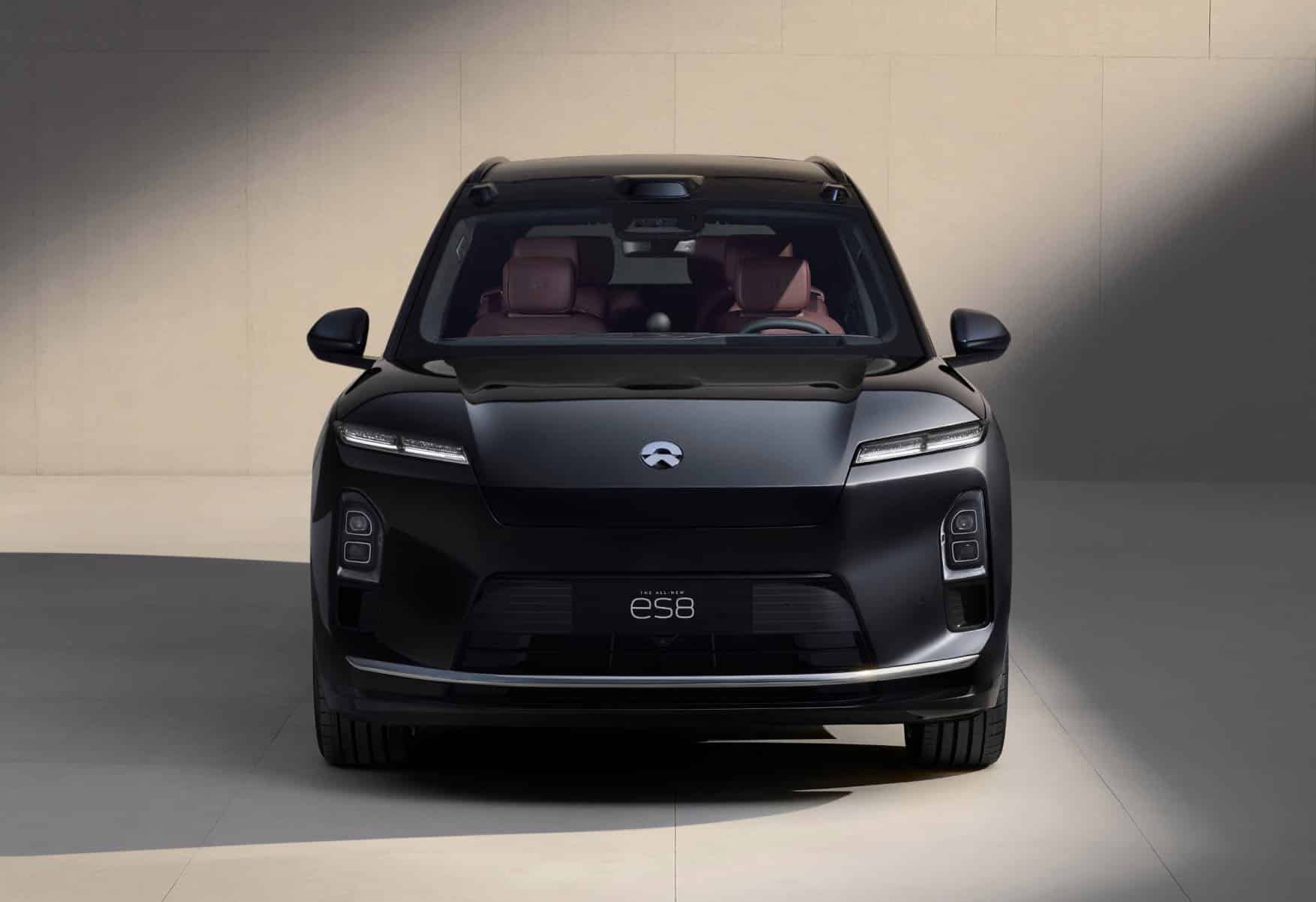
All-Electric NIO ES8 (credit: NIO)
Pricing
A UK retail price has not been announced for the third-generation NIO ES8, and none of the Chinese amounts below is a British on-the-road quotation. Chinese retail prices vary by seat layout, equipment and whether the buyer purchases the battery or instead subscribes through Battery-as-a-Service. Any future UK price would also depend on local taxes, regulatory approvals, transport, warranty terms and the manufacturer’s commercial strategy.
The following figures are published Chinese-market starting prices for their respective launch versions, shown in renminbi without conversion to sterling. The five-seat car joined the range in July 2026 and the latest Mirror Black Edition 2.0 was announced on 27 November. Earlier August 2025 pre-order prices were subsequently superseded by launch pricing and must not be reused as if they were current UK or even final China prices.
| China-market version | Battery included: launch price | With BaaS: vehicle only |
|---|---|---|
| Five-seat Executive Premium | RMB 382,800 | RMB 274,800 |
| Five-seat Executive Signature | RMB 422,800 | RMB 314,800 |
| Six-seat Executive / Luxury | RMB 406,800 | RMB 298,800 |
| Seven-seat Executive / Luxury | RMB 406,800 | RMB 298,800 |
| Six-seat Executive Signature | RMB 446,800 | RMB 338,800 |
| Five-seat Mirror Black Edition 2.0 (27 Nov 2026) | RMB 434,800 | RMB 326,800 |
| Six-seat Mirror Black Edition 2.0 (27 Nov 2026) | RMB 458,800 | RMB 350,800 |
A lower BaaS vehicle price does not mean the battery is free: it involves continuing subscription charges and contractual conditions, and China-market plans cannot be assumed to apply in Britain. The quoted retail prices are launch or announcement references, not verified live transaction offers for 28 November 2026. The meaningful UK purchase comparison is therefore with available, properly priced alternatives rather than with a simple currency conversion of those Chinese numbers.
Specifications
All specifications below concern the third-generation China-market NIO ES8 unless a line explicitly says otherwise. N/A means the necessary UK-approved or vehicle-specific information was not established by the sources reviewed, not that a feature is absent. Values are not transferred from the older European NIO EL8, whose dimensions, battery and charging hardware belong to a different generation.
| Battery, Emissions, Charging and Warranty | China-market data and UK qualifications |
|---|---|
| EV architecture | Battery-Electric Vehicle (BEV), dual-motor AWD, 900 V system |
| Battery chemistry | CATL-supplied lithium-ion NCM, reported China configuration |
| Manufacturer battery label | 102 kWh; gross/usable distinction not established |
| Verified usable battery | N/A — no defensible net capacity identified |
| Five-seat range | Up to 655 km CLTC; approximately 407 miles by distance conversion only |
| Six-/seven-seat range | Up to 635 km CLTC; approximately 395 miles by distance conversion only |
| UK certified WLTP | N/A — not announced; CLTC cannot be substituted |
| Official UK energy use | N/A — no UK WLTP consumption data |
| China-market DC peak | Up to 420 kW reported by China-market specialists; station and battery conditions apply |
| Official UK DC maximum | N/A — port and charging curve not confirmed |
| UK DC charging time (10–80%) | N/A — no certified third-generation UK figure |
| UK onboard AC charger | N/A — not confirmed for this generation |
| UK AC charge-port standard | N/A — no UK vehicle/connector approval |
| Battery swapping | Supported at compatible NIO Power Swap facilities in China; UK service not established |
| Tailpipe CO₂ emissions | 0 g/km in electric operation; not lifecycle zero emissions |
| Regenerative braking | Electric-drive feature; UK modes/calibration not confirmed |
| Euro NCAP for 2026 third-generation ES8 | N/A — 2021 earlier-generation result not applicable |
| China safety testing | C-IASI results reported for the third-generation vehicle; not Euro NCAP |
| UK vehicle and battery warranty | N/A — no UK warranty published for this vehicle |
| China-market first-owner cover | Five-seat launch: vehicle 6 years/150,000 km; powertrain 10 years/unlimited mileage, subject to local terms |
| UK battery subscription terms | N/A — no British Battery-as-a-Service agreement confirmed |
A manufacturer’s 900 V architecture or a charge station rated above 350 kW cannot by itself establish an actual 10–80% session time. Similarly, the Chinese first-owner warranty must not be presented as a UK guarantee. Before publication of a future UK buying offer, the complete vehicle homologation, charging interface, warranty documents and latest manufacturer technical tables should be checked again.
| Illustrative UK Home-Charging Cost | Worked example — NOT a confirmed ES8 charging session |
|---|---|
| Purpose | A partial 30.0 kWh energy top-up delivered into a hypothetical EV battery |
| Battery energy delivered | 30.00 kWh (chosen illustration; not a claimed ES8 usable capacity) |
| Charging efficiency assumed | 90% wall-to-battery; 10% losses modelled as an efficiency assumption |
| Grid electricity required | 30.00 ÷ 0.90 = 33.33 kWh |
| Illustrative low-rate electricity | £0.07 per kWh; chosen assumption, not a verified tariff |
| Low-rate grid cost | 33.33 × £0.07 = £2.33 (rounded) |
| Illustrative higher-rate electricity | £0.25 per kWh; chosen assumption, not a verified tariff |
| Higher-rate grid cost | 33.33 × £0.25 = £8.33 (rounded) |
| Illustrative 7 kW wall power | 33.33 ÷ 7 = 4.76 hours (about 4 h 46 min); assumes constant power |
| What the calculation excludes | Standing charge, real tariff eligibility, battery taper, auxiliary consumption, UK charger compatibility |
This simple illustration is deliberately based on 30 kWh of energy placed into a battery, not on filling the claimed 102 kWh pack from empty. The latter would require a reliable usable-capacity figure and a locally specified charger. A homeowner can explore charging-equipment choices in the solar-compatible home EV charger guide, but should obtain an actual tariff quote and check vehicle compatibility before budgeting.
| Dimensions and Practicality | China-market specification / qualification |
|---|---|
| Body | Five-door large SUV |
| Overall length | 5,280 mm |
| Body width, excluding mirrors | 2,010 mm (reported China-market measurement) |
| Overall height | 1,800 mm |
| Wheelbase | 3,130 mm according to NIO launch information; some secondary listings differ |
| Seating layouts | Five, six or seven seats (China-market choices) |
| Five-seat rear luggage capacity | 1,334 L, China-market measurement |
| Five-seat luggage, second row folded | Up to 3,084 L, China-market measurement |
| Three-row rear luggage capacity | 547 L for the six-seat configuration, including 132 L underfloor on NIO’s current model page; earlier manufacturer wording differs |
| Underfloor storage in three-row model | 132 L included within the 547 L total on NIO’s current model page; earlier announcement appears inconsistent |
| Seven-seat maximum cargo | Up to 3,230 L with second and third rows folded (China-market) |
| Front luggage compartment | 230 L powered front trunk |
| Turning radius | Approximately 5.7 m manufacturer claim |
| UK braked/unbraked towing limits | N/A — no UK type-approved tow rating confirmed |
| UK kerb mass / gross vehicle mass | N/A — homologated UK derivative not identified |
| UK right-hand-drive and child-seat specification | N/A — no UK orderable configuration |
| UK roof-load rating | N/A — no confirmed local vehicle approval |
Storage figures are quoted under Chinese-market conventions and depend on seat positions. NIO’s current model page explicitly includes the 132-litre underfloor compartment in its 547-litre boot total, although an earlier manufacturer announcement describes it differently. We use the current inclusive figure without adding those amounts. Similarly, 3,084 litres for the five-seat car is not an alternative test value for the seven-seat vehicle; packaging and folded-seat configurations differ materially.
| Powertrain and Performance by Variant | Seats | China range | Power / torque | Acceleration (0–100 km/h) |
|---|---|---|---|---|
| Five-seat Executive Premium | 5 | Up to 655 km CLTC | 520 kW / 700 Nm AWD | Approx. 3.9 s |
| Five-seat Executive Signature | 5 | Up to 655 km CLTC | 520 kW / 700 Nm AWD | Approx. 3.9 s |
| Six-seat Executive / Luxury | 6 | Up to 635 km CLTC | 520 kW / 700 Nm AWD | 3.97 s |
| Seven-seat Executive / Luxury | 7 | Up to 635 km CLTC | 520 kW / 700 Nm AWD | 3.97 s |
| Six-seat Executive Signature | 6 | Up to 635 km CLTC | 520 kW / 700 Nm AWD | 3.97 s |
| Mirror Black 2.0 five-seat | 5 | Up to 655 km CLTC | 520 kW / 700 Nm AWD | Approx. 3.9 s; inherited core powertrain |
| Mirror Black 2.0 six-seat | 6 | Up to 635 km CLTC | 520 kW / 700 Nm AWD | Approx. 3.97 s; inherited core powertrain |
No UK derivative is listed because no UK range has been announced. The variant table reflects verified Chinese seat and equipment structures rather than creating fictional British trims; the English translations of “Executive” and “Luxury” differ between listings. Independent China-market sources report a 220 km/h (about 137 mph) top speed, but UK homologation, tyre-dependent limits and delivery specification remain unconfirmed.
FAQs
| Question | Answer |
|---|---|
| Is the third-generation NIO ES8 available in the UK? | No confirmed UK retail launch, price, right-hand-drive specification or local warranty had been established by 28 November 2026. |
| What is the difference between NIO ES8 and NIO EL8? | The older European EL8 is a different, earlier-generation vehicle. Do not apply its WLTP or charging figures to the 2026 third-generation ES8. |
| How many seats does the latest NIO ES8 have? | Chinese-market configurations include five, six and seven seats, with substantially different luggage arrangements. |
| What is the battery capacity? | NIO labels the Chinese vehicle as 102 kWh, but a verified gross-versus-usable split for this generation was not established. |
| What is its electric range in Britain? | No UK-certified WLTP figure exists in the sources checked. Chinese results reach up to 655 km CLTC for five-seat and 635 km CLTC for three-row variants. |
| How quickly can it charge? | China-market reporting describes a potential 420 kW DC peak, but the UK connector, 10–80% time, onboard AC limit and charge curve remain unconfirmed. |
| Can British owners swap the battery? | Battery swapping exists in participating NIO markets, particularly China. No UK-compatible ES8 subscription or public service is established. |
| Does the new ES8 have a Euro NCAP rating? | A 2021 assessment belongs to an earlier-generation NIO ES8. It is not a certified rating for the third-generation 2026 vehicle. |
| How much does the 2026 NIO ES8 cost? | No UK price is announced. China-market launch prices start at RMB 382,800 for the five-seat vehicle with the battery included, subject to version and date. |
| What is the manufacturer warranty? | NIO announced China first-owner terms for the five-seat edition, but the UK vehicle and battery warranty for a future local version is not published. |
While e-zoomed uses reasonable efforts to provide accurate and up-to-date information, some of the information provided is gathered from third parties and has not been independently verified by e-zoomed. While the information from the third party sources is believed to be reliable, no warranty, express or implied, is made by e-zoomed regarding the accuracy, adequacy, completeness, legality, reliability or usefulness of any information. This disclaimer applies to both isolated and aggregate uses of this information.
Featured Articles
<!–
Carousel
–>
Fox ESS EQ5000 Home Battery Storage: UK Price, Specifications, Solar & EV Charging Guide
The third-generation NIO ES8 is an ambitious all-electric luxury SUV aimed at buyers who place equal value on passenger space, digital technology and effortless performance. First launched in China…
Do Longer Length EV Cables For Charging An Electric Car Work?
The third-generation NIO ES8 is an ambitious all-electric luxury SUV aimed at buyers who place equal value on passenger space, digital technology and effortless performance. First launched in China…
All-Electric Leapmotor B03X (2026): UK Prices, Specs, Range & Buying Guide
The third-generation NIO ES8 is an ambitious all-electric luxury SUV aimed at buyers who place equal value on passenger space, digital technology and effortless performance. First launched in China…
Featured Products
-
<!–
–>Sale!

Best-In-Class Home Solar Bundle Offer (440W All Black Jinko Solar 8 Panels + Sungrow Hybrid Inverter 3.6 kW): price includes product supply only
<!– –>
Original price was: £2,205.95.£2,150.95Current price is: £2,150.95. (Including VAT)
<!–
–>
<!– Term:
NEDC range:
Model Year:
Deposit: £
Miles Per AnnumSubject to status and conditions –>
Brand:SungrowJinko SolarCategory:Solar<!– –>
-
<!–
–>Sale!
Best-In-Class Home Solar Bundle Offer (440W All Black Jinko Solar 8 Panels + Sungrow Battery Storage 6.4 kWh + Sungrow Hybrid Inverter 3.6 kW): price includes product supply only
<!– –>
Original price was: £5,010.95.£4,800.95Current price is: £4,800.95. (Including VAT)
<!–
–>
<!– Term:
NEDC range:
Model Year:
Deposit: £
Miles Per AnnumSubject to status and conditions –>
Brand:SungrowJinko SolarCategory:Solar<!– –>
-
<!–
–>Sale!
Bundle Offer: SUNSYNK LifePO4 Home Battery Storage (5.32 kWh) + SUNSYNK Hybrid Inverter (3.6 kW/Single-Phase): price includes product supply only
<!– –>
Original price was: £3,345.95.£3,299.95Current price is: £3,299.95. (Including VAT)
<!–
–>
<!– Term:
NEDC range:
Model Year:
Deposit: £
Miles Per AnnumSubject to status and conditions –>
Brand:Sun SynkCategory:Battery Storage<!– –>
-
Bundle Offer: Tesla Powerwall 3 Home Battery Storage (13.5 kWh) + Gateway: price includes product supply only
<!– –>
£8,559.95 (Including VAT)
<!–
–>
<!– Term:
NEDC range:
Model Year:
Deposit: £
Miles Per AnnumSubject to status and conditions –>
Brand:TeslaCategory:Battery Storage<!– –>
-
<!–
–>Sale!
Custom-Made Single-Phase EV Charging Cable Type 2 to Type 2 (2m to 50m, 7.4 kW, 32 amp, Black)
<!– –>
Price range: £99.95 through £670.95 (Including VAT)
<!–
–>
<!– Term:
NEDC range:
Model Year:
Deposit: £
Miles Per AnnumSubject to status and conditions –>
Category:CablesType:Type 2Length (m):5 m7.5 m10 m3.5 m12.5 m15 m20 m17.5 m2 m22.5 m25 m30 m35 m40 m45 m50 mCurrent (amp):32 ampPhase:Single Phase (7.2kW)<!– –>
This product has multiple variants. The options may be chosen on the product page -
Untethered Ohme ePod Home Smart EV Charger (7.4 kW): price includes product only
<!– –>
£645.95 (Including VAT)
<!–
–>
<!– Term:
NEDC range:
Model Year:
Deposit: £
Miles Per AnnumSubject to status and conditions –>
Brand:OhmeCategory:EV Charging PointsCustomer type:ResidentialPower:7.4 kWCable:UntetheredPhase:Single Phase<!– –>
The post All-Electric NIO ES8 (2026): UK Prices, Specs, Range & Buying Guide appeared first on Ezoomed.