
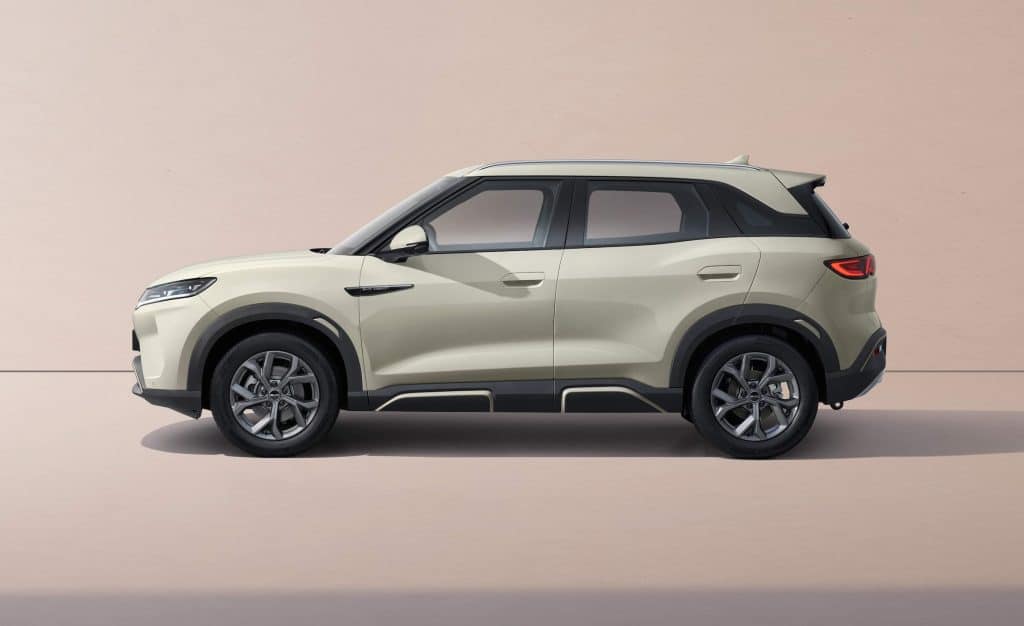
The BYD ATTO 2 is a fully electric, five-seat compact SUV designed for motorists seeking a practical electric vehicle for everyday driving. With UK prices starting from £30,875 on the road, an official WLTP driving range of up to 267 miles and a generous equipment package, the ATTO 2 represents an accessible entry point into BYD’s electric SUV range.
Available in two UK variants, Boost and Comfort, the ATTO 2 combines BYD’s lithium iron phosphate Blade Battery technology with front-wheel drive, a spacious cabin and modern infotainment and driver-assistance systems. It competes in a growing segment that includes the Kia EV3, Renault 4 E-Tech, Skoda Elroq, Volvo EX30 and Ford Puma Gen-E.
In this e-zoomed guide, we examine the BYD ATTO 2’s UK prices, battery capacities, electric driving range, charging times, specifications, practicality, safety and ownership costs. We also assess the differences between the Boost and Comfort variants to help buyers decide which version best meets their needs.
At a glance
| Feature | BYD ATTO 2 |
|---|---|
| Vehicle type | Battery electric vehicle (BEV) |
| Body type | Compact electric SUV |
| UK availability | Available through BYD’s UK retail network |
| UK starting price | From £30,875 OTR |
| Available variants | Boost / Comfort |
| Seating capacity | 5 |
| Battery capacity | 51.1 kWh / 64.8 kWh |
| Battery chemistry | Lithium iron phosphate (LFP) |
| Electric range (WLTP combined) | 214–267 miles |
| Electric motor power | 130 kW / 150 kW |
| Maximum torque | 290 Nm / 310 Nm |
| Drivetrain | Front-wheel drive |
| Acceleration (0–62 mph) | 7.9 seconds |
| Top speed | 99 mph |
| Maximum AC charging | 11 kW |
| Maximum DC charging | 82 kW / 155 kW |
| DC charging (10–80%) | 38 minutes / 25 minutes |
| Boot capacity | 400 litres / 450 litres |
| Tailpipe CO₂ emissions | 0 g/km |
According to BYD’s UK manufacturer data. Specifications, prices, driving range and charging performance vary by variant. Prices are manufacturer-advertised on-the-road figures checked in November 2026. WLTP range is measured under standardised test conditions and does not guarantee real-world driving range.
Table of Contents
Pros & cons
| Pros | Cons |
|---|---|
| 1. Generous standard equipment: Both variants include a heat pump, panoramic roof, heated front seats, 360-degree camera, connected infotainment and Vehicle-to-Load capability. | 1. Limited entry-level range and charging: The Boost offers 214 miles WLTP and takes a manufacturer-quoted 38 minutes for 10–80% DC charging, making longer journeys less convenient than in the Comfort. |
| 2. Practical family accommodation: Five seats, a useful 400–450-litre boot, elevated driving position and compact exterior dimensions make the ATTO 2 suitable for everyday family use. | 2. Unremarkable driving dynamics: Independent assessments suggest the ATTO 2 is better suited to relaxed driving than enthusiastic cornering, with some criticism of body control and steering response. |
| 3. Battery technology and ownership coverage: BYD’s LFP Blade Battery, Cell-to-Body construction and extended manufacturer battery-warranty programme strengthen its long-term ownership proposition. | 3. Competitive market positioning: Some alternative electric SUVs offer more driving range or a more engaging driving experience at comparable prices. The ATTO 2’s appeal rests partly on its equipment and practicality. |
Sign up to the e-zoomed Electric Living newsletter
About BYD: The company behind the ATTO 2
BYD, which stands for Build Your Dreams, is a Chinese multinational technology and automotive company founded in 1994. Initially specialising in rechargeable batteries, the company subsequently expanded into electric vehicles, plug-in hybrids, renewable energy and other technologies.
BYD’s experience in battery development is an important part of its automotive strategy. The manufacturer produces its own Blade Battery technology and integrates batteries, electric motors and power electronics into its vehicle platforms.
BYD entered the UK passenger-car market in 2023 and has expanded its range of electric and plug-in hybrid vehicles. Its UK electric portfolio has included the DOLPHIN, DOLPHIN SURF, ATTO 3, SEAL, SEALION 7 and ATTO 2.
The ATTO 2 was introduced in Europe in 2025 and subsequently launched in the UK. Positioned below the larger ATTO 3, it targets buyers who want SUV practicality without the dimensions or cost of a larger family vehicle.
BYD also offers an ATTO 2 DM-i plug-in hybrid in certain markets, including the UK. This is a different powertrain and should not be confused with the fully electric ATTO 2 examined in this article.
Meet the BYD ATTO 2
Overview
The BYD ATTO 2 is a compact electric SUV measuring 4,310 mm in length, 1,830 mm in width excluding mirrors and 1,675 mm in height. These dimensions make it smaller than the BYD ATTO 3 while providing sufficient cabin space for five occupants.
Its design incorporates the raised driving position, protective body cladding and upright proportions associated with SUVs. LED headlights, distinctive rear lighting, 17-inch alloy wheels and roof rails contribute to its contemporary exterior appearance.
The ATTO 2 uses BYD’s e-Platform 3.0 electric-vehicle architecture and Cell-to-Body (CTB) construction. In this arrangement, the battery pack forms an integrated part of the vehicle’s structure, supporting efficient packaging and structural rigidity.
Both UK variants use a single electric motor driving the front wheels. The Boost prioritises affordability, while the Comfort provides a larger battery, longer driving range and faster DC charging.
Published independent assessments generally identify the ATTO 2’s generous equipment, comfortable driving position and practical cabin as strengths. However, the driving experience has received mixed feedback, with some criticism of suspension control, steering characteristics and the operation of electronic driver-assistance systems.
For many buyers, the ATTO 2 will be most appealing as a comfortable urban and suburban family vehicle rather than a performance-oriented electric SUV.
Battery & range
The BYD ATTO 2 uses the manufacturer’s lithium iron phosphate (LFP) Blade Battery technology. LFP batteries do not require nickel or cobalt in their cathode chemistry and are widely recognised for their durability and thermal stability characteristics.
The UK Boost variant has a manufacturer-published battery capacity of 51.1 kWh, while the Comfort has a larger 64.8 kWh battery. These are the published battery-capacity figures; a separate usable-capacity figure is not specified in the UK technical data reviewed.
The Blade Battery is integrated into the vehicle using BYD’s Cell-to-Body construction. This allows the battery to contribute to the structural design rather than functioning solely as a separate energy-storage component.
According to BYD’s current UK data, the Boost has a combined WLTP range of 214 miles, while the Comfort offers 267 miles. The difference of 53 miles could be meaningful for drivers making regular longer journeys.
| Battery and range | Boost | Comfort |
|---|---|---|
| Battery capacity | 51.1 kWh | 64.8 kWh |
| Battery chemistry | LFP | LFP |
| WLTP combined range | 214 miles | 267 miles |
| WLTP city range | 302 miles | 375 miles |
| WLTP combined consumption | 3.6 miles/kWh | 3.5 miles/kWh |
| Drivetrain | Front-wheel drive | Front-wheel drive |
The Worldwide Harmonised Light Vehicle Test Procedure (WLTP) measures vehicle range and energy consumption under standardised conditions. These figures help consumers compare electric cars but should not be interpreted as guaranteed distances achievable on every journey.
Real-world driving range depends on factors including motorway speed, outside temperature, cabin heating, acceleration, gradients and vehicle load. Cold weather and sustained higher-speed driving can reduce range significantly compared with the WLTP result.
Independent tests have produced varying efficiency and range results for the ATTO 2, reflecting different driving routes and conditions. Some tests suggest that the smaller-battery Boost may require more frequent charging on motorway journeys than its official range initially implies.
The standard heat pump is a useful feature for UK driving conditions. A heat pump can provide cabin heating more efficiently than a conventional resistance heater in suitable conditions, helping to reduce the energy required for climate control. It does not eliminate the reduction in driving range commonly experienced in winter.
For predominantly local journeys with dependable home charging, the Boost’s range may be sufficient. Motorists regularly undertaking longer journeys may find the additional battery capacity of the Comfort more valuable.
Charging
The BYD ATTO 2 supports both alternating-current (AC) charging and direct-current (DC) charging. AC charging is generally used at home, workplaces and destination charging points, while DC charging is designed for faster battery replenishment during longer journeys.
Both UK variants support up to 11 kW AC charging using a suitable three-phase charging connection. Their DC charging capabilities differ substantially.
The Boost has a maximum manufacturer-rated DC charging power of 82 kW, with a quoted 10–80% charging time of 38 minutes. The Comfort supports up to 155 kW and can charge from 10% to 80% in approximately 25 minutes under suitable conditions.
| Charging specification | Boost | Comfort |
|---|---|---|
| Maximum AC charging power | 11 kW | 11 kW |
| AC charging (0–100%, 11 kW three-phase) | Approximately 5.7 hours | Approximately 7.2 hours |
| Maximum DC charging power | 82 kW | 155 kW |
| DC charging (10–80%) | 38 minutes | 25 minutes |
| DC charging (30–80%) | 29 minutes | 19 minutes |
| AC connector | Type 2 | Type 2 |
| DC connector | CCS2 | CCS2 |
Manufacturer-quoted charging figures. Actual charging time depends on charger output, battery temperature, battery state of charge and operating conditions. Maximum charging power is not maintained throughout an entire charging session.
Most UK homes have single-phase electricity supplies, and dedicated home EV chargers commonly provide up to approximately 7.4 kW, subject to the electrical installation. The ATTO 2’s 11 kW onboard AC charging capability does not mean every home charger can provide 11 kW.
With access to a suitable home charger, owners can schedule charging overnight or during cheaper off-peak electricity periods. The time required depends on how much energy needs to be added rather than simply the battery’s total capacity.
The manufacturer lists both a Mode 2 home charging cable and a Mode 3 charging cable as standard equipment for the UK variants reviewed. Portable charging must nevertheless use a suitable, correctly maintained electrical connection and follow the relevant safety instructions. An ordinary domestic socket should not automatically be assumed appropriate for prolonged EV charging.
For longer journeys, the Comfort’s faster DC charging is a significant advantage. However, drivers should distinguish between a charger’s advertised maximum power and the charging power the vehicle can actually accept at a given moment.
Another useful feature is Vehicle-to-Load (V2L), which allows the car’s battery to supply electricity to compatible external appliances through an appropriate adaptor. BYD lists V2L capability on both UK variants, although the V2L cable is listed as optional equipment. Buyers should confirm the applicable equipment, power limits and safety requirements.
Practicality
Practicality is one of the BYD ATTO 2’s main attractions. Its compact dimensions make it manageable in urban environments, while the 2,620 mm wheelbase supports a useful amount of interior space.
Both versions accommodate five occupants and offer a relatively upright seating position. The elevated driving position can improve forward visibility, although buyers should assess rearward visibility and parking convenience during a test drive.
The Boost provides a 400-litre boot, increasing to 1,340 litres with the rear seats folded. The Comfort offers a larger 450-litre boot and a maximum of 1,370 litres with the rear seats folded.
The rear seats use a 60:40 split-folding arrangement, allowing owners to balance passenger accommodation with luggage requirements. This is useful for family shopping, luggage and occasional bulky items.
The cabin includes a central armrest, cup holders, additional storage compartments and rear USB charging connections. An electrically operated panoramic roof with a sunshade is standard on both variants.
At 4,310 mm long and 2,060 mm wide including mirrors, the ATTO 2 should be more manageable in many UK parking spaces than a larger electric SUV. Nevertheless, its width remains relevant when using narrow garages or older parking facilities.
According to the manufacturer’s UK data, the maximum unbraked towing capacity is 750 kg. The available specification does not establish a braked towing capacity, so buyers intending to tow should obtain the exact vehicle-specific towing limits before making a purchase.
Technology & equipment
BYD equips the ATTO 2 with a technology-focused cabin. Both UK variants have a 12.8-inch central touchscreen, an 8.8-inch digital instrument display, navigation, smartphone connectivity and the manufacturer’s intelligent voice-control system.
The central screen supports multiple infotainment and vehicle functions, while the voice-control system allows drivers to operate certain features through spoken commands.
According to BYD’s UK equipment data, both versions include an eight-speaker sound system, wireless smartphone charging, Apple CarPlay and Android Auto connectivity, heated front seats, a heated steering wheel, panoramic roof and 360-degree parking camera.
A heat pump, keyless entry and start, digital key functionality, multiple USB-C connections and four selectable driving modes are also listed for both variants.
The driving modes are Eco, Normal, Sport and Snow. These provide settings intended for different driving requirements and conditions. They do not replace the need for suitable tyres or careful driving when road conditions deteriorate.
The Comfort adds electric lumbar adjustment for the driver’s seat and electrically folding door mirrors, among its equipment differences. Its larger battery and quicker DC charging remain the more significant reasons to consider the upgrade.
Although the equipment package is generous, buyers should assess the usability of the infotainment and driver-assistance controls. Some independent assessments have highlighted the complexity of certain menus and the sensitivity of electronic warnings.
Software features and connected services may require compatible devices, subscriptions or connectivity. Buyers should verify which functions are included and whether any ongoing charges apply.
Performance
The BYD ATTO 2 uses a front-mounted permanent magnet synchronous electric motor driving the front wheels through a single-speed transmission.
The Boost produces 130 kW and 290 Nm of torque, while the Comfort delivers 150 kW and 310 Nm. Despite the difference in motor output, both versions have a manufacturer-quoted 0–62 mph acceleration time of 7.9 seconds and a top speed of 99 mph.
Electric motor torque is available without the gear changes associated with conventional petrol or diesel vehicles. This supports smooth acceleration and makes stop-start urban driving relatively straightforward.
The ATTO 2 also offers regenerative braking, which allows the motor to recover some of the energy that would otherwise be lost during deceleration. The benefit depends on driving conditions and the vehicle’s selected settings.
Independent driving assessments generally describe the ATTO 2 as comfortable and easy to operate at ordinary road speeds. However, some have highlighted limitations in steering feedback, body control and suspension behaviour on more demanding roads.
These observations suggest that the ATTO 2 is better suited to relaxed everyday driving than to buyers seeking a particularly engaging driving experience.
For most family users, the difference between the two variants is likely to be more important in battery range and charging convenience than in outright acceleration.
Safety
The BYD ATTO 2 includes a comprehensive range of passive safety and driver-assistance equipment in its UK specification. Both variants include front, front-side and curtain airbags, electronic stability control, anti-lock braking, tyre-pressure monitoring and rear-seat ISOFIX mounting points. The Comfort specification additionally lists a front-centre airbag and ISOFIX/i-Size mounting provision for the front passenger seat.
Driver-assistance systems include automatic emergency braking, adaptive cruise control, lane-support functions, blind-spot detection, driver monitoring, rear cross-traffic alerts and a 360-degree parking camera.
These systems can assist with particular driving tasks and help identify potential hazards. They are not autonomous-driving functions, and the driver remains responsible for operating the vehicle safely.
As of this review, a verified model-specific rating from the relevant independent European crash-testing programme has not been established for the ATTO 2. Ratings awarded to other BYD models should not be assumed to apply to this vehicle.
Buyers should confirm the precise safety equipment fitted to their chosen UK model and familiarise themselves with the driver-assistance settings during a test drive.
The verdict
The BYD ATTO 2 is a practical and well-equipped electric SUV that should appeal to UK buyers seeking a compact family vehicle with manageable dimensions and straightforward everyday usability.
Its main strengths include the generous standard equipment, useful cabin and luggage space, LFP Blade Battery technology and comfortable driving character. The inclusion of a heat pump and Vehicle-to-Load capability on both variants also adds practical value.
There are compromises. The Boost’s 214-mile WLTP range and relatively modest maximum DC charging power may restrict its appeal to frequent long-distance drivers. Independent assessments have also identified areas where handling, driving dynamics and electronic controls could be improved.
The Comfort addresses the most important range and charging limitations, increasing the official driving range to 267 miles and reducing the quoted 10–80% DC charging time to 25 minutes.
The e-zoomed view: The ATTO 2 deserves consideration from buyers who value equipment, practicality and everyday comfort. The Boost is most compelling for local and regional driving with reliable home charging, while the Comfort offers a more versatile proposition for motorists who regularly undertake longer journeys.
Whether the Comfort’s additional cost is justified will depend on annual mileage, charging access and how frequently the vehicle is used for longer-distance travel. Buyers should compare both versions with competing electric SUVs before making a final decision.
Gallery
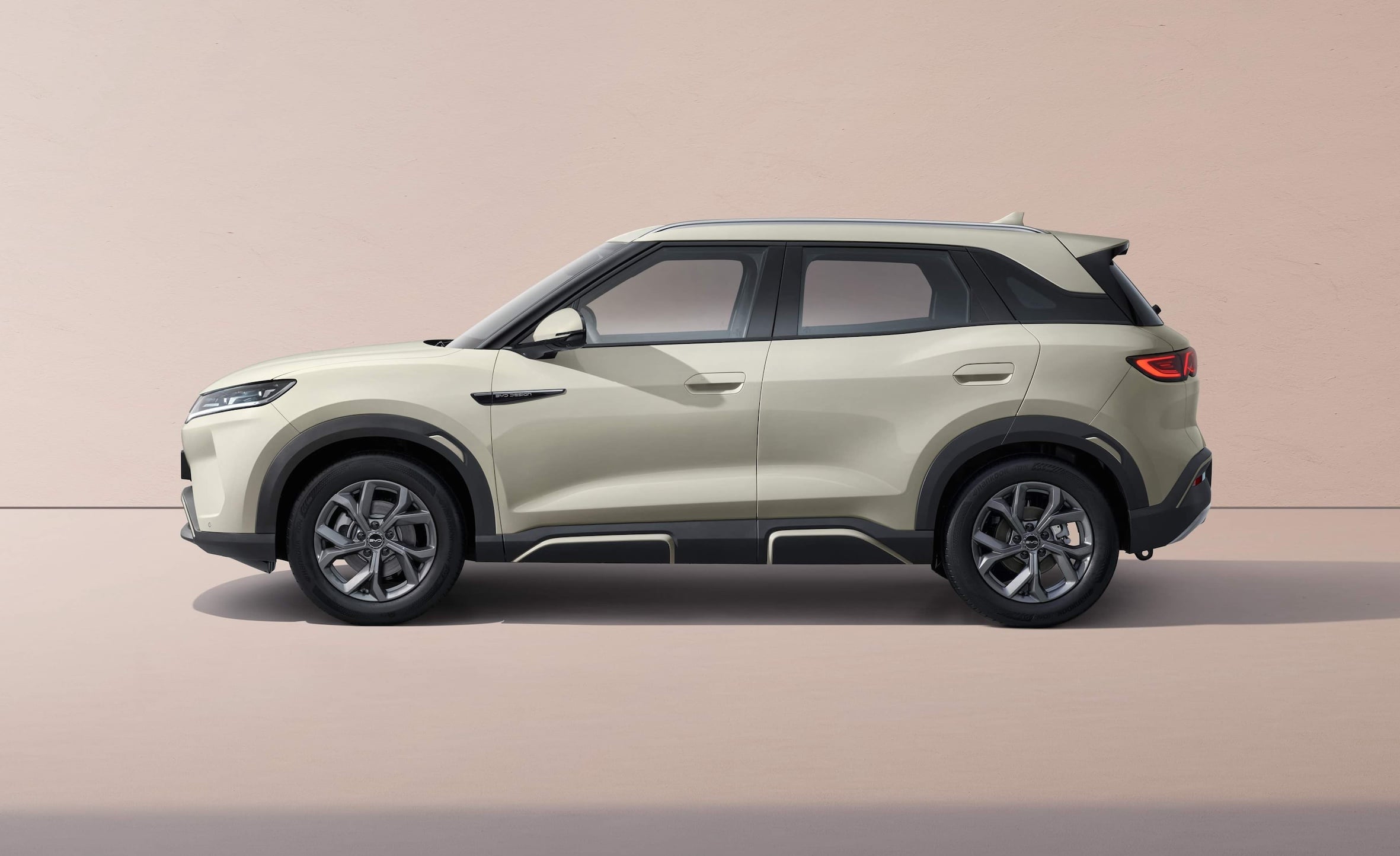
The BYD ATTO 2
Pricing
The fully electric BYD ATTO 2 is available in two principal UK variants: Boost and Comfort. The manufacturer’s UK configurator lists on-the-road starting prices of £30,875 and £34,975 respectively, as checked in November 2026.
| BYD ATTO 2 variant | UK starting OTR price |
|---|---|
| Boost | £30,875 |
| Comfort | £34,975 |
Manufacturer-advertised UK on-the-road starting prices checked in November 2026. Prices may vary with paintwork, accessories, retailer promotions and other applicable conditions. Obtain a current written quotation before ordering.
The Boost is the more affordable option and includes a high level of standard equipment. Its 51.1 kWh battery and 214-mile WLTP range may be sufficient for motorists whose driving is predominantly local and who can charge regularly at home.
The Comfort costs £4,100 more but increases battery capacity to 64.8 kWh and official range to 267 miles. It also supports faster DC charging and offers a larger boot.
Buyers should assess the total cost of ownership rather than the headline purchase price alone. Relevant considerations include finance charges, insurance, depreciation, Vehicle Excise Duty, servicing, tyres and electricity costs.
For drivers acquiring the ATTO 2 through an employer, an electric-car salary-sacrifice or company-car arrangement may provide an alternative ownership structure. The financial benefits depend on individual circumstances, tax rules and the terms of the scheme.
Retailer discounts or finance promotions may reduce the effective transaction price, but comparisons should include the deposit, monthly instalments, agreement term, interest rate, annual mileage allowance and any optional final payment.
Specifications
The following tables summarise the manufacturer-published UK specifications for the fully electric BYD ATTO 2. Figures and equipment may vary by version and are subject to change.
Battery, emissions, charging and warranty
| Specification | Boost | Comfort |
|---|---|---|
| Battery type | BYD Blade Battery (LFP) | BYD Blade Battery (LFP) |
| Battery capacity | 51.1 kWh | 64.8 kWh |
| Electric range (WLTP combined) | 214 miles | 267 miles |
| Electric range (WLTP city) | 302 miles | 375 miles |
| Combined energy consumption (WLTP) | 3.6 miles/kWh | 3.5 miles/kWh |
| Maximum AC charging | 11 kW | 11 kW |
| Maximum DC charging | 82 kW | 155 kW |
| DC charging (10–80%) | 38 minutes | 25 minutes |
| Tailpipe CO₂ emissions | 0 g/km | 0 g/km |
| Basic vehicle warranty | 6 years / 150,000 km | 6 years / 150,000 km |
| Battery warranty | 8 years / up to 250,000 km, subject to terms | 8 years / up to 250,000 km, subject to terms |
Warranty clarification: In January 2026, BYD announced an extension of its Blade Battery warranty to eight years or 250,000 km, whichever comes first, with a minimum 70% battery state-of-health condition and specified exclusions. The announcement includes the UK. Some older manufacturer information may still display the previous mileage allowance, so customers should obtain the current written warranty terms applicable to their vehicle. The battery warranty is separate from basic vehicle and electric drive-unit coverage.
BYD’s electric vehicles also require scheduled inspections and maintenance. Although an electric powertrain has fewer engine-related service components than a petrol or diesel vehicle, tyres, brakes, suspension, cooling systems and other items still require attention.
Buyers should check the applicable maintenance schedule, included servicing benefits and exclusions for their specific vehicle. Any time-limited servicing promotion should be confirmed through a current quotation rather than assumed to apply automatically.
Illustrative UK home charging cost
The cost of charging an electric car depends on the electricity tariff, energy delivered and charging losses. The following example uses a hypothetical tariff of 25p per kWh and an assumed overall charging efficiency of 90%.
For illustration, the calculation uses the manufacturer’s stated battery capacities as the energy basis. Actual electricity consumption and an empty-to-full charging bill will depend on the usable battery capacity, energy buffers and charging conditions.
| Illustrative calculation | Boost | Comfort |
|---|---|---|
| Manufacturer-stated battery capacity | 51.1 kWh | 64.8 kWh |
| Assumed electricity tariff | £0.25/kWh | £0.25/kWh |
| Assumed charging efficiency | 90% | 90% |
| Modelled electricity drawn | 56.8 kWh | 72.0 kWh |
| Illustrative charging cost | £14.19 | £18.00 |
Illustrative calculation, not a manufacturer charging-cost quotation. The model divides the published battery capacity by an assumed 90% charging efficiency and multiplies the result by £0.25/kWh. It should not be interpreted as a precise real-world 0–100% charging cost. Actual costs vary with tariff, battery condition, charging losses, temperature and energy added. Public charging tariffs may be substantially higher.
Owners with access to a suitable off-peak home electricity tariff may reduce regular charging expenditure. Motorists who depend predominantly on public rapid charging should consider the higher electricity costs when comparing the ATTO 2 with alternative vehicles.
Dimensions and practicality
| Specification | Boost | Comfort |
|---|---|---|
| Length | 4,310 mm | 4,310 mm |
| Width (excluding mirrors) | 1,830 mm | 1,830 mm |
| Width (including mirrors) | 2,060 mm | 2,060 mm |
| Height | 1,675 mm | 1,675 mm |
| Wheelbase | 2,620 mm | 2,620 mm |
| Seating capacity | 5 | 5 |
| Boot capacity | 400 litres | 450 litres |
| Boot capacity, rear seats folded | 1,340 litres | 1,370 litres |
| Kerb weight | 1,590 kg | 1,720 kg |
| Maximum unbraked towing capacity | 750 kg | 750 kg |
| Maximum roof load | 50 kg | 75 kg |
| Wheel size | 17 inches | 17 inches |
Performance by variant
| Specification | Boost | Comfort |
|---|---|---|
| Electric motor type | Permanent Magnet Synchronous Motor | Permanent Magnet Synchronous Motor |
| Maximum power | 130 kW | 150 kW |
| Maximum torque | 290 Nm | 310 Nm |
| Drivetrain | Front-wheel drive | Front-wheel drive |
| Transmission | Single-speed automatic | Single-speed automatic |
| Acceleration (0–62 mph) | 7.9 seconds | 7.9 seconds |
| Top speed | 99 mph | 99 mph |
| Front suspension | MacPherson strut | MacPherson strut |
| Rear suspension | Torsion beam | Multi-link |
| Driving modes | Eco, Normal, Sport, Snow | Eco, Normal, Sport, Snow |
Performance and suspension figures reflect the UK specification reviewed. Manufacturer data for vehicles in other markets may differ. Actual acceleration and energy consumption depend on conditions including battery charge, temperature, road surface and vehicle load.
FAQs
| Question | Answer |
|---|---|
| How much does the BYD ATTO 2 cost in the UK? | The manufacturer’s advertised starting on-the-road price is £30,875 for the Boost and £34,975 for the Comfort, as checked in November 2026. Current retailer offers may differ. |
| What is the range of the BYD ATTO 2? | The Boost has an official WLTP combined range of 214 miles, while the Comfort offers 267 miles. |
| What is the real-world range of the BYD ATTO 2? | Real-world range depends on speed, temperature, route and driving conditions. Independent assessments report varying efficiency, particularly during motorway driving. Motorists should not assume they will always achieve the official WLTP range. |
| What battery sizes are available? | The Boost uses a 51.1 kWh battery and the Comfort uses a 64.8 kWh battery. Both use BYD’s LFP Blade Battery technology. |
| Does the BYD ATTO 2 support DC rapid charging? | Yes. The Boost supports up to 82 kW DC and the Comfort up to 155 kW DC, according to the UK manufacturer specification. |
| How long does it take to charge the BYD ATTO 2? | BYD quotes 38 minutes for the Boost and 25 minutes for the Comfort when DC charging from 10% to 80% under specified conditions. |
| Can the BYD ATTO 2 charge at home? | Yes. Both variants support AC charging and can use a compatible dedicated home charger. The maximum practical charging rate depends on the electrical installation. |
| Does the BYD ATTO 2 have a heat pump? | Yes. A heat pump is listed as standard equipment on both UK variants. |
| Does the BYD ATTO 2 have Vehicle-to-Load? | Yes. Both UK variants support V2L, allowing compatible external electrical devices to be powered using an appropriate adaptor. The cable is listed as optional equipment. |
| Is the BYD ATTO 2 a seven-seater? | No. The fully electric BYD ATTO 2 has five seats. |
| How large is the BYD ATTO 2’s boot? | The Boost has 400 litres of boot space and the Comfort has 450 litres. With the rear seats folded, capacity increases to 1,340 and 1,370 litres respectively. |
| Is the BYD ATTO 2 front-wheel drive? | Yes. Both UK electric variants use a single front-mounted electric motor driving the front wheels. |
| What is the BYD ATTO 2 battery warranty? | BYD announced eight-year or 250,000 km Blade Battery coverage in January 2026, subject to applicable warranty conditions, including a battery state-of-health threshold. Buyers should confirm the written warranty for their particular vehicle. |
| Has the BYD ATTO 2 received an independent crash-test rating? | A verified model-specific rating from the relevant independent European crash-testing programme was not established for this review. Buyers should not rely on ratings awarded to other BYD vehicles. |
| What is the difference between the BYD ATTO 2 and ATTO 2 DM-i? | The ATTO 2 covered here is fully electric and has no combustion engine. The ATTO 2 DM-i is a separate plug-in hybrid model using a petrol engine alongside electric propulsion. |
| Which BYD ATTO 2 variant offers the best value? | The Boost is suitable for drivers prioritising purchase price and local journeys. The Comfort is worth considering for those who require additional range, faster DC charging and more luggage space. |
Technical information is based on UK manufacturer data and independently researched vehicle information reviewed in November 2026. Prices, specifications, software functionality, equipment and warranty conditions may change. Buyers should confirm the latest details with BYD or an authorised UK retailer before purchasing.
While e-zoomed uses reasonable efforts to provide accurate and up-to-date information, some of the information provided is gathered from third parties and has not been independently verified by e-zoomed. While the information from the third party sources is believed to be reliable, no warranty, express or implied, is made by e-zoomed regarding the accuracy, adequacy, completeness, legality, reliability or usefulness of any information. This disclaimer applies to both isolated and aggregate uses of this information.
Featured Articles
<!–
Carousel
–>
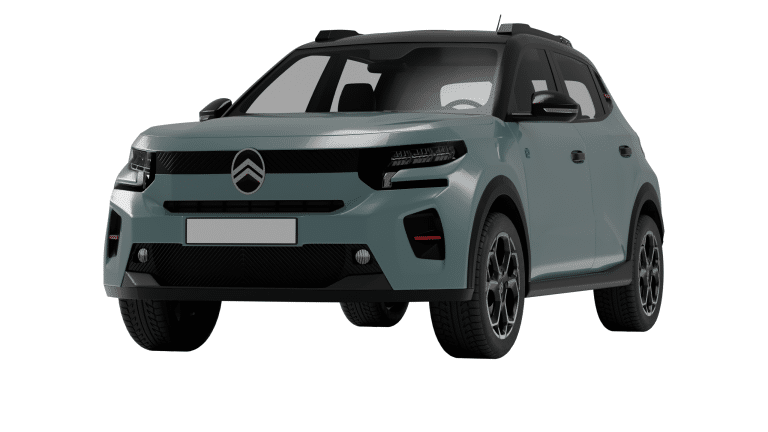
All-Electric Citroën ë-C3: UK Prices, Specs, Range & Buying Guide
The BYD ATTO 2 is a fully electric, five-seat compact SUV designed for motorists seeking a practical electric vehicle for everyday driving. With UK prices starting from £30,875 on…
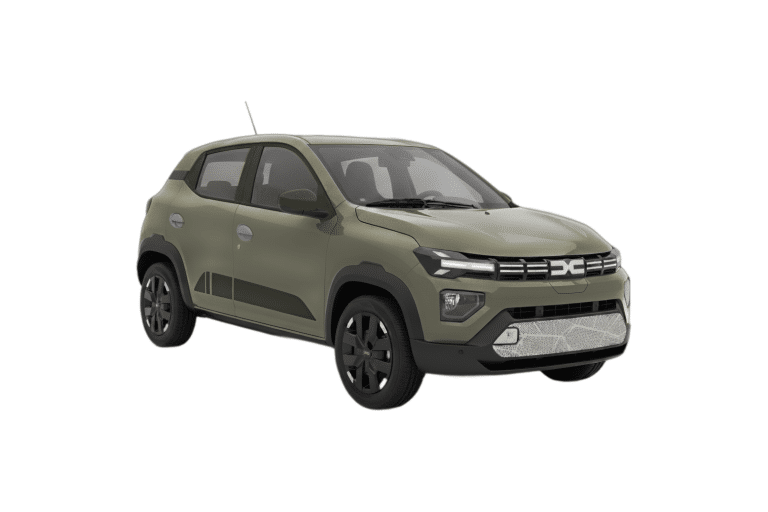
All-Electric Dacia Spring: UK Prices, Specs, Range & Buying Guide
The BYD ATTO 2 is a fully electric, five-seat compact SUV designed for motorists seeking a practical electric vehicle for everyday driving. With UK prices starting from £30,875 on…
All-Electric Hyundai INSTER: UK Prices, Specs, Range & Buying Guide
The BYD ATTO 2 is a fully electric, five-seat compact SUV designed for motorists seeking a practical electric vehicle for everyday driving. With UK prices starting from £30,875 on…
All-Electric Skoda Elroq: UK Prices, Specs, Range & Buying Guide
The BYD ATTO 2 is a fully electric, five-seat compact SUV designed for motorists seeking a practical electric vehicle for everyday driving. With UK prices starting from £30,875 on…
All-Electric Smart #3: UK Prices, Specs, Range & Buying Guide
The BYD ATTO 2 is a fully electric, five-seat compact SUV designed for motorists seeking a practical electric vehicle for everyday driving. With UK prices starting from £30,875 on…
Featured Products
-
<!–
–>Sale!

Best-In-Class Home Solar Bundle Offer (440W All Black Jinko Solar 8 Panels + Sungrow Hybrid Inverter 3.6 kW): price includes product supply only
<!– –>
Original price was: £2,205.95.£2,150.95Current price is: £2,150.95. (Including VAT)
<!–
–>
<!– Term:
NEDC range:
Model Year:
Deposit: £
Miles Per AnnumSubject to status and conditions –>
Brand:SungrowJinko SolarCategory:Solar<!– –>
-
<!–
–>Sale!
Best-In-Class Home Solar Bundle Offer (440W All Black Jinko Solar 8 Panels + Sungrow Battery Storage 6.4 kWh + Sungrow Hybrid Inverter 3.6 kW): price includes product supply only
<!– –>
Original price was: £5,010.95.£4,800.95Current price is: £4,800.95. (Including VAT)
<!–
–>
<!– Term:
NEDC range:
Model Year:
Deposit: £
Miles Per AnnumSubject to status and conditions –>
Brand:SungrowJinko SolarCategory:Solar<!– –>
-
<!–
–>Sale!
Bundle Offer: SUNSYNK LifePO4 Home Battery Storage (5.32 kWh) + SUNSYNK Hybrid Inverter (3.6 kW/Single-Phase): price includes product supply only
<!– –>
Original price was: £3,345.95.£3,299.95Current price is: £3,299.95. (Including VAT)
<!–
–>
<!– Term:
NEDC range:
Model Year:
Deposit: £
Miles Per AnnumSubject to status and conditions –>
Brand:Sun SynkCategory:Battery Storage<!– –>
-
Bundle Offer: Tesla Powerwall 3 Home Battery Storage (13.5 kWh) + Gateway: price includes product supply only
<!– –>
£8,559.95 (Including VAT)
<!–
–>
<!– Term:
NEDC range:
Model Year:
Deposit: £
Miles Per AnnumSubject to status and conditions –>
Brand:TeslaCategory:Battery Storage<!– –>
-
<!–
–>Sale!
Custom-Made Single-Phase EV Charging Cable Type 2 to Type 2 (2m to 50m, 7.4 kW, 32 amp, Black)
<!– –>
Price range: £99.95 through £670.95 (Including VAT)
<!–
–>
<!– Term:
NEDC range:
Model Year:
Deposit: £
Miles Per AnnumSubject to status and conditions –>
Category:CablesType:Type 2Length (m):5 m7.5 m10 m3.5 m12.5 m15 m20 m17.5 m2 m22.5 m25 m30 m35 m40 m45 m50 mCurrent (amp):32 ampPhase:Single Phase (7.2kW)<!– –>
This product has multiple variants. The options may be chosen on the product page -
Untethered Ohme ePod Home Smart EV Charger (7.4 kW): price includes product only
<!– –>
£645.95 (Including VAT)
<!–
–>
<!– Term:
NEDC range:
Model Year:
Deposit: £
Miles Per AnnumSubject to status and conditions –>
Brand:OhmeCategory:EV Charging PointsCustomer type:ResidentialPower:7.4 kWCable:UntetheredPhase:Single Phase<!– –>
The post All-Electric BYD ATTO 2 (2026): UK Prices, Specs, Range & Buying Guide appeared first on Ezoomed.