
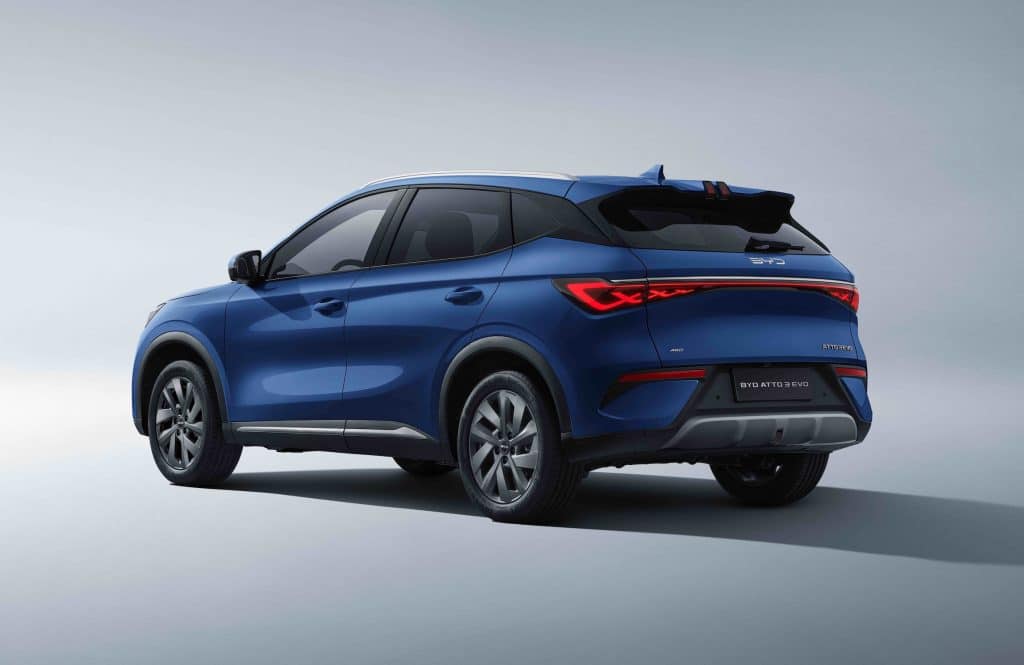
The BYD ATTO 3 EVO is a fully electric, five-seat family SUV that introduces substantial improvements over the original ATTO 3. With UK prices starting from £38,990 on the road, an official WLTP driving range of up to 316 miles and 220 kW DC rapid charging, the ATTO 3 EVO combines everyday practicality with a significantly upgraded electric powertrain.
Available in two UK variants, Design and Excellence, the ATTO 3 EVO uses BYD’s 74.8 kWh lithium iron phosphate Blade Battery with Cell-to-Body construction. Buyers can choose between a 230 kW rear-wheel-drive model and a more powerful 330 kW all-wheel-drive version. Both benefit from an upgraded infotainment system, a heat pump and generous standard equipment.
The ATTO 3 EVO competes in the increasingly competitive electric family SUV segment, alongside models such as the Skoda Elroq, Hyundai Kona Electric, Kia EV3, Renault Scenic E-Tech and Volvo EX40.
In this e-zoomed guide, we examine the BYD ATTO 3 EVO’s UK prices, battery technology, driving range, charging capabilities, practicality, performance, safety and ownership costs. We also compare the Design and Excellence variants to help buyers determine which offers the most appropriate balance of value, equipment and performance.
At a glance
| Feature | BYD ATTO 3 EVO |
|---|---|
| Vehicle type | Battery electric vehicle (BEV) |
| Body type | Electric family SUV |
| UK availability | Available through BYD’s UK retail network |
| UK starting price | From £38,990 OTR |
| Available variants | Design / Excellence |
| Seating capacity | 5 |
| Battery capacity | 74.8 kWh |
| Battery chemistry | Lithium iron phosphate (LFP) |
| Electric range (WLTP combined) | 292–316 miles |
| Maximum motor power | 230 kW / 330 kW |
| Maximum torque | 380 Nm / 560 Nm |
| Drivetrain | Rear-wheel drive / all-wheel drive |
| Acceleration (0–62 mph) | 5.5 seconds / 3.9 seconds |
| Top speed | 111 mph / 124 mph (UK technical specification) |
| Maximum AC charging | 11 kW |
| Maximum DC charging | 220 kW |
| DC charging (10–80%) | 25 minutes |
| Boot capacity | 490 litres |
| Front luggage compartment | 101 litres in the detailed UK specification |
| Maximum braked towing capacity | 1,500 kg |
| Tailpipe CO₂ emissions | 0 g/km |
According to BYD’s UK manufacturer data reviewed in November 2026. Prices, specifications and equipment are subject to change. The detailed UK specifications quote 316 miles for the maximum combined WLTP range, although an earlier announcement quoted 317 miles. A separate manufacturer summary also lists a different front luggage capacity. WLTP figures are measured under standardised conditions and do not guarantee real-world range.
Table of Contents
Pros & cons
| Pros | Cons |
|---|---|
| 1. Excellent rapid-charging capability: Both variants support up to 220 kW DC charging, with a manufacturer-quoted 10–80% charging time of 25 minutes under suitable conditions. | 1. Driving dynamics: Independent assessments have highlighted limitations in steering response, suspension control and body movement during more demanding driving. |
| 2. Improved practicality: A 490-litre rear boot, additional front luggage compartment, five-seat cabin and 1,500 kg braked towing capacity make the ATTO 3 EVO suitable for family use. | 2. Range versus performance compromise: The more powerful Excellence has a shorter official range of 292 miles, compared with 316 miles for the Design. |
| 3. Generous equipment and strong performance: Both variants include a heat pump, large infotainment display, connected technology, heated and ventilated front seats and advanced driver-assistance features. | 3. Touchscreen-heavy controls: Some independent reviews have criticised the reliance on digital menus for everyday functions and the calibration of certain vehicle controls. |
Sign up to the e-zoomed Electric Living newsletter
About BYD: The company behind the ATTO 3 EVO
BYD, which stands for Build Your Dreams, is a Chinese multinational technology and automotive company founded in 1994. Initially specialising in rechargeable batteries, the business subsequently expanded into electric vehicles, plug-in hybrids, renewable energy, electronics and related technologies.
Battery development remains a central part of BYD’s automotive strategy. The manufacturer designs and produces its own Blade Battery technology and integrates batteries, electric motors and power electronics into its vehicle platforms.
BYD entered the UK passenger-car market in 2023 with the original ATTO 3 electric SUV. Since then, the company has expanded its British electric vehicle range to include models such as the DOLPHIN, DOLPHIN SURF, ATTO 2, SEAL and SEALION 7.
The ATTO 3 EVO was introduced in February 2026 and became available to order in the UK in April 2026. It represents a substantial technical evolution of the original model, with changes to the electric powertrain, battery integration, charging architecture, suspension, technology and equipment.
Although the exterior retains the familiar ATTO 3 proportions, the underlying technical changes are significant. These reflect the increasing expectations of electric vehicle buyers for longer driving range, faster charging and improved practicality.
Meet the BYD ATTO 3 EVO
Overview
The BYD ATTO 3 EVO is a mid-size electric family SUV measuring 4,455 mm in length, 1,875 mm in width excluding mirrors and 1,615 mm in height. Its 2,720 mm wheelbase helps provide generous accommodation for five passengers.
Compared with the original ATTO 3, the EVO introduces revised front and rear bumpers, updated side skirts, a redesigned rear spoiler and new 18-inch alloy wheels. These changes give the vehicle a more contemporary appearance without significantly altering its exterior dimensions.
More significant changes are found beneath the bodywork. The updated BYD e-Platform 3.0 architecture incorporates Cell-to-Body battery construction and a revised drivetrain layout. The earlier ATTO 3 was front-wheel drive, whereas the EVO is available with rear-wheel drive or all-wheel drive.
The Design uses a single rear-mounted electric motor producing 230 kW. The Excellence adds an electric motor on the front axle, increasing total power to 330 kW and providing all-wheel-drive capability.
Both variants share the same 74.8 kWh Blade Battery, high-power charging capability and major cabin technology. The principal differences concern drivetrain, performance and selected comfort features.
Published independent assessments generally recognise the EVO’s improvements in equipment, practicality and charging capability. However, some reviewers consider the suspension and steering less refined than those of certain competing electric SUVs, particularly when driven enthusiastically.
The ATTO 3 EVO therefore presents an interesting combination of substantial electric performance and family practicality, although the driving experience may not appeal equally to every buyer.
Battery & range
The BYD ATTO 3 EVO uses a 74.8 kWh Blade Battery with lithium iron phosphate (LFP) chemistry. This represents an increase of 14.4 kWh in manufacturer-stated battery capacity compared with the original ATTO 3.
LFP battery chemistry does not require nickel or cobalt in its cathode materials and is widely recognised for its durability and thermal-stability characteristics. However, battery longevity also depends on factors such as temperature, charging patterns and the battery management system.
The ATTO 3 EVO uses BYD’s Cell-to-Body (CTB) construction, integrating the battery into the vehicle’s structural design. This approach supports efficient packaging and allows the battery assembly to contribute to overall body rigidity.
According to the detailed UK manufacturer data, the rear-wheel-drive Design has an official WLTP combined range of 316 miles, while the all-wheel-drive Excellence offers 292 miles.
| Battery and range | Design | Excellence |
|---|---|---|
| Battery capacity | 74.8 kWh | 74.8 kWh |
| Battery chemistry | LFP | LFP |
| WLTP combined range | 316 miles | 292 miles |
| WLTP city range | 441 miles | 391 miles |
| Drivetrain | Rear-wheel drive | All-wheel drive |
The Worldwide Harmonised Light Vehicle Test Procedure (WLTP) measures energy consumption and driving range under standardised conditions. These results are useful for comparing electric cars but do not guarantee the distance achievable under every driving condition.
The Design’s 24-mile range advantage reflects differences in drivetrain, vehicle weight and the energy requirements of the two configurations. Its single-motor layout is likely to be more suitable for buyers prioritising range over maximum acceleration.
Real-world range depends on motorway speed, external temperature, climate-control usage, terrain, driving style and vehicle load. Driving continuously at higher speeds or in cold weather can reduce range compared with official WLTP figures.
The standard heat pump can help manage cabin heating more efficiently in suitable conditions, reducing the energy required for climate control. Nevertheless, it does not eliminate the range reduction associated with winter driving.
Independent road tests have identified improvements in the ATTO 3 EVO’s electric range compared with its predecessor, although efficiency has received mixed assessments relative to some competitors. Motorists undertaking longer journeys should therefore plan around realistic energy consumption and available charging infrastructure.
For buyers frequently travelling longer distances, the Design’s higher WLTP range and lower purchase price make it particularly attractive.
Charging
Charging is one of the BYD ATTO 3 EVO’s most significant improvements over the original model. Both UK variants support alternating-current (AC) and direct-current (DC) charging, with a maximum DC charging capability of 220 kW.
BYD describes the vehicle as using an upgraded high-voltage charging architecture, enabling faster energy replenishment than the previous ATTO 3. Under suitable conditions, the manufacturer quotes a 10–80% DC charging time of just 25 minutes.
Both variants also have an 11 kW onboard AC charger. Using a compatible three-phase AC supply, BYD quotes approximately eight hours for charging from 0% to 100%.
| Charging specification | Design | Excellence |
|---|---|---|
| Maximum AC charging power | 11 kW | 11 kW |
| AC charging (0–100%, 11 kW three-phase) | 8 hours | 8 hours |
| Maximum DC charging power | 220 kW | 220 kW |
| DC charging (10–80%) | 25 minutes | 25 minutes |
| AC connector | Type 2 | Type 2 |
| DC connector | CCS2 | CCS2 |
Manufacturer-quoted charging figures under specified test conditions. The 25-minute DC charging result assumes a suitable high-power charger and favourable battery conditions. Actual charging times vary with battery temperature, state of charge, charger capability and other factors. Peak charging power is not sustained throughout the entire session.
Most UK homes use a single-phase electricity supply, with a dedicated home EV charger commonly providing up to approximately 7.4 kW, subject to the installation. An 11 kW onboard AC charger does not mean that every home charging point can supply 11 kW.
For everyday ownership, a suitable home charger can make charging convenient, particularly when combined with a compatible off-peak EV electricity tariff. The time required depends on how much energy must be replenished rather than simply the battery’s full capacity.
On longer journeys, drivers can use public CCS-compatible DC charging stations. The ATTO 3 EVO’s 220 kW maximum allows it to benefit from suitably powerful public chargers, although the charging speed will depend on the vehicle and charging conditions.
Charging from 80% towards 100% often takes proportionately longer as the vehicle reduces the charging rate to protect the battery. Consequently, planning charging stops around the energy needed to reach the next destination can be more time-efficient than always charging to full.
The vehicle also supports Vehicle-to-Load (V2L), allowing the battery to supply electricity to compatible external appliances through an appropriate adaptor. BYD quotes a V2L output of up to 3.3 kW. Users should observe the manufacturer’s equipment and electrical safety requirements.
Practicality
The BYD ATTO 3 EVO is designed to accommodate five occupants and provide useful luggage capacity for family life. Its 2,720 mm wheelbase contributes to passenger space, while the revised battery and drivetrain packaging improve overall practicality.
One of the principal improvements is the rear boot, which has increased to 490 litres, approximately 50 litres more than the earlier ATTO 3. Folding the rear seats expands luggage capacity to 1,360 litres.
The rear seats use a 60:40 split-folding arrangement, allowing owners to balance passenger accommodation with longer or bulkier items.
The ATTO 3 EVO also introduces a front luggage compartment beneath the bonnet. The detailed February 2026 UK specification quotes 101 litres, although another UK manufacturer summary lists 95 litres. This difference should be confirmed for the particular production vehicle.
Front luggage storage can be useful for items such as charging cables or smaller bags, allowing the rear boot to remain available for larger luggage.
The cabin provides electrically adjustable front seats, heating and ventilation, rear air-conditioning outlets, cup holders and several storage compartments. The elevated seating position and large windows contribute to everyday usability.
Another practical advantage is the manufacturer-rated maximum braked towing capacity of 1,500 kg. This may make the vehicle suitable for towing certain trailers or caravans, provided all relevant weight limits are respected. Towing can substantially increase electricity consumption and reduce available driving range.
Although the ATTO 3 EVO provides a spacious cabin, its 2,060 mm width including mirrors is worth considering for motorists regularly using narrow garages, parking bays or restricted urban roads.
Technology & equipment
The BYD ATTO 3 EVO features an extensively updated cabin with a strong emphasis on digital technology, connectivity and convenience.
Both UK variants include a 15.6-inch central touchscreen and an 8.8-inch digital instrument display. The infotainment system incorporates built-in Google services, including Google Maps, Google Assistant and access to compatible applications through Google Play.
Apple CarPlay and Android Auto compatibility are also included, allowing drivers to connect supported smartphones and access selected applications.
The cabin includes a 50 W wireless smartphone charging pad with an integrated cooling function, four USB-C ports, an eight-speaker audio system and ambient lighting. Actual wireless charging power depends on the connected device and operating conditions.
Both variants offer electrically adjustable front seats with heating and ventilation, adjustable driver lumbar support, a heated steering wheel, dual-zone climate control, a heat pump and a powered tailgate.
The Design also includes front and rear parking sensors, a 360-degree camera, keyless entry, digital vehicle-key functionality and a comprehensive package of driver-assistance systems.
The Excellence builds on this equipment by adding a head-up display, heated rear seats and a panoramic sunroof with an electric sunshade. The additional front motor and all-wheel-drive powertrain remain its most significant distinctions.
Connected services and over-the-air updates allow compatible vehicle functions to be maintained or improved through software. Some services may depend on network connectivity, compatible devices or applicable service terms.
While the extensive equipment package is attractive, buyers should assess the operation of the central touchscreen and digital vehicle controls during a test drive. Independent assessments have noted that accessing certain commonly used functions can be less convenient than operating conventional physical switches.
Performance
The BYD ATTO 3 EVO delivers substantially more performance than the original ATTO 3. The revised drivetrain is available in rear-wheel-drive and all-wheel-drive configurations.
The Design uses a rear-mounted permanent magnet synchronous motor producing 230 kW and 380 Nm of maximum torque. According to BYD’s UK data, this version accelerates from 0 to 62 mph in 5.5 seconds.
The Excellence adds an asynchronous electric motor to the front axle, producing a combined maximum output of 330 kW and 560 Nm. This reduces the manufacturer-quoted 0–62 mph acceleration time to just 3.9 seconds.
For a family SUV, these are substantial performance figures. However, outright acceleration is only one aspect of the driving experience. Steering calibration, suspension behaviour, ride comfort and energy efficiency are equally important for everyday use.
Independent road tests have identified the ATTO 3 EVO’s strong acceleration and comfortable cabin as positives. Nevertheless, some assessments have criticised the steering feel, suspension control and body movement during more demanding driving.
The vehicle uses a single-speed transmission and provides immediate electric motor torque without conventional gear changes. Selectable Eco, Normal, Sport and Snow driving modes allow drivers to adjust aspects of vehicle response.
Regenerative braking helps recover some energy during deceleration. Its effectiveness depends on the selected settings, battery conditions and driving situation. Regenerative braking does not eliminate the need for conventional friction brakes.
For most motorists, the rear-wheel-drive Design is likely to provide more than sufficient performance for urban, motorway and intercity travel. The Excellence is better suited to buyers who specifically value all-wheel drive and stronger acceleration.
Safety
The BYD ATTO 3 EVO includes a comprehensive package of passive safety features and advanced driver-assistance systems.
According to the UK manufacturer specification, both variants include seven airbags, comprising driver and front-passenger airbags, a front-centre airbag, front-side airbags and side-curtain airbags.
ISOFIX and i-Size child-seat mounting provisions are listed for the front passenger seat and outer rear seats. Other safety equipment includes electronic stability control, anti-lock braking, tyre-pressure monitoring and occupant-monitoring functions.
The driver-assistance package includes adaptive cruise control, automatic emergency braking, lane-departure assistance, emergency lane-keeping support, blind-spot detection, front and rear cross-traffic alerts, traffic-sign recognition, driver monitoring and a 360-degree camera.
These systems are designed to assist the driver during specific situations. They do not make the vehicle fully autonomous, and the driver remains responsible for operating it safely.
An earlier generation of the BYD ATTO 3 received a five-star rating in an independent European crash-safety assessment published in 2022. However, the ATTO 3 EVO introduces substantial structural and mechanical changes. A separate, verified model-specific crash-test assessment for the EVO has not been established in the information reviewed.
Consequently, the earlier rating should not automatically be treated as an independently confirmed crash-test result for the revised model. Buyers should confirm the latest applicable vehicle-safety information for the specific version they intend to purchase.
The verdict
The BYD ATTO 3 EVO represents a substantial improvement over its predecessor, introducing a larger battery, longer driving range, much faster charging, increased practicality and stronger performance.
Its principal strengths are the 220 kW DC charging capability, well-equipped cabin, improved luggage accommodation and range of up to 316 miles WLTP. The inclusion of a heat pump, Vehicle-to-Load functionality and numerous comfort features across both variants adds further appeal.
The Design provides a particularly attractive balance of performance, driving range and equipment. With 230 kW of motor power and a 5.5-second acceleration time, it offers strong performance without requiring the cost or higher energy demands of the all-wheel-drive Excellence.
The Excellence will appeal to buyers who prioritise additional traction, acceleration and comfort features. However, its shorter official range and higher purchase price should be considered alongside those benefits.
There are also areas for improvement. Independent assessments have highlighted limitations in steering response, suspension control and the usability of certain digital controls. These characteristics make a thorough test drive important, particularly for buyers comparing the ATTO 3 EVO with other family SUVs.
The e-zoomed view: The ATTO 3 EVO deserves serious consideration from UK motorists seeking a well-equipped electric family SUV with strong performance and rapid charging. For most buyers, the Design appears to offer the more balanced proposition, while the Excellence is better suited to those who specifically value all-wheel drive and its additional equipment.
Ultimately, the best choice will depend on budget, annual mileage, charging access and the importance placed on performance versus driving efficiency.
Gallery
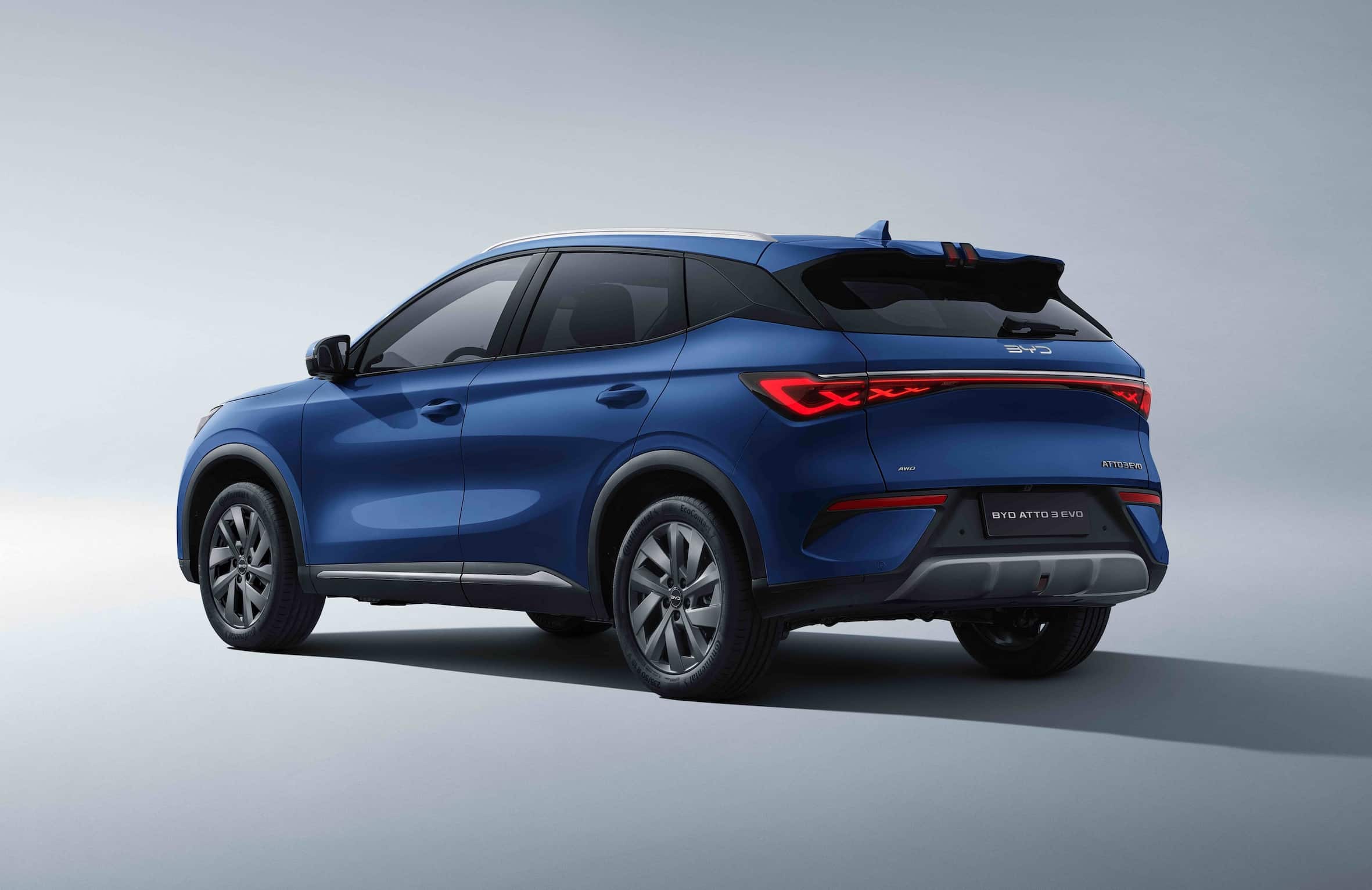
All-Electric BYD ATTO 3 EVO
Pricing
The BYD ATTO 3 EVO is available in two principal UK variants: Design and Excellence. BYD announced on-the-road prices of £38,990 and £42,730 respectively in March 2026.
| BYD ATTO 3 EVO variant | Published UK OTR price |
|---|---|
| Design | £38,990 |
| Excellence | £42,730 |
Manufacturer-announced UK on-the-road prices, checked against published UK information in November 2026. Prices may vary with paintwork, accessories, retailer offers and other conditions. A current written quotation should be obtained before ordering. Expired promotional discounts are not included.
The Design is the more affordable version and includes the 74.8 kWh battery, 316-mile WLTP range, rear-wheel drive and comprehensive standard equipment.
The Excellence costs £3,740 more and adds all-wheel drive, higher motor output, a head-up display, heated rear seats and a panoramic sunroof with an electric sunshade.
BYD offers six exterior paint colours, with Iris Blue listed as the standard finish. Other paint colours may attract additional charges. Buyers should confirm colour and equipment pricing with an authorised UK retailer.
Prospective owners should assess the total cost of ownership rather than focusing solely on the purchase price. Insurance, depreciation, Vehicle Excise Duty, charging, servicing, tyres and finance charges can all influence long-term costs.
For eligible employees, acquiring an electric car through an employer’s salary-sacrifice scheme or company-car arrangement may offer an alternative financing structure. The financial outcome depends on the applicable tax rules, scheme conditions and individual circumstances.
Retailer finance promotions may alter the amount payable. Buyers should compare the deposit, agreement term, monthly payments, representative APR, annual mileage restrictions and any optional final payment before committing to an agreement.
Specifications
The following tables summarise BYD’s published UK technical specifications for the ATTO 3 EVO. Equipment and specifications may change, and buyers should confirm the precise configuration of their chosen vehicle.
Battery, emissions, charging and warranty
| Specification | Design | Excellence |
|---|---|---|
| Battery type | BYD Blade Battery (LFP) | BYD Blade Battery (LFP) |
| Battery capacity | 74.8 kWh | 74.8 kWh |
| WLTP combined range | 316 miles | 292 miles |
| WLTP city range | 441 miles | 391 miles |
| Maximum AC charging | 11 kW | 11 kW |
| Maximum DC charging | 220 kW | 220 kW |
| DC charging (10–80%) | 25 minutes | 25 minutes |
| Tailpipe CO₂ emissions | 0 g/km | 0 g/km |
| Basic vehicle warranty | 6 years / 150,000 km | 6 years / 150,000 km |
| Electric drive-unit warranty | 8 years / 150,000 km, subject to terms | 8 years / 150,000 km, subject to terms |
| Battery warranty | 8 years / 250,000 km, subject to terms | 8 years / 250,000 km, subject to terms |
Battery warranty clarification: BYD’s 2026 ATTO 3 EVO information specifies eight years or 250,000 km of battery coverage, whichever comes first, together with a minimum 70% battery state-of-health condition and applicable exclusions. Some older UK warranty information still displays a lower mileage limit. Buyers should obtain the current written warranty terms for their specific vehicle.
The ATTO 3 EVO requires scheduled servicing and maintenance. Although battery-electric vehicles have fewer conventional engine-related maintenance requirements, components such as tyres, brakes, suspension, filters and cooling systems still need attention.
Owners should confirm the applicable service schedule, warranty conditions and any maintenance-plan benefits before purchasing. A longer battery warranty does not mean that every vehicle component is covered for the same period.
Illustrative UK home charging cost
The cost of charging an electric vehicle depends on the electricity tariff, the amount of energy added and charging losses. The following illustration uses a hypothetical electricity tariff of 25p per kWh and assumes an overall charging efficiency of 90%.
For consistency, the calculation uses the manufacturer’s stated 74.8 kWh battery capacity as the modelled energy basis. This is not necessarily identical to the usable battery capacity, so the results should not be interpreted as precise empty-to-full charging bills.
| Illustrative calculation | Design | Excellence |
|---|---|---|
| Manufacturer-stated battery capacity | 74.8 kWh | 74.8 kWh |
| Assumed electricity tariff | £0.25/kWh | £0.25/kWh |
| Assumed charging efficiency | 90% | 90% |
| Modelled electricity drawn | 83.1 kWh | 83.1 kWh |
| Illustrative charging cost | £20.78 | £20.78 |
Illustrative calculation only, not a manufacturer charging-cost quotation. The stated battery capacity is divided by an assumed charging efficiency of 90%, then multiplied by £0.25/kWh. Actual costs depend on usable capacity, electricity tariff, battery condition, temperature, charging losses and the energy added. Public charging tariffs may be substantially higher.
Owners with access to a suitable off-peak home electricity tariff may reduce routine charging expenditure. Motorists who depend primarily on public rapid charging should consider local tariffs and charger availability when estimating total ownership costs.
Dimensions and practicality
| Specification | Design | Excellence |
|---|---|---|
| Length | 4,455 mm | 4,455 mm |
| Width (excluding mirrors) | 1,875 mm | 1,875 mm |
| Width (including mirrors) | 2,060 mm | 2,060 mm |
| Height | 1,615 mm | 1,615 mm |
| Wheelbase | 2,720 mm | 2,720 mm |
| Seating capacity | 5 | 5 |
| Boot capacity | 490 litres | 490 litres |
| Boot capacity, rear seats folded | 1,360 litres | 1,360 litres |
| Front luggage compartment | 101 litres (detailed UK data) | 101 litres (detailed UK data) |
| Kerb weight | 1,880 kg | 1,990 kg |
| Minimum turning radius | 5.4 m | 5.4 m |
| Maximum unbraked towing capacity | 750 kg | 750 kg |
| Maximum braked towing capacity | 1,500 kg | 1,500 kg |
| Wheel size | 18 inches | 18 inches |
The detailed February 2026 UK specification lists a 101-litre front luggage compartment, whereas another manufacturer UK summary quotes 95 litres. Confirm the applicable figure for the vehicle being purchased. All other dimensions are based on the reviewed UK technical specification.
Performance by variant
| Specification | Design | Excellence |
|---|---|---|
| Rear motor type | Permanent Magnet Synchronous Motor | Permanent Magnet Synchronous Motor |
| Front motor type | N/A | AC asynchronous motor |
| Maximum power | 230 kW | 330 kW |
| Maximum torque | 380 Nm | 560 Nm |
| Drivetrain | Rear-wheel drive | All-wheel drive |
| Transmission | Single-speed automatic | Single-speed automatic |
| Acceleration (0–62 mph) | 5.5 seconds | 3.9 seconds |
| Top speed (detailed UK specification) | 111 mph | 124 mph |
| Front suspension | Double-pivot MacPherson strut | Double-pivot MacPherson strut |
| Rear suspension | Multi-link | Multi-link |
| Driving modes | Eco, Normal, Sport, Snow | Eco, Normal, Sport, Snow |
Performance figures are based on the detailed UK technical specification. Other manufacturer summaries quote 112 mph for the Design, compared with 111 mph in the detailed specification. Actual vehicle performance varies with battery conditions, temperature, road surface, load and other factors.
FAQs
| Question | Answer |
|---|---|
| How much does the BYD ATTO 3 EVO cost in the UK? | The published UK on-the-road prices are £38,990 for the Design and £42,730 for the Excellence, based on manufacturer information reviewed in November 2026. Current retailer quotations may differ. |
| What is the official range of the BYD ATTO 3 EVO? | The detailed UK specification gives a WLTP combined range of 316 miles for the Design and 292 miles for the Excellence. |
| What is the real-world range? | Actual range depends on speed, temperature, route, climate-control use and driving conditions. Independent assessments indicate that efficiency and range can vary substantially between urban and motorway journeys. |
| What battery does the BYD ATTO 3 EVO use? | Both variants use BYD’s 74.8 kWh LFP Blade Battery with Cell-to-Body construction. |
| How fast can the BYD ATTO 3 EVO charge? | Both versions support up to 220 kW DC charging. BYD quotes a 10–80% charging time of 25 minutes under suitable conditions. |
| Can the BYD ATTO 3 EVO charge at home? | Yes. Both variants have an 11 kW onboard AC charger and can use a compatible dedicated home charging point. Actual charging power depends on the electrical installation. |
| What is the difference between Design and Excellence? | The Design has rear-wheel drive and a 316-mile WLTP range. The Excellence adds all-wheel drive, stronger performance, a head-up display, heated rear seats and a panoramic sunroof, but has a shorter 292-mile WLTP range. |
| Is the BYD ATTO 3 EVO all-wheel drive? | The Excellence is all-wheel drive. The Design uses rear-wheel drive. |
| How fast is the BYD ATTO 3 EVO? | The Design accelerates from 0 to 62 mph in 5.5 seconds, while the Excellence achieves the same speed in 3.9 seconds, according to the manufacturer. |
| Does the BYD ATTO 3 EVO have a heat pump? | Yes. A heat pump is standard on both UK variants. |
| Does the BYD ATTO 3 EVO have Vehicle-to-Load? | Yes. Both variants support V2L with a manufacturer-stated output of up to 3.3 kW, subject to suitable equipment and operating conditions. |
| How much luggage space does the BYD ATTO 3 EVO have? | The rear boot offers 490 litres, increasing to 1,360 litres with the rear seats folded. Additional front storage is available, with the detailed UK specification listing 101 litres. |
| Can the BYD ATTO 3 EVO tow a caravan? | The manufacturer lists a maximum braked towing capacity of 1,500 kg. Buyers must confirm the trailer’s weight and observe all vehicle and legal towing limits. |
| What is the battery warranty? | BYD’s 2026 model information states eight years or 250,000 km, whichever comes first, subject to applicable warranty terms and a minimum battery state-of-health condition. |
| Has the BYD ATTO 3 EVO been independently crash-tested? | The earlier ATTO 3 received a five-star European safety rating in 2022. A separate model-specific independent crash-test result for the substantially updated EVO was not verified during this review. |
| Is the ATTO 3 EVO the same as the original ATTO 3? | No. The EVO introduces a substantially updated electric architecture, larger battery, rear-wheel-drive or all-wheel-drive options, much faster DC charging, stronger performance and improved practicality. |
| Which BYD ATTO 3 EVO variant offers the best value? | The Design offers the longer WLTP range, lower price and strong standard equipment. The Excellence is more suitable for buyers who prioritise all-wheel drive and higher performance. |
Information is based on UK manufacturer specifications, subsequent UK announcements and independently researched vehicle information reviewed in November 2026. Prices, equipment, charging performance and warranty terms may change. Buyers should confirm the latest vehicle-specific details with BYD or an authorised UK retailer before purchasing.
While e-zoomed uses reasonable efforts to provide accurate and up-to-date information, some of the information provided is gathered from third parties and has not been independently verified by e-zoomed. While the information from the third party sources is believed to be reliable, no warranty, express or implied, is made by e-zoomed regarding the accuracy, adequacy, completeness, legality, reliability or usefulness of any information. This disclaimer applies to both isolated and aggregate uses of this information.
Featured Articles
<!–
Carousel
–>
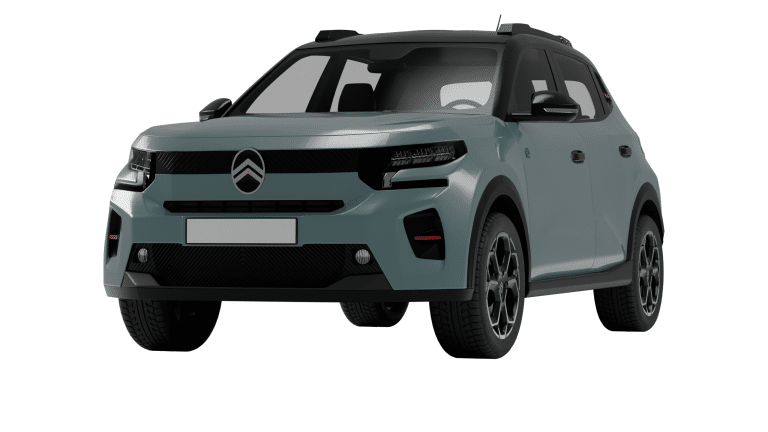
All-Electric Citroën ë-C3: UK Prices, Specs, Range & Buying Guide
The BYD ATTO 3 EVO is a fully electric, five-seat family SUV that introduces substantial improvements over the original ATTO 3. With UK prices starting from £38,990 on the…
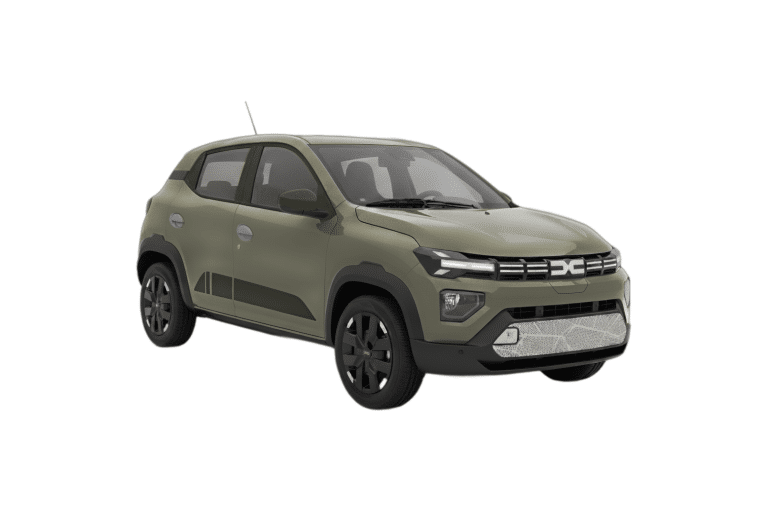
All-Electric Dacia Spring: UK Prices, Specs, Range & Buying Guide
The BYD ATTO 3 EVO is a fully electric, five-seat family SUV that introduces substantial improvements over the original ATTO 3. With UK prices starting from £38,990 on the…

All-Electric Hyundai INSTER: UK Prices, Specs, Range & Buying Guide
The BYD ATTO 3 EVO is a fully electric, five-seat family SUV that introduces substantial improvements over the original ATTO 3. With UK prices starting from £38,990 on the…
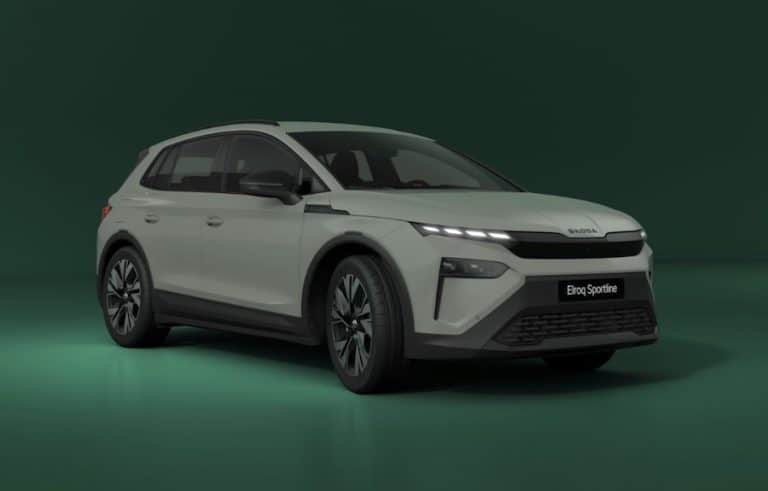
All-Electric Skoda Elroq: UK Prices, Specs, Range & Buying Guide
The BYD ATTO 3 EVO is a fully electric, five-seat family SUV that introduces substantial improvements over the original ATTO 3. With UK prices starting from £38,990 on the…
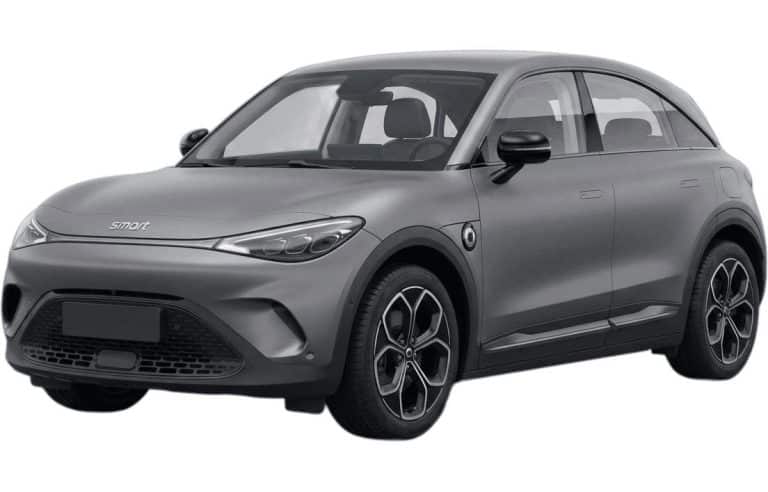
All-Electric Smart #3: UK Prices, Specs, Range & Buying Guide
The BYD ATTO 3 EVO is a fully electric, five-seat family SUV that introduces substantial improvements over the original ATTO 3. With UK prices starting from £38,990 on the…
Featured Products
-
<!–
–>Sale!

Best-In-Class Home Solar Bundle Offer (440W All Black Jinko Solar 8 Panels + Sungrow Hybrid Inverter 3.6 kW): price includes product supply only
<!– –>
Original price was: £2,205.95.£2,150.95Current price is: £2,150.95. (Including VAT)
<!–
–>
<!– Term:
NEDC range:
Model Year:
Deposit: £
Miles Per AnnumSubject to status and conditions –>
Brand:SungrowJinko SolarCategory:Solar<!– –>
-
<!–
–>Sale!
Best-In-Class Home Solar Bundle Offer (440W All Black Jinko Solar 8 Panels + Sungrow Battery Storage 6.4 kWh + Sungrow Hybrid Inverter 3.6 kW): price includes product supply only
<!– –>
Original price was: £5,010.95.£4,800.95Current price is: £4,800.95. (Including VAT)
<!–
–>
<!– Term:
NEDC range:
Model Year:
Deposit: £
Miles Per AnnumSubject to status and conditions –>
Brand:SungrowJinko SolarCategory:Solar<!– –>
-
<!–
–>Sale!

Bundle Offer: SUNSYNK LifePO4 Home Battery Storage (5.32 kWh) + SUNSYNK Hybrid Inverter (3.6 kW/Single-Phase): price includes product supply only
<!– –>
Original price was: £3,345.95.£3,299.95Current price is: £3,299.95. (Including VAT)
<!–
–>
<!– Term:
NEDC range:
Model Year:
Deposit: £
Miles Per AnnumSubject to status and conditions –>
Brand:Sun SynkCategory:Battery Storage<!– –>
-
Bundle Offer: Tesla Powerwall 3 Home Battery Storage (13.5 kWh) + Gateway: price includes product supply only
<!– –>
£8,559.95 (Including VAT)
<!–
–>
<!– Term:
NEDC range:
Model Year:
Deposit: £
Miles Per AnnumSubject to status and conditions –>
Brand:TeslaCategory:Battery Storage<!– –>
-
<!–
–>Sale!
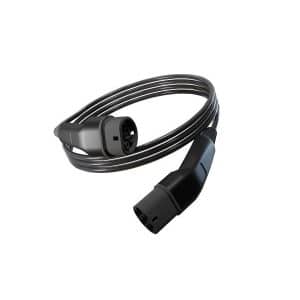
Custom-Made Single-Phase EV Charging Cable Type 2 to Type 2 (2m to 50m, 7.4 kW, 32 amp, Black)
<!– –>
Price range: £99.95 through £670.95 (Including VAT)
<!–
–>
<!– Term:
NEDC range:
Model Year:
Deposit: £
Miles Per AnnumSubject to status and conditions –>
Category:CablesType:Type 2Length (m):5 m7.5 m10 m3.5 m12.5 m15 m20 m17.5 m2 m22.5 m25 m30 m35 m40 m45 m50 mCurrent (amp):32 ampPhase:Single Phase (7.2kW)<!– –>
This product has multiple variants. The options may be chosen on the product page -
Untethered Ohme ePod Home Smart EV Charger (7.4 kW): price includes product only
<!– –>
£645.95 (Including VAT)
<!–
–>
<!– Term:
NEDC range:
Model Year:
Deposit: £
Miles Per AnnumSubject to status and conditions –>
Brand:OhmeCategory:EV Charging PointsCustomer type:ResidentialPower:7.4 kWCable:UntetheredPhase:Single Phase<!– –>

The post All-Electric BYD ATTO 3 EVO (2026): UK Prices, Specs, Range & Buying Guide appeared first on Ezoomed.