
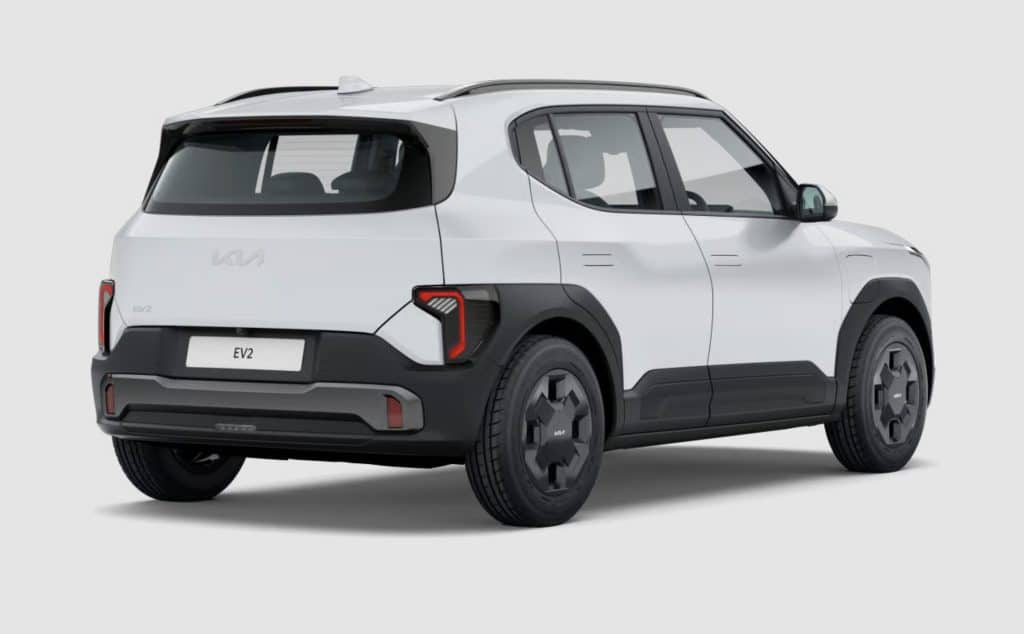
The Kia EV2 is a fully electric, five-seat compact SUV designed to make electric mobility more accessible to UK motorists. With on-the-road list prices starting from £27,995 before applicable grants, an official WLTP driving range of up to 275 miles and a generous equipment package, the EV2 is an important addition to Kia’s expanding electric vehicle range.
Available in four UK versions — Air, First Edition, GT-Line and GT-Line S — the EV2 offers two battery capacities, front-wheel drive, modern infotainment and a comprehensive range of driver-assistance features. The larger 61.0 kWh battery is available in three versions, while the limited-supply First Edition uses a smaller 42.2 kWh battery.
The Kia EV2 competes in the increasingly popular small electric car segment alongside models such as the Renault 4 E-Tech, Hyundai INSTER, Citroën ë-C3, Fiat Grande Panda Electric and BYD DOLPHIN SURF.
In this e-zoomed guide, we examine the Kia EV2’s UK prices, battery technology, electric range, charging times, practicality, performance, safety and ownership costs. We also compare the four variants to assess which provides the most convincing balance of value, driving range and equipment.
At a glance
| Feature | Kia EV2 |
|---|---|
| Vehicle type | Battery electric vehicle (BEV) |
| Body type | Compact electric SUV |
| UK availability | Available through Kia’s UK retail network |
| UK starting list price | From £27,995 OTR before applicable grants |
| UK variants | Air, First Edition, GT-Line, GT-Line S |
| Seating capacity | 5 |
| Battery capacity | 42.2 kWh / 61.0 kWh |
| Battery chemistry | LFP / NMC, depending on variant |
| Electric range (WLTP combined) | 195–275 miles |
| Electric motor power | 99.5–107.8 kW |
| Maximum torque | 250 Nm |
| Drivetrain | Front-wheel drive |
| Acceleration (0–62 mph) | 8.7–9.7 seconds |
| Top speed | 100 mph |
| Maximum AC charging | 11 kW |
| Maximum DC charging | Up to 118 kW |
| DC charging (10–80%) | 29–31 minutes under suitable conditions |
| Boot capacity | 362 litres |
| Independent safety rating | 5 stars (2026) |
| Tailpipe CO₂ emissions | 0 g/km |
According to Kia’s UK manufacturer data reviewed in November 2026. Prices are published on-the-road list prices before applicable Electric Car Grant deductions. Battery capacity, range, performance and equipment vary by variant. WLTP figures are measured under standardised conditions and do not guarantee real-world driving range. Charging performance depends on suitable infrastructure and operating conditions.
Table of Contents
Pros & cons
| Pros | Cons |
|---|---|
| 1. Strong driving range and value: The Air offers up to 275 miles WLTP, a competitive starting price and substantial standard equipment. Eligible buyers may also benefit from the UK Electric Car Grant. | 1. Shorter range for the First Edition: The limited-supply First Edition has a smaller 42.2 kWh battery and a 195-mile WLTP range, despite costing more than the Air before grants. |
| 2. Practical and well equipped: Five seats, a 362-litre boot, compact exterior dimensions, heated front seats, modern digital displays and comprehensive safety equipment support everyday family use. | 2. Ride and handling compromises: Independent assessments suggest that steering feedback is limited and ride comfort can deteriorate on uneven roads, particularly with larger wheels. |
| 3. Safety and ownership credentials: A five-star independent European safety rating, seven-year vehicle warranty and eight-year high-voltage battery warranty strengthen the ownership proposition. | 3. Equipment restrictions: Vehicle-to-Load capability is limited to GT-Line S, and the heat pump is an additional-cost option on that version rather than standard across the range. |
Sign up to the e-zoomed Electric Living newsletter
About Kia: The company behind the EV2
Kia is a South Korean automotive manufacturer with a history dating back to 1944. The company is part of Hyundai Motor Group and produces a broad range of passenger vehicles, including conventional petrol and hybrid models alongside an expanding portfolio of battery-electric vehicles.
Kia has developed a substantial presence in the UK automotive market, supported by a nationwide retail and servicing network. Its electric vehicle strategy includes dedicated electric models built around the Electric-Global Modular Platform, commonly known as E-GMP.
The manufacturer’s UK electric range includes vehicles such as the EV3, EV4, EV5, EV6 and EV9, addressing different requirements for size, driving range, equipment and passenger accommodation.
The EV2 represents the smallest and most affordable model in Kia’s dedicated European electric vehicle range. It was initially previewed in concept form in 2025 before the production vehicle was unveiled at the 2026 Brussels Motor Show.
Designed and engineered for European customers, the EV2 is manufactured at Kia’s production facility in Žilina, Slovakia, alongside the EV4. European production forms part of the company’s strategy to make electric vehicles more accessible across different price segments.
The EV2 combines Kia’s established electric vehicle technologies with a compact exterior footprint, aiming to deliver practical family accommodation without the size or purchase price of a larger electric SUV.
Meet the Kia EV2
Overview
The Kia EV2 is a five-door, five-seat compact electric SUV measuring approximately 4,060 mm in length, 1,800 mm in width and 1,575 mm in height for the Air and First Edition. The GT-Line variants are slightly longer and taller because of their exterior styling.
Its upright body design, short overhangs and relatively long 2,565 mm wheelbase are intended to maximise cabin space within a manageable exterior footprint. The styling follows Kia’s Opposites United design philosophy, with distinctive lighting, pronounced wheel arches and strong geometric surfaces.
The EV2 is based on a 400V version of Kia’s E-GMP electric vehicle architecture. It uses a single electric motor driving the front wheels through a single-speed transmission.
Four versions are offered in the UK. The Air, GT-Line and GT-Line S share the larger 61.0 kWh battery, while the limited-supply First Edition uses a smaller 42.2 kWh battery but provides additional equipment compared with the entry-level Air.
The EV2’s design balances urban manoeuvrability with family practicality. Its elevated seating position and relatively large windows help visibility, while the five-seat arrangement makes it more flexible than some entry-level electric cars with only four seats.
Independent driving assessments generally recognise the EV2’s quiet cabin, efficient powertrain, useful driving range and extensive equipment. However, some have highlighted limited steering feedback and less composed suspension behaviour on uneven country roads.
Overall, the EV2 is designed primarily for comfortable, efficient everyday travel rather than high-performance driving. Its combination of compact dimensions and substantial technology is likely to appeal to a broad range of UK motorists.
Battery & range
The Kia EV2 is available with two lithium-ion battery configurations. The limited-supply First Edition uses a 42.2 kWh battery with lithium iron phosphate (LFP) chemistry, while the Air, GT-Line and GT-Line S use a larger 61.0 kWh nickel-manganese-cobalt (NMC) battery.
LFP chemistry is valued for its thermal stability and reduced reliance on nickel and cobalt, while NMC chemistry can provide higher energy density. Battery performance and longevity also depend on factors such as temperature, battery management and charging patterns.
According to Kia’s UK manufacturer data, the Air has the longest official WLTP combined driving range at 275 miles. The GT-Line offers 261 miles and the GT-Line S 257 miles, while the smaller-battery First Edition provides 195 miles.
| Battery and range | Air | First Edition | GT-Line | GT-Line S |
|---|---|---|---|---|
| Battery capacity | 61.0 kWh | 42.2 kWh | 61.0 kWh | 61.0 kWh |
| Battery chemistry | NMC | LFP | NMC | NMC |
| WLTP combined range | 275 miles | 195 miles | 261 miles | 257 miles |
| Motor power | 99.5 kW | 107.8 kW | 99.5 kW | 99.5 kW |
| WLTP combined efficiency | 4.08 miles/kWh | 4.08 miles/kWh | 3.85 miles/kWh | 3.81 miles/kWh |
| Drivetrain | FWD | FWD | FWD | FWD |
Manufacturer-published UK battery capacities, driving ranges and efficiency figures. NMC means nickel-manganese-cobalt; LFP means lithium iron phosphate; FWD means front-wheel drive. The figures represent the specified UK configurations and standardised WLTP test results.
The Worldwide Harmonised Light Vehicle Test Procedure (WLTP) provides a standardised method of assessing vehicle range and electricity consumption. It is useful for comparing electric cars but does not guarantee the same driving range under all conditions.
Real-world range is influenced by factors including motorway speed, external temperature, cabin heating, air-conditioning, terrain, vehicle load and driving style. Continuous high-speed driving and cold weather can reduce the distance achievable between charging stops.
The Air’s longer official range partly reflects its smaller 16-inch wheels and associated efficiency advantages. The GT-Line and GT-Line S use larger 19-inch wheels and have slightly shorter WLTP ranges, despite sharing the same battery capacity.
The First Edition has a shorter official range because it uses a substantially smaller battery. However, it also offers slightly stronger motor output and quicker acceleration than the larger-battery versions.
Independent driving assessments have reported favourable everyday efficiency for the EV2, especially in mixed urban and suburban use. Nevertheless, motorists should plan longer motorway journeys using realistic range assumptions and an appropriate battery reserve.
For buyers undertaking regular longer journeys, the Air offers the highest certified range at the lowest list price. The higher-specification GT-Line versions provide additional comfort and design features in exchange for a modest reduction in official range.
Charging
The Kia EV2 supports alternating-current (AC) charging for home, workplace and destination use, together with direct-current (DC) rapid charging for longer journeys.
All four UK variants have an 11 kW onboard AC charger. The vehicle uses a 400V electrical architecture and supports DC charging at up to 118 kW, according to the manufacturer’s UK information.
With suitable DC charging equipment, Kia quotes a 10–80% charging time of approximately 29 minutes for the First Edition and 30 minutes for the larger-battery Air, GT-Line and GT-Line S models.
| Charging specification | First Edition | 61.0 kWh variants |
|---|---|---|
| Maximum AC charging | 11 kW | 11 kW |
| AC charging (10–100%, 11 kW) | 4 hours 5 minutes | 5 hours 35 minutes |
| Maximum DC charging capability | Up to 118 kW, subject to battery and operating conditions | |
| DC charging (10–80%, suitable high-power charger) | 29 minutes | 30–31 minutes, depending on variant |
| DC charging (10–80%, 50 kW) | 42 minutes | 70 minutes |
| AC connector | Type 2 | Type 2 |
| DC connector | CCS2 | CCS2 |
Manufacturer-quoted charging times under specified conditions. Actual charging power and duration depend on charger output, battery temperature, state of charge and other factors. Maximum charging power is not maintained throughout the entire charging session.
The AC charging figures assume access to a suitable 11 kW charging supply. Most UK homes use single-phase electricity, with dedicated domestic EV chargers commonly providing up to approximately 7.4 kW, subject to the electrical installation.
Consequently, the EV2’s full 11 kW onboard AC charging capability will generally require suitable three-phase infrastructure. Charging from a typical home charger will usually take longer than the manufacturer’s 11 kW figures.
For regular use, a dedicated home charger can replenish the electricity consumed during daily journeys overnight. Owners may also benefit from scheduling charging during suitable off-peak electricity tariff periods.
On longer journeys, the EV2 can use public CCS-compatible DC charging stations. Its maximum charging capability is lower than that of some larger electric vehicles, but a manufacturer-quoted 10–80% time of around 30 minutes is practical for many journey requirements.
The EV2 also incorporates adjustable regenerative braking controlled through steering-wheel paddles. Kia’s i-Pedal function can provide a high level of regenerative deceleration, including bringing the vehicle to a complete stop in suitable conditions.
Vehicle-to-Load (V2L) capability is available on the UK GT-Line S, using appropriate equipment. It allows compatible external appliances to draw electricity from the vehicle’s high-voltage battery. The feature should not be assumed to be included on other UK variants.
Drivers should use approved charging equipment and follow the manufacturer’s safety instructions. A conventional domestic socket should not automatically be assumed suitable for prolonged EV charging without appropriate electrical checks.
Practicality
The Kia EV2 is designed to provide useful family accommodation within compact exterior dimensions. Its boxy design, relatively high roofline and 2,565 mm wheelbase help maximise the available passenger compartment.
Unlike some small electric vehicles, the UK EV2 is offered exclusively with five seats. The conventional three-seat rear bench and 60:40 split-folding arrangement provide flexibility when transporting passengers and luggage.
The rear luggage compartment offers 362 litres of capacity with the seats upright. Kia’s published technical information identifies up to 1,201 litres with the rear seats folded, although buyers should confirm the measurement and specification applicable to their chosen version.
Selected variants also include a small front luggage compartment of approximately 15 litres, which can be useful for storing charging cables or smaller accessories. Front luggage storage is not listed for the entry-level Air.
The EV2’s relatively upright body design provides good headroom, while the flat floor improves usable cabin space. Rear legroom and the position of child seats should nevertheless be assessed during a test drive, particularly by families regularly carrying three rear passengers.
At approximately 4.06 metres long, the EV2 is substantially shorter than many conventional family SUVs. This makes it easier to manoeuvre in confined urban environments and can be particularly useful in narrow UK parking spaces.
According to Kia’s UK manufacturer data, the Air has a turning circle of approximately 10 metres. The other versions have similarly compact turning requirements, although the exact figure varies slightly.
The manufacturer lists a maximum braked towing capacity of 750 kg. Buyers intending to tow should verify the vehicle’s permitted towing limits and the weight of their trailer. Towing can substantially increase electricity consumption and reduce driving range.
Independent assessments generally identify the EV2’s interior packaging and everyday usability as strengths. However, buyers who regularly carry large luggage loads, pushchairs or substantial sports equipment may find a larger electric SUV more suitable.
Technology & equipment
The Kia EV2 incorporates an extensive range of digital technology and convenience features, even in the entry-level Air.
According to the UK manufacturer specification, all variants include a 12.3-inch central touchscreen navigation system, a 12.3-inch digital driver display and a separate 5.3-inch climate-control display.
Wireless Apple CarPlay and Android Auto, Bluetooth connectivity, USB-C charging ports, over-the-air software functionality and Kia Connect services are also included across the range.
The Air includes heated front seats, a heated steering wheel, automatic climate control, front and rear parking sensors, a reversing camera and a six-speaker audio system. Its 16-inch alloy wheels help support the vehicle’s longer official range.
The limited-supply First Edition adds selected convenience and comfort equipment, including electrically adjustable driver’s seating, wireless smartphone charging and a premium eight-speaker audio system.
The GT-Line introduces sportier exterior styling, 19-inch alloy wheels, privacy glass, upgraded interior materials, electrically adjustable driver’s seating and additional design details.
The GT-Line S adds further features, including ventilated front seats, a premium eight-speaker sound system, an electrically operated front sunroof, enhanced parking assistance, Digital Key functionality and Vehicle-to-Load capability.
A heat pump is available as an optional extra on GT-Line S. Kia’s published UK price information lists an additional charge of £700 for this equipment. It is not listed as standard across the range.
The EV2 also features a combination of touchscreen functions and physical buttons. This approach can make frequently used controls easier to operate compared with vehicles that rely almost entirely on a central touchscreen.
Selected connected features and entertainment upgrades may involve subscriptions or separate service conditions. Buyers should confirm which software functions are included and whether any recurring charges apply.
Independent assessments generally recognise the EV2’s user-friendly cabin layout and substantial equipment package. However, the additional comfort and technology features of the higher versions should be weighed against their greater purchase price and reduced official driving range.
Performance
The Kia EV2 uses a front-mounted permanent magnet synchronous electric motor driving the front wheels through a single-speed transmission.
The Air, GT-Line and GT-Line S produce 99.5 kW, equivalent to approximately 133 bhp, together with 250 Nm of torque. The smaller-battery First Edition produces 107.8 kW, equivalent to approximately 144 bhp, while retaining the same maximum torque.
According to Kia’s UK data, the First Edition accelerates from 0 to 62 mph in 8.7 seconds. The Air requires 9.5 seconds, while the GT-Line and GT-Line S take 9.7 seconds. All four variants have a manufacturer-quoted top speed of 100 mph.
Although the First Edition has the smaller battery, its higher motor output and relatively low vehicle weight allow it to offer the quickest acceleration in the range.
The EV2’s electric motor provides smooth acceleration without conventional gear changes. This makes the vehicle straightforward to operate during urban commuting and in stop-start traffic.
Selectable driving modes allow motorists to adjust certain vehicle characteristics to suit their preferences and road conditions. Regenerative braking can recover some energy during deceleration, helping improve overall efficiency.
The EV2 uses MacPherson strut front suspension and a multi-link rear suspension arrangement. Kia has also incorporated refinements intended to reduce vibration and improve the balance between ride comfort and handling.
Independent driving assessments generally describe the EV2 as quiet and refined during everyday driving, particularly on motorways and smoother roads. However, some have identified limitations in steering feedback and suspension control over uneven surfaces.
These observations suggest that the EV2 is better suited to relaxed everyday driving than enthusiastic cornering. Buyers should assess ride comfort on representative UK roads, particularly when considering versions with larger 19-inch wheels.
For most motorists, the performance available from the Air and GT-Line models should be sufficient for commuting, urban driving and motorway travel.
Safety
The Kia EV2 received a five-star rating in an independent European vehicle-safety assessment published on 12 October 2026. The assessment evaluated the vehicle across four principal categories covering safe driving, crash avoidance, crash protection and post-crash safety.
| 2026 independent safety assessment | Score |
|---|---|
| Safe Driving | 74% |
| Crash Avoidance | 66% |
| Crash Protection | 86% |
| Post-Crash Safety | 89% |
| Overall rating | 5 stars |
The assessment was conducted on a left-hand-drive Long Range configuration, with the published rating also covering applicable right-hand-drive versions and the smaller-battery configuration.
The EV2 performed particularly well in crash protection and post-crash safety. Its overall rating also reflects effective driver-monitoring functions, occupant-protection measures and the operation of selected safety systems.
However, the Crash Avoidance score of 66% demonstrates that the vehicle does not achieve uniformly high results in every category. The assessment identified limitations in certain collision-avoidance scenarios, reinforcing the importance of understanding the capabilities and restrictions of electronic safety systems.
Kia’s UK specification lists a comprehensive range of standard equipment, including front, rear, side and curtain airbags, electronic stability control, automatic emergency braking, lane-keeping assistance, adaptive cruise control, blind-spot collision avoidance and rear cross-traffic collision avoidance.
ISOFIX child-seat mounting points are provided on the outer rear seating positions. Buyers should check child-seat compatibility and the available rear passenger space before purchasing.
The EV2 also includes driver-attention monitoring, intelligent speed-limit assistance and other supporting technologies. These functions are designed to assist the driver rather than replace their responsibility for controlling the vehicle.
Additional parking and visibility systems are available on selected higher variants. Buyers should confirm the exact equipment included in their chosen vehicle and familiarise themselves with the relevant operating limitations.
The verdict
The Kia EV2 is a convincing addition to the UK electric car market, combining compact dimensions, practical passenger accommodation, a competitive driving range and substantial standard equipment.
Its principal strengths are the 275-mile maximum WLTP range, accessible purchase price, well-equipped cabin, five-star independent safety rating and generous manufacturer warranty.
The Air is particularly attractive because it combines the largest battery with the longest official range and the lowest list price. Its 16-inch wheels also contribute to a more efficiency-focused configuration.
The First Edition provides additional equipment and stronger acceleration but has a shorter 195-mile WLTP range. Consequently, it is most suitable for buyers who prioritise its equipment and can accommodate more frequent charging.
The GT-Line and GT-Line S offer sportier styling and additional comfort technology. However, their larger wheels, higher purchase prices and modestly reduced WLTP ranges should be considered when comparing overall value.
There are also some compromises. Independent driving assessments have highlighted limitations in ride control over uneven roads and steering feedback. The absence of a standard heat pump on most versions and the restriction of Vehicle-to-Load to GT-Line S are further considerations.
The e-zoomed view: The Kia EV2 deserves serious consideration from UK motorists seeking a practical, well-equipped compact electric SUV. For most buyers, the Air appears to offer the strongest combination of price, range and everyday usability. The GT-Line may appeal to those who place greater value on design and comfort equipment, while the GT-Line S is best suited to buyers who specifically want its additional technology.
Prospective buyers should compare the EV2 with competing small electric vehicles and consider their daily mileage, access to charging, required equipment and total ownership costs before making a final decision.
Gallery
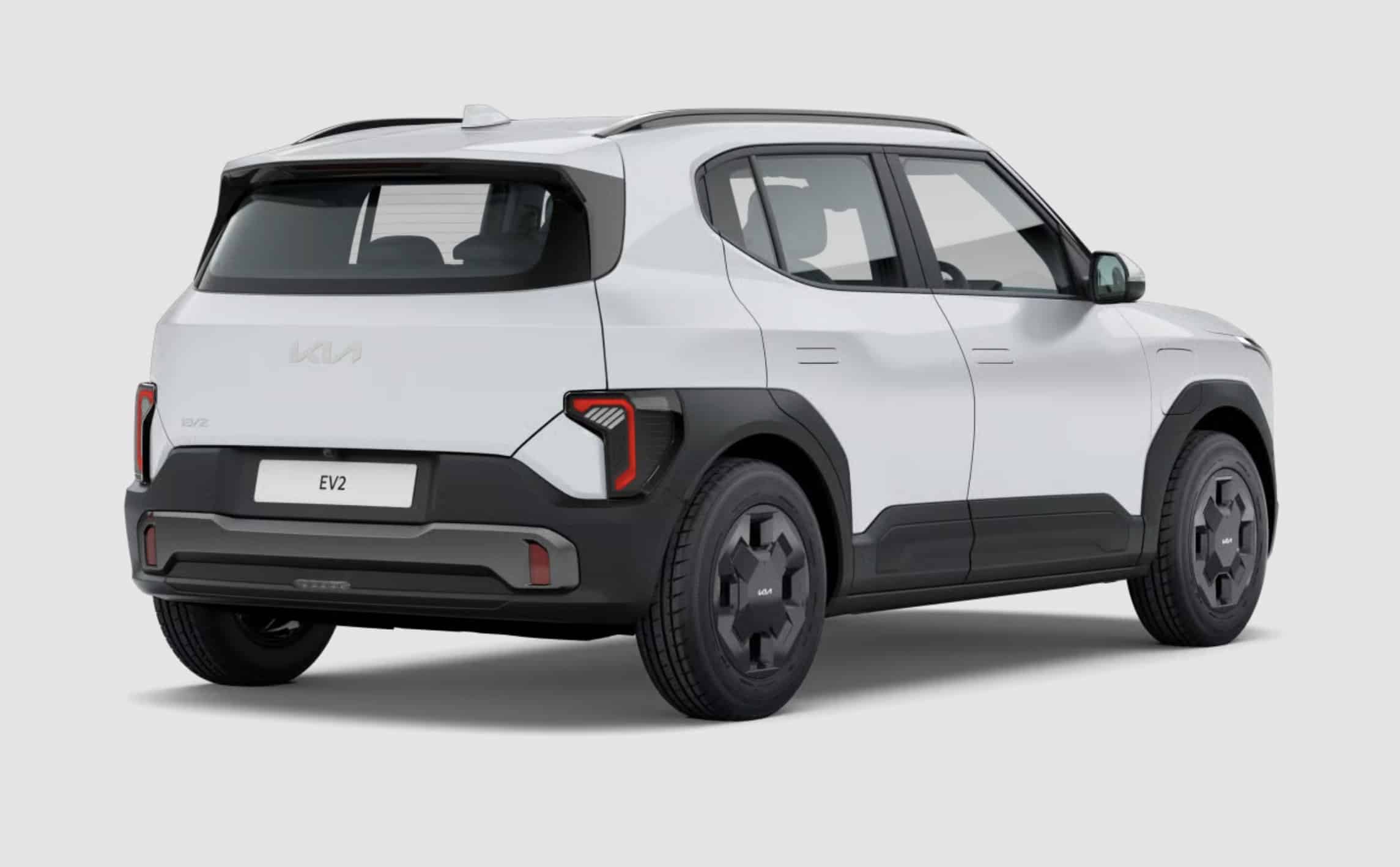
All-Electric Kia EV2
Pricing
The Kia EV2 is available in four principal UK versions. Kia’s current published on-the-road list prices range from £27,995 for the Air to £36,345 for the GT-Line S, before any applicable Electric Car Grant deductions.
| Kia EV2 variant | UK OTR list price | Published OTR price after eligible grant |
|---|---|---|
| Air | £27,995 | £24,245 |
| First Edition | £28,495 | £26,995 |
| GT-Line | £32,745 | £28,995 |
| GT-Line S | £36,345 | £32,595 |
| GT-Line S with optional heat pump | £37,045 | £33,295 |
UK manufacturer-published prices checked in November 2026. The prices after grant reflect the eligibility and deductions displayed by Kia at the time of review. Grant eligibility, funding, vehicle qualification and transaction conditions may change. Prices also vary with options, paintwork and retailer offers. Buyers should obtain a current written on-the-road quotation confirming the price and any grant deduction before ordering.
Kia identifies the Air, GT-Line and GT-Line S as eligible for a £3,750 Electric Car Grant deduction under the published arrangements. The First Edition is listed with a smaller £1,500 deduction.
This distinction is important because the amount payable after an applicable grant differs materially from the vehicle’s original list price. The grant should not be confused with a permanent reduction to the manufacturer’s underlying vehicle price.
The Air is the least expensive version before grants and offers the longest official WLTP range. Its standard equipment also includes heated front seats, a heated steering wheel, modern infotainment and a comprehensive package of driver-assistance features.
The First Edition has a smaller battery but adds selected comfort equipment. Its limited availability may also influence the choice available through individual retailers.
The GT-Line provides sportier styling and more equipment, while GT-Line S adds additional comfort, parking and technology features. The optional GT-Line S heat pump increases the published list price by £700.
Buyers should assess the total cost of ownership rather than focusing exclusively on the initial purchase price. Relevant considerations include insurance, depreciation, electricity, Vehicle Excise Duty, servicing, tyres and finance charges.
For eligible employees, an electric-car salary-sacrifice or company-car arrangement may provide an alternative acquisition method. The financial outcome depends on the scheme, applicable tax rules and individual circumstances.
When comparing finance quotations, buyers should consider the deposit, representative APR, agreement duration, monthly payments, annual mileage allowance and any optional final payment.
Specifications
The following tables summarise Kia’s published UK technical specifications for the EV2. Equipment, performance and range vary by model and production configuration. Buyers should confirm the precise specification before purchasing.
Battery, emissions, charging and warranty
| Specification | First Edition | 61.0 kWh variants |
|---|---|---|
| Battery capacity | 42.2 kWh | 61.0 kWh |
| Battery chemistry | LFP | NMC |
| WLTP combined range | 195 miles | 257–275 miles |
| Maximum AC charging | 11 kW | 11 kW |
| Maximum DC charging | Up to 118 kW, subject to conditions | |
| DC charging (10–80%) | 29 minutes | Approximately 31 minutes |
| Tailpipe CO₂ emissions | 0 g/km | 0 g/km |
| Vehicle warranty | 7 years / 100,000 miles | 7 years / 100,000 miles |
| High-voltage battery warranty | 8 years / 100,000 miles | 8 years / 100,000 miles |
| Servicing interval | 24 months / 20,000 miles | 24 months / 20,000 miles |
Warranty clarification: Kia’s UK information identifies a seven-year or 100,000-mile vehicle warranty and a separate eight-year or 100,000-mile high-voltage battery warranty, subject to the applicable terms, exclusions and battery conditions. Buyers should obtain the current written warranty and confirm the precise coverage for their chosen vehicle.
The manufacturer specifies servicing every 24 months or 20,000 miles, whichever occurs first. Electric vehicles still require regular maintenance of components such as tyres, brakes, suspension, cabin filters and cooling systems.
The longer battery warranty does not mean that every part of the vehicle is covered for eight years. Buyers should review the applicable component coverage and service requirements.
Illustrative UK home charging cost
The cost of charging an electric car depends on the electricity tariff, energy added and charging losses. The following calculation assumes a hypothetical electricity price of 25p per kWh and an overall charging efficiency of 90%.
For consistency, the calculation uses the manufacturer’s stated battery capacity as the modelled energy basis. Actual usable battery capacity may differ, so the values should not be interpreted as guaranteed empty-to-full charging bills.
| Illustrative calculation | 42.2 kWh | 61.0 kWh |
|---|---|---|
| Published battery capacity | 42.2 kWh | 61.0 kWh |
| Assumed electricity tariff | £0.25/kWh | £0.25/kWh |
| Assumed charging efficiency | 90% | 90% |
| Modelled electricity drawn | 46.9 kWh | 67.8 kWh |
| Illustrative charging cost | £11.72 | £16.94 |
Illustrative calculation only. Published battery capacity is divided by an assumed charging efficiency of 90% and multiplied by £0.25/kWh. Actual expenditure varies with usable capacity, charging losses, electricity tariffs, battery temperature and the amount of energy added. These estimates are not manufacturer quotations or guaranteed real-world charging costs.
Drivers with access to a suitable off-peak home electricity tariff may reduce regular charging costs. Those who rely primarily on public rapid charging should assess local electricity tariffs and charger availability when calculating total ownership expenditure.
Dimensions and practicality
| Specification | Kia EV2 |
|---|---|
| Length | 4,060–4,065 mm |
| Width | 1,800 mm |
| Height | 1,575–1,585 mm |
| Wheelbase | 2,565 mm |
| Seating capacity | 5 |
| Boot capacity | 362 litres |
| Maximum published boot capacity, rear seats folded | Up to 1,201 litres, subject to variant and measurement confirmation |
| Front luggage compartment | 15 litres on selected variants |
| Rear seats | 60:40 split-folding |
| Maximum braked towing capacity | 750 kg |
| Front suspension | MacPherson strut |
| Rear suspension | Multi-link |
| Wheel sizes | 16 / 18 / 19 inches, depending on variant |
Manufacturer-published UK dimensions and capacity information. Some Kia technical tables provide differing rear-seat-folded capacity figures for individual versions. The quoted maximum should be confirmed for the vehicle being purchased.
Performance by variant
| Specification | Air | First Edition | GT-Line | GT-Line S |
|---|---|---|---|---|
| Motor type | PMSM | PMSM | PMSM | PMSM |
| Motor power | 99.5 kW | 107.8 kW | 99.5 kW | 99.5 kW |
| Maximum torque | 250 Nm | 250 Nm | 250 Nm | 250 Nm |
| Drivetrain | FWD | FWD | FWD | FWD |
| Transmission | Single-speed automatic | Single-speed automatic | Single-speed automatic | Single-speed automatic |
| 0–62 mph | 9.5 seconds | 8.7 seconds | 9.7 seconds | 9.7 seconds |
| Top speed | 100 mph | 100 mph | 100 mph | 100 mph |
| WLTP range | 275 miles | 195 miles | 261 miles | 257 miles |
| Wheel size | 16 inches | 18 inches | 19 inches | 19 inches |
PMSM means permanent magnet synchronous motor. FWD means front-wheel drive. Manufacturer-published performance figures are based on the specified UK configurations. Actual acceleration and driving range vary with conditions including battery charge, temperature, road surface and vehicle load.
FAQs
| Question | Answer |
|---|---|
| How much does the Kia EV2 cost in the UK? | The published UK OTR list price starts at £27,995 for the Air before applicable grants. Kia also advertises prices after eligible Electric Car Grant deductions, which vary by version and scheme conditions. |
| What is the official range of the Kia EV2? | The Air offers 275 miles WLTP, First Edition 195 miles, GT-Line 261 miles and GT-Line S 257 miles. |
| What is the real-world range? | Actual range varies with driving speed, temperature, heating, terrain and other conditions. Independent assessments have reported favourable efficiency, but official WLTP figures should not be treated as guaranteed everyday results. |
| What battery sizes are available? | The First Edition uses a 42.2 kWh battery. The Air, GT-Line and GT-Line S have a 61.0 kWh battery. |
| What battery chemistry does the EV2 use? | The First Edition uses LFP chemistry, while the three 61.0 kWh versions use NMC chemistry. |
| How quickly can the Kia EV2 charge? | Kia quotes approximately 29–31 minutes for a 10–80% DC charging session using suitable equipment, with exact times depending on battery size, variant and charging conditions. |
| Can the Kia EV2 charge at home? | Yes. All variants support AC charging using compatible equipment. The maximum onboard AC rating is 11 kW, although typical UK single-phase home chargers operate at lower power. |
| Is the Kia EV2 a five-seater? | Yes. The UK EV2 is offered with five seats and a 60:40 split-folding rear bench. |
| How large is the Kia EV2 boot? | The rear boot has 362 litres of capacity. Kia publishes an expanded capacity of up to 1,201 litres with the rear seats folded, subject to configuration and measurement confirmation. |
| Does the Kia EV2 have a heat pump? | A heat pump is offered as an additional-cost option on GT-Line S. It is not listed as standard equipment across the UK range. |
| Does the Kia EV2 support Vehicle-to-Load? | Vehicle-to-Load capability is listed for the UK GT-Line S, using suitable equipment. It is not included as standard on the other published versions. |
| Is the Kia EV2 front-wheel drive? | Yes. All four UK versions use a single electric motor driving the front wheels. |
| What is the difference between Air and First Edition? | The Air has a larger 61.0 kWh battery and a 275-mile WLTP range. The First Edition uses a smaller 42.2 kWh battery, has a 195-mile range, stronger motor output and selected additional equipment. |
| Has the Kia EV2 received an independent crash-test rating? | Yes. The EV2 received five stars in an independent European safety assessment published in October 2026. |
| What is the Kia EV2 vehicle warranty? | Kia publishes a seven-year or 100,000-mile vehicle warranty, subject to applicable conditions and exclusions. |
| What is the Kia EV2 battery warranty? | The high-voltage battery is covered by a separate eight-year or 100,000-mile warranty, subject to the relevant terms and conditions. |
| What is the servicing interval? | Kia specifies servicing every 24 months or 20,000 miles, whichever occurs first. |
| Can the Kia EV2 tow a trailer? | Kia lists a maximum braked towing capacity of 750 kg. Owners must comply with the vehicle’s limits and applicable towing regulations. |
| Which Kia EV2 variant offers the best value? | The Air offers the largest battery, longest official range and lowest pre-grant list price. The GT-Line is worth considering for buyers prioritising sportier styling and additional comfort equipment. |
Information is based on UK manufacturer specifications, current pricing information and independently researched vehicle information reviewed in November 2026. Prices, grant eligibility, equipment, driving range and warranty conditions may change. Buyers should confirm the latest vehicle-specific details with Kia or an authorised UK retailer before purchasing.
While e-zoomed uses reasonable efforts to provide accurate and up-to-date information, some of the information provided is gathered from third parties and has not been independently verified by e-zoomed. While the information from the third party sources is believed to be reliable, no warranty, express or implied, is made by e-zoomed regarding the accuracy, adequacy, completeness, legality, reliability or usefulness of any information. This disclaimer applies to both isolated and aggregate uses of this information.
Featured Articles
<!–
Carousel
–>
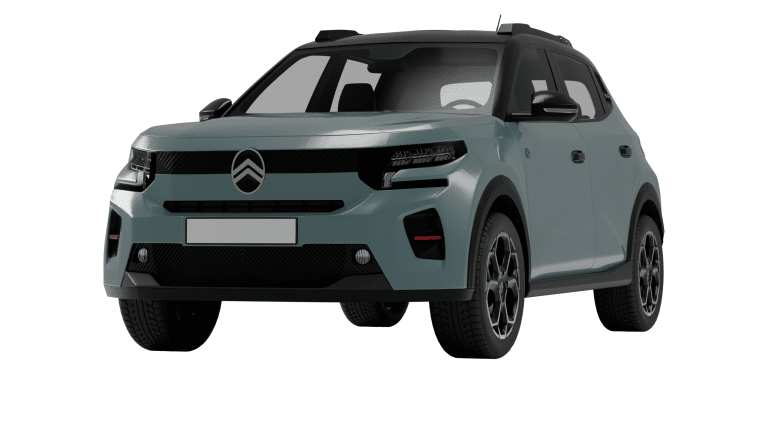
All-Electric Citroën ë-C3: UK Prices, Specs, Range & Buying Guide
The Kia EV2 is a fully electric, five-seat compact SUV designed to make electric mobility more accessible to UK motorists. With on-the-road list prices starting from £27,995 before applicable…
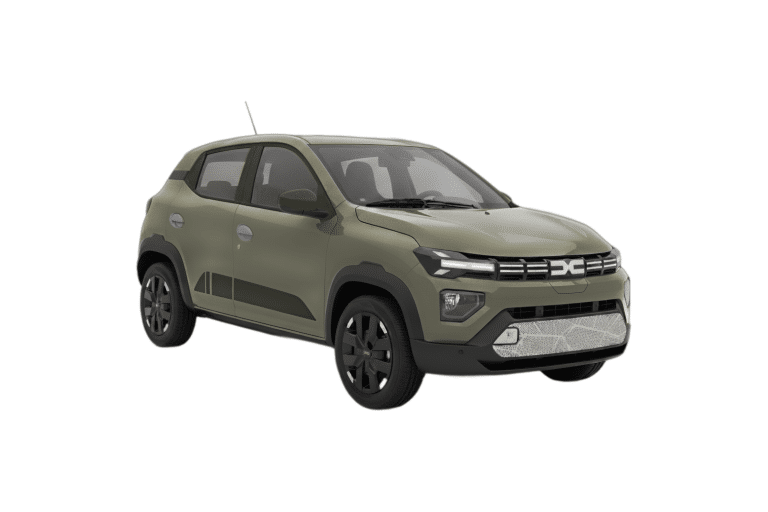
All-Electric Dacia Spring: UK Prices, Specs, Range & Buying Guide
The Kia EV2 is a fully electric, five-seat compact SUV designed to make electric mobility more accessible to UK motorists. With on-the-road list prices starting from £27,995 before applicable…
All-Electric Hyundai INSTER: UK Prices, Specs, Range & Buying Guide
The Kia EV2 is a fully electric, five-seat compact SUV designed to make electric mobility more accessible to UK motorists. With on-the-road list prices starting from £27,995 before applicable…
All-Electric Skoda Elroq: UK Prices, Specs, Range & Buying Guide
The Kia EV2 is a fully electric, five-seat compact SUV designed to make electric mobility more accessible to UK motorists. With on-the-road list prices starting from £27,995 before applicable…
All-Electric Smart #3: UK Prices, Specs, Range & Buying Guide
The Kia EV2 is a fully electric, five-seat compact SUV designed to make electric mobility more accessible to UK motorists. With on-the-road list prices starting from £27,995 before applicable…
Featured Products
-
<!–
–>Sale!
Best-In-Class Home Solar Bundle Offer (440W All Black Jinko Solar 8 Panels + Sungrow Hybrid Inverter 3.6 kW): price includes product supply only
<!– –>
Original price was: £2,205.95.£2,150.95Current price is: £2,150.95. (Including VAT)
<!–
–>
<!– Term:
NEDC range:
Model Year:
Deposit: £
Miles Per AnnumSubject to status and conditions –>
Brand:SungrowJinko SolarCategory:Solar<!– –>
-
<!–
–>Sale!
Best-In-Class Home Solar Bundle Offer (440W All Black Jinko Solar 8 Panels + Sungrow Battery Storage 6.4 kWh + Sungrow Hybrid Inverter 3.6 kW): price includes product supply only
<!– –>
Original price was: £5,010.95.£4,800.95Current price is: £4,800.95. (Including VAT)
<!–
–>
<!– Term:
NEDC range:
Model Year:
Deposit: £
Miles Per AnnumSubject to status and conditions –>
Brand:SungrowJinko SolarCategory:Solar<!– –>
-
<!–
–>Sale!
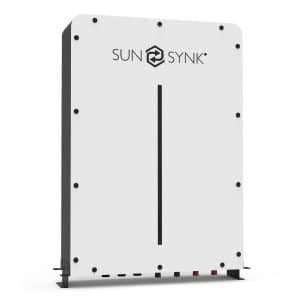
Bundle Offer: SUNSYNK LifePO4 Home Battery Storage (5.32 kWh) + SUNSYNK Hybrid Inverter (3.6 kW/Single-Phase): price includes product supply only
<!– –>
Original price was: £3,345.95.£3,299.95Current price is: £3,299.95. (Including VAT)
<!–
–>
<!– Term:
NEDC range:
Model Year:
Deposit: £
Miles Per AnnumSubject to status and conditions –>
Brand:Sun SynkCategory:Battery Storage<!– –>
-
Bundle Offer: Tesla Powerwall 3 Home Battery Storage (13.5 kWh) + Gateway: price includes product supply only
<!– –>
£8,559.95 (Including VAT)
<!–
–>
<!– Term:
NEDC range:
Model Year:
Deposit: £
Miles Per AnnumSubject to status and conditions –>
Brand:TeslaCategory:Battery Storage<!– –>
-
<!–
–>Sale!
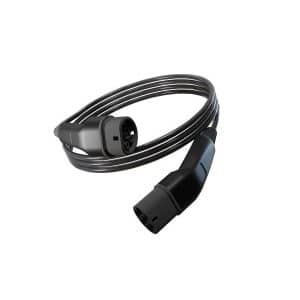
Custom-Made Single-Phase EV Charging Cable Type 2 to Type 2 (2m to 50m, 7.4 kW, 32 amp, Black)
<!– –>
Price range: £99.95 through £670.95 (Including VAT)
<!–
–>
<!– Term:
NEDC range:
Model Year:
Deposit: £
Miles Per AnnumSubject to status and conditions –>
Category:CablesType:Type 2Length (m):5 m7.5 m10 m3.5 m12.5 m15 m20 m17.5 m2 m22.5 m25 m30 m35 m40 m45 m50 mCurrent (amp):32 ampPhase:Single Phase (7.2kW)<!– –>
This product has multiple variants. The options may be chosen on the product page -
Untethered Ohme ePod Home Smart EV Charger (7.4 kW): price includes product only
<!– –>
£645.95 (Including VAT)
<!–
–>
<!– Term:
NEDC range:
Model Year:
Deposit: £
Miles Per AnnumSubject to status and conditions –>
Brand:OhmeCategory:EV Charging PointsCustomer type:ResidentialPower:7.4 kWCable:UntetheredPhase:Single Phase<!– –>

The post All-Electric Kia EV2 (2026): UK Prices, Specs, Range & Buying Guide appeared first on Ezoomed.