
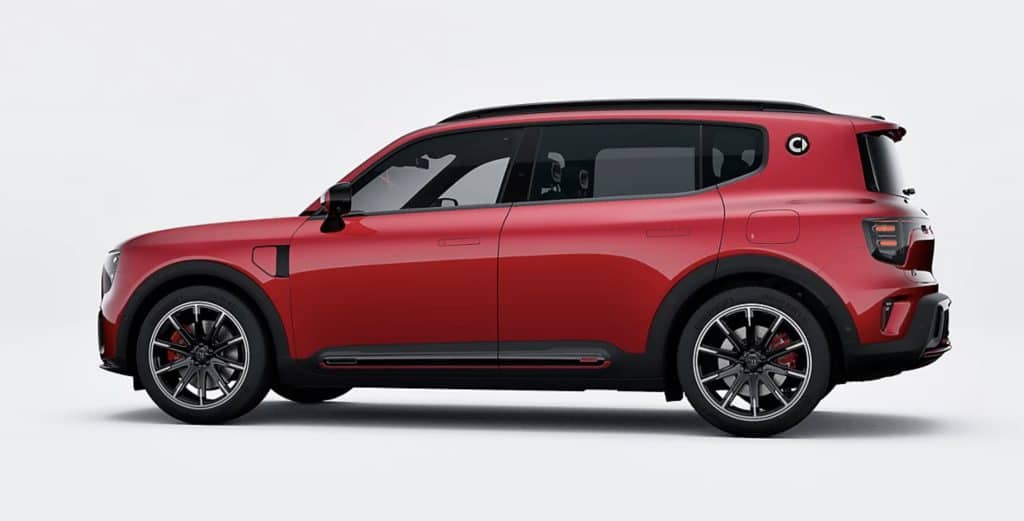
The smart #5 is a fully electric, five-seat family SUV that marks a significant departure from the small city cars traditionally associated with smart. With UK prices starting from £39,800, a WLTP driving range of up to 366 miles and ultra-rapid DC charging on selected variants, the smart #5 is designed to compete in the increasingly popular electric SUV segment.
Available with two battery sizes, rear-wheel drive or all-wheel drive, the smart #5 combines practical family accommodation with substantial electric performance. Its competitors include the Tesla Model Y, Skoda Enyaq, Hyundai IONIQ 5 and Kia EV5. In this e-zoomed guide, we examine the smart #5’s UK prices, battery options, electric driving range, charging times, specifications, practicality and safety credentials. We also consider which variant offers the most convincing combination of value and everyday usability.
At a glance
| Feature | smart #5 |
|---|---|
| Vehicle type | Battery electric vehicle (BEV) |
| Body type | Mid-size electric SUV |
| UK availability | Available through smart’s UK retail network |
| UK starting price | From £39,800 |
| Seating capacity | 5 |
| Battery capacity (gross) | 76 kWh / 100 kWh |
| Battery capacity (usable) | 74.4 kWh / 94 kWh |
| Electric range (WLTP) | 288–366 miles |
| Electric motor power | 250–475 kW |
| Drivetrain | Rear-wheel drive / all-wheel drive |
| Acceleration (0–62 mph) | 3.8–6.9 seconds |
| Top speed | 124–130 mph |
| Maximum AC charging | 11 kW / 22 kW |
| Maximum DC charging | 150 kW / 400 kW |
| DC charging (10–80%) | 30 minutes / 18 minutes |
| Boot capacity | 630 litres |
| Euro NCAP safety rating | 5 stars (2025) |
| Tailpipe CO₂ emissions | 0 g/km |
According to smart’s UK manufacturer data. Specifications, charging speeds and driving range vary by variant. UK prices are advertised list prices checked in November 2026 and are subject to change. WLTP figures are measured under standardised test conditions and do not guarantee real-world range.
Table of Contents
Pros & cons
| Pros | Cons |
|---|---|
| 1. Excellent charging capability: The 100 kWh variants support up to 400 kW DC charging, with a manufacturer-quoted 10–80% charging time of just 18 minutes under optimal conditions. | 1. Energy efficiency: Independent reviewers have found that energy consumption can be relatively high compared with some competing electric SUVs, particularly on motorway journeys. |
| 2. Practical and spacious: A 630-litre boot, generous passenger accommodation, additional front storage and 1,600 kg braked towing capacity support family use. | 2. Important entry-level compromises: The Pro has a smaller battery, a shorter 288-mile WLTP range and slower DC charging than the 100 kWh variants. |
| 3. Strong equipment and safety: Generous standard equipment, advanced digital technology and a five-star Euro NCAP rating strengthen its appeal. | 3. Digital controls and driving refinement: Some independent reviewers have criticised the touchscreen-heavy controls and aspects of the accelerator and regenerative-braking calibration. |
Sign up to the e-zoomed Electric Living newsletter
About smart: The company behind the smart #5
smart is an automotive brand originally recognised for its compact urban vehicles, particularly the smart fortwo. Its history includes early involvement in electric mobility, with electric smart fortwo trials taking place in London in 2007.
The brand entered a new phase in 2019 when Mercedes-Benz and Geely established a joint venture to develop the next generation of smart vehicles. The partnership combines Mercedes-Benz’s design expertise with Geely’s engineering, technology and manufacturing capabilities.
smart’s contemporary UK electric vehicle line-up includes the compact smart #1, the sportier smart #3 SUV coupé and the larger smart #5. The #5 made its global debut in August 2024 and subsequently joined the UK market, representing the brand’s move into the premium mid-size SUV segment. Unlike the original smart city cars, the #5 is intended to provide the space, performance and driving range expected from a modern family electric SUV.
Meet the smart #5
Overview
The smart #5 is an important vehicle for the brand because it addresses a substantially different audience from its original urban-focused models. At 4,695 mm long and 1,920 mm wide, excluding mirrors, it is a sizeable SUV designed to accommodate five adults and their luggage. Its upright proportions, distinctive lighting and relatively boxy design differentiate it from the more streamlined appearance of some competitors. The interior places greater emphasis on passenger comfort, digital displays and flexible storage.
UK buyers can choose between the Pro, Pro+, Premium, Pulse, Summit Edition and BRABUS. These variants differ not only in comfort equipment but also in battery chemistry, usable battery capacity, charging capability and drivetrain. The entry-level Pro is a rear-wheel-drive vehicle with a 76 kWh gross battery, while the larger-battery versions use a 100 kWh gross battery. The Pulse, Summit Edition and BRABUS provide all-wheel drive and considerably stronger acceleration.
Independent UK assessments generally recognise the smart #5’s spacious cabin, substantial equipment and comfortable character. However, efficiency and the operation of some electronic controls have attracted criticism. This makes the choice of variant particularly important.
Battery & range
The smart #5 is offered with two different battery configurations in the UK. The Pro uses a lithium iron phosphate (LFP) battery with a gross capacity of 76 kWh and a usable capacity of 74.4 kWh. The other principal variants use nickel-cobalt-manganese (NCM) chemistry, with 100 kWh gross and 94 kWh usable capacity.
Gross battery capacity represents the total nominal energy capacity of the battery pack, while usable capacity is the portion available for normal vehicle operation. Manufacturers retain an energy buffer to support battery management and protection.
LFP batteries are generally valued for their durability and reduced reliance on nickel and cobalt. NCM chemistry can offer high energy density, making it suitable for vehicles requiring substantial range and performance. Battery chemistry alone does not determine longevity; battery management, temperature and charging patterns also matter.
According to smart’s UK manufacturer data, the official WLTP combined range extends from 288 miles for the Pro to 366 miles for the Pro+ and Premium. The all-wheel-drive Pulse, Summit Edition and BRABUS have an official range of 335 miles.
| Variant | Battery (gross) | WLTP range |
|---|---|---|
| Pro | 76 kWh | 288 miles |
| Pro+ | 100 kWh | 366 miles |
| Premium | 100 kWh | 366 miles |
| Pulse | 100 kWh | 335 miles |
| Summit Edition | 100 kWh | 335 miles |
| BRABUS | 100 kWh | 335 miles |
The Worldwide Harmonised Light Vehicle Test Procedure (WLTP) provides a standardised method of measuring vehicle energy consumption and range. It is useful for comparing electric cars, but real-world results are influenced by motorway speed, weather, cabin heating, terrain, payload and driving style.
Independent results illustrate this variation. In a long-term test updated in November 2026, it was reported a 325-mile test range for a smart #5 Premium, compared with its official 366-mile WLTP figure. Another test reported approximately 270 miles during a journey involving substantial motorway driving at around 10°C. These are different tests conducted under different conditions, rather than guaranteed outcomes for every driver. For UK motorway journeys, especially in winter, planning with a suitable range reserve remains sensible.
Charging
Charging is one of the smart #5’s principal strengths, particularly for the larger-battery variants. The vehicle supports alternating-current (AC) charging for home, workplace and destination use, together with direct-current (DC) charging for rapid energy replenishment during longer journeys. The Pro offers up to 11 kW AC and 150 kW DC charging. The 100 kWh variants support up to 22 kW AC and 400 kW DC charging, using the higher-voltage electrical architecture.
| Charging specification | Pro | 100 kWh variants |
|---|---|---|
| Maximum AC power | 11 kW | 22 kW |
| Maximum DC power | 150 kW | 400 kW |
| Manufacturer’s AC charging time | Under 8.5 hours (11 kW, 10–100%) | Under 5.5 hours (22 kW, 10–80%) |
| DC charging time (10–80%) | 30 minutes | 18 minutes |
| AC connector | Type 2 | Type 2 |
| DC connector | CCS | CCS |
Manufacturer-quoted figures under specified conditions. The AC charging figures use different charge-percentage windows and are not directly comparable. Actual charging times depend on charger output, battery temperature, state of charge and other conditions.
Most UK homes with a standard single-phase electricity supply use a dedicated EV charger capable of approximately 7.4 kW. A vehicle’s 11 kW or 22 kW AC capability does not mean it can draw that power from every home installation. The higher AC charging rates generally require suitable three-phase infrastructure.
For regular use, a dedicated home charger can replenish energy overnight or during scheduled off-peak charging periods. A 100 kWh battery will take considerably longer to recharge from a conventional 7.4 kW home charger than from a compatible high-power public AC charger.
On longer journeys, the 100 kWh smart #5 variants can theoretically charge from 10% to 80% in 18 minutes when connected to a suitably powerful DC charger under optimal conditions. This is impressive for a large electric SUV, although a charger labelled 350 kW or 400 kW does not guarantee that the vehicle will receive its peak charging power throughout the session.
Charging speed is controlled by the vehicle’s battery management system and usually reduces as the battery approaches a high state of charge. Consequently, charging to 80% and continuing a journey can sometimes be more time-efficient than waiting for a full charge.
Owners should use a properly installed, compatible charger. Any portable charging arrangement must be suitable for the electrical installation and approved for the intended use; ordinary domestic sockets should not be assumed suitable for prolonged EV charging without appropriate checks.
Practicality
The smart #5’s dimensions and packaging make practicality an important selling point. The 2,900 mm wheelbase helps provide a spacious passenger compartment, while the upright body design supports rear headroom and luggage accommodation.
All UK variants have five seats and a 630-litre rear boot. According to the manufacturer’s data, luggage capacity increases to 1,530 litres with the rear seats folded. Additional storage is available beneath the bonnet: 72 litres on rear-wheel-drive versions and 47 litres on all-wheel-drive versions.
The rear seating area provides generous accommodation for passengers, and the reclining rear seatbacks can improve comfort on longer journeys. The vehicle’s large doors and elevated seating position also contribute to its family-oriented design. For buyers who regularly carry substantial luggage, sports equipment or family accessories, the boot capacity is a meaningful advantage. However, those who frequently park on narrow urban streets should consider the vehicle’s 2,169 mm width with mirrors, as well as its overall length.
The smart #5 has a manufacturer-rated braked towing capacity of 1,600 kg. This potentially makes it suitable for towing certain trailers or caravans, provided the total load remains within the vehicle’s permitted limits. Towing can substantially increase electricity consumption and reduce driving range.
Technology & equipment
The smart #5 adopts a digital-first interior design, using large displays and integrated software for navigation, entertainment, charging functions and vehicle settings. Depending on the variant, its cabin equipment includes high-resolution OLED infotainment displays, a dedicated passenger screen, a digital driver display, a head-up display and premium audio systems. The Premium variant is particularly well equipped, with a Sennheiser audio system, advanced display technology and additional cabin refinements.
Even the entry-level Pro offers an extensive equipment package. Features reported for UK vehicles include electrically adjustable heated front seats, a panoramic roof, a 360-degree camera, adaptive cruise control and a heated steering wheel. Buyers should check the current UK variant specification before ordering, as equipment packages and software features can change. smart also supports over-the-air (OTA) software updates, allowing compatible vehicle functions to be improved without a conventional workshop visit.
In September 2026, smart announced an update introducing digital vehicle-key functionality through Apple Wallet on compatible iPhones and Apple Watches. The update also introduced refinements to driver-distraction warnings and driving-setting controls. Feature availability depends on compatible devices, software installation and applicable market support.
Although a technology-rich cabin is appealing, it is worth testing the infotainment system before purchasing. Independent reviews have noted that some frequently used functions require navigating touchscreen menus rather than using conventional physical controls.
Performance
The smart #5 offers a broad performance range, from the 250 kW rear-wheel-drive Pro to the 475 kW all-wheel-drive BRABUS. The rear-wheel-drive versions are likely to offer more than sufficient performance for ordinary commuting, urban driving and motorway use. For example, the Pro accelerates from 0 to 62 mph in 6.9 seconds, while the Pro+ and Premium achieve the same speed in 6.5 seconds.
The dual-motor Pulse and Summit Edition reduce the manufacturer-quoted acceleration time to 4.9 seconds. The BRABUS, the performance flagship of the range, completes the same acceleration in 3.8 seconds. As with most electric vehicles (EVs), the smart #5 provides immediate motor torque and a single-speed transmission. Drivers do not need to manage conventional gear changes, making the vehicle straightforward to operate in stop-start traffic.
Selectable driving modes alter the vehicle’s response to the accelerator and other operating characteristics. Regenerative braking allows the electric motor to recover some kinetic energy during deceleration, helping to reduce net energy consumption under suitable conditions. However, published independent reviews suggest that the smart #5 is better suited to comfortable driving than enthusiastic cornering. These reviews have highlighted aspects of accelerator response, regenerative-braking calibration and suspension control that could be improved.
For motorists prioritising everyday range and comfort rather than maximum acceleration, the rear-wheel-drive Pro+ or Premium may provide the more balanced ownership proposition.
Safety
The smart #5 received a five-star Euro NCAP safety rating in 2025, demonstrating strong results across adult occupant protection, child occupant protection, vulnerable road user protection and safety assistance.
| Euro NCAP assessment | Score |
|---|---|
| Adult occupant protection | 88% |
| Child occupant protection | 93% |
| Vulnerable road user protection | 84% |
| Safety assist | 92% |
| Overall rating | 5 stars |
| Test year | 2025 |
The vehicle was also recognised by Euro NCAP as its Best in Class Large SUV for 2025, based on its weighted assessment of the models tested that year. The independent Euro NCAP smart #5 assessment provides detailed information about the tested vehicle, crash protection and driver-assistance performance.
Safety and driver-assistance features can include automatic emergency braking, adaptive cruise control and lane-support systems. These technologies are intended to assist the driver, not replace their attention or responsibility for operating the vehicle safely. Buyers should verify which systems are included on their chosen variant and familiarise themselves with their limitations before using them on public roads.
The verdict
The smart #5 is a convincing addition to the UK electric SUV market. It combines a spacious interior, generous luggage capacity, strong safety credentials and a competitive equipment package with impressive charging technology on its larger-battery versions.
Its most attractive characteristics are the 366-mile maximum WLTP range, the potential for 18-minute DC charging and the considerable amount of usable space provided by its relatively upright design. The five-star Euro NCAP result is another important consideration for family buyers. There are compromises. The entry-level Pro has a smaller battery and reduced charging capability, while independent tests suggest that the larger-battery versions can consume more energy than some competing electric SUVs. The touchscreen-heavy interior may also be less appealing to drivers who prefer straightforward physical controls.
The e-zoomed view: The smart #5 deserves serious consideration from UK motorists seeking a practical, well-equipped electric family SUV. The Pro+ appears to offer a particularly attractive balance of price, range and charging capability. The Premium will appeal to buyers prioritising additional comfort and technology, while the BRABUS is better suited to those who specifically value high performance. For most buyers, the best decision is likely to depend on whether the additional cost of the 100 kWh battery is justified by their regular journey lengths and charging requirements.
Gallery
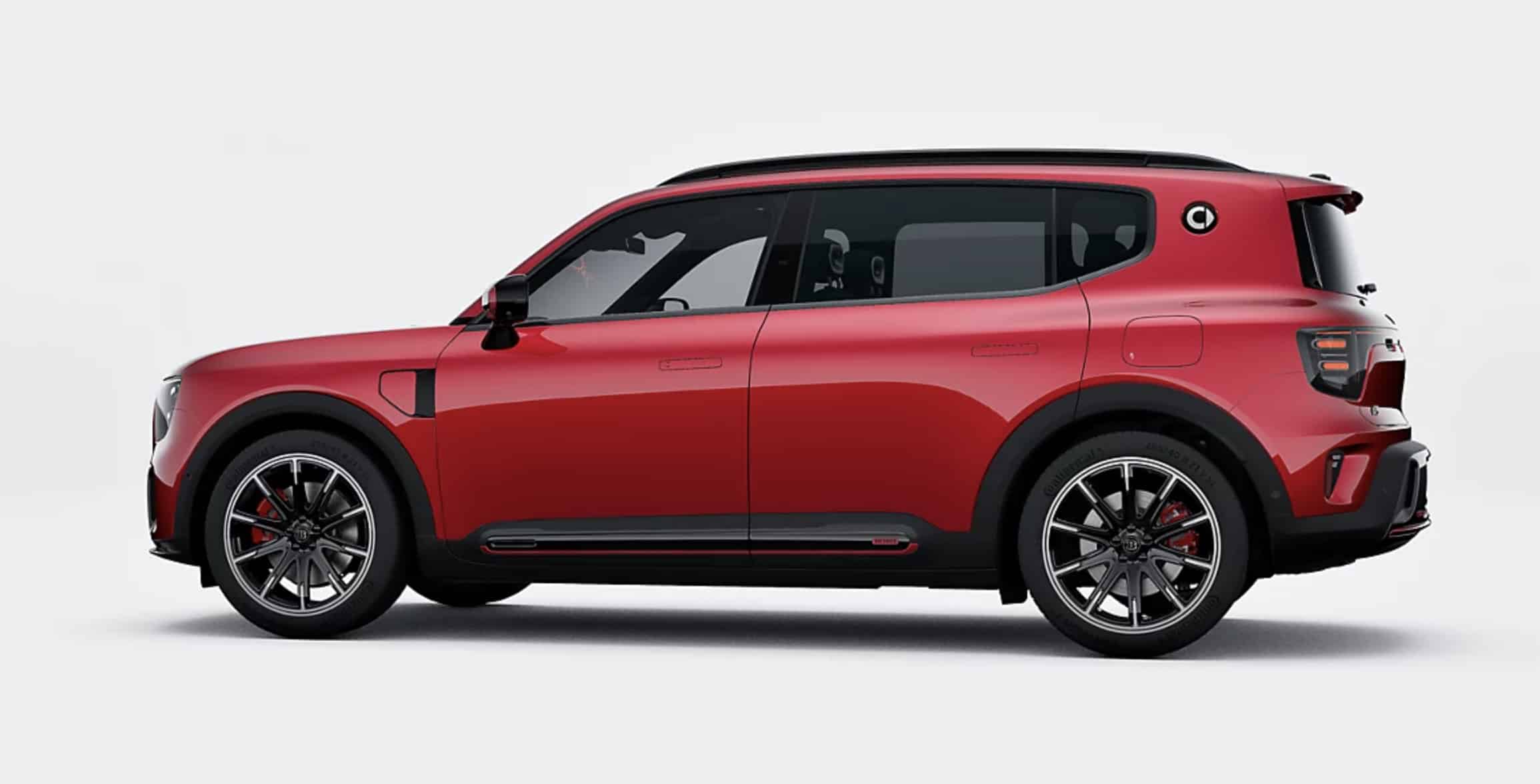
The All-Electric smart #5
Pricing
The smart #5 is offered in six principal UK variants, with advertised list prices ranging from £39,800 for the Pro to £51,800 for the BRABUS. These prices reflect UK retail listings checked in November 2026 and exclude temporary dealer discounts or separately quoted offers.
| smart #5 variant | Advertised UK list price |
|---|---|
| Pro | £39,800 |
| Pro+ | £43,800 |
| Premium | £47,300 |
| Pulse | £47,300 |
| Summit Edition | £48,800 |
| BRABUS | £51,800 |
Prices include VAT and are indicative UK list prices, not guaranteed current transaction prices. They may change with specification, paintwork, accessories and manufacturer or retailer offers. Obtain a written on-the-road quotation confirming all applicable charges before ordering.
UK manufacturer or retailer promotions may reduce the amount payable. However, finance quotations should be evaluated using the deposit, monthly payments, agreement duration, interest rate, optional final payment and mileage restrictions, rather than the headline monthly payment alone.
The Pro is the most affordable option and provides a useful level of standard equipment. The Pro+ costs approximately £4,000 more but adds the 100 kWh gross battery, longer official range and substantially faster DC charging capability. The Premium retains the longer-range rear-wheel-drive powertrain and adds more comfort-oriented features. The Pulse and Summit Edition introduce all-wheel drive, while the BRABUS is positioned as the performance flagship.
For buyers considering a smart #5 through an employer, a salary-sacrifice arrangement or company-car scheme may be worth investigating. The financial outcome depends on the applicable tax rules, scheme terms and individual circumstances. Vehicle Excise Duty, insurance, charging costs and depreciation should also form part of the overall purchase decision.
Specifications
The following specifications are based on the manufacturer’s published UK data. Equipment, technical information and performance vary by model and version.
Battery, emissions, charging and warranty
| Specification | Pro | 100 kWh variants |
|---|---|---|
| Battery chemistry | LFP | NCM |
| Gross battery capacity | 76 kWh | 100 kWh |
| Usable battery capacity | 74.4 kWh | 94 kWh |
| WLTP combined range | 288 miles | 335–366 miles |
| Maximum AC charging | 11 kW | 22 kW |
| Maximum DC charging | 150 kW | 400 kW |
| DC charging (10–80%) | 30 minutes | 18 minutes |
| Tailpipe CO₂ emissions | 0 g/km | 0 g/km |
| Vehicle warranty | 3 years | 3 years |
| High-voltage battery warranty | 8 years; mileage limit requires confirmation | 8 years; mileage limit requires confirmation |
Warranty clarification: smart’s UK model specification page lists eight years/100,000 miles for the high-voltage battery, while its separate UK Warranty Terms, version dated 21 March 2025, specify eight years/125,000 miles for the battery itself and eight years/100,000 miles for high-voltage core components. The manufacturer should confirm the applicable written warranty and mileage limits for the particular vehicle before purchase. Battery state-of-health coverage and other exclusions are also subject to the applicable terms.
smart also describes an Integrated Service Package covering eligible servicing for three years or 30,000 miles, subject to its terms. This does not make the vehicle maintenance-free. Tyres, brakes, suspension, cooling systems and other components still require inspection and maintenance. Owners should check the precise servicing and consumables included in their contract.
Illustrative UK home charging cost
Home charging costs depend on the electricity tariff, the amount of energy required and charging losses. The following example assumes a hypothetical electricity price of 25p per kWh and an overall charging efficiency of 90%.
| Illustrative calculation | Pro | 100 kWh variants |
|---|---|---|
| Usable battery capacity | 74.4 kWh | 94 kWh |
| Assumed electricity tariff | £0.25/kWh | £0.25/kWh |
| Assumed charging efficiency | 90% | 90% |
| Estimated electricity drawn for 0–100% | 82.7 kWh | 104.4 kWh |
| Estimated charging cost | £20.67 | £26.11 |
Illustrative calculation only, not a quoted UK electricity tariff or a manufacturer charging-cost claim. It assumes energy delivered to the usable battery capacity from empty, divided by a modelled 90% charging efficiency. Actual costs vary with tariff, charging losses, temperature, battery condition and the amount of energy added. Public charging prices may be substantially different.
Drivers with access to a suitable off-peak EV electricity tariff may be able to reduce routine charging expenditure. As with any electric vehicle, electricity costs should be considered separately from finance, insurance, servicing and other ownership expenses.
Dimensions and practicality
| Specification | smart #5 |
|---|---|
| Length | 4,695 mm |
| Width (excluding mirrors) | 1,920 mm |
| Width (including mirrors) | 2,169 mm |
| Height | 1,705 mm |
| Wheelbase | 2,900 mm |
| Number of seats | 5 |
| Boot capacity | 630 litres |
| Boot capacity, rear seats folded | 1,530 litres |
| Front luggage compartment | 72 litres (RWD) / 47 litres (AWD) |
| Maximum braked towing capacity | 1,600 kg |
Performance by variant
| Variant | Power | Drivetrain | 0–62 mph |
|---|---|---|---|
| Pro | 250 kW | RWD | 6.9 seconds |
| Pro+ | 267 kW | RWD | 6.5 seconds |
| Premium | 267 kW | RWD | 6.5 seconds |
| Pulse | 432 kW | AWD | 4.9 seconds |
| Summit Edition | 432 kW | AWD | 4.9 seconds |
| BRABUS | 475 kW | AWD | 3.8 seconds |
RWD means rear-wheel drive; AWD means all-wheel drive. Power and acceleration values are manufacturer-published UK figures. Vehicle performance may vary with battery state of charge, road conditions, temperature and tyres.
FAQs
| Question | Answer |
|---|---|
| How much does the smart #5 cost in the UK? | Advertised UK list prices start from £39,800 for the Pro and rise to £51,800 for the BRABUS, based on prices checked in November 2026. Retail offers and final quotations may differ. |
| What is the official range of the smart #5? | The UK WLTP combined range is 288 miles for the Pro, 366 miles for the Pro+ and Premium, and 335 miles for the Pulse, Summit Edition and BRABUS. |
| What is the smart #5’s real-world range? | Actual range depends on driving conditions. What Car? reported a 325-mile test range for a Premium, while Top Gear achieved approximately 270 miles on a motorway-heavy journey in cooler weather. These results are not universal guarantees. |
| What battery sizes are available? | The Pro uses a 76 kWh gross battery with 74.4 kWh usable capacity. The other principal variants use a 100 kWh gross battery with 94 kWh usable capacity. |
| How quickly can the smart #5 charge? | The Pro has a manufacturer-quoted 10–80% DC charging time of 30 minutes at up to 150 kW. The 100 kWh variants can achieve 18 minutes at up to 400 kW under optimal conditions. |
| Can the smart #5 charge at home? | Yes. The vehicle supports AC charging using a compatible home charger. Typical UK single-phase home chargers offer up to approximately 7.4 kW, subject to the installation. |
| Does the smart #5 have an 800V charging system? | The 100 kWh variants use the higher-voltage architecture that supports ultra-rapid DC charging. The Pro has a different charging specification and is limited to a manufacturer-rated 150 kW DC maximum. |
| Is the smart #5 a seven-seater? | No. The smart #5 is a five-seat electric SUV. |
| How large is the smart #5’s boot? | The rear boot offers 630 litres, increasing to 1,530 litres with the rear seats folded. Additional front storage is available, with capacity depending on drivetrain. |
| Can the smart #5 tow a caravan? | It has a manufacturer-rated maximum braked towing capacity of 1,600 kg. Buyers must check the weight of their specific caravan or trailer and comply with all applicable towing limits. |
| Is the smart #5 safe? | Yes. It received a five-star Euro NCAP rating in 2025 and was subsequently recognised as Best in Class Large SUV for that testing year. |
| What is the battery warranty? | smart describes eight-year high-voltage battery coverage, but its UK specification page and detailed warranty terms give conflicting mileage limits. Buyers should obtain written confirmation of the applicable battery warranty and conditions. |
| Which smart #5 variant offers the best value? | The Pro+ is a compelling option because it combines the larger 100 kWh battery, 366-mile WLTP range and 18-minute manufacturer-quoted DC charging capability without requiring the cost of the highest trims. |
Technical information is based on UK manufacturer data and independent sources reviewed in November 2026. Prices, specifications, equipment, software functionality and warranty conditions may change. Buyers should confirm the latest details with smart or an authorised UK retailer.
While e-zoomed uses reasonable efforts to provide accurate and up-to-date information, some of the information provided is gathered from third parties and has not been independently verified by e-zoomed. While the information from the third party sources is believed to be reliable, no warranty, express or implied, is made by e-zoomed regarding the accuracy, adequacy, completeness, legality, reliability or usefulness of any information. This disclaimer applies to both isolated and aggregate uses of this information.
Featured Articles
<!–
Carousel
–>
All-Electric Citroën ë-C3: UK Prices, Specs, Range & Buying Guide
The smart #5 is a fully electric, five-seat family SUV that marks a significant departure from the small city cars traditionally associated with smart. With UK prices starting from…
All-Electric Dacia Spring: UK Prices, Specs, Range & Buying Guide
The smart #5 is a fully electric, five-seat family SUV that marks a significant departure from the small city cars traditionally associated with smart. With UK prices starting from…
All-Electric Hyundai INSTER: UK Prices, Specs, Range & Buying Guide
The smart #5 is a fully electric, five-seat family SUV that marks a significant departure from the small city cars traditionally associated with smart. With UK prices starting from…
All-Electric Skoda Elroq: UK Prices, Specs, Range & Buying Guide
The smart #5 is a fully electric, five-seat family SUV that marks a significant departure from the small city cars traditionally associated with smart. With UK prices starting from…
All-Electric Smart #3: UK Prices, Specs, Range & Buying Guide
The smart #5 is a fully electric, five-seat family SUV that marks a significant departure from the small city cars traditionally associated with smart. With UK prices starting from…
Featured Products
-
<!–
–>Sale!

Best-In-Class Home Solar Bundle Offer (440W All Black Jinko Solar 8 Panels + Sungrow Hybrid Inverter 3.6 kW): price includes product supply only
<!– –>
Original price was: £2,205.95.£2,150.95Current price is: £2,150.95. (Including VAT)
<!–
–>
<!– Term:
NEDC range:
Model Year:
Deposit: £
Miles Per AnnumSubject to status and conditions –>
Brand:SungrowJinko SolarCategory:Solar<!– –>
-
<!–
–>Sale!
Best-In-Class Home Solar Bundle Offer (440W All Black Jinko Solar 8 Panels + Sungrow Battery Storage 6.4 kWh + Sungrow Hybrid Inverter 3.6 kW): price includes product supply only
<!– –>
Original price was: £5,010.95.£4,800.95Current price is: £4,800.95. (Including VAT)
<!–
–>
<!– Term:
NEDC range:
Model Year:
Deposit: £
Miles Per AnnumSubject to status and conditions –>
Brand:SungrowJinko SolarCategory:Solar<!– –>
-
<!–
–>Sale!
Bundle Offer: SUNSYNK LifePO4 Home Battery Storage (5.32 kWh) + SUNSYNK Hybrid Inverter (3.6 kW/Single-Phase): price includes product supply only
<!– –>
Original price was: £3,345.95.£3,299.95Current price is: £3,299.95. (Including VAT)
<!–
–>
<!– Term:
NEDC range:
Model Year:
Deposit: £
Miles Per AnnumSubject to status and conditions –>
Brand:Sun SynkCategory:Battery Storage<!– –>
-
Bundle Offer: Tesla Powerwall 3 Home Battery Storage (13.5 kWh) + Gateway: price includes product supply only
<!– –>
£8,559.95 (Including VAT)
<!–
–>
<!– Term:
NEDC range:
Model Year:
Deposit: £
Miles Per AnnumSubject to status and conditions –>
Brand:TeslaCategory:Battery Storage<!– –>
-
<!–
–>Sale!
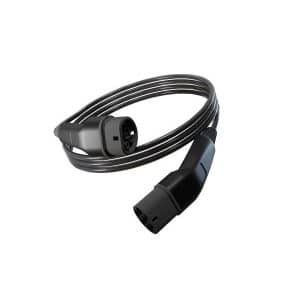
Custom-Made Single-Phase EV Charging Cable Type 2 to Type 2 (2m to 50m, 7.4 kW, 32 amp, Black)
<!– –>
Price range: £99.95 through £670.95 (Including VAT)
<!–
–>
<!– Term:
NEDC range:
Model Year:
Deposit: £
Miles Per AnnumSubject to status and conditions –>
Category:CablesType:Type 2Length (m):5 m7.5 m10 m3.5 m12.5 m15 m20 m17.5 m2 m22.5 m25 m30 m35 m40 m45 m50 mCurrent (amp):32 ampPhase:Single Phase (7.2kW)<!– –>
This product has multiple variants. The options may be chosen on the product page -
Untethered Ohme ePod Home Smart EV Charger (7.4 kW): price includes product only
<!– –>
£645.95 (Including VAT)
<!–
–>
<!– Term:
NEDC range:
Model Year:
Deposit: £
Miles Per AnnumSubject to status and conditions –>
Brand:OhmeCategory:EV Charging PointsCustomer type:ResidentialPower:7.4 kWCable:UntetheredPhase:Single Phase<!– –>

The post All-Electric smart #5 (2026): UK Prices, Specs, Range & Buying Guide appeared first on Ezoomed.