
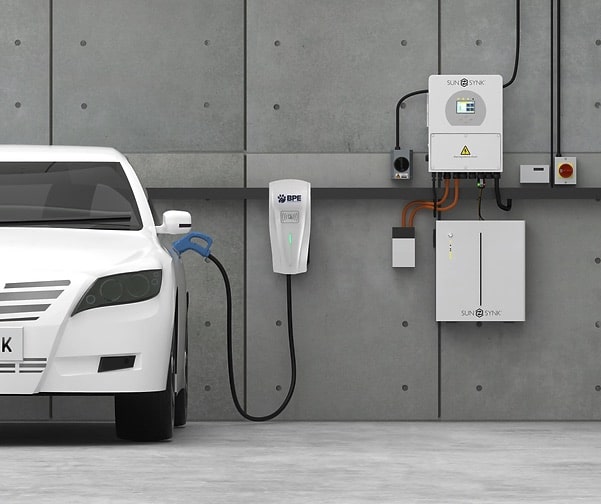
Sungrow SBH is a modular high-voltage home battery range built around 5 kWh lithium iron phosphate (LFP) modules. A single stack contains two to eight modules, providing 10–40 kWh of manufacturer-rated usable battery energy. A separate compatible hybrid inverter is required to supply household AC electricity. The range comprises SBH100, SBH150, SBH200, SBH250, SBH300, SBH350 and SBH400 configurations. This UK guide explains storage capacity, solar integration, backup and EV charging.
We at e-zoomed encourage electric car owners to leverage the substantial benefits of a home energy storage system. A win for the household wallet!
Table of Contents
Sign up to the e-zoomed Electric Living newsletter
Benefits of residential battery storage
| Benefit | What it means for your household |
|---|---|
| Use more solar electricity | Store surplus generation for use later in the day |
| Shift grid consumption | Charge during cheaper periods where the inverter settings and tariff support it |
| Support backup loads | Supply approved circuits through a compatible inverter and suitable backup installation |
| Contribute to EV charging | Use stored energy through the inverter and a separate home charger |
Savings depend on household demand, solar generation, tariffs, export payments and system losses.
Sungrow SBH at a glance
| Specification | Sungrow SBH |
|---|---|
| Battery chemistry | Lithium iron phosphate (LFP), prismatic cells |
| Energy per module | 5.0 kWh |
| Modules per stack | 2–8, subject to inverter compatibility |
| Rated usable energy per stack | 10–40 kWh under the stated test conditions |
| Maximum depth of discharge | 100%, adjustable |
| Maximum continuous charge/discharge current | 50 A, subject to system and operating limits |
| Nominal stack voltage | 140.8–563.2 V, depending on configuration |
| Communication | CAN |
| Protection rating | IP55 |
| Installation | Floor-standing, with fixing brackets as specified |
| Location | Indoors or outdoors, subject to siting requirements |
| Cooling | Natural convection |
| Warranty listed in supplied documents | 10 years; subject to the applicable battery warranty letter |
Usable-energy test conditions are 25°C, 100% depth of discharge and 0.2C charging/discharging. These battery-side figures are not a guarantee of AC energy delivered to appliances. Backup reserves, temperature, ageing and conversion losses affect available household energy.
What is the Sungrow SBH?
SBH stores DC electricity and communicates with the inverter through its battery management system (BMS). Modules connect in series within a stack, increasing voltage and capacity as modules are added. Inter-module connections are built into the stacking arrangement; the installation still requires external electrical connections.
The 5 kWh battery module is not a complete standalone household battery system. A stack requires the appropriate system accessory kit, sufficient modules and a compatible inverter.
Pros and cons
| Pros | Cons and limitations |
|---|---|
| Modular storage from 10 to 40 kWh per stack | The 10 kWh starting capacity may be larger than some households need |
| Up to 50 A continuous battery charge/discharge current | Household AC output depends on the inverter, stack size and operating conditions |
| LFP chemistry and a stackable design with indoor/outdoor installation options | Inverter compatibility, expansion equipment and siting conditions require careful confirmation |
Capacity, dimensions and power
| Configuration | Modules | Rated usable energy | Dimensions W × H × D | Weight |
|---|---|---|---|---|
| SBH100 | 2 | 10 kWh | 675 × 580 × 350 mm | 106 kg |
| SBH150 | 3 | 15 kWh | 675 × 740 × 350 mm | 151 kg |
| SBH200 | 4 | 20 kWh | 675 × 900 × 350 mm | 196 kg |
| SBH250 | 5 | 25 kWh | 675 × 1,060 × 350 mm | 241 kg |
| SBH300 | 6 | 30 kWh | 675 × 1,220 × 350 mm | 286 kg |
| SBH350 | 7 | 35 kWh | 675 × 1,380 × 350 mm | 331 kg |
| SBH400 | 8 | 40 kWh | 675 × 1,540 × 350 mm | 376 kg |
Each battery module weighs 45 kg. Allow additional space for the inverter, cabling, required clearances and any equipment serving parallel stacks.
Energy in kWh determines how much electricity can be stored; power in kW determines how quickly it can be delivered. Sungrow advertises battery power exceeding 25 kW within the range, but this is not a universal household AC output rating. Smaller stacks and the chosen inverter can impose lower limits. Ask for the continuous AC output of the complete proposed installation.
Solar and inverter compatibility
A compatible Sungrow hybrid inverter can manage the battery alongside a suitable solar installation. For existing solar, the installer must assess how the new storage system will integrate with the existing inverter, metering and electrical supply. Compatibility must be checked for the exact UK inverter model, hardware version and firmware.
Confirm whether the proposed inverter requires a single-phase or three-phase supply and whether your property has the appropriate connection. The battery’s capacity does not determine the inverter’s solar input limits or household output.
Backup during power cuts
SBH can form part of a backup system, but the battery modules alone cannot keep household circuits running during a power cut. Backup capability, transfer time and output depend on the inverter and installation design.
Ask the installer to specify protected circuits, switching equipment, reserve settings and appliance starting loads. An inverter’s overload capability should not be treated as its continuous output. Whole-home backup and operation of high-demand equipment require a specific assessment.
Expansion and parallel battery stacks
One stack accommodates up to eight modules. Expansion must follow Sungrow’s procedure, including checking module compatibility and matching state of charge. The manufacturer directs owners to seek installer support and contact the company when intending to add modules.
Sungrow’s advertises up to four stacks in parallel and 160 kWh across the range. This is a platform maximum, subject to the inverter, approved connection equipment and regional availability; it is not a guaranteed UK installation option.
EV charging
Stored electricity can contribute to charging an electric car through the hybrid inverter and a separate EV charger. SBH does not include an EV charging point, and charger integration must be checked separately.
A 10 kWh battery does not imply 10 kW charging power. Available power depends on the stack, inverter, charger, household supply and simultaneous appliance demand. During grid-connected operation, the grid may supply any shortfall. EV charging during a power cut requires separate approval within the backup design.
Compare direct off-peak car charging with routing electricity through the home battery. Battery conversion losses and tariff differences affect which approach is more economical.
Monitoring and electricity tariffs
The Sungrow system uses iSolarCloud for supported monitoring and settings through compatible inverter and communications equipment. Available charging schedules, export controls and tariff integrations depend on the installed hardware, firmware and regional services.
Time-of-use tariffs may provide opportunities to buy cheaper electricity for later use. Assess the import-price difference alongside conversion losses and the export income forgone when solar generation is stored. Do not assume automatic compatibility with a particular energy supplier or smart tariff.
UK pricing and quotation inclusions
Compare complete installed quotations rather than the price of one 5 kWh module. A quotation should identify module quantity, system accessory kits, inverter, metering, mounting, cabling, protection, commissioning and any backup equipment.
For parallel stacks, specify the approved connectors or other equipment and confirm what is included. Ask the installer to state rated usable capacity, continuous AC output, installation work, warranty documentation and any applicable tax charges.
Installation and maintenance
The IP55-rated system can be installed indoors or outdoors in a suitable location. The location requires ventilation, protection from direct sun, rain and snow, and suitable fixing to prevent the stack tipping. The installation surface and supporting structure must meet the manufacturer’s requirements. The manufacturer excludes locations within 500 metres of the coastline or exposed to sea winds. Coastal properties therefore need particular care when assessing suitability.
The manufacturer specifies charging at 0°C to 50°C and discharging at −20°C to 50°C. Your installer should confirm the applicable limits for the supplied equipment; do not assume charging is supported below 0°C. Use a qualified installer familiar with Sungrow equipment. Keep required clearances unobstructed, monitor system alerts and arrange the checks specified in the manual. Obtain guidance before prolonged shutdown or storage so that the battery does not remain at an unsuitable state of charge.
Warranty and support
The company offers a ten-year warranty. Before purchase, obtain the current UK warranty covering the exact SBH equipment. Confirm its commencement date, product and performance cover, any energy-throughput limits, registration requirements, exclusions and claims procedure. Keep the invoice, serial numbers and commissioning records. Inverter and installer workmanship cover should be checked separately.
Is Sungrow SBH right for your home?
SBH may suit households seeking at least 10 kWh of modular storage with a confirmed compatible Sungrow inverter. Larger configurations can support greater energy demand, provided inverter output and available space are also suitable.
Size the system around solar production, evening and overnight demand, tariff opportunities, backup priorities and EV use. Confirm UK compatibility and future expansion options before purchase rather than relying on the maximum capacities advertised for the range.
Frequently Asked Questions
| Question | Answer |
|---|---|
| Can one 5 kWh SBH module operate alone? | The SBH range starts with two modules, forming the 10 kWh SBH100. A complete system also needs the appropriate accessories and a compatible inverter |
| What is the largest single stack? | SBH400 contains eight modules and provides 40 kWh of rated usable battery energy under the manufacturer’s test conditions |
| Is the stated energy usable or nominal? | The stack capacities as usable energy. Household AC delivery is affected by conversion losses, reserves and operating conditions |
| Does SBH include a solar inverter? | No. A separate compatible hybrid inverter is required |
| Can I install 160 kWh in the UK? | Do not assume so. The advertised four-stack maximum requires an approved inverter and parallel arrangement with regionally available equipment |
| Does it provide backup automatically? | Backup depends on the inverter, switching equipment, circuit design and commissioning |
| Can it charge below freezing? | The product information specify a minimum charging temperature of 0°C. The lower discharge limit does not establish below-freezing charging capability |
| Can SBH support EV charging? | Yes, through a suitable inverter and separate charger, within the complete system’s power limits |
| What warranty is advertised? | Ten years, subject to the separate battery warranty letter and its conditions |
Explore home battery storage with e-zoomed
Consider household electricity use, solar generation and EV charging together. Compare usable storage, battery power, controller output, backup equipment and the complete installed cost before choosing a system. Other home energy storage brands to consider are myenergi, EcoFlow, Enphase, AlphaESS, BYD and Tesla. Write to [email protected] to enquire further.
While e-zoomed uses reasonable efforts to provide accurate and up-to-date information, some of the information provided is gathered from third parties and has not been independently verified by e-zoomed. While the information from the third party sources is believed to be reliable, no warranty, express or implied, is made by e-zoomed regarding the accuracy, adequacy, completeness, legality, reliability or usefulness of any information. This disclaimer applies to both isolated and aggregate uses of this information.
Featured Articles
What Is Home Battery Storage? Benefits and How It Works
Sungrow SBH is a modular high-voltage home battery range built around 5 kWh lithium iron phosphate (LFP) modules. A single stack contains two to eight modules, providing 10–40 kWh…
What Is EV Smart Charging? A Complete Guide to Home Charging and Cost Savings
Sungrow SBH is a modular high-voltage home battery range built around 5 kWh lithium iron phosphate (LFP) modules. A single stack contains two to eight modules, providing 10–40 kWh…
What Is Vehicle-to-Home (V2H) Charging? Powering Your House With Your EV
Sungrow SBH is a modular high-voltage home battery range built around 5 kWh lithium iron phosphate (LFP) modules. A single stack contains two to eight modules, providing 10–40 kWh…
What Is Vehicle-to-Load (V2L) Technology? Powering Appliances With Your EV
Sungrow SBH is a modular high-voltage home battery range built around 5 kWh lithium iron phosphate (LFP) modules. A single stack contains two to eight modules, providing 10–40 kWh…
What Is Vehicle-to-Grid (V2G) Technology? How Your EV Can Earn You Money
Sungrow SBH is a modular high-voltage home battery range built around 5 kWh lithium iron phosphate (LFP) modules. A single stack contains two to eight modules, providing 10–40 kWh…
Featured Products
-
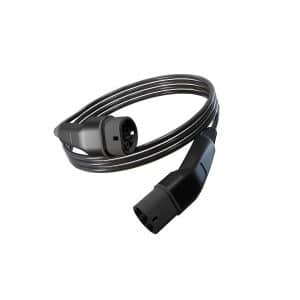
Custom-Made Single-Phase EV Charging Cable Type 2 to Type 2 (2m to 50m, 7.4 kW, 32 amp, Black)
Price range: £99.95 through £670.95 (Including VAT)
Category:CablesType:Type 2Length (m):5 m7.5 m10 m3.5 m12.5 m15 m20 m17.5 m2 m22.5 m25 m30 m35 m40 m45 m50 mCurrent (amp):32 ampPhase:Single Phase (7.2kW)
This product has multiple variants. The options may be chosen on the product page -
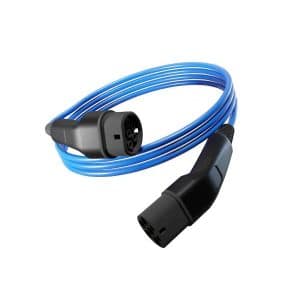
Custom-Made Single-Phase EV Charging Cable Type 2 to Type 2 (2m to 50m, 7.4 kW, 32 amp, Blue)
Price range: £99.95 through £670.95 (Including VAT)
Category:CablesType:Type 2Length (m):5 m7.5 m10 m3.5 m12.5 m15 m20 m17.5 m2 m22.5 m25 m30 m35 m40 m45 m50 mCurrent (amp):32 ampPhase:Single Phase (7.2kW)
This product has multiple variants. The options may be chosen on the product page -
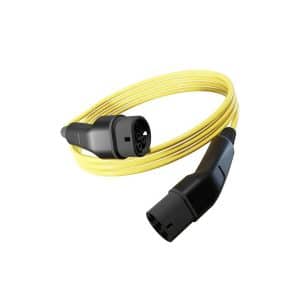
Custom-Made Single-Phase EV Charging Cable Type 2 to Type 2 (2m to 50m, 7.4 kW, 32 amp, Yellow)
Price range: £99.95 through £670.95 (Including VAT)
Category:CablesType:Type 2Length (m):5 m7.5 m10 m3.5 m12.5 m15 m20 m17.5 m2 m22.5 m25 m30 m35 m40 m45 m50 mCurrent (amp):32 ampPhase:Single Phase (7.2kW)
This product has multiple variants. The options may be chosen on the product page -
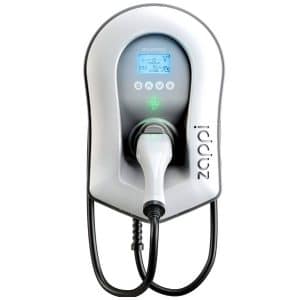
Tethered myenergi eco-smart zappi Home Smart EV Charger (7kW, 6.5m): price includes product only
£810.95 (Including VAT)
Brand:zappi EV Charge PointCategory:EV Charging PointsCustomer type:ResidentialPower:7 kWType:Type 2Cable:TetheredPhase:Single Phase -
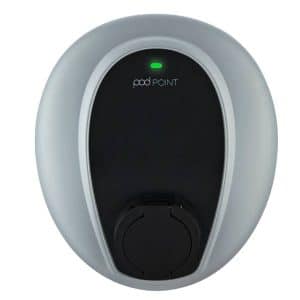
Untethered pod POINT Solo 3 Home Smart EV Charger (7kW): price includes product only
£750.95 (Including VAT)
Brand:pod POINT EV Charge PointCategory:EV Charging PointsCustomer type:ResidentialPower:7 kWType:Type 1Type 2Cable:UntetheredPhase:Single Phase -
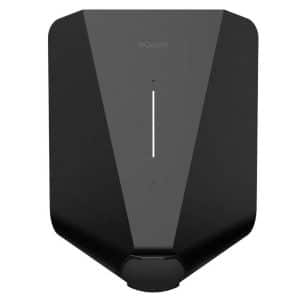
Untethered Easee Charge Commercial Smart EV Charger (22 kW): price includes product only
£945.95 (Including VAT)
Brand:easeeCategory:EV Charging PointsCustomer type:BusinessPower:22 kWType:Type 2Cable:UntetheredPhase:Three Phase
This product has multiple variants. The options may be chosen on the product page
The post Sungrow SBH Home Battery Storage: UK Price, Specifications, Solar & EV Charging Guide appeared first on Ezoomed.