
Overview
Sweden has created its fair share of global brands, but none with a reputation as good as Volvo Cars when it comes to passenger safety. Volvo cars is an automotive manufacturer based in Gothenburg, Sweden. The Volvo Group has a long history of success and was established in 1927. Since then the company has had multiple owners, to include the US based, Ford Motor Company. Its current owner is a Chinese automotive behemoth, Geely Automobile, which acquired Volvo Cars in 2010. Geely also owns the automotive brands Lotus Cars and Polestar.
Volvo Cars was one of the first mainstream OEM’s to commit to a push towards zero-tailpipe emission road transportation. In 2017, the company announced its intention to ‘electrify every car in our range’. Volvo is not new to ‘electric propulsion’ and had already deployed a test fleet of battery-electric vehicles (BEVs) in 2010 and had launched the first plug-in hybrid diesel car in 2012. In March 2021, the company announced its ambition to be a fully electric brand by 2030. The company is also committed to becoming ‘climate neutral’ across the value chain by 2040. The name Volvo is derived from Latin. It means “I roll’. The logo is an ancient chemistry sign for iron, signifying Volvo’s commitment to using high quality iron.
The company currently has the following battery-electric vehicles (BEVs) and plug-in hybrid electric vehicles (PHEVs):
- All-electric Volvo C40 Recharge (BEV)
- All-electric Volvo XC40 Recharge (BEV)
- All-electric Volvo EX30 (BEV)
- All-electric Volvo EX60 (BEV)
- All-electric Volvo EX90 (BEV)
- All-electric Volvo ES90 (BEV)
- Volvo XC40 Plug-in Hybrid (PHEV)
- Volvo XC60 Plug-in Hybrid (PHEV)
- Volvo XC90 Plug-in Hybrid (PHEV)
- Volvo S60 Plug-in Hybrid (PHEV)
- Volvo S90 Plug-in Hybrid (PHEV)
- Volvo V60 Plug-in Hybrid (PHEV)
- Volvo V90 Plug-in Hybrid (PHEV)
Electric Cars: The Basics
For those of you new to zero-emission electric driving, we recommend a read of the following articles:
Types Of Electric Cars: The Complete Electric Car Buying Guide For The UK
Overview Sweden has created its fair share of global brands, but none with a reputation as good as Volvo Cars when it comes to passenger safety. Volvo cars is an…
Electric Cars: Pros And Cons: The Complete Electric Car Buying Guide For The UK
Overview Sweden has created its fair share of global brands, but none with a reputation as good as Volvo Cars when it comes to passenger safety. Volvo cars is an…

Top Jargons Used For Electric Driving: The Complete Electric Car Buying Guide For The UK
Overview Sweden has created its fair share of global brands, but none with a reputation as good as Volvo Cars when it comes to passenger safety. Volvo cars is an…

Air Quality: The Complete Guide For The UK
Overview Sweden has created its fair share of global brands, but none with a reputation as good as Volvo Cars when it comes to passenger safety. Volvo cars is an…
Are Electric Vehicles (EVs) A New Invention? The Complete Electric Car Buying Guide For The UK
Overview Sweden has created its fair share of global brands, but none with a reputation as good as Volvo Cars when it comes to passenger safety. Volvo cars is an…
Sign up to the e-zoomed Electric Living newsletter
The All-Electric Volvo EX60 SUV
The all-electric Volvo EX60 mid-sized SUV is the latest battery-electric vehicle (BEV) from the Sweden based automotive manufacturer, well known for automotive safety and Scandinavian minimalist design. Despite a fiercely competitive electric mobility mid-size segment, the luxurious five-seater family Volvo EX60 has much to offer. The EX60 was unveiled on 21st January 2026 in Stockholm and is intended to replace the very popular Volvo XC60 SUV.
The series production of the Volvo EX60 commenced on 22nd April 2026. The EV is being built at Volvo’s manufacturing plant in Torslanda, Sweden. In fact, the EX60 is the first Volvo fully electric vehicle (EV) to be designed, developed and built in Sweden. Deliveries commence in mid 2026 for the standard EX60. In 2027, Volvo will deliver the EX60 Cross Country variant. Volvo claims that the demand for the EX60 has been ‘considerably higher’ than anticipated, resulting in the company increasing production volumes for 2026.
This should not come as a surprise for anyone who has followed the recent news on the significant increase in petrol prices globally. Drivers are fast moving to pure electric cars to mitigate the continued risks of higher fuel prices. We expect this trend of higher petrol/ diesel prices to continue long-term. Bottom-line, pure electric cars offer far lower ownership costs compared to internal combustion engine (ICE) petrol and diesel vehicles, and is the only drivetrain technology to mitigate fuel price inflation. We encourage all families and businesses to switch to electric driving at the soonest.
Electric cars also offer the lowest profile of life-cycle emissions. In fact, pure electric cars reduce life-cycle emissions up to 70% compared to conventional petrol and diesel vehicles. Moreover electric cars have zero-tailpipe pollution i.e. improve local air quality! Interestingly, the Volvo EX60 has the lowest carbon footprint of any all-electric Volvo vehicle. A win for the environment and the wallet!
The electric SUV is the first model to be built on the new Volvo electric vehicle architecture, the SPA3. Most of the latest-generation of pure electric cars are developed and built on a dedicated EV platform. In general, BEVs built on a dedicated EV platform offer a more compelling proposition compared to electric cars built on a platform shared with internal combustion engine (ICE) models. According to Volvo, the SPA3 sets new standards in scalability, modularity, manufacturing efficiencies and cost.
The family-friendly all-electric EX60 is Volvo’s longest range electric vehicle (EV), offering up to 500 miles on a single charge. The e-SUV is available in three EV battery sizes: 83 kWh, 95 kWh and 117 kWh. All on a 800-Volt electric architecture. Though you maybe tempted to opt for the largest EV battery size and longest range variant, we will caution the enthusiasm. Most day-to-day car journeys are relatively short, and the entry-level 83 kWh battery option has a 379.7 miles (WLTP) electric range. Even adjusting for real-world driving conditions, the 83 kWh should deliver over 325 miles on a single charge. More than ample for most family requirements.
For those that need more range on a regular basis, the 95 kWh offers up to 410.1 miles (WLTP) and the 117 kWh up to 503.3 miles. Adjusting for real-world driving, the 95 kWh should deliver up to 350 miles and the 117 kWh up to 430 miles. For those new to electric driving, a number of factors impact e-range, to include: driving style, speed, road surface, vehicle weight, weather, temperature, terrain, tyre size, regenerative braking profile and more! Volvo offers as standard a 10 years or 100,000 miles EV battery warranty for the EX60. An increase from 8 years for the previous EV models. A strong signal that automotive manufacturers are gaining more confidence in the long-term performance of EV batteries! The EV also offers an onboard heat pump as standard.
The Volvo EX60 electric SUV incorporates a 22 kW AC onboard charger as standard. Perfect for those with access to three-phase (11/22 kW) EV charging at home, work or public EV charging destinations. At 22 kW AC, the 83 kWh variant can be charged 0%-100% in 8 hours. The 95 kWh variant will take up to 9 hours and the 117 kWh will take up to 12 hours. Single-phase (7.4 kW) EV charging will take longer. The EX60 is also capable of bi-directional charging.
The EV incorporates DC charging up to 400 kW. The entry-level 83 kWh (10%-80%: 16 mins) has up to 350 kW DC charging, while the 95 kWh (10%-80%: 16 mins) and 117 kWh (10%-80%: 19 mins) variants have up to 400 kW DC charging.
For home charging we recommend the use of a smart EV charger which is solar compatible. We at e-zoomed also encourage EV owners to install on-site (home or business) solar PV and battery storage. It is a fantastic way to leverage the potential for lower cost of ownership of an electric car, and also achieve ‘well-to-wheel’ zero-tailpipe emissions. We at e-zoomed offer a number of fantastic solar PV and battery storage bundle offers!
The Volvo EX60 is available in available in three powertrain options. The entry-level 83 kWh is a rear-wheel drive (RWD), while the 95 kWh and 117 kWh variants are all-wheel drive (AWD). The entry-level 83 kWh can achieve 0-62 mph in 5.9 seconds (maximum power: 374 HP/ torque: 480 Nm), while the 95 kWh can achieve 0-62 mph in 4.6 seconds (maximum power: 510 HP/ torque: 710 Nm). The top-of-the range 117 kWh can achieve 0-62 mph in 3.9 seconds (maximum power: 680 HP/ torque: 790 Nm). All variants have a top speed up to 112 mph. The EV incorporates one-pedal driving as standard. For the driver there is good all-round visibility, given the higher driving position.
In terms of dimensions, the Volvo EX60 sits between the all-electric EX90 and all-electric EX40 SUVs. The EX60 is 4.80m long and 1.63m tall (1.99m wide). In comparison, the EX90 is 5.03m long and the EX40 is 4.44m in length. The EX60 EV has a generous 58 L frunk (perfect for storing a shorter length EV cable) and a 523 L boot (up to 1,647 L with rear seats folded down). There is also a 63-litre compartment under the boot floor. The tailgate is power-operated. The five-door family SUV offers ample legroom and headroom for adults seated in the rear.
In terms of technology, the EX60 is Volvo’s most intelligent car yet. The BEV incorporates the latest generation of HuginCore, developed in collaboration with Google, NVIDIA and Qualcomm Technologies Inc. The EV is capable of 254 trillion operations per second (TOPS). The EX60 is also the first Volvo to include the Google Gemini AI assistant. Also included: 11.4″ forward driver display, 15.04″ landscape centre display, 360 degree camera with 3D view, park pilot assist, wireless Apple CarPlay and Android Auto.
As for the exterior styling, Volvo continues with its signature Scandinavian design philosophy, which we understand may not be to everyones liking. Having said that, approach does help improve the aerodynamic efficiency of the EV. The EX60 has a drag coefficient of 0.26 Cd. In general, the lower the drag coefficient, the higher the vehicle efficiency, the lower the energy consumption, the higher the electric range. You get the point! And yes, the e-SUV has Volvo’s signature Thor’s Hammer LED headlights!
The Volvo ES90 has yet to be awarded the Euro NCAP Safety Rating. But of course, Volvo has a very strong reputation for safety. We expect the EX60 to continue this trend and be awarded a five-star rating. Some of the driving aids and safety features incorporated in the electric vehicle include: advanced sensing technology, blind spot information system, collision avoidance and mitigation, door opening alert, lane keeping aid, pedestrian and cyclists steering avoidance, rear collision warning and more!
Is the Volvo EX60 a good car? We believe the premium electric SUV has much to offer, in particular, for those consumers seeking a luxurious, capable and practical zero-tailpipe emission electric SUV. Other options to consider are the all-electric BMW iX3 and the all-electric Mercedes-Benz GLC. However, for those with limited budgets there are other more affordable e-SUV options. Prices for the EX60 start from £56,860.
Company-car drivers can take advantage of the lower Benefit-in-Kind (BiK) tax rate for pure electric cars. Electric cars can be leased via e-zoomed at fantastic prices (to include salary sacrifice offers). Bottom-line, electric driving is good for the environment and the wallet.
| PROS | CONS |
|---|---|
| Available in three EV battery sizes with an e-range up to 500 miles | The exterior styling may not appeal to those buyers seeking more |
| 350 kW DC charging as standard. Up to 400 kW DC for top of the line variant. 22 kW AC onboard charger as standard | Entry-level variant does not offer all-wheel drive (AWD) |
| Technology-filled to include Google Gemini AI | Cheaper options available |
Gallery
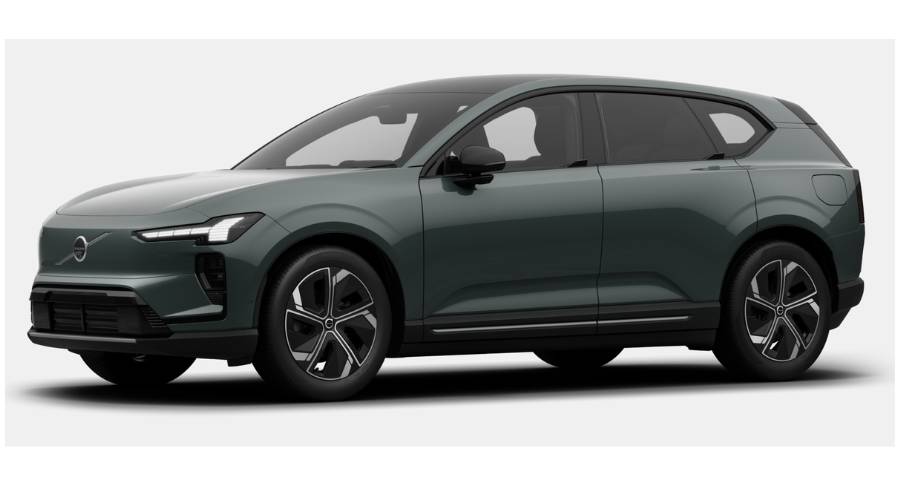


The All-Electric Volvo EX60 SUV (credit: Volvo)
| At A Glance | |
|---|---|
| EV Type: | Battery-Electric Vehicle (BEV) |
| Body Type: | SUV |
| Engine: | Electric |
| Available In UK: | Yes |
| Variants (3 Options) |
|---|
| Volvo EX60 P6 Electric (from £56,860) |
| Volvo EX60 P10 AWD Electric (from £59,860) |
| Volvo EX60 P12 AWD Electric (from £64,860) |
| EV Battery & Emissions | |
|---|---|
| EV Battery Type: | NMC |
| EV Battery Capacity: | Available in three battery sizes: 83 kWh (800 V)/ 95 kWh (800 V)/ 117 kWh (800 V) |
| Charging: | 350-400 kW DC Rapid Charging (10%-80%: 16-19 mins). Onboard AC charger: 11 kW AC (0%-100%: 8-12 hrs) |
| Charge Port: | Type 2 |
| Charge Port Type/ Location: | Type 2/ Rear Left |
| EV Cable Type: | Type 2 |
| Tailpipe Emissions: | 0g (CO2/km) |
| EV Battery Warranty: | 10 years or 100,000 miles |
| Average Cost Of Residential Charging | |
|---|---|
| Battery net capacity : 16.7 kWh | £4.40 |
| Battery net capacity : 30.0 kWh | £7.91 |
| Battery net capacity : 39.2 kWh | £10.33 |
| Battery net capacity : 45.0 kWh | £11.86 |
| Battery net capacity : 50.0 kWh | £13.18 |
| Battery net capacity : 64.0 kWh | £16.86 |
| Battery net capacity : 71.0 kWh | £18.71 |
| Battery net capacity : 77.0 kWh | £20.29 |
| Battery net capacity : 90.0 kWh | £23.72 |
| Battery net capacity : 100.0 kWh | £26.35 |
| Battery net capacity : 112.0 kWh | £29.51 |
| Battery net capacity : 120.0 kWh | £31.62 |
| Battery net capacity : 130.0 kWh | £34.26 |
- Note 1: The average cost of residential electricity in the UK varies depending on the region, supplier and type of energy used. An average for the UK is 26.35 p/kWh.
- Note 2: Not all EV manufactures make available the data on net EV battery capacity, and in a number of instances the EV battery capacity advertised, does not state if it is gross or net capacity. In general, usable EV battery capacity is between 85% to 95% of the gross available capacity.
| Charging Times (Overview) | |
|---|---|
| Slow charging AC (3 kW – 3.6 kW): | 6 – 12 hours (dependent on size of EV battery & SOC) |
| Fast charging AC (7 kW – 22 kW): | 3 – 8 hours (dependent on size of EV battery & SoC) |
| Rapid charging AC (43 kW): | 0-80%: 20 mins to 60 mins (dependent on size of EV battery & SoC) |
| Rapid charging DC (50 kW+): | 0-80%: 20 mins to 60 mins (dependent on size of EV battery & SoC) |
| Ultra rapid charging DC (150 kW – 350 kW): | 0-80% : 20 mins to 40 mins (dependent on size of EV battery & SoC) |
| Tesla Supercharger (120 kW – 350 kW): | 0-80%: up to 25 mins (dependent on size of EV battery & SoC) |
- Note 1: SoC: state of charge
| Dimensions | |
|---|---|
| Height (mm): | 1635 |
| Width (mm): | 1993 (mirrors folded) |
| Length (mm): | 4803 |
| Wheelbase (mm): | 2970 |
| Turning Circle (m): | 11 |
| Boot Space (L): | 523 (up to 1,647 L with rear seats folded down) |
| Frunk (L): | 58 |
| P6 Electric | |
|---|---|
| EV Battery Capacity: | 83 kWh (800 V) |
| Pure Electric Range (WLTP-combined): | 379.7 miles |
| Electric Energy Consumption (kWh/100miles): |
24.1 |
| Miles per kWh: | 4.57 |
| Charging: | 350 kW DC Rapid Charging (10%-80%: 16 mins). Onboard AC charger: 22 kW AC (0%-100%: 8 hrs 0 mins) |
| Top Speed: | 112 mph |
| 0-62 mph: | 5.9 seconds |
| Drive: | Rear-wheel drive (RWD) |
| Electric Motor (kW): | 275 |
| Horsepower (hp): | 374 |
| Torque (Nm): | 480 |
| Transmission: | Automatic |
| Seats: | 5 |
| Doors: | 5 |
| Weight (kg): | 2,189 |
| Towing Capacity (Braked/Unbraked)/ (kg): | 2,000 |
| Colours: | 8 |
| NCAP Safety Rating: | N/A |
| Insurance: | N/A |
| P10 AWD Electric | |
|---|---|
| EV Battery Capacity: | 95 kWh (800 V) |
| Pure Electric Range (WLTP-combined): | 410.1 miles |
| Electric Energy Consumption (kWh/100miles): |
26.1 |
| Miles per kWh: | 4.31 |
| Charging: | 400 kW DC Rapid Charging (10%-80%: 16 mins). Onboard charger: 22 kW AC (0%-100%: 9 hrs 0 mins) |
| Top Speed: | 112 mph |
| 0-62 mph: | 4.6 seconds |
| Drive: | All-wheel drive (AWD) |
| Electric Motor (kW): | 375 |
| Horsepower (hp): | 510 |
| Torque (Nm): | 710 |
| Transmission: | Automatic |
| Seats: | 5 |
| Doors: | 5 |
| Weight (kg): | 2,350 |
| Towing Capacity (Braked/Unbraked)/ (kg): | 2,400 |
| Colours: | 8 |
| NCAP Safety Rating: | N/A |
| Insurance: | N/A |
| P12 AWD Electric | |
|---|---|
| EV Battery Capacity: | 117 kWh (800 V) |
| Pure Electric Range (WLTP): | 503.3 miles |
| Electric Energy Consumption (kWh/100miles): |
25.7 |
| Miles per kWh: | 4.30 |
| Charging: | 400 kW DC Rapid Charging (10%-80%: 19 mins). Onboard AC charger: 22 kW AC (0%-100%: 12 hrs 0 mins) |
| Top Speed: | 112 mph |
| 0-62 mph: | 3.9 seconds |
| Drive: | All-wheel drive (AWD) |
| Electric Motor (kW): | 500 |
| Horsepower (hp): | 680 |
| Torque (Nm): | 790 |
| Transmission: | Automatic |
| Seats: | 5 |
| Doors: | 5 |
| Weight (kg): | 2,405 |
| Towing Capacity (Braked/Unbraked)/ (kg): | 2,400 |
| Colours: | 8 |
| NCAP Safety Rating: | N/A |
| Insurance: | N/A |
While e-zoomed uses reasonable efforts to provide accurate and up-to-date information, some of the information provided is gathered from third parties and has not been independently verified by e-zoomed. While the information from the third party sources is believed to be reliable, no warranty, express or implied, is made by e-zoomed regarding the accuracy, adequacy, completeness, legality, reliability or usefulness of any information. This disclaimer applies to both isolated and aggregate uses of this information.
Featured Articles
The All-Electric BYD Sealion 7 (SUV): The Complete Electric Car Buying Guide For The UK
Overview Sweden has created its fair share of global brands, but none with a reputation as good as Volvo Cars when it comes to passenger safety. Volvo cars is an…
The All-Electric CUPRA Tavascan (SUV Coupé): The Complete Electric Car Buying Guide For The UK
Overview Sweden has created its fair share of global brands, but none with a reputation as good as Volvo Cars when it comes to passenger safety. Volvo cars is an…
The All-Electric Polestar 4 (SUV): The Complete Electric Car Buying Guide For The UK
Overview Sweden has created its fair share of global brands, but none with a reputation as good as Volvo Cars when it comes to passenger safety. Volvo cars is an…
The All-Electric Ford Explorer (SUV): The Complete Electric Car Buying Guide For The UK
Overview Sweden has created its fair share of global brands, but none with a reputation as good as Volvo Cars when it comes to passenger safety. Volvo cars is an…
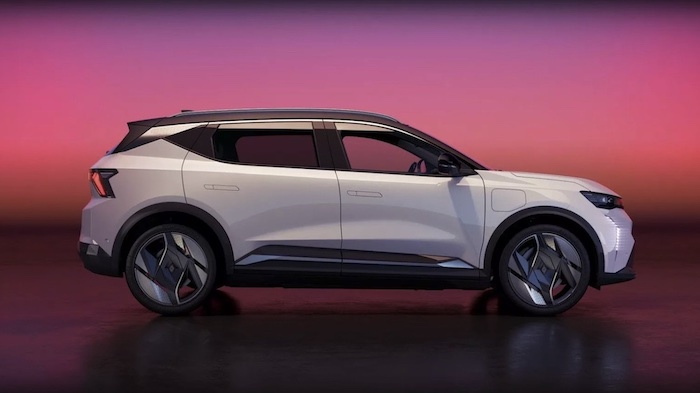
The All-Electric Renault Scenic E-Tech (SUV): The Complete Electric Car Buying Guide For The UK
Overview Sweden has created its fair share of global brands, but none with a reputation as good as Volvo Cars when it comes to passenger safety. Volvo cars is an…
Featured Products
-
Best-In-Class Home Solar Bundle Offer (440W All Black Jinko Solar 8 Panels + Sungrow Hybrid Inverter 3.6 kW): price includes product supply only – free delivery
Original price was: £2,205.95.£2,150.95Current price is: £2,150.95. (Including VAT)
-
Best-In-Class Home Solar Bundle Offer (440W All Black Jinko Solar 8 Panels + Sungrow Battery Storage 6.4 kWh + Sungrow Hybrid Inverter 3.6 kW): price includes product supply only – free delivery
Original price was: £5,010.95.£4,800.95Current price is: £4,800.95. (Including VAT)
-
Bundle Offer: SUNSYNK LifePO4 Home Battery Storage (5.32 kWh) + SUNSYNK Hybrid Inverter (3.6 kW/Single-Phase): price includes product supply only – free delivery
Original price was: £3,345.95.£3,299.95Current price is: £3,299.95. (Including VAT)
-
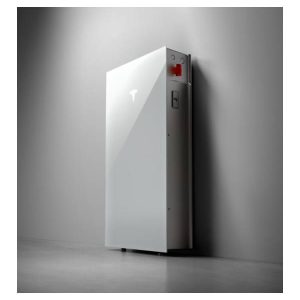
Bundle Offer: Tesla Powerwall 3 Home Battery Storage (13.5 kWh) + Gateway: price includes product supply only – free delivery
£8,559.95 (Including VAT)
-
Custom-Made Single-Phase EV Charging Cable Type 2 to Type 2 (2m to 50m, 7.4 kW, 32 amp, Black) – Built & Tested In The UK – Free Delivery
Price range: £99.95 through £670.95 (Including VAT)
Category:CablesType:Type 2Length (m):5 m7.5 m10 m3.5 m12.5 m15 m20 m17.5 m2 m22.5 m25 m30 m35 m40 m45 m50 mCurrent (amp):32 ampPhase:Single Phase (7.2kW)
This product has multiple variants. The options may be chosen on the product page -

Untethered Ohme ePod Home Smart EV Charger (7.4 kW): price includes product only – free delivery
£645.95 (Including VAT)
Brand:OhmeCategory:EV Charging PointsCustomer type:ResidentialPower:7.4 kWCable:UntetheredPhase:Single Phase


The post The All-Electric Volvo EX60 (SUV): The Complete Electric Car Buying Guide For The UK appeared first on Ezoomed.