
Overview
Groupe Renault (Renault Group/ Renault S.A.), is a leading player in the global automotive sector. The company was established in 1899 and has over the course of its history, manufactured varied vehicles, to include: trucks, tractors, buses and even tanks! Renault has been part of the global Renault-Nissan-Mitsubishi Alliance since 1999 (previously, Renault-Nissan Alliance). The partnership makes the partnership the 3rd largest automotive group in the world after Volkswagen and Toyota.
Renault is headquartered in France and the French state owns a 15% stake in the company. The company manufacturers across a number of global locations, to include: Romania, Morocco, Türkiye, Spain, South Korea, Argentina and others! Renault has also been involved with motor sport, both, Formula 1 and Formula E. Renault offers both, battery-electric vehicles (BEVs) and plug-in hybrid electric vehicles (PHEVs) . The portfolio includes:
- All-electric Renault Twingo E-TECH (BEV)
- All-electric Renault 4 E-TECH (BEV)
- All-electric Renault 5 E-TECH (BEV)
- All-electric Renault R5 Turbo 3E (BEV)
- All-electric Renault Megane E-TECH (BEV)
- All-electric Renault Scenic E-TECH (BEV)
- All-electric Renault TWIZY (BEV)
- All-electric Renault ZOE E-TECH (BEV)
- Renault Rafale E-Tech Plug-In Hybrid (PHEV)
- Renault Captur E-TECH Plug-In Hybrid (PHEV)
- Renault Megane E-TECH Plug-In Hybrid (PHEV)
- Renault Megane Sport Tourer E-TECH Plug-In Hybrid (PHEV)
Electric Cars: The Basics
For those of you new to zero-emission electric driving, we recommend a read of the following articles:
Types Of Electric Cars: The Complete Electric Car Buying Guide For The UK
Overview Groupe Renault (Renault Group/ Renault S.A.), is a leading player in the global automotive sector. The company was established in 1899 and has over the course of its…
Electric Cars: Pros And Cons: The Complete Electric Car Buying Guide For The UK
Overview Groupe Renault (Renault Group/ Renault S.A.), is a leading player in the global automotive sector. The company was established in 1899 and has over the course of its…

Top Jargons Used For Electric Driving: The Complete Electric Car Buying Guide For The UK
Overview Groupe Renault (Renault Group/ Renault S.A.), is a leading player in the global automotive sector. The company was established in 1899 and has over the course of its…

Air Quality: The Complete Electric Car Buying Guide For The UK
Overview Groupe Renault (Renault Group/ Renault S.A.), is a leading player in the global automotive sector. The company was established in 1899 and has over the course of its…

Are Electric Vehicles (EVs) A New Invention? The Complete Electric Car Buying Guide For The UK
Overview Groupe Renault (Renault Group/ Renault S.A.), is a leading player in the global automotive sector. The company was established in 1899 and has over the course of its…
Sign up to the e-zoomed Electric Living newsletter
The All-Electric Renault Twingo E-Tech Hatchback
‘Small is beautiful’ is the best way to introduce you to the latest battery-electric vehicle (BEV) from Renault. The all-electric Renault Twingo E-Tech city car (A-Segment) is just that, small and beautiful. While automotive manufacturers (OEMs) have in the recent years displayed unbridled enthusiasm for larger electric vehicles (EVs), mostly SUVs, it is very good to see Renault come full circle to a mini-car. The A-Segment accounts for just 5% of the European market and offers a strong growth opportunity for automotive manufacturers in the fast growing EV sector.
The advantages of a small city electric car are numerous. Apart from the fantastic benefits of owning an electric vehicle (EVs), the additional benefits of an all-electric city car includes: affordable price tag, cheap to run, service and maintain (ownership costs), easy to park and drive in congested cities, lower life-cycle emissions and more. The Renault Twingo E-Tech has a 60% smaller carbon footprint compared to an equivalent petrol or diesel city car.
Bottom-line, all-electric mini-cars are fantastic for both the household wallet and the environment. So kudos to Renault for the launch of the Renault Twingo E-Tech in its latest incarnation as a pure electric city car. Today, sustainability matters and we all have a responsibility to choose products and services that have a lower detrimental impact on our environment.
We at e-zoomed strongly encourage those living in cities to opt for smaller cars, in particular, zero-tailpipe emission pure electric cars. For those living away from city centres, the Renault Twingo EV can still be very useful as a second family car to be used for local trips to the school, grocery store, gym, high street etc. Of course, we discourage families from owning large vehicles in city centres and strongly believe that petrol or diesel cars have no place in our cities today.
Though many factors contribute to compact electric cars being attractive for the household wallet and the environment, none plays a greater role than the onboard EV battery size. Renault is correct to challenge the status quo that all EVs require a large onboard EV battery. The irrational anti-EV propaganda on range anxiety has made consumers believe that a larger onboard EV battery is a must have. This is absolutely not the case.
In fact, Honda, the Japanese automotive manufacturer was an early proponent of smaller EV batteries, as witnessed in the all-electric Honda-e supermini. The Honda-e electric car was launched in 2020 with a 35.5 kWh onboard EV battery. Honda argued that an electric car for urban drivers did not need a larger EV battery. Of course, since then, EV battery performance and electric range has further improved which is evident in the Renault Twingo E-Tech.
Many of us will be familiar with the previous best-selling Renault Twingo internal combustion engine (ICE) model. The original Twingo has been an incredible success for Renault with over 4.1 million units sold between 1992 and 2024. The vehicle spanned three generations and 25 countries. The internal combustion engine Renault Twingo was discontinued in 2024, paving the way for the all-electric Renault Twingo E-Tech. The Twingo E-Tech EV was unveiled in November 2025.
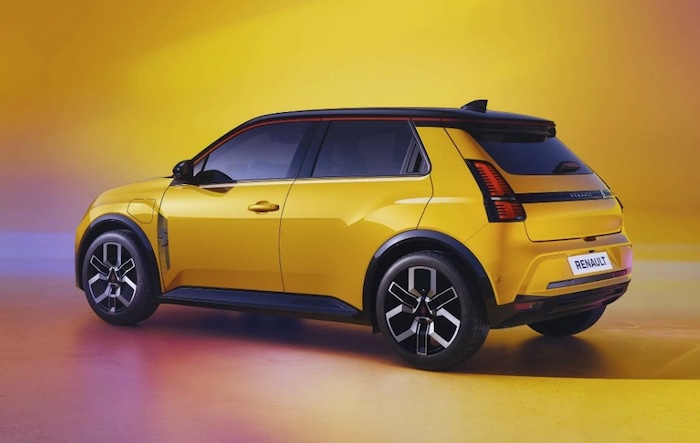
The Twingo electric car incorporates inspiration from the first-generation Renault Twingo (1992). This includes both the exterior and interior styling. Examples include: the shape of the headlamps and grille, air vents on the bonnet, the over sized hazard warning button, the original Twingo slogan “A vous d’inventer la vie qui va avec” (it’s up to you to invent the life to go with it) on the straps and the message “Ouvert d’esprit” (open-minded) visible on the inside of the tailgate. For the air vents, Renault should have replicated the approach used in the Renault 5 that displays the charging status. In the Twingo it gives access to refill the windscreen washer fluid.
The Twingo E-Tech is being built at the Novo Mesto plant in Slovenia and uses the AmpR Small platform. The BEV has been developed in record time (100 weeks) under the Renault new ‘Leap 100’ programme. It is the first vehicle in Renault’s history to be developed at this speed. This is an important achievement as European automotive manufacturers seek to increase their competitive advantage, in particular, in relation to Chinese automotive manufactures like BYD.
The Renault Twingo E-Tech has a 27.5 kWh (usable) Lithium Iron Phosphate (LFP) EV battery with a 163 miles (WLTP) electric range on a full charge. By way of comparison, the heavier Honda-e electric car with a 35.5 kWh onboard EV battery has a claimed range of 137 miles on a full charge. A good example of the improvement in EV battery performance over the years.
It is worth noting that a LFP EV battery has a lower energy density compared to an Nickel-Manganese-Cobalt (NMC) EV battery, but Renault opted for the LFP technology based on the most appropriate cost/ electric range ratio. In general, the higher the energy density of an EV battery, the longer the potential electric range. It is the first time Renault is using an LFP EV battery. Renault sources the EV battery from CATL, the world’s largest manufacturer of EV batteries.
Of course, also assisting the higher electric range of the Twingo E-Tech is its lower weight (1,200 kg). In general, lower the vehicle weight, higher the efficiency of the electric vehicle. By way of comparison, the Honda-e weighs 1,520 – 1,543 kg. An EV battery is between 20% to 30% of the total weight of an electric car. The LFP battery in the Twingo E-Tech uses a cell-to-pack architecture reducing battery costs by 20%.
In fact, the EV industry has witnessed a significant reduction in battery costs over the past decade, a trend that will continue for the foreseeable future. One of the key reasons why electric cars are becoming cheaper than petrol and diesel cars.
For those few of you still concerned about range anxiety, it is worth noting that the average commuting distance in a city is between 5 and 15 miles. Therefore, it will not come as a surprise that the average distanced covered by city drivers in a day is less than 25 miles. Even adjusting the claimed 163 miles (WLTP) for real-world driving conditions, the Twingo E-Tech should be able to deliver over 140 miles on a full charge.
More than ample for day-to-day city driving needs and shorter motorway trips. Do keep in mind that electric cars are more efficient in city driving than motorway driving (the opposite of petrol and diesel cars). A lot of this is to do with the benefit of regenerative braking in electric cars. Also a top tip for EV owners: declutter the electric vehicle of any items that you do not need. As mentioned earlier, the lower the weight of the EV, the higher the efficiency, which directly translates into more electric range. Moreover, a decluttered car is far more enjoyable to drive.
The Renault Twingo incorporates a 6.6 kW AC (single-phase) onboard AC charger as standard. Given the size of the onboard EV battery, single-phase EV charging is appropriate. It will take up to 4 hours and 15 minutes to charge from 10%-100%. There is an option to upgrade to 11 kW (three-phase) AC charging. Using a three-phase dedicated EV charger, the Twingo can be charged 10%-100% in 2 hours and 35 minutes. It would make little sense in upgrading to 11 kW AC if your home is supplied by single-phase power supply, as the EV will only charge at single-phase. For those with access to three-phase (11 kW) EV charging at home, work or public EV charging destinations it is worth considering an upgrade.
The Renault Twingo incorporates 50 kW DC rapid charging as standard. The EV can be charged 10%-80% in 30 minutes. A bit disappointing. Renault should have offered 100 kW DC as standard. By way of comparison, the Hyundai Inster offers 120 kW DC as standard.
For home charging we recommend the use of a smart EV charger which is solar compatible. We at e-zoomed also encourage EV owners to install on-site (home or business) solar PV and battery storage. It is a fantastic way to leverage the potential for lower cost of ownership of an electric car, and also achieve ‘well-to-wheel’ zero-tailpipe emissions. We at e-zoomed offer a number of fantastic solar PV and battery storage bundle offers!
In terms of dimensions, the five-door Twingo electric hatchback is 3.78m long, 1.72m wide and 1.49m tall. The wheelbase has been extended to 2.49m. Despite the compact size of the EV, it does offer reasonable legroom and headroom for adults. Of course, for taller individuals the rear seats are not the most comfortable seats in the house. Nor the best seat for longer motorway drives.
In all practicality, the electric car is a four seater. Like the original Twingo, the rear seats in the Twingo electric slide forward and back by 17cm. You can choose between more legroom or more boot space. You cannot have both. The inability to open the rear passenger windows does not help in improving the sense of space. The EV has a 360L boot which includes a 50L underfloor storage area. With the rear seats folded down, the EV offers up to 1,000L of space. It does not have a frunk.
It is hard not to like the exterior stying of the city electric car. It is simply adorable. The available choice of colours further enhance the vibrant personality of the EV. Our favourite colour is the Absolute Green.
The EV incorporates as standard a 7″ digital instrument panel and a 10″ central multimedia screen, Apple Car Play, Android Auto, over 100 apps and more. We like the physical control buttons in the EV, in particular for climate control. In terms of equipment, also on offer is Vehicle-To-Load (V2L). You can buy fantastic Vehicle-To-Load (V2L) EV cables at e-zoomed.
The front-wheel drive (FWD) Renault Twingo E-Tech has the identical front axle as used in the Renault 4 and Renault 5. The Twingo electric can achieve 0-62 mph in 12.1 seconds (maximum power: 82 hp/ torque: 175 Nm). The top speed of the EV is 81 mph. Given the expected use of the vehicle for urban driving and the prevailing speed limits in cities, this performance is more than adequate. Of course, for motorway journeys it is underwhelming. The Twingo E-Tech offers One-Pedal Driving functionality only on the higher trim. In terms of visibility for the driver, the view through the front windshield not ideal for shorter individuals.
The Twingo E-Tech has yet to be awarded a Euro NCAP Safety Rating. The EV incorporates up to 24 Advanced Driver Assistance Systems (ADAS) depending on the trim. For those of you unfamiliar with ADAS, these are electronic systems in vehicles that use advanced technologies (such as radar, cameras, sensors, and onboard computers) to assist the driver and enhance vehicle safety. Some of the ADAS features on offer include: traffic sign recognition, lane keeping, front sensors with emergency lane keeping, blind spot warning and adaptive cruise control. The EV incorporates a hands-free parking function. Most helpful for drivers less comfortable parking in tight spaces.
Is the Renault Twingo E-Tech a good car? Yes, it is a practical city car for urban driving, in particular for small families. Though pricing is yet to be confirmed for the UK, we expect the electric car to be priced below GBP 20,000. For this pricing that Twingo electric offers a compelling proposition. Other options to consider are the all-electric Dacia Spring, the all-electric Hyundai INSTER and the all-electric Leapmotor TO3.
Company-car drivers can take advantage of the lower Benefit-in-Kind (BiK-2%) tax rate for pure electric cars. Bottom-line, electric driving is good for the environment and the wallet. You can lease electric vehicles (EVs), to include, Salary Sacrifice, via e-zoomed at very competitive prices!
| PROS | CONS |
|---|---|
| A compelling proposition to lower car ownership costs in an urban environment | DC charging limited to 50 kW DC |
| A very practical real world electric range for urban and shorter motorway driving | The driver view through the windshield not ideal for shorter individuals |
| Fantastic styling and personality | One-pedal driving not standard on all trims |
Gallery


The All-Electric Renault Twingo E-Tech Hatchback (credit: Renault)
| At A Glance | |
|---|---|
| EV Type: | Battery-Electric Vehicle (BEV) |
| Body Type: | Hatchback |
| Engine: | Electric |
| Available In UK: | Yes |
| Variants (2 Options) |
|---|
| Renault Twingo E-Tech Evolution (from £N/A) |
| Renault Twingo E-Tech Techno (from £N/A) |
| EV Battery & Emissions | |
|---|---|
| EV Battery Type: | Lithium Iron Phosphate (LFP) |
| EV Battery Capacity: | Available in one battery size: 27.5 kWh (usable) |
| Charging: | 50 kW DC Rapid Charging (10%-80%: 30 mins). Onboard AC charger: 6.6 kW AC (10%-100%: 4 hrs 15 mins) |
| Charge Port: | Type 2 |
| Charge Port Location: | Front Right Side |
| EV Cable Type: | Type 2 |
| Tailpipe Emissions: | 0g (CO2/km) |
| EV Battery Warranty: | 8 years or 100,000 miles |
| Average Cost Of Residential Charging | |
|---|---|
| Battery net capacity : 16.7 kWh | £4.40 |
| Battery net capacity : 30.0 kWh | £7.91 |
| Battery net capacity : 39.2 kWh | £10.33 |
| Battery net capacity : 45.0 kWh | £11.86 |
| Battery net capacity : 50.0 kWh | £13.18 |
| Battery net capacity : 64.0 kWh | £16.86 |
| Battery net capacity : 71.0 kWh | £18.71 |
| Battery net capacity : 77.0 kWh | £20.29 |
| Battery net capacity : 90.0 kWh | £23.72 |
| Battery net capacity : 100.0 kWh | £26.35 |
| Battery net capacity : 112.0 kWh | £29.51 |
| Battery net capacity : 120.0 kWh | £31.62 |
| Battery net capacity : 130.0 kWh | £34.26 |
- Note 1: The average cost of residential electricity in the UK varies depending on the region, supplier and type of energy used. An average for the UK is 26.35 p/kWh.
- Note 2: Not all EV manufactures make available the data on net EV battery capacity, and in a number of instances the EV battery capacity advertised, does not state if it is gross or net capacity. In general, usable EV battery capacity is between 85% to 95% of the gross available capacity.
| Charging Times (Overview) | |
|---|---|
| Slow charging AC (3 kW – 3.6 kW): | 6 – 12 hours (dependent on size of EV battery & SOC) |
| Fast charging AC (7 kW – 22 kW): | 3 – 8 hours (dependent on size of EV battery & SoC) |
| Rapid charging AC (43 kW): | 0-80%: 20 mins to 60 mins (dependent on size of EV battery & SoC) |
| Rapid charging DC (50 kW+): | 0-80%: 20 mins to 60 mins (dependent on size of EV battery & SoC) |
| Ultra rapid charging DC (150 kW – 350 kW): | 0-80% : 20 mins to 40 mins (dependent on size of EV battery & SoC) |
| Tesla Supercharger (120 kW – 350 kW): | 0-80%: up to 25 mins (dependent on size of EV battery & SoC) |
- Note 1: SoC: state of charge
| Dimensions | |
|---|---|
| Height (mm): | 1491 |
| Width (mm): | 1720 |
| Length (mm): | 3789 |
| Wheelbase (mm): | 2493 |
| Turning Circle (m): | 9.87 |
| Boot Space (L): | 360 (rear seats folded down: 1,000 L) |
| Frunk (L): | N/A |
| Twingo E-Tech | |
|---|---|
| EV Battery Capacity: | 27.5 kWh |
| Pure Electric Range (WLTP): | 163 miles |
| Electric Energy Consumption (kWh/ 100km): | 12.2 – 12.3 |
| Miles per kWh: | 5.92 |
| Charging: | 50 kW DC Rapid Charging (10%-80%: 30 mins). Onboard AC charger: 6.6 kW AC (10%-100%: 4 hrs 15 mins) |
| Top Speed: | 81 mph |
| 0-62 mph: | 12.1 seconds |
| Drive: | Front-wheel drive (FWD) |
| Electric Motor (kW): | 60 |
| Max Power (hp): | 82 |
| Torque (Nm): | 175 |
| Transmission: | Automatic |
| Seats: | 4 |
| Doors: | 5 |
| Gross Weight (kg): | 1,200 |
| Towing Capacity (Braked/Unbraked)/ (kg): | N/A |
| Colours: | 6 |
| Euro NCAP Safety Rating: | N/A |
| Insurance Group: | N/A |
While e-zoomed uses reasonable efforts to provide accurate and up-to-date information, some of the information provided is gathered from third parties and has not been independently verified by e-zoomed. While the information from the third party sources is believed to be reliable, no warranty, express or implied, is made by e-zoomed regarding the accuracy, adequacy, completeness, legality, reliability or usefulness of any information. This disclaimer applies to both isolated and aggregate uses of this information.
Featured Articles
The All-Electric Citroën ë-C3 (SUV): The Complete Electric Car Buying Guide For The UK
Overview Groupe Renault (Renault Group/ Renault S.A.), is a leading player in the global automotive sector. The company was established in 1899 and has over the course of its…
The All-Electric Dacia Spring (Hatchback): The Complete Electric Car Buying Guide For The UK
Overview Groupe Renault (Renault Group/ Renault S.A.), is a leading player in the global automotive sector. The company was established in 1899 and has over the course of its…

The All-Electric Hyundai INSTER (SUV): The Complete Electric Car Buying Guide For The UK
Overview Groupe Renault (Renault Group/ Renault S.A.), is a leading player in the global automotive sector. The company was established in 1899 and has over the course of its…
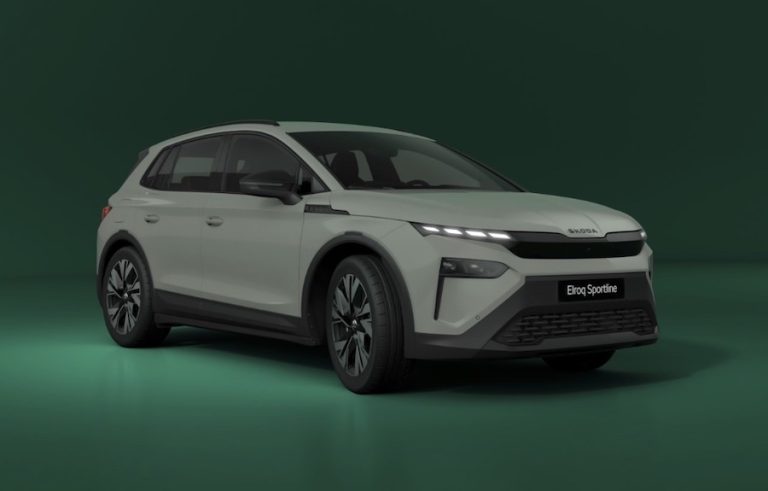
The All-Electric Skoda Elroq (SUV): The Complete Electric Car Buying Guide For The UK
Overview Groupe Renault (Renault Group/ Renault S.A.), is a leading player in the global automotive sector. The company was established in 1899 and has over the course of its…
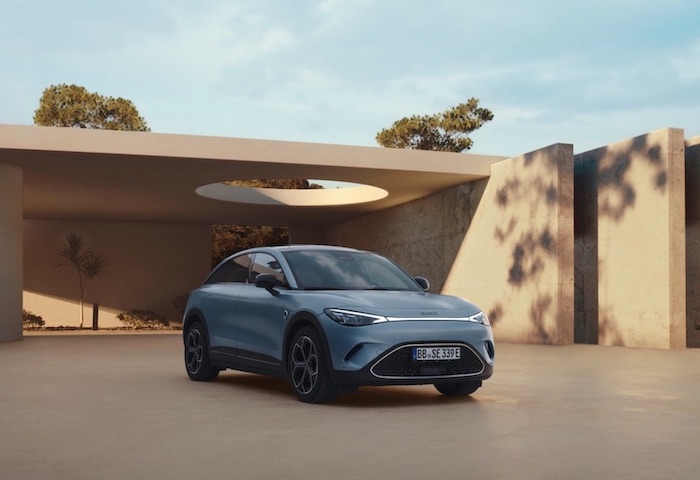
The All-Electric Smart #3 (SUV Coupé): The Complete Electric Car Buying Guide For The UK
Overview Groupe Renault (Renault Group/ Renault S.A.), is a leading player in the global automotive sector. The company was established in 1899 and has over the course of its…
Featured Products
-
Best-In-Class Home Solar Bundle Offer (440W All Black Jinko Solar 8 Panels + Sungrow Hybrid Inverter 3.6 kW): price includes product supply only – free delivery
Original price was: £2,205.95.£2,150.95Current price is: £2,150.95. (Including VAT)
-
Best-In-Class Home Solar Bundle Offer (440W All Black Jinko Solar 8 Panels + Sungrow Battery Storage 6.4 kWh + Sungrow Hybrid Inverter 3.6 kW): price includes product supply only – free delivery
Original price was: £5,010.95.£4,800.95Current price is: £4,800.95. (Including VAT)
-
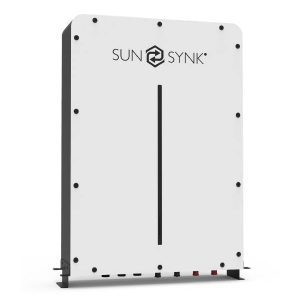
Bundle Offer: SUNSYNK LifePO4 Home Battery Storage (5.32 kWh) + SUNSYNK Hybrid Inverter (3.6 kW/Single-Phase): price includes product supply only – free delivery
Original price was: £3,345.95.£3,299.95Current price is: £3,299.95. (Including VAT)
-
Bundle Offer: Tesla Powerwall 3 Home Battery Storage (13.5 kWh) + Gateway: price includes product supply only – free delivery
£8,559.95 (Including VAT)
-
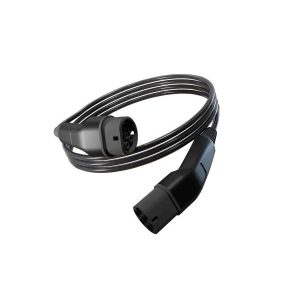
Custom-Made Single-Phase EV Charging Cable Type 2 to Type 2 (2m to 50m, 7.4 kW, 32 amp, Black) – Built & Tested In The UK – Free Delivery
Price range: £99.95 through £670.95 (Including VAT)
Category:CablesType:Type 2Length (m):5 m7.5 m10 m3.5 m12.5 m15 m20 m17.5 m2 m22.5 m25 m30 m35 m40 m45 m50 mCurrent (amp):32 ampPhase:Single Phase (7.2kW)
This product has multiple variants. The options may be chosen on the product page -

Untethered Ohme ePod Home Smart EV Charger (7.4 kW): price includes product only – free delivery
£645.95 (Including VAT)
Brand:OhmeCategory:EV Charging PointsCustomer type:ResidentialPower:7.4 kWCable:UntetheredPhase:Single Phase
The post The All-Electric Renault Twingo E-Tech (Hatchback): The Complete Electric Car Buying Guide For The UK appeared first on Ezoomed.