
Overview
Polestar is a high performance Swedish automotive brand established by Volvo in 1996. Polestar is headquartered close to Gothenburg, Sweden. The genesis of the Polestar brand is linked to motorsport, in particular, Flash Engineering, a Swedish motorsport team. Flash Engineering was rebranded to Polestar Racing in 2005. Polestar was acquired by Volvo Cars in 2015, with the brand being repositioned as an EV brand from 2017. Volvo Cars was acquired by Geely Holding Group in 2010. Geely, a Chinese automotive behemoth also owns Lotus Cars, well known for its luxury sport cars.
The Polestar 1 was launched in 2017, based on Volvo’s Concept Coupé introduced in 2013. The Polestar 1 was manufactured in Chengdu, China (2019-2021). Polestar 2 is also manufactured in China (Taizhou). Polestar continues to operate an ‘asset-light’ business model, with manufacturing outsourced to production facilities controlled by its parent, Geely. Manufacturing locations include, China, United States, South Korea and others.
Volvo Cars was one of the first mainstream OEM’s to commit to a push towards zero-tailpipe emission electric cars. Volvo is not new to ‘electric propulsion’ and had deployed a test fleet of battery-electric vehicles (BEVs) in 2010, and had also launched the first plug-in hybrid diesel car in 2012. Polestar’s portfolio of battery-electric vehicles (BEVs) include:
- All-electric Polestar 2 (BEV)
- All-electric Polestar 3 (BEV)
- All-electric Polestar 4 (BEV)
- All-electric Polestar 5 (BEV)
Electric Cars: The Basics
For those of you new to zero-emission electric driving, we recommend a read of the following articles:
Types Of Electric Cars: The Complete Electric Car Buying Guide For The UK
Overview Polestar is a high performance Swedish automotive brand established by Volvo in 1996. Polestar is headquartered close to Gothenburg, Sweden. The genesis of the Polestar brand is linked…
Electric Cars: Pros And Cons: The Complete Electric Car Buying Guide For The UK
Overview Polestar is a high performance Swedish automotive brand established by Volvo in 1996. Polestar is headquartered close to Gothenburg, Sweden. The genesis of the Polestar brand is linked…

Top Jargons Used For Electric Driving: The Complete Electric Car Buying Guide For The UK
Overview Polestar is a high performance Swedish automotive brand established by Volvo in 1996. Polestar is headquartered close to Gothenburg, Sweden. The genesis of the Polestar brand is linked…

Air Quality: The Complete Electric Car Buying Guide For The UK
Overview Polestar is a high performance Swedish automotive brand established by Volvo in 1996. Polestar is headquartered close to Gothenburg, Sweden. The genesis of the Polestar brand is linked…
Are Electric Vehicles (EVs) A New Invention? The Complete Electric Car Buying Guide For The UK
Overview Polestar is a high performance Swedish automotive brand established by Volvo in 1996. Polestar is headquartered close to Gothenburg, Sweden. The genesis of the Polestar brand is linked…
Sign up to the e-zoomed Electric Living newsletter
The All-Electric Polestar 5 Grand Tourer (GT)
In its ambition to develop the best in class electric cars, the parent company, Geely is not holding back. This is evident from both, the all-electric Polestar 5 and the all-electric Volvo EX60 pure electric cars. Both of these EVs have been developed on new EV dedicated platforms.
In general, it is common for electric vehicles (EVs) to be built on a shared platform. By using the same platform for multiple models, the automotive manufacturer (OEM) can leverage both economies of scale and economies of scope i.e. quite simply put: build cheaper electric cars and deliver more affordability to the end consumer.
We believe Geely’s approach to create a new Polestar platform is the correct approach and key in maintaining long-term competitiveness of the Polestar marque. For those of you new to electric cars, battery-electric vehicles (BEVs) built on a dedicated EV platform offer a more compelling proposition compared to electric cars built on a platform shared with internal combustion engine (ICE) models. The four-door Polestar 5 has been developed on a bespoke bonded aluminium EV architecture, the Polestar Performance Architecture (PPA) platform.
The platform has been developed in-house by the UK R&D team, leveraging the extensive experience of Polestar. According to Polestar, the PPA platform is made of anodised high-strength aluminium bound by heat-cured adhesive. This enables superior body control, controlled energy absorption and torsional rigidity. The electric motors for the Polestar 5 have also been developed in-house.
Given Polestar’s enviable track record in relation to sustainability and decarbonisation, it does not come as any surprise that 83% of the aluminium sourced for the Polestar 5 is sourced from smelters using renewable energy, while 13% of it is recycled. According to Polestar, this mitigates over 14 tCO2e! We strongly encourage all potential buyers of cars to look beyond just the standard parameters when assessing a car. Delve deeper in assessing the carbon footprint of the vehicle. It is imperative that every car owner plays a role in fighting against human-induced climate change, of which, road transportation is a significant contributor.
The fantastic news is that electric cars are the perfect choice in combating the significant threat of human-induced climate change. Electric cars offer the lowest profile of life-cycle emissions. Pure electric cars reduce life-cycle emissions up to 70% compared to conventional petrol and diesel vehicles. Moreover, electric cars have zero-tailpipe pollution i.e. improve local air quality! Honestly, there are very few valid reasons to own a petrol or diesel car today.
The F-segment Polestar 5 made its debut in 2025 at the Munich Motor Show. It is an evolution of the Polestar Precept concept car launched in 2020. The Polestar 6 will also be an evolution of the Polestar Precept concept.
In terms of dimensions, the Polestar 5 is 5.08m long and up to 1.42m tall. The Dual Motor variant is a little taller. The Performance EV is 2.01m wide (mirrors folded). The EV has a generous 62 L frunk (perfect for storing a shorter length EV cable or a small suitcase). Certainly a practical frunk. Not all pure electric cars offer a practical frunk! However, the boot space in the Polestar 5 is not as large as some of its competition. The performance electric car has a 365 L boot which includes a 52 L underfloor storage compartment (up to 1,128 L L with rear seats folded down). Though the size of the boot space is limited, it is worth noting this is not a Multi-Performance Vehicle (MPV)! It is a performance sports car! In any case, packing light is an excellent skill to learn.
The performance Polestar 5 GT is a 4 + 1 seat configuration. In all practicality, it is a four-seater electric saloon. In the rare occasion you need to use the fifth seat, the armrest will need to be folded up. Not the most comfortable seat for an adult! The four main seats are truly luxurious and one can recline the rear seats and press the massage button (the massage function is an option). The EV incorporates Recaro seats and loads of sustainable materials, to include: natural fibre, NFPP, Econyl, recycled PET as examples. Given the EV has been built on a dedicated EV platform, there is ample legroom and headroom for adults seated in the two main rear seats.
The panoramic glass roof, which stretches behind the rear passengers further enhances the experience of space within the cabin. The glass roof shields up to 99.5% of ultraviolet radiation. For those of you familiar with electric driving, you are aware of the reduced cabin noise in electric cars compared to the very noise petrol and diesel cars. Polestar has further refined the sound quality within the cabin by incorporating noise cancellation technology in the Polestar 5 i.e. reducing noise from wind, tyre and the road surface. Do not worry, you can hear all the important sounds like sirens and car horns!
The Polestar 5 EV is available in one battery size: 112 kWh lithium-ion NMC EV battery (800-Volt architecture). According to the manufacturer, the Polestar 5 Dual Motor variant can deliver up to 421 miles WLTP on single-charge. The top-of-the-line Polestar 5 Performance variant can deliver up to 346 miles WLTP on a single charge. Of course, these need to be adjusted for real-world driving conditions. For the entry-level Dual Motor variant expect up to 375 miles and for the Performance variant expect up to 300 miles. Polestar offers a 8 years or 100,000 miles EV battery warranty.
Do keep in mind that the Performance variant has 21″ wheels, while the Dual Motor variant has 20″ wheels. The larger the wheels of an electric car, the lower the efficiency! Both variants offer excellent electric range, but worth noting that the all-new BMW i3 Neue Klasse electric saloon has a claimed range of a whopping 562 miles WLTP on a single charge. The benchmark for the definition of class-leading has been moved considerable higher by the BMW electric car.
The Polestar 5 electric saloon incorporates a 11 kW AC onboard charger as standard. There is no option to upgrade to 22 kW AC. Surprising, given the pricing of the vehicle. In fact, a 22 kW AC should have been incorporated as standard. In any case, for those with access to three-phase (11 kW) EV charging at home, work or public EV charging destinations, the 112 kWh EV battery will take up to 11 hours to fully charge. Single-phase (7.4 kW) EV charging will take longer. We really like the charging status indicator on the rear side windows of the Polestar 5. You will recall that the all-electric Renault 5 has incorporated a similar approach on its bonnet!
The Polestar 5 EV incorporates up to 350 kW DC as standard. Certainly very good, but worth noting some of the latest BEVs offer up to 400 kW DC charging. Again, given the price tag of the GT, Polestar should have offered 400 kW DC as standard. It is an excellent approach to future proofing the electric vehicle. The EV can be charged 10%-80% in 22 minutes. The EV can add up to 211 miles in 10 minutes.
For home charging we recommend the use of a smart EV charger which is solar compatible. We at e-zoomed also encourage EV owners to install on-site (home or business) solar PV and battery storage. It is a fantastic way to leverage the potential for lower cost of ownership of an electric car, and also achieve ‘well-to-wheel’ zero-tailpipe emissions. We at e-zoomed offer a number of fantastic solar PV and battery storage bundle offers!
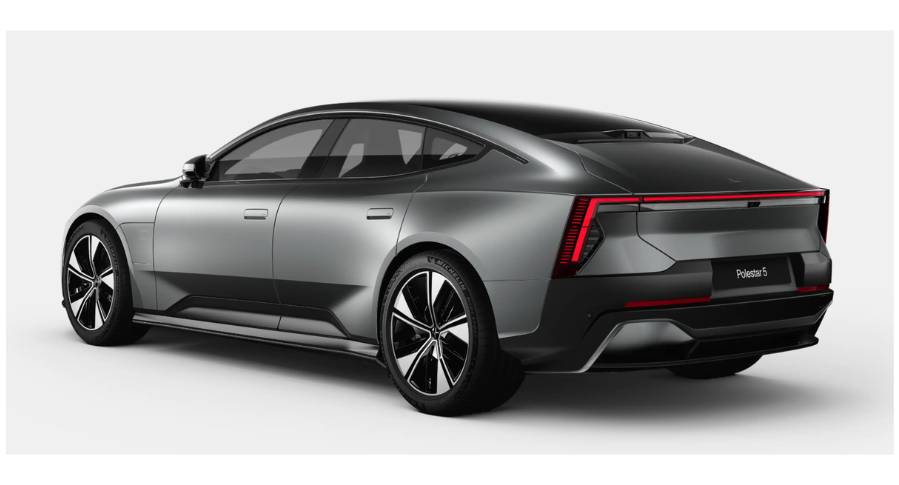
The Polestar 5 is available in two variants, both all-wheel drive (AWD). The entry-level Polestar 5 Dual Motor delivers a maximum power: 737 HP/ torque: 812 Nm. The EV can achieve 0-60 mph in 3.8 seconds. The Polestar 5 Performance variant delivers a maximum power: 871 HP/ torque: 1,015 Nm. The EV can achieve 0-60 mph in 3.2 seconds. The top speed of the EV is 155 mph. Like the Polestar 4, the Polestar 5 does not have a rear-view glass. Instead the car has a rear-view HD camera. The reaction in general is mixed on this issue, as the more conventional drivers prefer a rear-view glass instead of a camera.
The Polestar 5 has yet to be awarded the Euro NCAP Safety Rating. Some of the driving aids and safety features incorporated in the electric vehicle include: parking assistance (12 ultrasonic sensors, 360° camera with 3D view), 4 short range cameras, providing a 360° with 3D view, 1 rear-view HD camera , 1 driver monitoring camera, mid-range forward-facing radar, collision avoidance/mitigation, lane keeping aid, lane departure warning, blind spot information, cross traffic alert and more. We expect the BEV to be awarded the highest Euro NCAP Safety Rating. On a side note, we like the Swedish gold seatbelts in the Polestar 5 Performance variant.
In terms of technology, the EV offers the following: 9″ driver display, 9×3″ head-up display, 14.5″ centre display, over-the-air (OTA) updates, Apple CarPlay and more.
In terms of exterior styling, it is hard not to be impressed by the sporty performance GT. The EV has a Presence with a capital ‘P’. It looks very much a Polestar with its signature dual blade headlights. The overall approach to the styling has been minimalism. It is just not a design approach, but also an engineering approach. Given the weight of the 112 kWh onboard EV battery, to achieve efficiency and performance, the aerodynamics of the vehicle is key. Every inch of external surface area has to be carefully considered. Polestar has done that in granularity. The electric car has 0.24 Cd drag coefficient.
Is the Polestar 5 a good car? Well, the electric car does not come cheap. Prices start at £89,500. But the Polestar 5 is not positioned for affordability. Rather it is positioned for unrivalled performance: to set your heart racing every minute you are sat in the drivers seat of this sporty Grand Tourer (GT). If performance and premium is your thing, then the Polestar 5 is certainly worth considering. Also worth checking out is the all-electric Lotus Emeya Hyper-GT!
Company-car drivers can take advantage of the lower Benefit-in-Kind (BiK) tax rate for pure electric cars. Bottom-line, electric driving is good for the environment and the wallet. You can lease electric vehicles (EVs), to include, Salary Sacrifice, via e-zoomed at very competitive prices!
| PROS | CONS |
|---|---|
| A truly high performance and luxurious electric car with very few true competitors | AC charging limited to 11 kW AC |
| Large sized onboard EV battery. Good and practical electric range. 350 kW DC charging as standard | Some competitors are offering 10 year EV battery warranty |
| The electric car sets the heart racing | Only a five-seater in name. In reality, just a four-seater. Boot space on the smaller side |
Gallery


The All-Electric Polestar 5 GT Saloon (credit: Polestar)
| At A Glance | |
|---|---|
| EV Type: | Battery-Electric Vehicle (BEV) |
| Body Type: | Saloon (Grand Tourer-GT) |
| Engine: | Electric |
| Available In UK: | Yes |
| Variants (2 Options) |
|---|
| Polestar 5 Dual motor (from £89,500) |
| Polestar 5 Performance (from £104,900) |
| EV Battery & Emissions | |
|---|---|
| EV Battery Type: | Lithium-ion NMC battery |
| EV Battery Capacity: | Available in one battery size: 112 kWh (800V) |
| Charging: | 350 kW DC Rapid Charging (10%-80%: 22 mins). Onboard AC charger: 11 kW AC (0%-100%: 11 hrs) |
| Charge Port: | Type 2 |
| Charge Port Location: | Front Left |
| EV Cable Type: | Type 2 |
| Tailpipe Emissions: | 0g (CO2/km) |
| EV Battery Warranty: | 8 years or 100,000 miles (70% State-of-Health (SoH)) |
| Average Cost Of Residential Charging | |
|---|---|
| Battery net capacity : 12.4 kWh | £3.27 |
| Battery net capacity : 16.7 kWh | £4.40 |
| Battery net capacity : 26.6 kWh | £7.01 |
| Battery net capacity : 30.0 kWh | £7.91 |
| Battery net capacity : 39.2 kWh | £10.33 |
| Battery net capacity : 45.0 kWh | £11.86 |
| Battery net capacity : 50.0 kWh | £13.18 |
| Battery net capacity : 64.0 kWh | £16.86 |
| Battery net capacity : 71.0 kWh | £18.71 |
| Battery net capacity : 77.0 kWh | £20.29 |
| Battery net capacity : 90.0 kWh | £23.72 |
| Battery net capacity : 100.0 kWh | £26.35 |
| Battery net capacity : 112.0 kWh | £29.51 |
| Battery net capacity : 120.0 kWh | £31.62 |
| Battery net capacity : 130.0 kWh | £34.26 |
- Note 1: The average cost of residential electricity in the UK varies depending on the region, supplier and type of energy used. An average for the UK is 26.35 p/kWh.
- Note 2: Not all EV manufactures make available the data on net EV battery capacity, and in a number of instances the EV battery capacity advertised, does not state if it is gross or net capacity. In general, usable EV battery capacity is between 85% to 95% of the gross available capacity. Best to charge an EV overnight when the rates are the lowest.
| Charging Times (Overview) | |
|---|---|
| Slow charging AC (3 kW – 3.6 kW): | 6 – 12 hours (dependent on size of EV battery & SOC) |
| Fast charging AC (7 kW – 22 kW): | 3 – 8 hours (dependent on size of EV battery & SoC) |
| Rapid charging AC (43 kW): | 0-80%: 20 mins to 60 mins (dependent on size of EV battery & SoC) |
| Rapid charging DC (50 kW+): | 0-80%: 20 mins to 60 mins (dependent on size of EV battery & SoC) |
| Ultra rapid charging DC (150 kW – 350 kW): | 0-80% : 20 mins to 40 mins (dependent on size of EV battery & SoC) |
| Tesla Supercharger DC (120 kW – 350 kW): | 0-80%: up to 25 mins (dependent on size of EV battery & SoC) |
- Note 1: SoC: state of charge
| Dimensions | |
|---|---|
| Height (mm): | 1419 – 1425 |
| Width (mm): | 2015 (mirrors folded) |
| Length (mm): | 5087 |
| Wheelbase (mm): | 3054 |
| Turning Circle (m): | 12.33 |
| Boot Space (L): | 365 (rear seats folded down: 1,128 L) |
| Frunk (L): | 62 |
| Polestar 5 Dual motor | |
|---|---|
| EV Battery Capacity: | 112 kWh (800V) |
| Pure Electric Range (WLTP): | 421 miles |
| Electric Energy Consumption (kWh/100mi): | 28.6 – 29.4 |
| Miles per kWh: | 3.75 |
| Charging: | 350 kW DC Rapid Charging (10%-80%: 22 mins). Onboard AC charger: 11 kW AC (0%-100%: 11 hrs) |
| Top Speed: | 155 mph |
| 0-60 mph: | 3.8 seconds |
| Drive: | All-wheel drive (AWD) |
| Electric Motor (kW): | 550 |
| Horsepower (bhp): | 737 |
| Torque (lbf-ft): | 599 (812 Nm) |
| Transmission: | Automatic |
| Seats: | 5 (4+1) |
| Doors: | 4 |
| Kerb Weight (kg): | 2,500 |
| Towing Capacity (Braked/Unbraked)/ (kg): | 1,800 |
| Colours: | 6 |
| NCAP Safety Rating: | N/A |
| Insurance Group: | N/A |
| Polestar 5 Performance | |
|---|---|
| EV Battery Capacity: | 112 kWh (800V) |
| Pure Electric Range (WLTP): | 346 miles |
| Electric Energy Consumption (kWh/100mi): | 34.1 |
| Miles per kWh: | 3.08 |
| Charging: | 350 kW DC Rapid Charging (10%-80%: 22 mins). Onboard AC charger: 11 kW AC (0%-100%: 11 hrs) |
| Top Speed: | 155 mph |
| 0-60 mph: | 3.1 seconds |
| Drive: | All-wheel drive (AWD) |
| Electric Motor (kW): | 650 |
| Horsepower (hp): | 871 |
| Torque (lbf-ft): | 749 (1,015 Nm) |
| Transmission: | Automatic |
| Seats: | 5 (4+1) |
| Doors: | 4 |
| Unladen Weight (kg): | 2,500 |
| Towing Capacity (Braked/Unbraked)/ (kg): | 1,800 |
| Colours: | 6 |
| NCAP Safety Rating: | N/A |
| Insurance Group: | N/A |
While e-zoomed uses reasonable efforts to provide accurate and up-to-date information, some of the information provided is gathered from third parties and has not been independently verified by e-zoomed. While the information from the third party sources is believed to be reliable, no warranty, express or implied, is made by e-zoomed regarding the accuracy, adequacy, completeness, legality, reliability or usefulness of any information. This disclaimer applies to both isolated and aggregate uses of this information.
Featured Articles
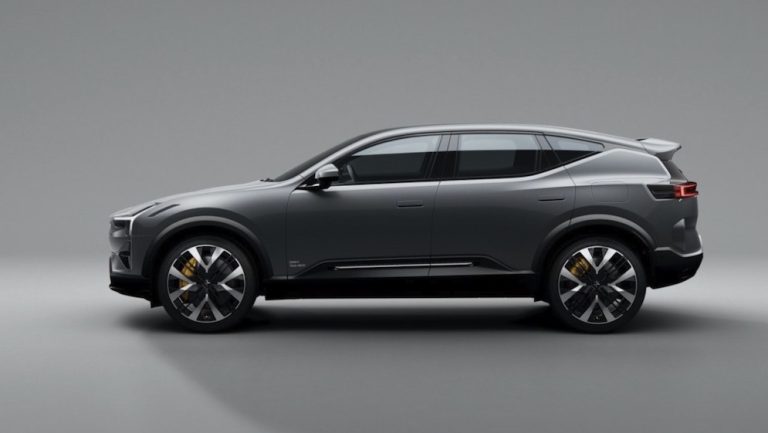
The All-Electric Polestar 3 (SUV): The Complete Electric Car Buying Guide For The UK
Overview Polestar is a high performance Swedish automotive brand established by Volvo in 1996. Polestar is headquartered close to Gothenburg, Sweden. The genesis of the Polestar brand is linked…
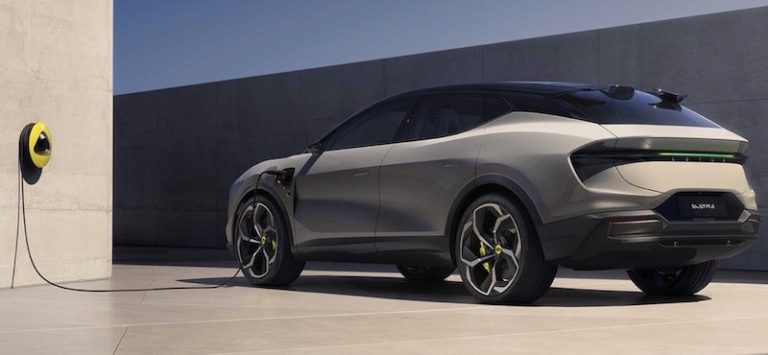
The All-Electric Lotus Eletre Hyper-(SUV): The Complete Electric Car Buying Guide For The UK
Overview Polestar is a high performance Swedish automotive brand established by Volvo in 1996. Polestar is headquartered close to Gothenburg, Sweden. The genesis of the Polestar brand is linked…
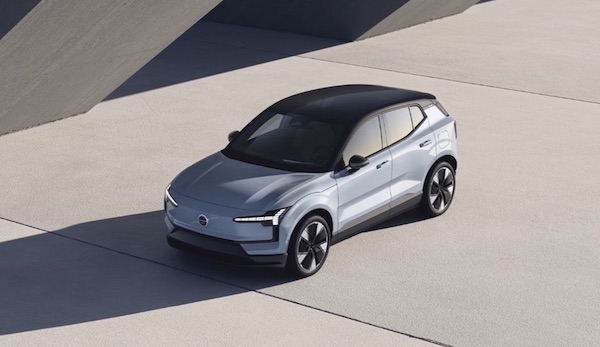
The All-Electric Volvo EX30 (SUV): The Complete Electric Car Buying Guide For The UK
Overview Polestar is a high performance Swedish automotive brand established by Volvo in 1996. Polestar is headquartered close to Gothenburg, Sweden. The genesis of the Polestar brand is linked…
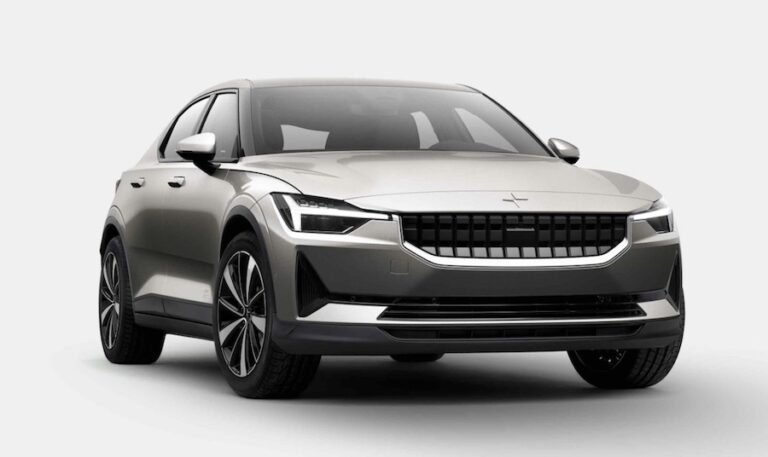
The All-Electric Polestar 2 (Hatchback): The Complete Electric Car Buying Guide For The UK
Overview Polestar is a high performance Swedish automotive brand established by Volvo in 1996. Polestar is headquartered close to Gothenburg, Sweden. The genesis of the Polestar brand is linked…

The All-Electric Volvo C40 Recharge (SUV): The Complete Electric Car Buying Guide For The UK
Overview Polestar is a high performance Swedish automotive brand established by Volvo in 1996. Polestar is headquartered close to Gothenburg, Sweden. The genesis of the Polestar brand is linked…
Featured Products
-
Best-In-Class Home Solar Bundle Offer (440W All Black Jinko Solar 8 Panels + Sungrow Hybrid Inverter 3.6 kW): price includes product supply only – free delivery
Original price was: £2,205.95.£2,150.95Current price is: £2,150.95. (Including VAT)
-
Best-In-Class Home Solar Bundle Offer (440W All Black Jinko Solar 8 Panels + Sungrow Battery Storage 6.4 kWh + Sungrow Hybrid Inverter 3.6 kW): price includes product supply only – free delivery
Original price was: £5,010.95.£4,800.95Current price is: £4,800.95. (Including VAT)
-
Bundle Offer: SUNSYNK LifePO4 Home Battery Storage (5.32 kWh) + SUNSYNK Hybrid Inverter (3.6 kW/Single-Phase): price includes product supply only – free delivery
Original price was: £3,345.95.£3,299.95Current price is: £3,299.95. (Including VAT)
-

Bundle Offer: Tesla Powerwall 3 Home Battery Storage (13.5 kWh) + Gateway: price includes product supply only – free delivery
£8,559.95 (Including VAT)
-
Custom-Made Single-Phase EV Charging Cable Type 2 to Type 2 (2m to 50m, 7.4 kW, 32 amp, Black) – Built & Tested In The UK – Free Delivery
Price range: £99.95 through £670.95 (Including VAT)
Category:CablesType:Type 2Length (m):5 m7.5 m10 m3.5 m12.5 m15 m20 m17.5 m2 m22.5 m25 m30 m35 m40 m45 m50 mCurrent (amp):32 ampPhase:Single Phase (7.2kW)
This product has multiple variants. The options may be chosen on the product page -

Untethered Ohme ePod Home Smart EV Charger (7.4 kW): price includes product only – free delivery
£645.95 (Including VAT)
Brand:OhmeCategory:EV Charging PointsCustomer type:ResidentialPower:7.4 kWCable:UntetheredPhase:Single Phase


The post The All-Electric Polestar 5 Grand Tourer (Saloon): The Complete Electric Car Buying Guide For The UK appeared first on Ezoomed.