
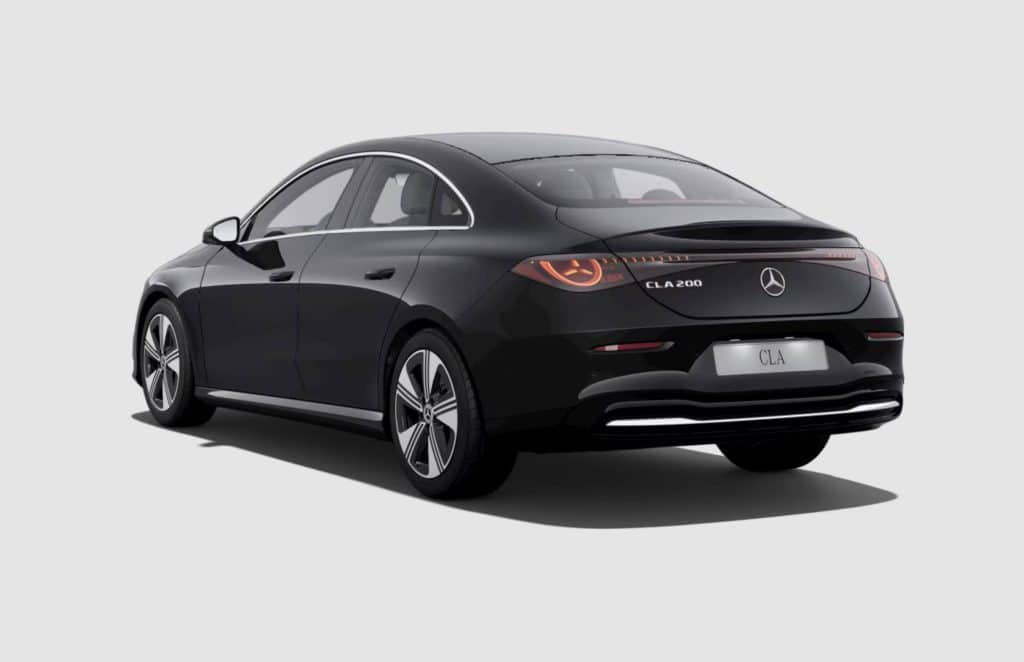
The all-new Mercedes-Benz CLA Electric (2026) is a sleek, four-door battery-electric saloon designed to make long-range electric driving more accessible within the Mercedes-Benz line-up. Built on the new Mercedes-Benz Modular Architecture rather than converted from the previous CLA, it combines compact-executive proportions with a particularly aerodynamic shape and an illuminated star-pattern front panel. The result is a distinctive alternative to both conventional executive saloons and the growing number of premium electric SUVs.
UK buyers can choose the rear-wheel-drive Mercedes-Benz CLA 200 Electric with a 58 kWh usable battery, the longer-range Mercedes-Benz CLA 250+ Electric with 85 kWh, or the dual-motor Mercedes-Benz CLA 350 4MATIC Electric with the same larger battery. Official maximum WLTP range reaches 483 miles for a suitably configured CLA 250+, although each powertrain and trim has its own figure. Maximum DC charging also differs: up to 200 kW for the CLA 200 and 320 kW for the 85 kWh versions.
Mercedes-Benz UK advertises prices from £39,150 on the road for the CLA 200 Sport, with more expensive Sport Executive and AMG Line specifications above it. The current range includes cars with September 2026 production pricing, while the separate high-performance Mercedes-AMG CLA 45 has a later production schedule and is not included in this mainstream buyer guide. Before ordering, buyers should confirm the configuration-specific price, actual WLTP figure and optional 400-volt DC charging capability in writing.
The CLA competes with the Tesla Model 3, Hyundai IONIQ 6 and BYD SEAL, while the BMW i3 Neue Klasse provides an additional premium reference point. These cars are not exact price matches in every derivative, making battery size, equipment and official range more meaningful than badge comparisons alone. The CLA’s appeal is especially strong for drivers who favour quiet motorway travel and a saloon shape over maximum loading flexibility.
This e-zoomed guide compares the three mainstream UK electric powertrains, the five principal trim families, charging requirements, practical space, safety and ownership costs. It also highlights an unusually important specification decision: the optional converter needed to use many UK 400-volt public DC charging stations. Our assessment is based on manufacturer information and independent research, not a claim that e-zoomed has personally road-tested this vehicle.
At a glance: Mercedes-Benz CLA Electric (2026)
| Specification | Mercedes-Benz CLA Electric — UK |
|---|---|
| Starting UK price | £39,150 OTR; CLA 200 Sport |
| Electric vehicle type | Battery-Electric Vehicle (BEV) |
| Body style / seats | Four-door electric saloon / five seats |
| UK electric derivatives | CLA 200; CLA 250+; CLA 350 4MATIC |
| Usable batteries | 58 kWh (CLA 200); 85 kWh (CLA 250+ and 350) |
| Official electric range | Up to 483 miles WLTP; varies by derivative, trim and options |
| Motor power | 165 kW / 200 kW / 260 kW, respectively |
| Drivetrain | Rear-wheel drive (200/250+); all-wheel drive (350 4MATIC) |
| 0–62 mph | 7.5 / 6.7 / 4.9 seconds, respectively |
| AC charging | 11 kW on-board charger |
| DC charging / 10–80% | 200 kW and 20 min (200); 320 kW and 22 min (85 kWh models) |
| 400-volt DC compatibility | Requires optional converter; quoted UK cost £850 |
| Boot / front compartment | 405 litres / 101 litres |
| Euro NCAP | Five stars (2025 test of new electric CLA) |
| Battery warranty | Eight years / 100,000 miles; 70% minimum threshold |
| Tailpipe CO₂ | 0 g/km |
UK headline prices and equipment are based on the current manufacturer website and September 2026 production information, with technical details corroborated by the Mercedes-Benz UK electric-CLA specification. The maximum 483-mile WLTP claim is not the range of every CLA: the manufacturer’s currently displayed Sport configuration, for example, may carry a lower certified figure depending on equipment.
Table of Contents
Pros & cons
| Pros | Cons |
|---|---|
| 1. Outstanding long-range option: The 85 kWh CLA 250+ can travel up to 483 miles in its most efficient UK WLTP configuration. | 1. Important charging option: Without the extra-cost converter, the CLA cannot use many existing 400-volt DC rapid chargers. |
| 2. Fast charging and efficiency: The 800-volt system supports up to 320 kW DC on the larger-battery versions, with a 22-minute claimed 10–80% stop. | 2. Saloon practicality: The 405-litre boot has a smaller opening than a hatchback or estate, and taller rear passengers may find headroom limited. |
| 3. Strong safety and refinement: A five-star Euro NCAP result, composed road manners and useful standard driver-assistance technology strengthen its appeal. | 3. Equipment and price trade-offs: Upmarket trims raise the cost and can reduce official range; some buyers may also dislike the screen-focused controls. |
Sign up to the e-zoomed Electric Living newsletter
About Mercedes-Benz: The company behind the CLA Electric
Mercedes-Benz has a long history in premium cars, but the Mercedes-Benz CLA Electric represents a more fundamental change than the name suggests. The new C174 electric car uses a purpose-developed platform, a high-efficiency rear electric drive unit and the Mercedes-Benz Operating System, or MB.OS. For manufacturer and model history, the Mercedes-Benz CLA encyclopaedia entry provides background on the nameplate’s earlier generations.
The CLA sits below the larger electric executive saloons in Mercedes-Benz’s UK range, including the Mercedes-Benz EQE. The combustion-engined and hybrid CLA models are separate powertrains and should not be confused with the fully electric versions discussed here. Equally, the CLA Electric Shooting Brake has its own body shape, boot measurements and UK prices; this guide deliberately concentrates on the four-door electric saloon.
Meet the Mercedes-Benz CLA Electric
Overview
The Mercedes-Benz CLA Electric combines a smooth, coupé-like roofline with four doors, short overhangs and a distinctive illuminated Mercedes-Benz pattern in the front panel. The new platform supports an 800-volt electrical system and a two-speed transmission on the rear axle, engineered to improve efficiency across urban and motorway driving. Its exterior presentation feels more futuristic than the outgoing CLA, but the fastback-style proportions still impose practical compromises in rear headroom and luggage access.
The CLA 200 is the relatively affordable starting point, while the CLA 250+ substitutes a larger battery and delivers the outstanding long-range figures. The CLA 350 4MATIC adds a front motor, bringing greater traction and stronger acceleration at the cost of some WLTP range. Within each powertrain, Sport, Sport Executive, AMG Line Executive, AMG Line Premium and AMG Line Premium Plus determine comfort, equipment and wheels, rather than creating a different fundamental battery platform.
Independent reviews suggest that the CLA’s main strengths are its refined ride, controlled motorway behaviour and efficient use of energy. The Polestar 2 offers another premium electric fastback experience, but the CLA’s long-distance figures and dashboard design give it a distinct personality. Buyers should test the seating position, visibility and physical controls rather than assuming that a dramatic screen layout will suit everybody.
Battery & range
The Mercedes-Benz CLA 200 Electric has 58 kWh usable battery capacity and the CLA 250+ and CLA 350 4MATIC have 85 kWh usable. The manufacturer’s April 2026 UK technical schedule lists up to 331, 483 and 447 miles WLTP respectively, before accounting for all additional options; the current UK website illustrates slightly different certified figures for selected configurations. These numbers are not interchangeable, and the 483-mile maximum specifically belongs to an efficient CLA 250+ configuration.
For regular motorway use, the difference between 58 and 85 kWh will be more consequential than small changes in upholstery or equipment. In the wider published specification, some CLA 200 combinations drop towards 300 miles, while the CLA 250+ can vary substantially with wheels, towing equipment and optional charging hardware. Prospective owners should check the actual WLTP result of the car they are buying and plan a reserve for winter temperatures, motorway speeds and adverse weather.
An efficient 85 kWh saloon can reduce the number of public charging stops on a long UK journey, but the actual benefit depends on driving habits and access to charging infrastructure. The Volkswagen ID.7 is another long-distance electric option worth considering where cabin and luggage space matter as much as range. It is better to compare realistically equipped cars than to base the decision on the most favourable laboratory number alone.
Charging
The CLA uses an 800-volt electrical architecture and a CCS charging connection. According to Mercedes-Benz UK, the CLA 200 can charge at up to 200 kW DC and complete 10–80% in approximately 20 minutes, while the larger-battery CLA 250+ and CLA 350 4MATIC reach up to 320 kW and are quoted at 22 minutes. These are manufacturer figures under favourable conditions; neither the charging peak nor the full rate can be assumed throughout every session.
A particularly important UK caveat is the optional 400-volt DC charging system. Earlier CLA electric cars could not use 400-volt DC rapid chargers, and the available converter, quoted at £850, allows charging on compatible 400-volt sites at up to 100 kW. Buyers should confirm the specific car has this hardware, particularly when buying existing stock, because an 800-volt peak charging figure alone does not establish compatibility with the charger network they actually use.
For AC charging, all three mainstream versions use an 11 kW on-board charger, with manufacturer estimates of approximately 6.5 hours for the 58 kWh battery and nine hours for 85 kWh at a suitable three-phase charge point. Most UK homes provide single-phase electricity and should expect longer charging times at a 7 kW wallbox. Our guide to charging an electric car and DC charging guide explain the distinctions between home, rapid and ultra-rapid equipment.
Practicality
The four-door Mercedes-Benz CLA Electric seats five and provides a 405-litre rear boot, plus a useful 101-litre front storage compartment for smaller bags or charging cables. The rear boot lid opens as a conventional saloon aperture rather than a full hatch, so carrying bulky boxes or large pushchairs may be less convenient than the volume figure initially suggests. The separately marketed electric Shooting Brake is more appropriate for buyers who need the flexibility of a larger tailgate.
At 4,723 mm long and 2,021 mm wide including mirrors, the CLA occupies substantial road space despite its compact-executive positioning. A wheelbase of 2,790 mm helps cabin packaging, but the sloping roofline means that taller adults should test access and rear headroom carefully. The fixed panoramic roof contributes to cabin brightness and exterior design, although the exact treatment of roof glazing and sun protection depends on the chosen specification.
Mercedes-Benz quotes towing limits that depend on drivetrain and equipment, with suitable versions offering up to 1,500 kg braked for rear-wheel drive and up to 1,800 kg for CLA 350 4MATIC. Buyers should verify the rated limit, factory towbar and vehicle registration documents for their exact car, rather than assuming every configuration can tow the published maximum. Trailer use also reduces electric range, sometimes significantly on motorway journeys.
Technology & equipment
The CLA introduces Mercedes-Benz’s MB.OS digital architecture and a new generation of MBUX infotainment. A 10.25-inch driver display and 14-inch central touchscreen are central to the cabin, while the available MBUX Superscreen adds a separate front-passenger display on appropriate specifications. Connected navigation, voice assistance and software updates broaden its capabilities, although the availability and continuing cost of individual Digital Extras should be confirmed when ordering.
Standard and optional equipment vary across Sport, Sport Executive and the AMG Line levels. Heated front seats, the panoramic roof and a heat pump make the underlying specification appealing, while higher trims can add premium audio, enhanced lighting, parking cameras and a head-up display. These upgrades are genuinely useful to some drivers but are not a substitute for choosing the right battery and charging configuration in the first place.
The large-screen layout looks impressive, yet independent testing suggests that some controls take more attention to operate than conventional buttons. Buyers who prefer an alternative cabin philosophy may wish to compare the BMW i5, recognising that it is a larger and generally more expensive executive car. During a test drive, check how straightforward it is to adjust heating, navigation and driver assistance without taking attention away from the road.
Performance
The rear-wheel-drive CLA 200 develops 165 kW (224 hp) and 335 Nm, reaching 62 mph in 7.5 seconds. The CLA 250+ raises output to 200 kW (272 hp), with the same published 335 Nm and a 6.7-second acceleration time; the dual-motor CLA 350 4MATIC produces 260 kW (354 hp), 515 Nm and reaches 62 mph in 4.9 seconds. All three mainstream versions have a quoted top speed of 130 mph.
The two-speed rear transmission and efficient electric drivetrain are designed to balance low-speed response with motorway economy. Independent reviews generally praise the quiet, controlled ride and assured handling, although the CLA is not necessarily the most communicative sports saloon in its class. Wheel and suspension choices can influence refinement, so the most expensive appearance package should not automatically be assumed to deliver the most comfortable daily drive.
The CLA 350 4MATIC has an obvious advantage for drivers seeking rapid acceleration and all-weather traction, but the CLA 250+ is likely to be the better balance for buyers prioritising range and running costs. Its rear-drive configuration is already quick enough for routine overtaking and motorway joining, while the lower-priced CLA 200 offers adequate everyday performance. The right choice depends more on likely journeys than on chasing the shortest acceleration time.
Safety
The new electric Mercedes-Benz CLA achieved five stars in Euro NCAP testing published in December 2025, with 94% adult-occupant, 89% child-occupant, 93% vulnerable-road-user and 85% safety-assistance results. Euro NCAP identifies the electric saloon CLA 250+ as the tested variant and lists rating applicability to the relevant right-hand-drive electric CLA range. This is evidence for the new electric generation, not a recycled rating from the earlier petrol CLA.
The assessment highlights a stable passenger compartment and strong crash protection, alongside modern automatic emergency braking and safety-assistance measures. Nevertheless, individual driver-assistance functions and parking equipment can vary between trims, and some features remain optional or dependent on software availability. Buyers should confirm the final UK safety specification and treat electronic assistance as support for, not replacement of, attentive driving.
The verdict
The Mercedes-Benz CLA Electric is one of the more persuasive premium electric saloons because its battery and charging technology translate into genuinely useful ownership advantages. The distinctive styling will divide opinion, but the efficient drivetrain, composed road manners and strong independent safety rating give it substance beyond visual drama. It deserves serious consideration from buyers who want a sleek four-door car rather than another electric SUV.
The CLA 250+ is the standout all-rounder in the range. Its 85 kWh usable battery, up-to-483-mile official WLTP capability and 320 kW DC charging provide an attractive combination for regular long-distance travel. The more affordable CLA 200 should not be overlooked, however, particularly by owners whose daily mileage rarely justifies paying for the larger battery.
There are significant trade-offs. The saloon opening and rear headroom are less versatile than a hatchback or estate, premium trims can add considerable cost, and an abundance of touchscreen functions will not suit every driver. Most importantly, the 400-volt rapid-charging converter is a purchase decision that should be resolved before signing for a car, rather than discovered at a public charger.
Long-range capability makes the CLA attractive for travel across the UK, but an excellent 800-volt charging specification is only valuable when compatible stations are available. Households with home charging will generally have the simplest ownership experience; those relying on public infrastructure should compare charger compatibility and likely costs carefully. Our UK EV charging tariffs guide can help assess the cost side of ownership.
The e-zoomed view: the Mercedes-Benz CLA 250+ Electric offers the strongest balance of range, charging and performance in the mainstream UK line-up, especially in a modestly specified trim. The CLA 200 is better value for shorter-distance users, while the CLA 350 4MATIC makes most sense if the extra acceleration and all-wheel drive are genuine priorities. Avoid treating the maximum WLTP figure as applicable to every configuration.
Before ordering, obtain a written quote showing the exact derivative, production specification, WLTP range, charger-converter equipment, battery warranty and expected delivery. Test both front and rear seats, check luggage loading with your usual belongings, and try the infotainment system on a representative drive. Comparing the CLA against a similarly priced, similarly equipped electric rival will reveal more than comparing their marketing headlines.
Gallery
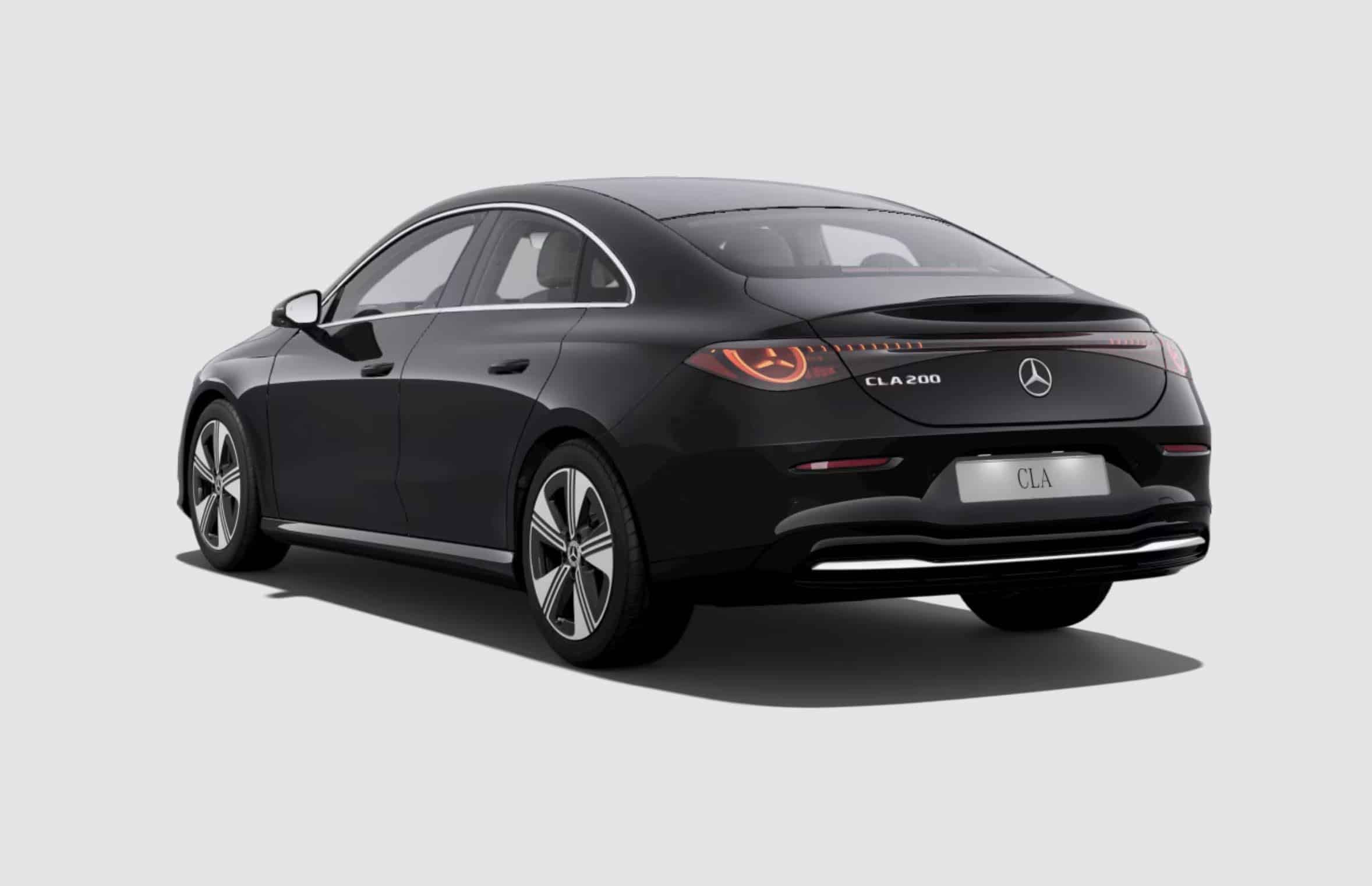
Mercedes-Benz CLA Electric (Credit: Mercedes-Benz)
Pricing
Mercedes-Benz UK currently advertises the CLA Electric saloon from £39,150 on the road. The table below sets out recommended UK OTR figures reported for September 2026 production, before individual options, finance offers or changes made by a retailer. The saloon range comprises the CLA 200 and CLA 250+ across five principal trims, with the CLA 350 4MATIC starting at AMG Line Executive; the separately priced electric Shooting Brake and Mercedes-AMG CLA 45 are not included.
| UK trim | CLA 200 Electric OTR | CLA 250+ Electric OTR | CLA 350 4MATIC Electric OTR |
|---|---|---|---|
| Sport | £39,150 | £43,250 | Not listed |
| Sport Executive | £41,300 | £45,400 | Not listed |
| AMG Line Executive | £43,750 | £47,850 | £51,800 |
| AMG Line Premium | £45,650 | £48,950 | £53,700 |
| AMG Line Premium Plus | £48,350 | £52,450 | £56,350 |
The 400-volt DC converter has been quoted as an £850 UK option, and it is worth checking whether it is fitted to the particular vehicle being offered rather than assuming it is included in every trim. Paint, upgraded audio, additional assistance functions and other options can also affect the final OTR price and WLTP certification. The quoted figures include standard on-road charges; they should not be confused with a manufacturer RRP excluding registration and delivery costs.
Specifications
The tables distinguish the CLA 200, CLA 250+ and CLA 350 4MATIC, using UK manufacturer information for the electric C174 saloon rather than the previous CLA Coupé or Shooting Brake. Where a source presents a range of figures, these are configuration-dependent and cannot be applied automatically to a different trim. Battery sizes below are usable capacity, not unverified gross figures.
| Battery, charging and warranty | CLA 200 Electric | CLA 250+ Electric | CLA 350 4MATIC Electric |
|---|---|---|---|
| Usable battery | 58 kWh | 85 kWh | 85 kWh |
| Battery chemistry | Lithium-ion | Lithium-ion | Lithium-ion |
| On-board AC charger | 11 kW | 11 kW | 11 kW |
| AC 0–100% at suitable 11 kW supply | Approx. 6.5 hours | Approx. 9 hours | Approx. 9 hours |
| Maximum DC rate | 200 kW | 320 kW | 320 kW |
| DC 10–80% claim | 20 minutes | 22 minutes | 22 minutes |
| Optional 400 V DC converter | Required for 400 V DC; up to 100 kW if specified | Required for 400 V DC; up to 100 kW if specified | Required for 400 V DC; up to 100 kW if specified |
| New-car warranty | 3 years / unlimited mileage | 3 years / unlimited mileage | 3 years / unlimited mileage |
| Battery warranty | 8 years / 100,000 miles | 8 years / 100,000 miles | 8 years / 100,000 miles |
| Capacity warranty threshold | 70% | 70% | 70% |
| Tailpipe CO₂ | 0 g/km | 0 g/km | 0 g/km |
Illustrative UK home-charging cost: at a hypothetical electricity rate of 25p per kWh, an amount equal to the full usable battery capacity would cost £14.50 for 58 kWh or £21.25 for 85 kWh before charging losses. A 10–80% energy amount is approximately 40.6 kWh or 59.5 kWh respectively, not necessarily the energy drawn from the wall. Actual bills depend on tariff, battery temperature and charging efficiency; our home charger cable guide covers a separate practical installation choice.
| Illustrative electricity input | Battery energy used | At 25p/kWh before losses | At 7p/kWh before losses |
|---|---|---|---|
| CLA 200: 0–100% usable equivalent | 58.0 kWh | £14.50 | £4.06 |
| CLA 200: 10–80% usable equivalent | 40.6 kWh | £10.15 | £2.84 |
| CLA 250+ / 350: 0–100% usable equivalent | 85.0 kWh | £21.25 | £5.95 |
| CLA 250+ / 350: 10–80% usable equivalent | 59.5 kWh | £14.88 | £4.17 |
| Dimensions and practicality | CLA Electric saloon |
|---|---|
| Overall length | 4,723 mm |
| Width including mirrors | 2,021 mm |
| Width without mirrors | 1,855 mm |
| Height | 1,468 mm |
| Wheelbase | 2,790 mm |
| Seats / doors | Five / four |
| Rear boot | 405 litres |
| Front storage compartment | 101 litres |
| Turning circle | 11.2 metres |
| Braked towing limit | Configuration dependent; up to 1,500 kg RWD / 1,800 kg AWD with suitable equipment |
| Euro NCAP | Five stars under 2025 protocol; 94% adult / 89% child / 93% vulnerable road users / 85% safety assist |
| Performance and range | CLA 200 | CLA 250+ | CLA 350 4MATIC |
|---|---|---|---|
| Motor power | 165 kW (224 hp) | 200 kW (272 hp) | 260 kW (354 hp) |
| Torque | 335 Nm | 335 Nm | 515 Nm |
| Drive | Rear-wheel drive | Rear-wheel drive | All-wheel drive |
| Transmission | Two-speed rear drive | Two-speed rear drive | Two-speed rear drive / additional front motor |
| 0–62 mph | 7.5 sec | 6.7 sec | 4.9 sec |
| Top speed | 130 mph | 130 mph | 130 mph |
| Highest quoted UK WLTP | Up to 331 miles | Up to 483 miles | Up to 447 miles |
| UK WLTP spread in April 2026 schedule | Approx. 300–331 miles | Approx. 439–483 miles | Approx. 423–447 miles |
Current Mercedes-Benz UK online examples can show a slightly lower certified WLTP range than the maximum published in its technical schedule, depending on the displayed specification. The 58 and 85 kWh variants should also not be assigned each other’s 10–80% charging times or motor outputs. For any individual car, use the VIN-linked specification and manufacturer-confirmed WLTP value when comparing range, tax or finance terms.
FAQs
| Frequently asked question | Answer |
|---|---|
| What is the UK starting price of the Mercedes-Benz CLA Electric? | The CLA 200 Sport is advertised from £39,150 OTR, before options and any subsequent price changes. |
| Is the new CLA fully electric? | The CLA Electric C174 variants discussed here are Battery-Electric Vehicles (BEVs). Petrol and hybrid CLA models are separate derivatives. |
| What electric motors can UK buyers choose? | CLA 200: 165 kW rear drive; CLA 250+: 200 kW rear drive; CLA 350 4MATIC: 260 kW all-wheel drive. |
| How big is the battery? | The CLA 200 has 58 kWh usable; CLA 250+ and CLA 350 4MATIC have 85 kWh usable. |
| Which CLA has the longest range? | The CLA 250+ has the highest claimed UK WLTP figure, up to 483 miles in a suitable configuration. |
| Can every CLA Electric travel 483 miles? | No. The CLA 200, CLA 350 4MATIC, different trims and added options have their own certified WLTP figures. |
| How quickly does the CLA charge on DC? | CLA 200: up to 200 kW, around 20 minutes 10–80%; 85 kWh versions: up to 320 kW, around 22 minutes. |
| Will the CLA work at a 400-volt DC rapid charger? | Only with the appropriate 400-volt converter. In the UK, this has been quoted at £850 as an option; verify fitment for the actual car. |
| How long does AC charging take? | At suitable 11 kW three-phase AC equipment, approximately 6.5 hours for 58 kWh or nine hours for 85 kWh, 0–100%. |
| What is its boot capacity? | The saloon has a 405-litre rear boot and an additional 101-litre front compartment. |
| Is there a more practical body style? | Yes. The separately marketed Mercedes-Benz CLA Electric Shooting Brake has a different rear body and luggage opening. |
| Can the electric CLA tow? | Certain configurations offer up to 1,500 kg braked with rear drive or 1,800 kg with all-wheel drive and suitable towing equipment. |
| What warranty covers the high-voltage battery? | Eight years or 100,000 miles, with a 70% capacity threshold, subject to the complete Mercedes-Benz certificate terms. |
| How safe is the electric CLA? | Euro NCAP awarded five stars in December 2025; its test results include the right-hand-drive electric CLA saloon range. |
While e-zoomed uses reasonable efforts to provide accurate and up-to-date information, some information comes from third parties and has not been independently verified by e-zoomed. Although these sources are believed to be reliable, no warranty, express or implied, is made by e-zoomed regarding the accuracy, adequacy, completeness, legality, reliability or usefulness of such information. This disclaimer applies to both individual and combined uses of this information.
Featured Articles
<!–
Carousel
–>
Hypervolt Home 3 Pro EV Charger: UK Price, Specifications & Solar Charging Guide
The all-new Mercedes-Benz CLA Electric (2026) is a sleek, four-door battery-electric saloon designed to make long-range electric driving more accessible within the Mercedes-Benz line-up. Built on the new Mercedes-Benz…
Best EV Charging Cables UK: How to Choose the Right Length, Type, and Amperage
The all-new Mercedes-Benz CLA Electric (2026) is a sleek, four-door battery-electric saloon designed to make long-range electric driving more accessible within the Mercedes-Benz line-up. Built on the new Mercedes-Benz…
All-Electric MG Cyberster Roadster: UK Prices, Specs, Range & Buying Guide
The all-new Mercedes-Benz CLA Electric (2026) is a sleek, four-door battery-electric saloon designed to make long-range electric driving more accessible within the Mercedes-Benz line-up. Built on the new Mercedes-Benz…
Featured Products
-
<!–
–>Sale!
Best-In-Class Home Solar Bundle Offer (440W All Black Jinko Solar 8 Panels + Sungrow Hybrid Inverter 3.6 kW): price includes product supply only
<!– –>
Original price was: £2,205.95.£2,150.95Current price is: £2,150.95. (Including VAT)
<!–
–>
<!– Term:
NEDC range:
Model Year:
Deposit: £
Miles Per AnnumSubject to status and conditions –>
Brand:SungrowJinko SolarCategory:Solar<!– –>
-
<!–
–>Sale!
Best-In-Class Home Solar Bundle Offer (440W All Black Jinko Solar 8 Panels + Sungrow Battery Storage 6.4 kWh + Sungrow Hybrid Inverter 3.6 kW): price includes product supply only
<!– –>
Original price was: £5,010.95.£4,800.95Current price is: £4,800.95. (Including VAT)
<!–
–>
<!– Term:
NEDC range:
Model Year:
Deposit: £
Miles Per AnnumSubject to status and conditions –>
Brand:SungrowJinko SolarCategory:Solar<!– –>
-
<!–
–>Sale!
Bundle Offer: SUNSYNK LifePO4 Home Battery Storage (5.32 kWh) + SUNSYNK Hybrid Inverter (3.6 kW/Single-Phase): price includes product supply only
<!– –>
Original price was: £3,345.95.£3,299.95Current price is: £3,299.95. (Including VAT)
<!–
–>
<!– Term:
NEDC range:
Model Year:
Deposit: £
Miles Per AnnumSubject to status and conditions –>
Brand:Sun SynkCategory:Battery Storage<!– –>
-
Bundle Offer: Tesla Powerwall 3 Home Battery Storage (13.5 kWh) + Gateway: price includes product supply only
<!– –>
£8,559.95 (Including VAT)
<!–
–>
<!– Term:
NEDC range:
Model Year:
Deposit: £
Miles Per AnnumSubject to status and conditions –>
Brand:TeslaCategory:Battery Storage<!– –>
-
<!–
–>Sale!
Custom-Made Single-Phase EV Charging Cable Type 2 to Type 2 (2m to 50m, 7.4 kW, 32 amp, Black)
<!– –>
Price range: £99.95 through £670.95 (Including VAT)
<!–
–>
<!– Term:
NEDC range:
Model Year:
Deposit: £
Miles Per AnnumSubject to status and conditions –>
Category:CablesType:Type 2Length (m):5 m7.5 m10 m3.5 m12.5 m15 m20 m17.5 m2 m22.5 m25 m30 m35 m40 m45 m50 mCurrent (amp):32 ampPhase:Single Phase (7.2kW)<!– –>
This product has multiple variants. The options may be chosen on the product page -
Untethered Ohme ePod Home Smart EV Charger (7.4 kW): price includes product only
<!– –>
£645.95 (Including VAT)
<!–
–>
<!– Term:
NEDC range:
Model Year:
Deposit: £
Miles Per AnnumSubject to status and conditions –>
Brand:OhmeCategory:EV Charging PointsCustomer type:ResidentialPower:7.4 kWCable:UntetheredPhase:Single Phase<!– –>

The post Mercedes-Benz CLA Electric (2026): UK Prices, Specs, Range & Buying Guide appeared first on Ezoomed.