
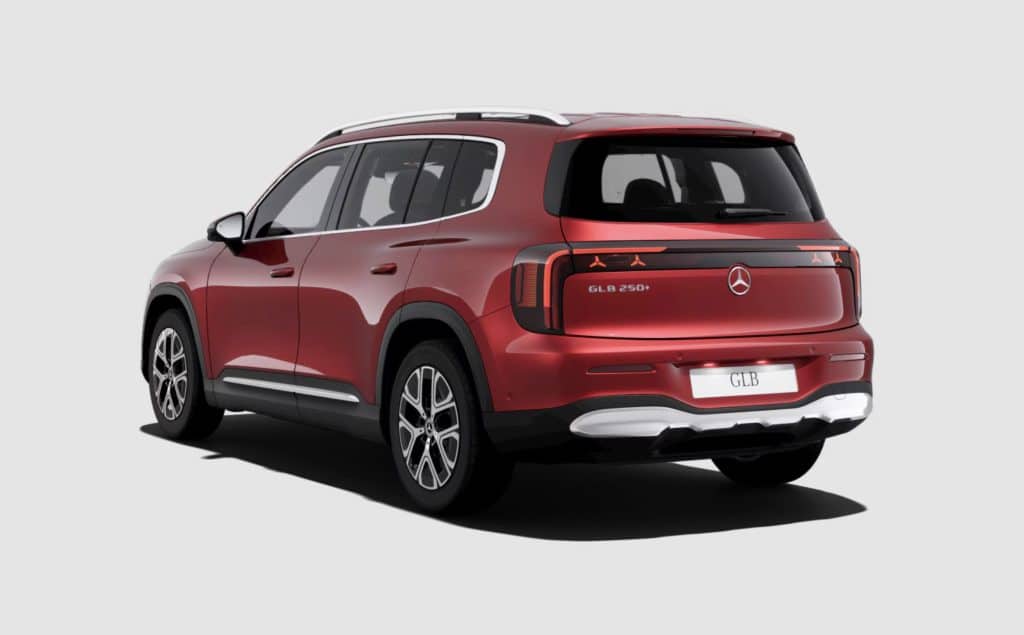
The new Mercedes-Benz GLB Electric (2026) brings genuine seven-seat flexibility to the premium battery-electric SUV market in the UK. Its upright body is designed for families who need more passenger space than a conventional electric crossover, without moving into the size or price bracket of a full-sized luxury SUV. A large front storage compartment and a flexible rear cabin add everyday usefulness to the familiar Mercedes-Benz design.
There are two UK electric powertrains: the rear-wheel-drive GLB 250+ Electric and the more powerful, all-wheel-drive GLB 350 4MATIC Electric. Both use an 85 kWh usable lithium-ion battery and an 800-volt electrical system, with rapid charging at up to 320 kW. The most efficient UK configuration is rated at up to 380 miles WLTP, although larger wheels and selected optional packages reduce that figure.
The new-generation GLB Electric replaces the previous electric-SUV formula associated with the EQB, bringing new software, a redesigned cabin and substantially faster charging. The UK Model Year 807.5 price and technical schedule applies to vehicles produced from September 2026, with recommended on-the-road prices beginning at £46,100. Petrol-hybrid GLB versions are sold separately, and their fuel economy, powertrains and equipment must not be confused with this battery-electric model.
A natural seven-seat alternative is the Peugeot E-5008, while the larger Kia EV9 provides a more expensive and spacious electric-SUV option. Families placing maximum emphasis on cabin access and luggage can also consider the Volkswagen ID. Buzz, which uses a different MPV-style layout. These choices make it especially important to consider actual third-row usability, not just the headline number of seats.
This buying guide examines the two UK powertrains, five equipment lines, real charging requirements and the implications of carrying seven passengers. It also explains why the available 400-volt DC charging upgrade deserves attention, what the boot figures mean for a seven-seat vehicle and how manufacturer warranty conditions apply. Our aim is to help buyers compare a precisely configured GLB Electric rather than relying on an attractive but incomplete headline specification.
At a glance
| UK buyer information | Mercedes-Benz GLB Electric (2026) |
|---|---|
| Starting UK price | From £46,100 OTR (GLB 250+ Electric Sport) |
| Vehicle / seating | Battery-Electric Vehicle (BEV); SUV; seven seats in listed UK trims |
| UK powertrains | GLB 250+ Electric RWD; GLB 350 4MATIC Electric AWD |
| Battery | 85 kWh usable lithium-ion NMC; gross capacity not confirmed in the UK schedule |
| WLTP combined range | Up to 380 miles; lower figures with some trims, wheels and options |
| Performance | 200 or 260 kW; 0–62 mph in 7.4 or 5.5 seconds |
| Rapid DC charging | Up to 320 kW at suitable 800 V chargers; 10–80% in about 22 minutes |
| AC / other DC charging | 11 kW AC; optional £850 equipment for up to 100 kW at compatible 400 V DC chargers |
| Luggage / towing | 480 litres with third row stowed in seven-seat UK technical data; 127-litre front boot; up to 2,000 kg braked towing |
| Warranty / safety | Battery: 8 years / 100,000 miles, 70% capacity threshold; no verified new-generation Euro NCAP test |
| Tailpipe emissions | 0 g CO₂/km |
Figures are UK manufacturer information for the electric X244, not the petrol-hybrid GLB. The manufacturer displays 380 miles on its live model page, while other technical tables round some configurations to 379 miles; optional charging and towing packages can reduce range further. For context on the standardised laboratory test, see the WLTP electric range guide.
Table of Contents
Pros & cons
| PROS | CONS |
|---|---|
| 1. Genuine UK seven-seat choice: Every listed electric trim has a third row, plus a separate 127-litre front storage compartment. | 1. Seven-seat compromises: The third row is better suited to occasional use, and luggage space must be assessed with all seats occupied. |
| 2. Fast long-distance charging: An 85 kWh usable battery, up to 380 miles WLTP and a 22-minute 10–80% claim are compelling on paper. | 2. Charger compatibility costs extra: Accessing some 400-volt DC charging equipment requires the optional £850 upgrade. |
| 3. Useful drivetrain choice: The 250+ emphasises efficiency; the 350 4MATIC adds all-wheel drive and up to 2,000 kg braked towing. | 3. Premium ownership costs: Starting at £46,100, it can become considerably dearer with AMG Line trims and options. |
Sign up to the e-zoomed Electric Living newsletter
About Mercedes-Benz: The company behind the GLB Electric
Mercedes-Benz is a premium vehicle manufacturer based in Stuttgart, Germany, with passenger-car ranges covering compact cars, family SUVs and large luxury saloons. Electric vehicles now sit alongside petrol and hybrid models within several familiar nameplates rather than appearing only under separate EQ badges. The GLB Electric extends this approach into a practical seven-seat SUV, sharing elements of its newer electric architecture with other recently introduced Mercedes-Benz models.
The outgoing Mercedes-Benz EQB demonstrated the appeal of a compact electric SUV with extra seats, but the new GLB Electric offers a different battery, drivetrain and charging specification. The manufacturer is part of the Mercedes-Benz Group. UK customers should check whether a vehicle on offer is the new X244 rather than an earlier EQB, as similarly positioned cars can differ substantially in technology and running costs.
Meet the Mercedes-Benz GLB Electric
Overview
The new Mercedes-Benz GLB Electric has a deliberately upright, recognisable SUV shape, with a redesigned illuminated front panel and a comparatively long roofline. It is 4,732 mm long, which helps package three seating rows without demanding the road space of the largest electric SUVs. The wide-opening tailgate, sliding second row and separate under-bonnet storage distinguish its practical role from more styling-led electric crossovers.
The UK range starts with Sport, followed by Sport Executive, AMG Line Executive, AMG Line Premium and AMG Line Premium Plus. All five are offered with the rear-wheel-drive GLB 250+ Electric, whereas the all-wheel-drive GLB 350 4MATIC Electric begins at AMG Line Executive. Comparing equipment lines is important: some expensive-looking upgrades are appearance changes, but others add useful daily features such as improved lighting, seat adjustment or parking technology.
The vehicle uses the modern Mercedes-Benz Operating System and a two-speed rear-axle transmission intended to balance low-speed response with motorway efficiency. The all-wheel-drive version introduces an additional front motor, increasing performance and towing ability. Despite the new technology, the appeal for many UK buyers will be straightforward: a relatively compact premium electric SUV that can carry more people than most of its direct competitors.
Battery & range
Both electric powertrains use an 85 kWh usable lithium-ion battery with nickel-manganese-cobalt chemistry. The manufacturer’s UK specification provides the usable capacity rather than a separately certified gross-capacity number, so the figures should not be interchanged. The GLB 250+ Electric is rated at up to 380 miles WLTP in the entry specification, while the GLB 350 4MATIC Electric reaches around 360 miles in its most efficient UK equipment line.
The precise range varies with wheels, trim and selected equipment. The UK technical tables show standard GLB 250+ Electric trims ranging from around 360 to 380 miles, with additional towing and 400-volt charging equipment lowering some configurations to approximately 352 miles. The equivalent GLB 350 4MATIC Electric figures run from roughly 350 to 360 miles before those optional combinations, with some listed option packages bringing the figure down to 343 miles.
A WLTP result is useful for comparing vehicles, but it is not a prediction of winter motorway range. UK independent assessments of the new electric GLB suggest that actual efficiency can vary materially with road speed, weather and equipment, so a conservative charging margin is sensible on longer family journeys. Seven people, luggage and heating demand can also change consumption compared with a lightly loaded laboratory test vehicle.
Buyers who rarely use the extra acceleration of the all-wheel-drive model should examine the GLB 250+ Electric first. Its official range advantage can reduce the number of charging stops, and its lower starting price improves value. The GLB 350 4MATIC Electric makes greater sense when all-wheel traction, stronger performance or frequent towing matters enough to justify its higher price and energy use.
Charging
The 800-volt electrical architecture supports rapid charging at up to 320 kW DC when a compatible high-power charging station and suitable battery conditions are available. Mercedes-Benz quotes approximately 22 minutes for a 10–80% charge on both UK powertrains. That represents a substantial improvement over the previous electric family-SUV generation, but 320 kW is a brief peak rather than a rate sustained through the entire charging session.
An important UK purchasing detail is compatibility with older 400-volt rapid chargers. The standard setup is designed for compatible 800-volt DC equipment; the optional direct-current charging system, listed at £850, permits charging at up to 100 kW on suitable 400-volt stations. Drivers who frequently use varied motorway services or local rapid chargers should confirm whether their configured GLB Electric includes this equipment before relying on a particular charging network.
The standard onboard AC charger is rated at 11 kW, with Mercedes-Benz quoting approximately nine hours for a full charge at a suitable three-phase wallbox. A typical UK single-phase home installation operates nearer 7 kW and is quoted at roughly 13 hours 45 minutes under the manufacturer’s stated conditions. The supplied Type 2 cable may be rated for 22 kW, but that rating does not increase the car’s 11 kW onboard AC limit.
For trip planning, the most useful combination is home charging where feasible and planned high-power public stops on longer journeys. Battery temperature, charger availability and the starting state of charge affect real charging time, particularly when a rapid charger cannot provide the required voltage. Our AC and DC charging guide explains these differences, while the charging-time guide helps interpret quoted charging figures.
Practicality
Every electric UK trim in the supplied specification is a seven-seater, with a foldable pair of seats in the third row and a second row that can be repositioned to balance legroom. That is valuable for occasional school runs or extra passengers, although the rearmost places are better assessed as occasional seating rather than an adult-sized substitute for a larger MPV. Families should take their usual child seats and test access, headroom and luggage loading in person.
The manufacturer’s seven-seat UK technical table lists 480 litres behind the second row with the third row folded and up to 1,605 litres with the rear rows folded. A separate 127-litre front compartment provides useful cable storage; the ISO measurement for this compartment is 104 litres. The live UK model page also displays a 540-litre boot figure without the same explicit seven-seat layout, so that number should not be assumed for every UK electric configuration.
The GLB 250+ Electric has a quoted maximum braked trailer load of 1,500 kg, rising to 2,000 kg for the GLB 350 4MATIC Electric, subject to the correct towing specification. The September-production UK schedule prices the folding towbar option at £950, and towing can substantially reduce practical driving range. Anyone considering the vehicle as a large-family workhorse should compare it with the seven-seater electric-car guide, bearing in mind that older comparison figures may need refreshing.
Technology & equipment
The interior centres on the Mercedes-Benz Operating System and MBUX display arrangement, including a 14-inch central media screen. Higher specifications offer the MBUX Superscreen with an additional passenger-facing display, while digital navigation, connected services and parking assistance are central parts of the vehicle’s interface. As with other modern Mercedes-Benz models, some functions may require activation or a subscription after an initial included term.
Even the Sport line has useful family equipment, including heated front seats, a panoramic fixed-glass roof and modern driver-support systems. Sport Executive adds conveniences such as ambient lighting and keyless access, while AMG Line models bring a sportier appearance and cabin details. Premium and Premium Plus grades introduce further equipment, potentially including enhanced displays, sound systems, improved headlamps and additional comfort features; buyers should compare the final vehicle build rather than assume every screen is standard.
The touchscreen-rich cockpit will appeal to drivers who like an integrated digital environment, but independent reviews have identified a learning curve and varying reactions to some cabin materials. A showroom demonstration should cover navigation, climate controls, smartphone pairing and the location of frequently used functions. For a family car, the accessibility of the controls and the practicality of the second and third rows matter as much as the sophistication of the display.
Performance
The rear-wheel-drive GLB 250+ Electric produces 200 kW, equivalent to approximately 268 UK mechanical horsepower in the manufacturer’s technical schedule, and 335 Nm of torque. It reaches 62 mph from rest in 7.4 seconds and has a quoted top speed of 130 mph. That is comfortably brisk for family use, while its single-motor layout contributes to the better official range in the line-up.
For drivers who want more traction and acceleration, the GLB 350 4MATIC Electric develops 260 kW, approximately 349 hp, and 515 Nm. The quoted 0–62 mph time falls to 5.5 seconds, with the same 130 mph maximum speed. Its four-wheel-drive system and higher tow rating are useful differentiators, but acceleration alone is unlikely to justify the premium for every household.
Independent UK driving impressions describe a composed, comfortable SUV whose long-distance refinement suits its family purpose, although the body’s height and mass are noticeable on demanding roads. The two-speed transmission and regenerative braking are worth evaluating on a mixed route, along with ride quality on the larger AMG Line wheels. These observations come from independent testing rather than a personal road test by e-zoomed.
Safety
The new-generation X244 Mercedes-Benz GLB Electric has not been confirmed as having its own published Euro NCAP crash-test rating as of November 2026. A five-star result for the older GLB, assessed under an earlier protocol, must not be transferred to the new electric vehicle. Buyers should therefore distinguish available driver-assistance equipment from an independently established crash-test result for this exact generation.
Mercedes-Benz lists driver-assistance and occupant-protection features including emergency braking, blind-spot monitoring and parking functions, with some systems varying by trim or optional package. These features are designed to support, not replace, an attentive driver, and their performance depends on operating conditions. Families should check the child-seat arrangements for all seating rows and obtain the final build sheet if a particular safety system is an essential purchase requirement.
The verdict
The Mercedes-Benz GLB Electric (2026) is a persuasive addition to the UK market because it combines seven-seat availability, strong official range and fast charging in a vehicle smaller than many premium seven-seat rivals. Its boxy shape is a practical choice rather than a styling gimmick, and the 127-litre front compartment provides a particularly useful place for cables and smaller bags. It does, however, remain an expensive vehicle once desirable equipment is added.
The strongest reasons to consider it are its standard UK seven-seat configuration, 85 kWh usable battery and capable 800-volt charging system. The entry model’s up-to-380-mile WLTP figure should suit many medium- and long-distance journeys, while the 22-minute 10–80% claim is promising where the right infrastructure exists. Its relatively narrow body, compared with some larger seven-seat SUVs, may also help drivers in urban streets and car parks.
There are important compromises. The third row is not the same as a spacious adult seating area, and the published 480- and 540-litre luggage figures need careful interpretation against the exact seating layout. The optional 400-volt DC charging hardware is another significant detail: at this price, buyers might reasonably expect broader charging compatibility without an additional payment. Cabin technology and higher-trim pricing will not appeal equally to everyone.
The GLB 250+ Electric Sport is a sensible starting point for private buyers who value range, seven seats and core family equipment more than appearance upgrades. At £46,100 OTR it is still a substantial purchase, but the standard battery and charging capability are the same as those of the more expensive versions. Sport Executive is worth comparing where keyless access, larger wheels or added cabin convenience materially improve daily use.
The GLB 350 4MATIC Electric is the stronger choice for households that frequently tow, drive in adverse conditions or want quicker acceleration. Its 2,000 kg maximum braked tow rating is a genuine benefit over the rear-wheel-drive model, but the actual towbar, payload and combined-weight limits must match the chosen vehicle. AMG Line Premium and Premium Plus bring further luxury rather than more usable battery capacity, so a detailed equipment comparison is essential.
The e-zoomed view: for most UK families, the GLB 250+ Electric is the best-balanced version, provided the smaller third-row seats meet their needs. We would prioritise confirming the 400-volt charging option, checking the full seven-seat luggage configuration and comparing the insurance and vehicle-tax implications of each trim. A meaningful test drive with passengers and familiar routes should settle whether this premium electric SUV offers sufficient value for the household.
Gallery
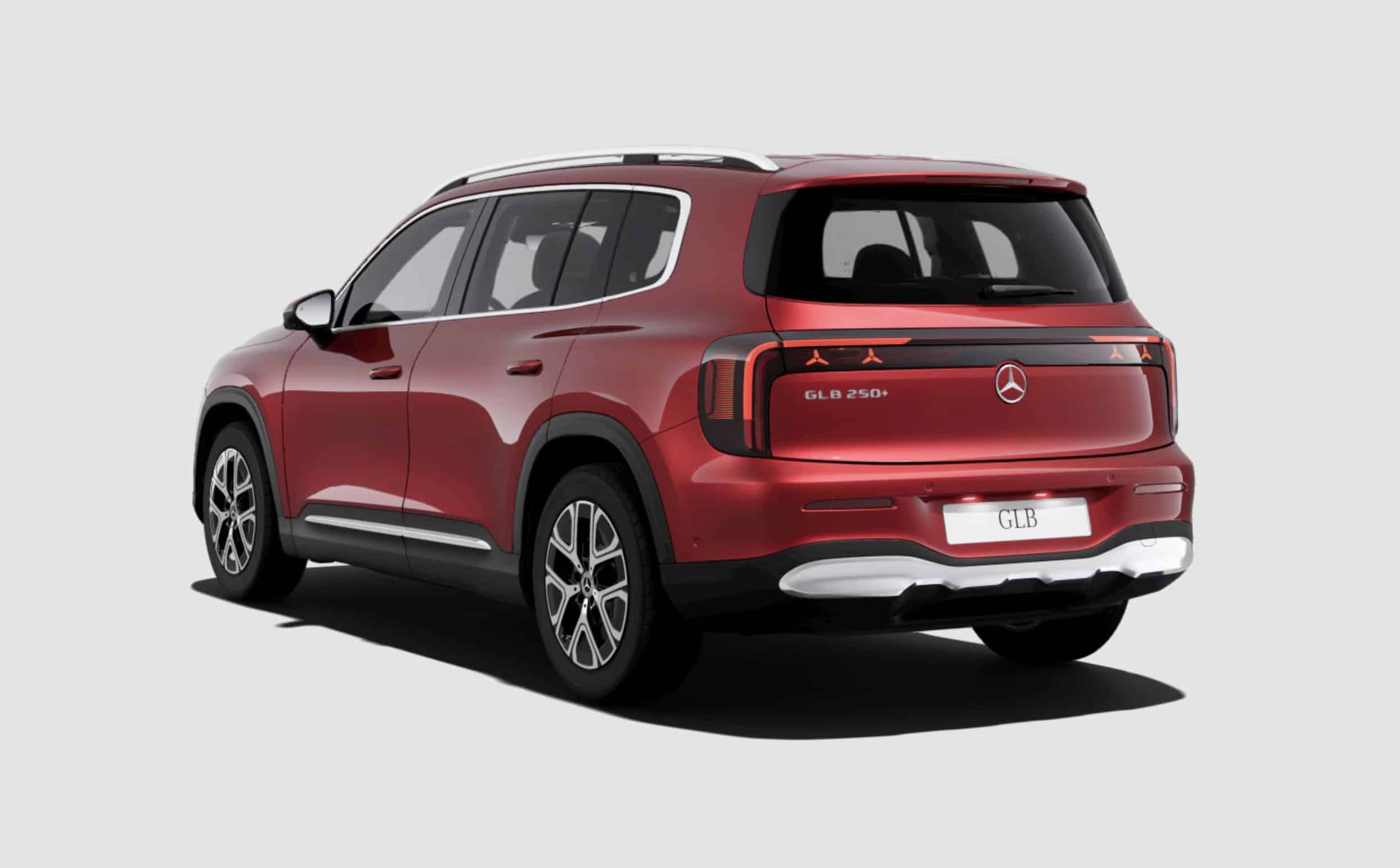
All-Electric Mercedes-Benz GLB SUV (Credit: Mercedes-Benz)
Pricing
The following UK recommended on-the-road prices come from Mercedes-Benz’s Model Year 807.5 schedule, effective from September 2026 production. They include VAT and the manufacturer’s specified registration-related charges, but do not establish the price or delivery date of an individual configured vehicle. The two powertrains have different availability across the five equipment lines, so a simple five-row price table would obscure important choices.
| UK powertrain and trim | Recommended OTR price |
|---|---|
| GLB 250+ Electric Sport | £46,100 |
| GLB 250+ Electric Sport Executive | £48,050 |
| GLB 250+ Electric AMG Line Executive | £51,050 |
| GLB 350 4MATIC Electric AMG Line Executive | £55,100 |
| GLB 250+ Electric AMG Line Premium | £53,700 |
| GLB 350 4MATIC Electric AMG Line Premium | £57,800 |
| GLB 250+ Electric AMG Line Premium Plus | £56,800 |
| GLB 350 4MATIC Electric AMG Line Premium Plus | £60,900 |
Two options particularly relevant to active families are the £850 400-volt DC charging system and the £950 folding towbar, both subject to availability and the selected build. Company-car benefit-in-kind is listed at 4% for the 2026/27 tax year, but personal tax liability depends on the vehicle’s applicable P11D value and the driver’s tax band. Insurance, electricity tariffs, vehicle excise duty and financing costs should be included when comparing ownership with a cheaper or larger rival.
Specifications
The tables below use the UK GLB Electric technical specification rather than petrol-hybrid figures or specifications from another market. Quoted range depends on the selected trim, tyres and optional equipment, while towing and charge-time figures require the stated vehicle configuration and operating conditions. Where the manufacturer gives different load-space measurements for different seat layouts, they are kept separate rather than added together or presented as an unconditional standard.
| Battery, charging and efficiency | GLB 250+ Electric | GLB 350 4MATIC Electric |
|---|---|---|
| Battery (usable) | 85 kWh | 85 kWh |
| Battery type | Lithium-ion (NMC) | Lithium-ion (NMC) |
| Battery warranty | 8 years / 100,000 miles; 70% capacity threshold | 8 years / 100,000 miles; 70% capacity threshold |
| UK WLTP range, typical listed trims | Approximately 360–380 miles | Approximately 350–360 miles |
| Lowest published range with selected option packs | Approximately 352 miles | Approximately 343 miles |
| AC onboard charging | 11 kW | 11 kW |
| AC wallbox 11 kW, manufacturer estimate | About 9 hours | About 9 hours |
| UK home wallbox around 7 kW, estimate | About 13 hours 45 minutes | About 13 hours 45 minutes |
| Peak DC at compatible 800 V charger | 320 kW | 320 kW |
| DC charge 10–80% | Approximately 22 minutes | Approximately 22 minutes |
| Optional compatible 400 V DC charging | Up to 100 kW with £850 option | Up to 100 kW with £850 option |
| Tailpipe emissions | 0 g CO₂/km | 0 g CO₂/km |
The listed wallbox figures represent manufacturer test-condition estimates; actual household charging times vary with supply voltage, charging losses and battery conditions. The separate optional 400-volt capability is not an alternative 320 kW charge rate. The standard battery warranty is conditional on the vehicle-specific Mercedes-Benz High Voltage Battery Certificate, including the minimum-capacity provisions and the earlier of the stated years or mileage.
| Illustrative UK home charging cost | 85 kWh usable battery |
|---|---|
| Example household electricity rate | 25p per kWh (assumption, not a quoted tariff) |
| Wall-to-battery efficiency assumption | 90% |
| Electricity drawn for 0–100% battery addition | About 94.44 kWh |
| Illustrative cost for 0–100% | About £23.61 |
| Illustrative cost for 10–80% | About £16.53 |
The modelled empty-to-full cost is 85 kWh divided by 0.90, then multiplied by £0.25 per kWh. For a 10–80% increase, the calculation uses 70% of the battery’s usable capacity with the same illustrative charging efficiency. Actual charging costs depend on tariff, charging losses, starting state of charge and any standing or public-charging fees, none of which is included in this simple comparison.
| Dimensions and practicality | UK electric seven-seat specification |
|---|---|
| Length | 4,732 mm |
| Width, excluding mirrors | 1,861 mm |
| Width with mirrors | 2,029 mm |
| Height | 1,687 mm |
| Turning circle | 11.2 m (manufacturer UK web figure) |
| Seats / doors | 7 / 5 |
| Rear luggage volume, third row folded | 480 litres (UK seven-seat technical schedule) |
| Maximum luggage volume, rear rows folded | 1,605 litres |
| Front boot | 127 litres nominal; 104 litres ISO |
| Maximum roof load | 75 kg |
| Braked towing, 250+ / 350 4MATIC | 1,500 kg / 2,000 kg, subject to towing package |
| Powertrain and performance | GLB 250+ Electric | GLB 350 4MATIC Electric |
|---|---|---|
| Driven wheels | Rear-wheel drive | All-wheel drive |
| Power | 200 kW / 268 hp | 260 kW / 349 hp |
| Maximum torque | 335 Nm | 515 Nm |
| 0–62 mph | 7.4 seconds | 5.5 seconds |
| Top speed | 130 mph | 130 mph |
| Usable battery | 85 kWh | 85 kWh |
FAQs
| Question | Answer |
|---|---|
| What is the UK starting price of the Mercedes-Benz GLB Electric? | £46,100 recommended OTR for the GLB 250+ Electric Sport in the September 2026 production schedule; check the live quotation. |
| Does every UK electric GLB have seven seats? | Yes, the listed UK electric equipment lines in the supplied manufacturer schedule have seven seats. |
| How large is the electric GLB battery? | 85 kWh usable lithium-ion NMC battery capacity in both the GLB 250+ and GLB 350 4MATIC. |
| What is the longest published WLTP range? | Up to 380 miles in the GLB 250+ Electric Sport; wheels and optional equipment can reduce the certified figure. |
| What does the 320 kW charging rating mean? | It is the maximum possible DC charging power under suitable 800-volt charging conditions, not a constant charge rate. |
| How long is a 10–80% DC charging stop? | Mercedes-Benz quotes about 22 minutes at a suitable 320 kW-capable 800 V DC charger under ideal conditions. |
| Can every electric GLB use a 400-volt DC charger? | Do not assume so. The £850 optional direct-current charging equipment provides up to 100 kW at compatible 400 V stations. |
| Does the supplied 22 kW Type 2 cable enable 22 kW AC charging? | No. The car’s onboard AC charger is rated at 11 kW; the cable capacity does not raise this limit. |
| How much boot space does the seven-seat electric GLB offer? | The UK technical table lists 480 litres with the third row folded and 1,605 litres with rear rows folded. The manufacturer also quotes 540 litres elsewhere for a different or unspecified layout. |
| Is there a front boot? | Yes, a 127-litre front compartment (104 litres under the ISO measurement method) for cables and other smaller items. |
| How much can the electric GLB tow? | Up to 1,500 kg braked for the GLB 250+ and 2,000 kg for the GLB 350 4MATIC, provided the required towing equipment and limits apply. |
| What is the high-voltage battery warranty? | Eight years or 100,000 miles, whichever comes first, subject to conditions and a 70% capacity threshold in the applicable certificate. |
| Has the new 2026 electric GLB received a Euro NCAP rating? | A separate verified new-generation Euro NCAP rating was not identified by November 2026. Ratings from the older GLB must not be carried over. |
| How can I learn more about charging for family trips? | The beginner’s guide to charging an electric car explains home and public charging fundamentals. |
While e-zoomed uses reasonable efforts to provide accurate and up-to-date information, some of the information provided is gathered from third parties and has not been independently verified by e-zoomed. While the information from the third party sources is believed to be reliable, no warranty, express or implied, is made by e-zoomed regarding the accuracy, adequacy, completeness, legality, reliability or usefulness of any information. This disclaimer applies to both isolated and aggregate uses of this information.
Featured Articles
<!–
Carousel
–>
myenergi zappi GLO EV Charger: UK Price, Specifications & Solar Charging Guide
The new Mercedes-Benz GLB Electric (2026) brings genuine seven-seat flexibility to the premium battery-electric SUV market in the UK. Its upright body is designed for families who need more…
BYD Battery-Box HVB Home Battery Storage: UK Price, Specifications, Solar & EV Charging Guide
The new Mercedes-Benz GLB Electric (2026) brings genuine seven-seat flexibility to the premium battery-electric SUV market in the UK. Its upright body is designed for families who need more…
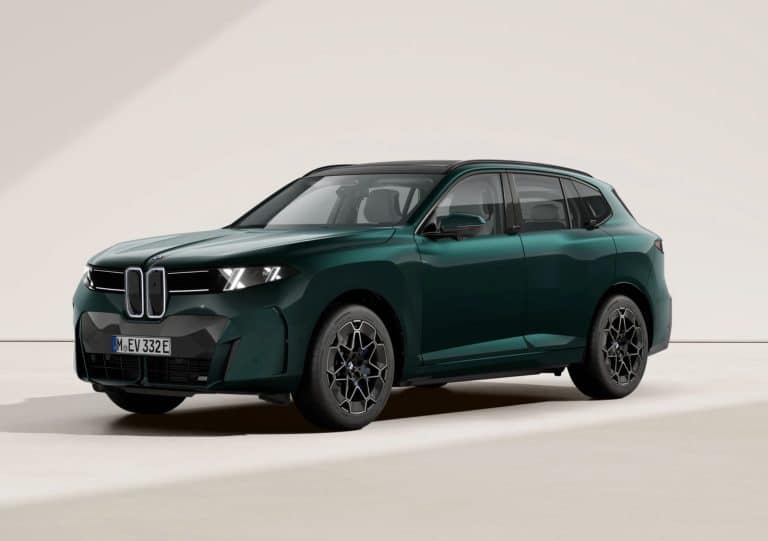
All-Electric BMW iX5 (2027): UK Prices, Specs, Range & Buying Guide
The new Mercedes-Benz GLB Electric (2026) brings genuine seven-seat flexibility to the premium battery-electric SUV market in the UK. Its upright body is designed for families who need more…
Featured Products
-
<!–
–>Sale!
Best-In-Class Home Solar Bundle Offer (440W All Black Jinko Solar 8 Panels + Sungrow Hybrid Inverter 3.6 kW): price includes product supply only
<!– –>
Original price was: £2,205.95.£2,150.95Current price is: £2,150.95. (Including VAT)
<!–
–>
<!– Term:
NEDC range:
Model Year:
Deposit: £
Miles Per AnnumSubject to status and conditions –>
Brand:SungrowJinko SolarCategory:Solar<!– –>
-
<!–
–>Sale!
Best-In-Class Home Solar Bundle Offer (440W All Black Jinko Solar 8 Panels + Sungrow Battery Storage 6.4 kWh + Sungrow Hybrid Inverter 3.6 kW): price includes product supply only
<!– –>
Original price was: £5,010.95.£4,800.95Current price is: £4,800.95. (Including VAT)
<!–
–>
<!– Term:
NEDC range:
Model Year:
Deposit: £
Miles Per AnnumSubject to status and conditions –>
Brand:SungrowJinko SolarCategory:Solar<!– –>
-
<!–
–>Sale!
Bundle Offer: SUNSYNK LifePO4 Home Battery Storage (5.32 kWh) + SUNSYNK Hybrid Inverter (3.6 kW/Single-Phase): price includes product supply only
<!– –>
Original price was: £3,345.95.£3,299.95Current price is: £3,299.95. (Including VAT)
<!–
–>
<!– Term:
NEDC range:
Model Year:
Deposit: £
Miles Per AnnumSubject to status and conditions –>
Brand:Sun SynkCategory:Battery Storage<!– –>
-
Bundle Offer: Tesla Powerwall 3 Home Battery Storage (13.5 kWh) + Gateway: price includes product supply only
<!– –>
£8,559.95 (Including VAT)
<!–
–>
<!– Term:
NEDC range:
Model Year:
Deposit: £
Miles Per AnnumSubject to status and conditions –>
Brand:TeslaCategory:Battery Storage<!– –>
-
<!–
–>Sale!
Custom-Made Single-Phase EV Charging Cable Type 2 to Type 2 (2m to 50m, 7.4 kW, 32 amp, Black)
<!– –>
Price range: £99.95 through £670.95 (Including VAT)
<!–
–>
<!– Term:
NEDC range:
Model Year:
Deposit: £
Miles Per AnnumSubject to status and conditions –>
Category:CablesType:Type 2Length (m):5 m7.5 m10 m3.5 m12.5 m15 m20 m17.5 m2 m22.5 m25 m30 m35 m40 m45 m50 mCurrent (amp):32 ampPhase:Single Phase (7.2kW)<!– –>
This product has multiple variants. The options may be chosen on the product page -
Untethered Ohme ePod Home Smart EV Charger (7.4 kW): price includes product only
<!– –>
£645.95 (Including VAT)
<!–
–>
<!– Term:
NEDC range:
Model Year:
Deposit: £
Miles Per AnnumSubject to status and conditions –>
Brand:OhmeCategory:EV Charging PointsCustomer type:ResidentialPower:7.4 kWCable:UntetheredPhase:Single Phase<!– –>

The post All-Electric Mercedes-Benz GLB (2026): UK Prices, Specs, Range & Buying Guide appeared first on Ezoomed.