
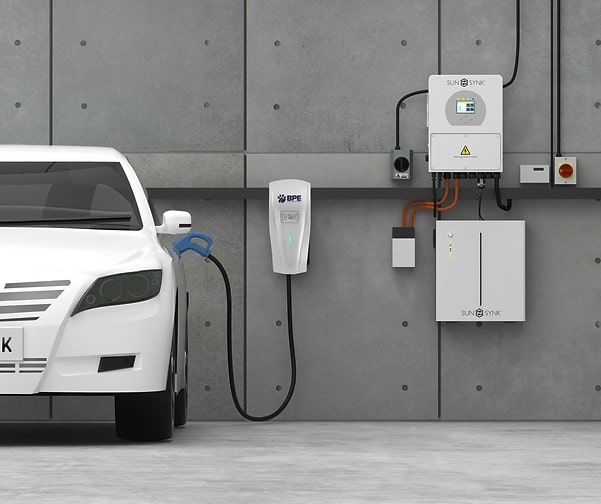
The myenergi libbi is a modular home battery storage system that can store electricity from solar panels or the grid for use later. For UK households, it offers a way to use more of their own solar generation and, with a suitable electricity tariff and charging schedule, shift some electricity purchases to cheaper periods.
The system combines a battery, a hybrid inverter and a controller. There are 3.68 kW and 5 kW inverter options, with battery capacity selected separately. It is also designed to work within the myenergi ecosystem, which includes zappi EV charging and eddi surplus-energy diversion.
This guide covers both inverter options. The right configuration depends on your household demand, solar installation and any backup requirements. A qualified installer should confirm the exact equipment and design before purchase.
Table of Contents
Sign up to the e-zoomed Electric Living newsletter
What is myenergi libbi?
libbi stores energy for later use rather than generating electricity itself. With solar panels, it can retain some of the electricity that would otherwise be exported. Stored electricity can then help supply household loads when solar generation falls, subject to available charge and the system’s power limits.
Grid charging is another option. Where your tariff has cheaper periods, charging at those times may reduce the cost of electricity used later. Savings depend on the tariff, charging losses, household consumption and installation cost; a battery does not guarantee lower bills.
myenergi libbi: key specifications
| Feature | Specification or guidance |
|---|---|
| System components | Battery module(s), hybrid inverter and myenergi controller |
| Inverter options | 3.68 kW or 5 kW rated AC output |
| Battery chemistry | Lithium iron phosphate (LFP) |
| Nominal capacity per module | 5.12 kWh |
| Published usable capacity per module | 4.6 kWh |
| Battery configurations | One to four modules per system |
| Total nominal capacity | 5.12–20.48 kWh |
| Total published usable capacity | 4.6–18.4 kWh, depending on module count |
| Published depth of discharge | 90% |
| Solar inputs | Two maximum power point trackers (MPPTs), with one string per tracker |
| Installation options | New solar installation, retrofit to existing solar, or grid charging without solar |
| Battery and inverter ingress protection | IP65; siting must follow installation requirements |
| Controller location | Indoors |
| Backup | Optional dedicated backup circuit, subject to installation design |
| Warranty | Ten years for the complete system under the applicable current myenergi warranty terms |
Confirm the current datasheet and specification of the actual supplied kit with your installer, particularly where hardware or document revisions differ.
Pros and cons
| Pros | Cons |
|---|---|
| Modular storage, with one to four battery modules | Additional modules increase storage capacity, but inverter output remains limited by the chosen inverter |
| Supports solar storage and grid charging without solar | Savings depend on consumption, tariffs, system losses and installed cost |
| Integration with compatible myenergi products | Backup requires a suitable installation; standard installation should not be assumed to provide whole-home backup |
Battery capacity and inverter output
A single module provides 5.12 kWh of nominal storage and 4.6 kWh of published usable storage. Two, three and four modules provide 9.2 kWh, 13.8 kWh and 18.4 kWh of published usable capacity respectively. The largest configuration is commonly described as a 20 kWh system, although its nominal capacity is 20.48 kWh.
Capacity and power describe different things. Capacity, measured in kWh, indicates the amount of electricity stored. Power, measured in kW, indicates how quickly electricity can be supplied. Choosing more battery modules does not automatically increase the inverter’s rated AC output.
The 3.68 kW and 5 kW inverter options therefore suit different requirements. Battery discharge capability also depends on module count: the published specification lists a maximum battery discharge power of 4.096 kW for a single module paired with the 5 kW inverter. Do not assume a one-module configuration can sustain the inverter’s full 5 kW output from the battery alone.
Your installer should assess simultaneous loads, such as cooking appliances and other electrical equipment, alongside your daily energy use. If demand exceeds the battery system’s available output while connected to the grid, the grid can supply the balance.
Using libbi with solar panels or without solar
For a new solar installation, libbi’s hybrid inverter can manage both solar generation and battery storage. The specification provides two MPPT inputs, allowing the installer to design suitable solar strings within the inverter’s electrical limits.
For an existing solar installation, libbi can be configured as an AC-coupled battery system. Compatibility and the proposed connection arrangement should be checked before ordering; the presence of existing solar panels does not establish that every installation design will be suitable.
Solar panels are not essential. libbi can also store electricity purchased from the grid. A time-of-use tariff may make this useful, but compare the cost of charging, energy losses and the value of the electricity displaced before estimating savings.
Does libbi provide backup power?
libbi offers an optional backup arrangement for a dedicated circuit, such as selected lighting or sockets. This requires appropriate installation work and should be specified when obtaining a quotation.
Do not assume that the complete home, EV charger or other high-demand appliances will remain powered during a grid outage. Your installer should identify the supported loads, explain the changeover behaviour and confirm the backup output limits of the chosen configuration.
Backup duration depends on the charge available when an outage occurs and the demand on the protected circuit. Discuss any reserve-charge setting and its effect on the energy available for everyday use.
Using libbi with zappi and eddi
A particular attraction of libbi is its integration with compatible myenergi equipment. zappi provides EV charging, while eddi can divert surplus electricity to suitable heating loads. The controller and app help manage how energy is used across the system.
Configuration matters: charging a car or heating water can compete with storing energy for later household use. Discuss your priorities with the installer, including whether compatible devices should be allowed to draw from the battery.
Compatibility must be checked against your exact product generation. The operating instructions specifically exclude the original zappi V1. For any existing or newer device, confirm current compatibility, firmware and required accessories with myenergi or your installer.
Installation and choosing your system
Choose a qualified installer familiar with myenergi libbi. The installation assessment should cover battery capacity, inverter output, solar compatibility, mounting location, electrical protection, internet connectivity and the applicable electricity-network connection requirements.
The battery and inverter carry an IP65 rating, but installation must still follow myenergi’s requirements for location, clearances and operating conditions. The controller is intended for indoor installation. An ingress-protection rating does not remove the need for suitable siting.
If you may add battery modules later, ask the installer to confirm the permitted expansion procedure and compatibility of future modules. Request an itemised quotation that identifies the inverter, battery count, controller, commissioning and any optional backup work.
Warranty and maintenance
myenergi’s current product warranty applies to products purchased on or after 11 November 2025. It provides ten years of cover from purchase for the libbi battery, hybrid inverter and controller when connected and operated together as a libbi system.
Cover is subject to the warranty conditions, including account and product registration, competent installation and commissioning, and use and maintenance in accordance with the manuals. Check the terms applicable to your purchase rather than relying on an older brochure or warranty sheet.
Ask your installer to explain the inspection and maintenance schedule for your supplied system. The operating manual recommends routine visual observation and periodic inspection by a qualified person. If a fault develops, contact myenergi through the prescribed warranty process before arranging repair work.
Is myenergi libbi suitable for your home?
libbi may suit households looking for modular battery storage, particularly those already using compatible myenergi equipment. It can serve homes with new solar panels, existing solar or a suitable grid-charging strategy.
The best configuration depends on how much electricity you can shift and how quickly you need to use it. Assess your consumption and tariff before selecting module count, and treat backup as a separate installation requirement. Pricing and potential savings should be assessed using a quotation for your own property.
Frequently Asked Questions
| Question | Answer |
|---|---|
| What is myenergi libbi? | A home battery storage system combining battery modules, a hybrid inverter and a myenergi controller |
| How much electricity can libbi store? | Each module has 5.12 kWh nominal capacity and 4.6 kWh published usable capacity. One to four modules provide 4.6–18.4 kWh of published usable storage |
| Which inverter options are available? | 3.68 kW and 5 kW options. Select the inverter and battery count together with your installer |
| Can libbi work without solar panels? | Yes. It can charge from the grid, subject to installation and configuration |
| Can it work with existing solar panels? | An AC-coupled retrofit arrangement is available. An installer must confirm suitability for the existing system |
| Will it power my whole home during a power cut? | Do not assume whole-home backup. The optional backup arrangement requires a dedicated, appropriately designed circuit and has output limits |
| Does it work with zappi and eddi? | It integrates with compatible myenergi products. Confirm the exact models and firmware; the operating manual excludes zappi V1 |
| Can I expand the battery later? | The system supports up to four modules. Confirm expansion requirements and module compatibility before planning a later addition |
| What is the warranty? | The current warranty provides ten years for the battery, hybrid inverter and controller operated together as a libbi system, subject to the applicable terms |
| Will libbi reduce my electricity bills? | It may, through increased use of solar generation or tariff-based grid charging. Savings depend on your consumption, tariff, system losses and installed cost |
While e-zoomed uses reasonable efforts to provide accurate and up-to-date information, some of the information provided is gathered from third parties and has not been independently verified by e-zoomed. While the information from the third party sources is believed to be reliable, no warranty, express or implied, is made by e-zoomed regarding the accuracy, adequacy, completeness, legality, reliability or usefulness of any information. This disclaimer applies to both isolated and aggregate uses of this information.
Featured Articles
What Is Home Battery Storage? Benefits and How It Works
The myenergi libbi is a modular home battery storage system that can store electricity from solar panels or the grid for use later. For UK households, it offers a…
What Is EV Smart Charging? A Complete Guide to Home Charging and Cost Savings
The myenergi libbi is a modular home battery storage system that can store electricity from solar panels or the grid for use later. For UK households, it offers a…

What Is Vehicle-to-Home (V2H) Charging? Powering Your House With Your EV
The myenergi libbi is a modular home battery storage system that can store electricity from solar panels or the grid for use later. For UK households, it offers a…

What Is Vehicle-to-Load (V2L) Technology? Powering Appliances With Your EV
The myenergi libbi is a modular home battery storage system that can store electricity from solar panels or the grid for use later. For UK households, it offers a…
What Is Vehicle-to-Grid (V2G) Technology? How Your EV Can Earn You Money
The myenergi libbi is a modular home battery storage system that can store electricity from solar panels or the grid for use later. For UK households, it offers a…
Featured Products
-
Custom-Made Single-Phase EV Charging Cable Type 2 to Type 2 (2m to 50m, 7.4 kW, 32 amp, Black)
Price range: £99.95 through £670.95 (Including VAT)
Category:CablesType:Type 2Length (m):5 m7.5 m10 m3.5 m12.5 m15 m20 m17.5 m2 m22.5 m25 m30 m35 m40 m45 m50 mCurrent (amp):32 ampPhase:Single Phase (7.2kW)
This product has multiple variants. The options may be chosen on the product page -
Custom-Made Single-Phase EV Charging Cable Type 2 to Type 2 (2m to 50m, 7.4 kW, 32 amp, Blue)
Price range: £99.95 through £670.95 (Including VAT)
Category:CablesType:Type 2Length (m):5 m7.5 m10 m3.5 m12.5 m15 m20 m17.5 m2 m22.5 m25 m30 m35 m40 m45 m50 mCurrent (amp):32 ampPhase:Single Phase (7.2kW)
This product has multiple variants. The options may be chosen on the product page -
Custom-Made Single-Phase EV Charging Cable Type 2 to Type 2 (2m to 50m, 7.4 kW, 32 amp, Yellow)
Price range: £99.95 through £670.95 (Including VAT)
Category:CablesType:Type 2Length (m):5 m7.5 m10 m3.5 m12.5 m15 m20 m17.5 m2 m22.5 m25 m30 m35 m40 m45 m50 mCurrent (amp):32 ampPhase:Single Phase (7.2kW)
This product has multiple variants. The options may be chosen on the product page -
Tethered myenergi eco-smart zappi Home Smart EV Charger (7kW, 6.5m): price includes product only
£810.95 (Including VAT)
Brand:zappi EV Charge PointCategory:EV Charging PointsCustomer type:ResidentialPower:7 kWType:Type 2Cable:TetheredPhase:Single Phase -
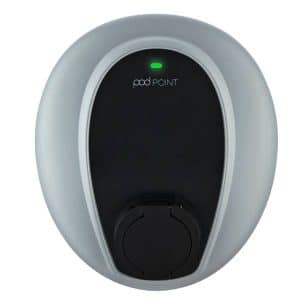
Untethered pod POINT Solo 3 Home Smart EV Charger (7kW): price includes product only
£750.95 (Including VAT)
Brand:pod POINT EV Charge PointCategory:EV Charging PointsCustomer type:ResidentialPower:7 kWType:Type 1Type 2Cable:UntetheredPhase:Single Phase -
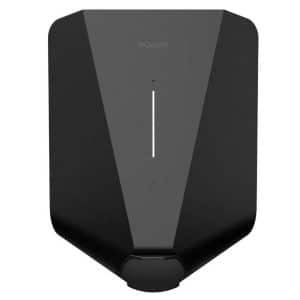
Untethered Easee Charge Commercial Smart EV Charger (22 kW): price includes product only
£945.95 (Including VAT)
Brand:easeeCategory:EV Charging PointsCustomer type:BusinessPower:22 kWType:Type 2Cable:UntetheredPhase:Three Phase
This product has multiple variants. The options may be chosen on the product page
The post myenergi libbi: UK Price, Specifications, Solar & EV Charging Guide appeared first on Ezoomed.