
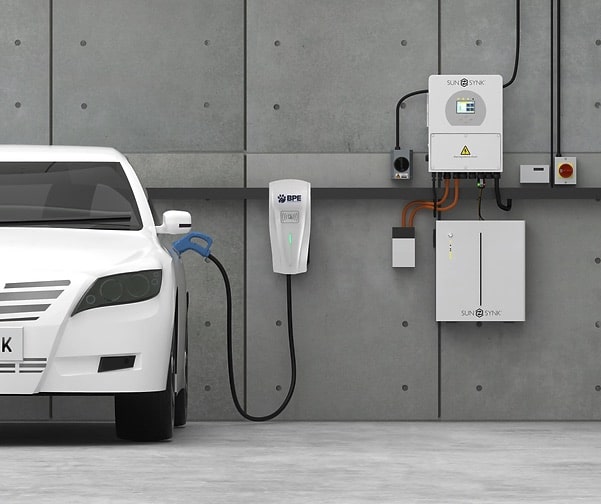
EcoFlow OCEAN 2 Plus is a modular home solar-and-battery storage system. The configuration covered in this UK guide uses the 8 kW single-phase hybrid inverter and OCEAN 2 LFP Battery 5kWh modules, each with 5.02 kWh nominal energy.
It combines solar management, expandable storage and an integrated backup design. This guide is based on EcoFlow’s technical documentation rather than hands-on testing, and distinguishes inverter output from the power available from individual batteries.
Table of Contents
Sign up to the e-zoomed Electric Living newsletter
Benefits of residential battery storage
| Benefits | What it means for your household |
|---|---|
| Use more solar electricity | Store surplus generation for later household use |
| Shift electricity purchases | Use a suitable tariff to charge during lower-price periods |
| Support backup | Supply appropriately configured household loads during an outage |
| Contribute to EV charging | Provide electricity to a separate, suitably connected home charger |
Benefits depend on demand, solar generation, tariffs, conversion losses and installation design. Battery storage does not guarantee a specific saving or eliminate reliance on the grid.
OCEAN 2 Plus at a glance
| Specification | 8 kW OCEAN 2 Plus with 5.02 kWh modules |
|---|---|
| System | OCEAN 2 Plus single-phase; 8 kW inverter |
| Battery module | OCEAN 2 LFP Battery 5kWh; EF BD-5-S2 |
| Nominal energy per module | 5.02 kWh |
| Depth of discharge | 100%, as specified |
| Chemistry | Lithium iron phosphate (LFP) |
| Nominal inverter AC output | 8 kW |
| Maximum total PV input for 8 kW model | 16 kW |
| MPPTs / strings per MPPT | 3 / 1 |
| Maximum PV input current per MPPT | 16 A |
| Maximum PV input voltage | 900 V |
| Maximum input power per battery module | 2.5 kW, as specified in the brochure |
| Maximum output power per battery module | 3.4 kW, as specified in the brochure |
| Battery modules per inverter | Up to 12; configuration-dependent |
| Nominal capacity with 12 modules | 60.24 kWh; approximately 60 kWh |
| Maximum inverter efficiency | 97.6%; not battery round-trip efficiency |
| Ingress protection | IP66 |
| Inverter operating temperature | −20°C to 60°C |
| Battery operating temperature | −20°C to 55°C |
| Inverter dimensions (W × D × H) | N/A |
| Inverter weight | Approximately 36.5 kg |
| Battery warranty | 15 years or 21.9 MWh throughput, whichever comes first; subject to terms |
What is EcoFlow OCEAN 2 Plus?
OCEAN 2 Plus is a modular solar-and-battery system with a hybrid inverter and separate stackable LFP battery modules. This guide covers the single-phase 8 kW inverter with OCEAN 2 LFP Battery 5kWh modules, model EF BD-5-S2, each rated at 5.02 kWh nominal energy.
The inverter manages compatible solar generation, battery charging and household electricity supply. The complete installation needs the appropriate battery base, connections, metering, electrical protection and commissioning. Its integrated backup design differs from the earlier PowerOcean system.
Pros and cons
| Pros | Cons and limitations |
|---|---|
| 8 kW hybrid inverter with three MPPTs for a suitable solar installation. | A single battery’s power rating is lower than the inverter’s 8 kW output |
| Modular 5.02 kWh batteries allow storage to grow with demand. | Expansion requires the correct stack layout, bases, connections and system design |
| Integrated backup design can simplify an appropriately specified installation. | Battery warranty has throughput, connectivity and other conditions; inverter cover needs separate confirmation |
Battery capacity and power explained
One OCEAN 2 battery module has 5.02 kWh nominal capacity and a stated 100% depth of discharge. That is not a guarantee that 5.02 kWh will reach household appliances after conversion losses, reserve settings and operating conditions are considered.
The chosen inverter is rated at 8 kW nominal AC output. However, the brochure specifies a maximum battery output of 3.4 kW for one 5.02 kWh module, and maximum input power of 2.5 kW per module. At the higher battery voltage configuration shown in the brochure, output increases with battery quantity: 6.8 kW for two modules and 10.2 kW for three, before inverter and installation limits are applied.
Therefore, one battery cannot be described as supplying the inverter’s full 8 kW rating by itself. The installer should size the battery configuration for the required charging rate, household loads and backup performance.
As a simple illustration, 5.02 kWh divided by a constant 1 kW load gives 5.02 hours. Actual operating duration will differ with conversion losses, backup reserve, temperature, battery ageing and varying demand.
Solar panel compatibility
The 8 kW inverter model accepts up to 16 kW total PV input power. It has three maximum power point trackers (MPPTs), with one string per tracker, and a maximum input current of 16 A per MPPT.
The installation guide specifies a PV operating voltage range of 50–900 V, an MPPT voltage range at rated power of 500–810 V, and a 120 V start-up voltage. These describe different operating conditions and should not be combined into a single specification.
The 16 kW solar input limit is not a 16 kW household AC output rating. Solar array size, string voltage and current, roof layout and network requirements all need professional assessment.
EcoFlow describes support for approved third-party inverter connections on the backup side. Existing solar compatibility and its behaviour during an outage should be verified against the installation guide for the exact system.
Backup during power cuts
OCEAN 2 Plus includes an integrated whole-home backup design. EcoFlow advertises a 0 ms load-side transfer time under stated conditions, including appropriate grid operation before the outage, stable grid conditions and load demand within the rated output.
This is a manufacturer specification, not a guarantee that every appliance will operate without interruption under every circumstance. The connected loads, battery quantity, available charge and electrical installation determine actual backup capability.
The 8 kW inverter’s off-grid nominal output rating does not remove the battery modules’ power limits. Confirm which loads can run during an outage and how appliances with high starting demand will be managed.
Whole-home backup also does not mean unlimited duration. Ask the installer to confirm the usable reserve, solar recharging during outages and any loads that should be restricted or excluded.
Expanding your storage
The OCEAN 2 Plus installation guide specifies support for up to twelve battery modules per inverter. With twelve 5.02 kWh modules, the arithmetic total is 60.24 kWh nominal capacity, marketed as approximately 60 kWh.
The brochure allows up to six batteries in a floor-standing stack, while wall-mounted stacks are limited to three. The permitted number of stacks and required bases or junction boxes must be confirmed for the complete configuration.
Expansion should match household demand and the available solar generation or off-peak charging window. Additional modules can increase both energy capacity and available battery power, but the selected inverter still imposes its own output limit.
The documentation also describes cross-generation compatibility with earlier PowerOcean batteries. That does not make the batteries identical or freely interchangeable: mixed stacks have different installation requirements. This guide focuses on a new installation using OCEAN 2 5.02 kWh modules.
EV charging and home energy management
The system can supply electricity to a suitably connected home EV charger, but the charger is separate equipment. EcoFlow’s home energy ecosystem also includes monitoring and controls for compatible household products.
An 8 kW inverter rating alone does not establish that a single 5.02 kWh battery can run a 7 kW charger at full power. Battery quantity, other household loads and the grid or solar contribution must be considered together.
For backup operation, ask the installer whether EV charging is permitted and what power limit applies. Prioritising essential household loads may be more useful than charging the vehicle during a power cut.
Compare direct off-peak EV charging with charging through stored household battery energy. Battery conversion losses and the value of exported solar affect which arrangement is economical.
App, tariffs and monitoring
EcoFlow provides app monitoring and a home energy management platform. Available controls depend on the installed devices, software, configuration and regional support.
A suitable time-of-use tariff can enable cheaper grid charging followed by battery use during more expensive periods. Savings depend on import and export rates, demand, charging power, energy losses and operating settings.
The brochure describes intelligent tariff-based management, but any particular tariff integration or third-party service should be confirmed for the UK installation. Marketing savings examples should not be presented as a guaranteed household saving.
The quoted 97.6% maximum efficiency is an inverter figure, not a complete battery round-trip efficiency. These measure different processes and should not be treated as equivalent.
UK pricing and quotation inclusions
Compare the complete installed system rather than the price of one battery module. The inverter, battery quantity, bases, junction boxes, metering, protection, backup connections and installation work all affect the total.
Ask the quotation to identify the 8 kW OCEAN 2 Plus single-phase inverter, EF BD-5-S2 battery modules, total nominal capacity and the backup performance of the proposed configuration. Confirm commissioning, delivery, tax treatment and any additional electrical work.
Installation and maintenance
The system supports indoor and outdoor installation, with IP66 protection listed for the inverter and OCEAN 2 batteries. The installation location still needs suitable ventilation, access, clearances and protection from environmental damage.
The inverter weighs approximately 36.5 kg. Ask your installer to confirm its dimensions and required installation clearances against the documentation for the supplied model. The brochure lists a one-battery assembly at 679.6 × 195.6 × 494.75 mm and 54.6 kg, including its base and junction box. These assembly figures should not be confused with the bare battery module’s size or weight.
The specified inverter operating range is −20°C to 60°C, while the battery operating range is −20°C to 55°C. Follow the installation instructions and performance limitations for the exact components.
Arrange installation and commissioning through an EcoFlow-authorised installer. The guide recommends routine checks, including cleanliness, operating condition and electrical connections. It specifies cleaning with a dry, soft cloth and avoiding liquids or abrasive materials. Electrical inspection and servicing should be handled professionally.
Battery warranty and support
The supplied OCEAN 2 battery warranty, version V1.7 effective from 21 August 2026, specifies cover for the EF BD-5-S2 5.02 kWh battery until the earlier of fifteen years or 21.9 MWh warranted throughput. It states a 60% usable-energy retention threshold, subject to its conditions.
The warranty start date is the earlier of commissioning or nine months after production. It should not be described as automatically fifteen years from the purchase date.
Internet connectivity is required for critical firmware and safety updates. Under this policy, disconnection for more than one year adjusts cover to five years from the original activation date. Keep purchase records, serial numbers and commissioning details.
The supplied document is a battery warranty. Confirm the separate applicable warranty for the OCEAN 2 Plus inverter and associated equipment, rather than assuming every component has identical cover.
The 8.03 kWh OCEAN 2 battery has different basic warranty terms in this policy. Those terms should not be substituted for the 5.02 kWh model covered here.
Is OCEAN 2 Plus right for your home?
The 8 kW single-phase system merits consideration for households seeking a higher-output hybrid inverter, modular battery storage and an integrated backup design. Three MPPTs may be useful for a suitable solar layout with multiple strings.
The battery configuration is crucial. A small initial battery can provide storage, but its charge and discharge power may fall short of the inverter’s capability. Match battery quantity to household demand and backup priorities.
Compare the complete installed cost, approved power output, required battery quantity, support arrangements and warranty conditions with alternative systems. Larger capacity is worthwhile only when your household can make effective use of it.
Frequently Asked Questions
| Question | Answer |
|---|---|
| Is this the same as the earlier PowerOcean system? | No. This guide covers OCEAN 2 Plus with OCEAN 2 EF BD-5-S2 batteries. Earlier PowerOcean specifications should not be used for this configuration |
| Can one battery deliver 8 kW? | No. The brochure lists 3.4 kW maximum output for one 5.02 kWh module. The 8 kW figure is the inverter’s nominal rating |
| How much capacity do two modules provide? | Two 5.02 kWh modules provide 10.04 kWh nominal capacity. Energy delivered to household loads depends on system losses and operating settings |
| How large can storage become? | The installation guide supports up to twelve modules per inverter: 60.24 kWh nominal with twelve 5.02 kWh batteries, subject to the approved design |
| Does whole-home backup mean unlimited power? | No. Available battery power, inverter limits, connected demand and remaining energy determine which loads can run and for how long |
| Can it support EV charging? | It can supply a suitably connected charger. Battery quantity and other household loads determine the available contribution, especially during backup |
| Is the battery warranty an unconditional fifteen years? | No. For EF BD-5-S2 it is fifteen years or 21.9 MWh throughput, whichever comes first, with energy-retention and other conditions |
Explore home battery storage with e-zoomed
Consider solar generation, household electricity demand and EV charging together. Compare storage capacity, battery power, inverter output, backup scope and the complete installed cost before choosing a home battery system.
While e-zoomed uses reasonable efforts to provide accurate and up-to-date information, some of the information provided is gathered from third parties and has not been independently verified by e-zoomed. While the information from the third party sources is believed to be reliable, no warranty, express or implied, is made by e-zoomed regarding the accuracy, adequacy, completeness, legality, reliability or usefulness of any information. This disclaimer applies to both isolated and aggregate uses of this information.
Featured Articles
What Is Home Battery Storage? Benefits and How It Works
EcoFlow OCEAN 2 Plus is a modular home solar-and-battery storage system. The configuration covered in this UK guide uses the 8 kW single-phase hybrid inverter and OCEAN 2 LFP…
What Is EV Smart Charging? A Complete Guide to Home Charging and Cost Savings
EcoFlow OCEAN 2 Plus is a modular home solar-and-battery storage system. The configuration covered in this UK guide uses the 8 kW single-phase hybrid inverter and OCEAN 2 LFP…

What Is Vehicle-to-Home (V2H) Charging? Powering Your House With Your EV
EcoFlow OCEAN 2 Plus is a modular home solar-and-battery storage system. The configuration covered in this UK guide uses the 8 kW single-phase hybrid inverter and OCEAN 2 LFP…

What Is Vehicle-to-Load (V2L) Technology? Powering Appliances With Your EV
EcoFlow OCEAN 2 Plus is a modular home solar-and-battery storage system. The configuration covered in this UK guide uses the 8 kW single-phase hybrid inverter and OCEAN 2 LFP…
What Is Vehicle-to-Grid (V2G) Technology? How Your EV Can Earn You Money
EcoFlow OCEAN 2 Plus is a modular home solar-and-battery storage system. The configuration covered in this UK guide uses the 8 kW single-phase hybrid inverter and OCEAN 2 LFP…
Featured Products
-
Custom-Made Single-Phase EV Charging Cable Type 2 to Type 2 (2m to 50m, 7.4 kW, 32 amp, Black)
Price range: £99.95 through £670.95 (Including VAT)
Category:CablesType:Type 2Length (m):5 m7.5 m10 m3.5 m12.5 m15 m20 m17.5 m2 m22.5 m25 m30 m35 m40 m45 m50 mCurrent (amp):32 ampPhase:Single Phase (7.2kW)
This product has multiple variants. The options may be chosen on the product page -
Custom-Made Single-Phase EV Charging Cable Type 2 to Type 2 (2m to 50m, 7.4 kW, 32 amp, Blue)
Price range: £99.95 through £670.95 (Including VAT)
Category:CablesType:Type 2Length (m):5 m7.5 m10 m3.5 m12.5 m15 m20 m17.5 m2 m22.5 m25 m30 m35 m40 m45 m50 mCurrent (amp):32 ampPhase:Single Phase (7.2kW)
This product has multiple variants. The options may be chosen on the product page -
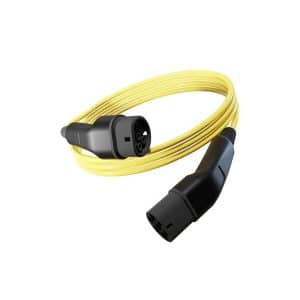
Custom-Made Single-Phase EV Charging Cable Type 2 to Type 2 (2m to 50m, 7.4 kW, 32 amp, Yellow)
Price range: £99.95 through £670.95 (Including VAT)
Category:CablesType:Type 2Length (m):5 m7.5 m10 m3.5 m12.5 m15 m20 m17.5 m2 m22.5 m25 m30 m35 m40 m45 m50 mCurrent (amp):32 ampPhase:Single Phase (7.2kW)
This product has multiple variants. The options may be chosen on the product page -
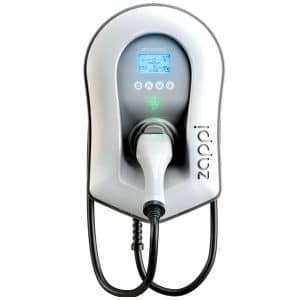
Tethered myenergi eco-smart zappi Home Smart EV Charger (7kW, 6.5m): price includes product only
£810.95 (Including VAT)
Brand:zappi EV Charge PointCategory:EV Charging PointsCustomer type:ResidentialPower:7 kWType:Type 2Cable:TetheredPhase:Single Phase -
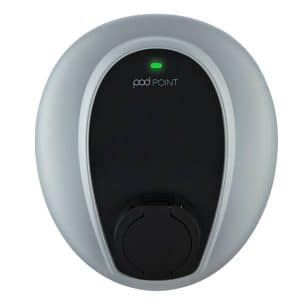
Untethered pod POINT Solo 3 Home Smart EV Charger (7kW): price includes product only
£750.95 (Including VAT)
Brand:pod POINT EV Charge PointCategory:EV Charging PointsCustomer type:ResidentialPower:7 kWType:Type 1Type 2Cable:UntetheredPhase:Single Phase -
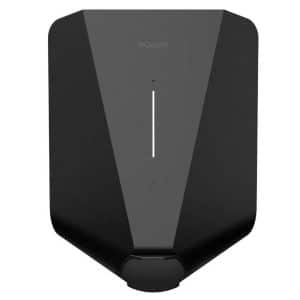
Untethered Easee Charge Commercial Smart EV Charger (22 kW): price includes product only
£945.95 (Including VAT)
Brand:easeeCategory:EV Charging PointsCustomer type:BusinessPower:22 kWType:Type 2Cable:UntetheredPhase:Three Phase
This product has multiple variants. The options may be chosen on the product page
The post EcoFlow OCEAN 2 Plus: UK Price, Specifications, Solar & EV Charging Guide appeared first on Ezoomed.