
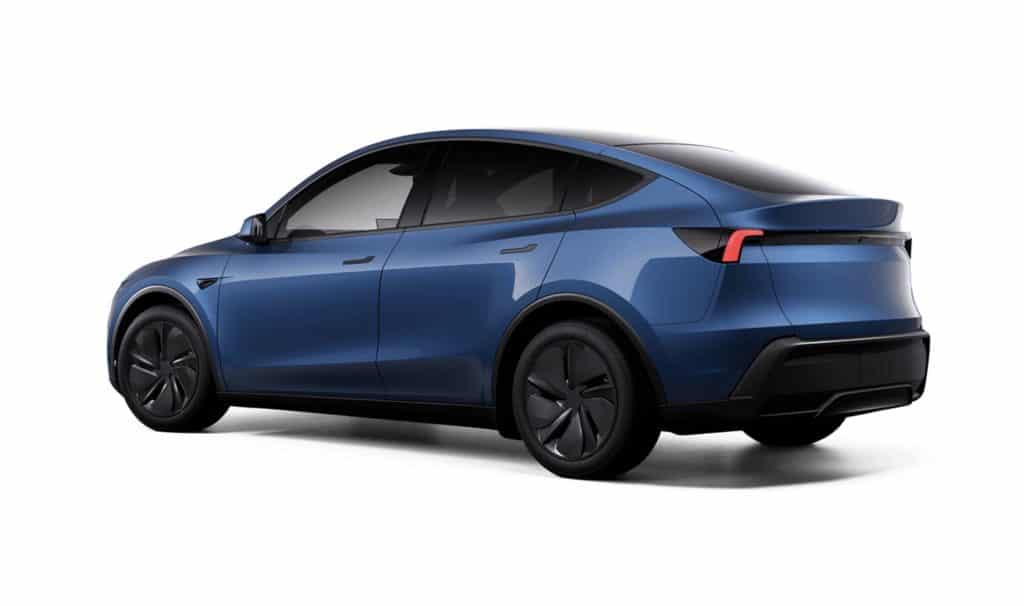
The Tesla Model Y is a five-door electric family SUV with a strong reputation for efficiency, generous luggage space and straightforward route planning. Its refreshed design brings a quieter cabin, revised suspension and updated lighting, while the accessible rear-wheel-drive version and more expensive Premium and Performance models serve different budgets. For a British household switching from petrol or diesel, the central questions are which specification to buy, where to charge and how much usable range to expect.
For the 2026 UK line-up, Tesla lists the Model Y Rear-Wheel Drive, Model Y Premium Long Range Rear-Wheel Drive, Model Y Premium Long Range All-Wheel Drive and Model Y Performance. Their advertised starting purchase prices run from £44,990 to £61,990 in the November price check. The company quotes a 309-mile WLTP figure for the selected entry configuration and up to 387 miles for the Premium AWD, with substantial differences in charging power, equipment and acceleration.
The revised Model Y family builds on the extensively updated vehicle introduced during 2025, with additional UK line-up changes during 2026. Tesla sells through its digital configurator rather than a traditional fixed dealer price list, so paint, wheels, seven-seat configuration, delivery charges and time-limited promotions must be examined on the actual order. The Premium AWD can be specified with seven seats; other listed versions should be treated as five-seat cars unless Tesla confirms otherwise.
The Tesla Model Y competes with the Hyundai IONIQ 5, Škoda Enyaq, Volkswagen ID.4 and Kia EV5. These electric SUVs offer differing approaches to controls, ride comfort, interior presentation and charging infrastructure. Tesla’s particular advantage is the integration of its charging network, vehicle software and navigation, but the highly screen-led cockpit will not suit every driver.
This UK guide compares the current four models, clarifies where Tesla’s WLTP and estimated range figures differ, and examines charging, cabin equipment, safety, luggage space and the cost of home electricity. It also distinguishes Tesla’s published specifications from independently estimated battery capacities and conditional Supercharging claims. The objective is a practical new-car purchasing decision based on the individual UK configuration, not an assumption that every Model Y has identical equipment or a fixed battery size.
At a glance
| Feature | Tesla Model Y (2026) — UK summary |
|---|---|
| UK versions | Model Y RWD; Model Y Premium Long Range RWD; Model Y Premium Long Range AWD; Model Y Performance |
| Starting UK cash purchase price | £44,990, selected entry car including current listed delivery/registration fees; options extra |
| Body / seating | Electric midsize SUV; five seats, optional seven seats on Premium Long Range AWD |
| Battery capacity | Not disclosed consistently by Tesla UK; independent usable-capacity estimates approximately 60–79 kWh, version dependent |
| Official/estimated range | 309 miles WLTP on selected entry configuration; Premium RWD up to 378 miles estimated; Premium AWD up to 387 miles WLTP; Performance up to 360 miles WLTP |
| Drive | Rear-wheel drive on entry and Premium RWD; dual-motor AWD on Premium AWD and Performance |
| 0–60 mph, Tesla figures | 6.9 / 5.4 / 4.6 / 3.3 seconds, respective UK derivatives |
| Maximum DC charging | 175 kW entry RWD; 250 kW Premium and Performance, with compatible charger and battery conditions |
| AC charging | Up to 11 kW with an appropriate three-phase connection; typically up to 7.4 kW at a suitable UK single-phase home |
| Storage | Up to 2,118 litres total with folded rear seats on entry RWD; up to 2,138 litres on five-seat Premium/Performance, includes front storage |
| Towing | Up to 1,600 kg braked with approved tow equipment; confirm vehicle plate and fitment |
| Safety | Euro NCAP five-star assessment published November 2025; current online validity includes RWD and Premium/Performance variants, while the original test document listed Premium variants only |
| Warranty | Four years/60,000 miles vehicle; eight years/100,000 or 120,000 miles battery/drive unit, model dependent |
| Tailpipe CO₂ | 0 g/km |
Tesla’s public model page and configurator are not perfectly synchronised: a general entry-model marketing tile shows 326 miles, while the selected UK vehicle configuration reports 309 miles WLTP on its listed wheels. The Premium RWD is shown as approximately 378 miles, with an estimated rather than universally certified figure. Prices reflect a 1 November 2026 UK cross-check, and the base purchase-price breakdown was also independently located; reconfirm the exact order price and certified range before paying a deposit.
Table of Contents
Pros & cons
| PROS | CONS |
|---|---|
| 1. Efficient, practical family SUV: Strong long-range configurations, a useful front boot and generous folded-seat luggage capacity support everyday ownership. | 1. Screen-first controls: Reliance on the central touchscreen, including many routine functions, may frustrate drivers wanting more physical switches. |
| 2. Well-integrated charging: Tesla’s Supercharger routing and battery preconditioning make longer journeys straightforward when the selected site has suitable chargers. | 2. Real-world range varies: The 309–387-mile figures are not interchangeable and motorway, winter, wheel and towing conditions reduce actual distance. |
| 3. Meaningful choice of versions: Buyers can choose affordable rear-wheel drive, extended-range Premium models, optional seven seats or a genuinely rapid Performance derivative. | 3. Options and running costs: Higher trims, insurance, tyres, the optional tow hitch and public charging can make ownership substantially more expensive than the headline price. |
Sign up to the e-zoomed Electric Living newsletter
About Tesla: The company behind Model Y
Tesla began developing battery-electric vehicles in the early 2000s and now sells electric cars, charging equipment and energy-storage products internationally. The Tesla Model Y became a central part of its mainstream vehicle range by sharing many underlying components with the Tesla Model 3 while offering a taller SUV body and more cargo room. Tesla’s direct online ordering and frequent software updates distinguish its ownership model from that of many traditional manufacturers.
The updated Model Y introduced redesigned front and rear lighting, greater attention to cabin noise and improvements to the suspension. A manufacturer account from April 2026 describes acoustic glass, efficiency improvements and refined ride quality compared with previous cars. Those developments provide context for the current vehicle without implying that every 2026 UK trim has the same seats, displays, acoustic treatment or wheel specification.
Readers investigating the earlier UK generations can consult the historical Tesla Model Y UK review, which contains older prices and specifications rather than today’s order figures. This guide instead concentrates on the four contemporary UK buying configurations, whose purchase prices and equipment should be confirmed directly against the current Tesla checkout.
The wider history of the model is also summarised in the Tesla Model Y article on Wikipedia. This background reference is not a source for current UK pricing or variant-specific technical claims.
Meet the Tesla Model Y
Overview
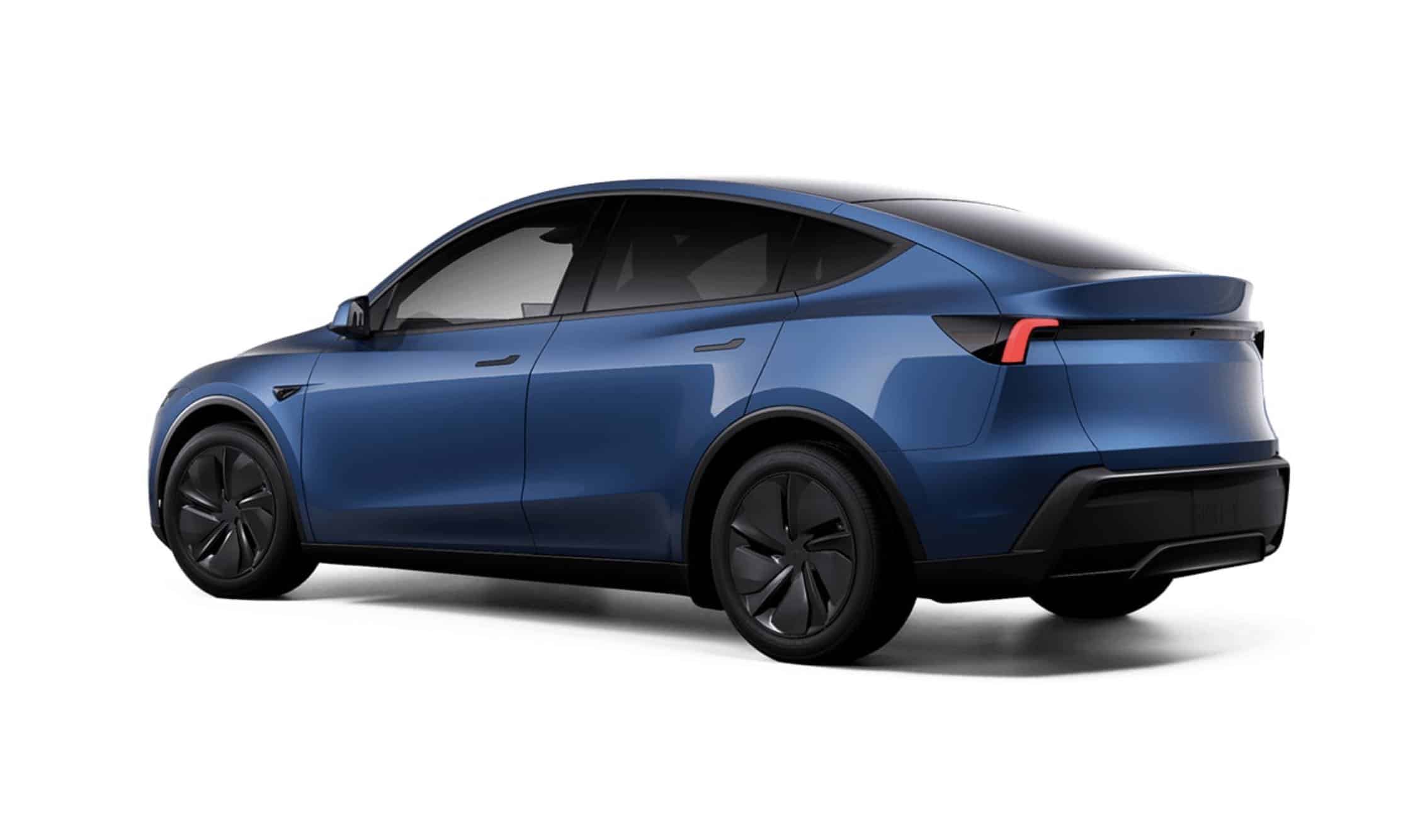
The refreshed Tesla Model Y uses a compact-looking but wide SUV body, with a shallow bonnet, smooth surfaces and a high tailgate. Its architecture puts the battery low in the floor and leaves space for a front luggage compartment as well as the rear boot. The car is designed primarily for five passengers, while the additional third row offered on a specific Premium AWD configuration brings greater flexibility for occasional extra occupants.
There is no conventional instrument binnacle ahead of the driver on the main UK variants, so speed, navigation and many controls are presented on the central display. Rear-seat comfort is good for the vehicle’s size, although the optional third row necessarily restricts space behind it. New-car shoppers should compare the entry RWD against Premium versions in person: the driving range is not the only meaningful difference between their equipment packages.
Battery & range
The UK configurator identifies 309 miles of certified WLTP range for a selected entry Model Y Rear-Wheel Drive, while Tesla’s broader marketing page displays a 326-mile headline in a different page snapshot. The Model Y Premium Long Range RWD is promoted at approximately 378 miles with an estimated-range qualification, the Premium Long Range AWD reaches 387 miles WLTP, and the Model Y Performance is listed at 360 miles. Always compare the wheel and seating configuration displayed for the exact order.
Tesla does not consistently publish individual UK gross and usable battery capacities in its public four-variant specification tables. Independent vehicle databases give approximately 60 kWh usable for the contemporary entry RWD and estimates around the mid-70s to high-70s kWh for longer-range versions, but cell suppliers and hardware can change during a model run. Accordingly, the estimated 60–79 kWh band in this guide is contextual, not an official Tesla capacity promise.
Actual motorway range will be affected by speed, ambient temperature, wind, cabin heating, gradient and tyres. Premium AWD’s higher published range does not mean that its second motor is invariably more efficient than RWD: battery size and the certification specification both matter. For anyone unfamiliar with the laboratory test cycle, our WLTP electric-car range guide explains why journeys can differ markedly from the headline number.
Charging
Tesla lists peak DC Supercharging of up to 175 kW on the entry Model Y RWD and up to 250 kW on Premium and Performance versions. The brand also advertises a variant-dependent number of miles added in 15 minutes, but these are illustrative miles calculated under defined conditions, not a constant power level or a reliable prediction for every public stop. Battery preconditioning, charger capability and arrival state of charge all affect the result.
Navigation can incorporate Supercharger stops and warm the battery in advance of a planned fast-charge arrival. The Tesla Supercharger network guide explains the charging ecosystem, while our DC rapid-charging explainer covers the relationship between charger power and the vehicle’s charging curve. Buyers should still check site access, waiting times and the current per-kWh price before relying on any route suggestion.
At home, the UK charging information allows up to 11 kW AC with the correct three-phase connection, while a properly installed domestic single-phase wallbox typically provides up to about 7.4 kW. A larger battery generally requires a longer overnight session when replenishing the same percentage of charge, and charging losses raise electricity drawn from the meter. Our home-charging time guide explains why the on-board charger and household supply must both be considered.
Practicality
The Tesla Model Y measures roughly 4.8 metres long and 2.13 metres across its open mirrors, with a wheelbase of about 2.89 metres according to Tesla’s current owner information. The five-seat entry version has approximately 835 litres behind the second row and a 114-litre front boot, while the Premium five-seat/Performance layout has about 822 litres behind the rear bench and 116 litres in front. Tesla’s much larger total cargo figures include space gained by folding the rear seats and therefore are not ordinary seats-up boot measurements.
Tesla publishes maximum combined cargo volumes of 2,118 litres for the entry five-seater and 2,138 litres for Premium five-seat and Performance derivatives. The optional seven-seat layout is confined to a specified Premium AWD configuration and reduces room for bags when the third row is in use. Buyers who routinely carry five people and bulky luggage should inspect the actual car rather than assume a headline total volume applies to every seating arrangement.
An approved towing package permits a maximum braked trailer of 1,600 kg, subject to the specific vehicle plate, towbar, tyres and loading instructions. Tesla also gives a 750 kg unbraked trailer limit in its towing documentation, and trailer use will materially reduce driving range. The car is practical for family holidays, but its width, relatively firm suspension on some wheel choices and optional towing hardware warrant attention on narrow roads and in multi-storey car parks.
Technology & equipment
Tesla’s technology proposition centres on a large touchscreen, smartphone integration through its own app, software updates and a navigation system that can account for charging stops. The Premium versions add extra cabin equipment, including an available rear touchscreen, upgraded comfort features and more elaborate cabin treatments, while Performance has sport-oriented interior and chassis details. The entry version is deliberately simpler, and customers should compare the actual equipment list rather than infer it from promotional images.
Tesla includes active driver-assistance functions and presents additional assistance packages through its configurator, but it is essential to distinguish assistance from autonomous driving. Full Self-Driving (Supervised) is not currently available in the UK according to Tesla’s UK disclosures, and any future launch depends on regulatory permission and technical readiness. Drivers must remain responsible and attentive whenever an assistance feature is engaged, including on motorways and when parking.
The electric ownership experience also depends on access to reliable home charging, correct software configuration, insurance costs and service support. Tesla provides warranty documentation and charging instructions through its UK support pages, but particular accessories and subscription features can involve separate costs. Our UK electric-SUV comparison offers a broader starting point for buyers prioritising a smaller monthly budget.
Performance
Tesla quotes 0–60 mph in 6.9 seconds for the entry Model Y RWD, 5.4 seconds for the Model Y Premium Long Range RWD, 4.6 seconds for the Premium Long Range AWD and 3.3 seconds for the Model Y Performance. The Performance result is stated with rollout subtracted, so it is not directly comparable with every independent timed test. The two AWD models deliver strong traction, while the RWD derivatives offer more than adequate acceleration for ordinary UK traffic.
Public Tesla UK pages do not provide a consistent by-derivative motor-power or torque table, so this guide deliberately does not invent a precise PS figure for each version. The Performance adds adaptive suspension and specialist wheel and brake-related hardware for a more dynamic character, but its larger wheels and firmer setup can alter ride comfort and running costs. Independent driving assessments generally identify strong responses and improved refinement, although buyers should test their chosen wheel size on familiar roads.
Safety
The updated Tesla Model Y achieved a five-star Euro NCAP rating published on 19 November 2025. Its results were 91% for adult occupants, 93% for child occupants, 86% for vulnerable road users and 92% for safety assistance. The original November 2025 assessment document lists Premium Long Range RWD, Premium Long Range AWD and Performance, but Euro NCAP’s current online validity table also includes electric Rear-Wheel Drive and Long Range Rear-Wheel Drive, for both left- and right-hand-drive vehicles. Buyers should check the current rating scope against the exact UK specification because these published versions of the validity list differ.
Tesla includes collision-warning and emergency-braking technologies, but their presence cannot prevent every collision or remove the need to maintain safe following distances. The independent assessment contains detailed qualifications for individual crash and assistance scenarios beyond the overall five-star headline. Prospective owners should review current UK safety features and understand the limitations of automated steering, parking and lane support before using them in traffic.
The verdict
The current Tesla Model Y remains a compelling electric family SUV because it combines spacious packaging, efficient long-distance versions and integrated charging tools in one easy-to-order product. The improvements to noise suppression and suspension address weaknesses associated with earlier cars, although the finished driving experience still varies by wheels and version. For a family that can charge at home, the entry RWD may provide everything necessary without paying for the highest published range.
The Model Y Premium Long Range RWD offers a useful balance of equipment, potential range and purchase price, provided the customer is comfortable with a published estimated rather than universally final certified range figure. The Premium Long Range AWD is attractive for frequent motorway journeys or buyers seeking stronger traction and the possibility of a seven-seat interior. It has the highest quoted 387-mile UK WLTP headline within the four-model line-up reviewed here.
The Model Y Performance is impressively quick, and its steering, adaptive suspension and dedicated seats distinguish it from ordinary long-range versions. Yet most households will obtain more daily benefit from suitable tyres, predictable charging and a comfortable ride than from the final seconds saved in a sprint. The Performance also commands the highest upfront cost and may increase replacement-tyre and insurance bills.
The main limitations are not a lack of technology but its very screen-led operation, the wide body and the need to interpret range and battery data carefully. Tesla’s dynamically updated marketing page has sometimes displayed 326 rather than 309 miles for the entry vehicle, while the Premium RWD uses an estimated range headline. These differences are manageable when the buyer relies on the final selected configuration, but they are reasons not to copy a single generic figure into every model comparison.
The e-zoomed view: For most UK buyers, the decision should begin with realistic annual mileage, reliable overnight charging and the price of the actual selected configuration. We would compare entry RWD and Premium Long Range RWD first, then consider AWD if its improved traction, range or optional seating is genuinely required. A short test drive concentrating on controls, visibility, cabin noise and suspension comfort is more useful than choosing purely by headline acceleration.
Before ordering, request a written full purchase-price breakdown, check whether any colour or wheel options are selected, and confirm the exact WLTP status, vehicle warranty and delivery estimate. Obtain realistic home-charging and insurance quotations and plan a representative winter motorway journey with charging stops. Those steps make the refreshed Model Y easier to judge against its electric-SUV rivals and help avoid relying on an obsolete earlier-generation specification.
Gallery
Tesla Model Y SUV (Credit: Tesla)
Pricing
The UK prices checked in Tesla’s 1 November 2026 configurator comparison were £44,990 for the Model Y RWD, £49,990 for the Premium Long Range RWD, £52,990 for the Premium Long Range AWD and £61,990 for the Model Y Performance. Tesla’s selected entry configuration also itemised £44,000 vehicle cost, £925 destination/documentation fees, £55 first registration and £10 first-year vehicle tax, totalling £44,990. These are cash purchase prices, not after-estimated-fuel-savings figures.
| UK 2026 configuration | Advertised cash purchase price | Range and buyer note |
|---|---|---|
| Model Y Rear-Wheel Drive | £44,990 | 309 mi WLTP on selected UK 19-inch configuration; simpler five-seat equipment |
| Model Y Premium Long Range RWD | £49,990 | Up to 378 mi (Tesla estimated headline); five seats |
| Model Y Premium Long Range AWD | £52,990 | Up to 387 mi WLTP; seven-seat configuration available at additional cost |
| Model Y Performance AWD | £61,990 | Up to 360 mi WLTP; high-performance chassis and equipment |
Tesla can change quoted vehicle prices, option prices and promotional offers without the traditional annual model-year price schedule, and a saved digital configuration can carry extras that alter its total. The figures above are dated cash-price starting points, not independently verified live checkout totals for every trim on the date you read this article. Confirm VAT and all registration charges, finance conditions and whether a promotion applies before proceeding with any non-refundable order fee.
Specifications
The grouped technical information below is for the four current UK buying configurations, not the early Model Y described in our historical article. Tesla openly publishes range, charging limits, performance, dimensions and warranty details but does not provide comparable official gross/usable battery-capacity figures or motor-torque figures for every trim. Where independent estimates are mentioned, they remain estimates; model-year, wheel and seating differences are not silently combined.
| Battery, Emissions, Charging and Warranty | UK 2026 specification and qualification |
|---|---|
| Battery architecture | Battery-electric architecture; gross/usable capacity varies by derivative and is not consistently disclosed by Tesla UK |
| Independent usable capacity estimates | Approximately 60–79 kWh across entry and longer-range configurations; not Tesla-certified capacity figures |
| Entry RWD WLTP, selected configuration | 309 miles on the UK configurator with selected 19-inch wheels; separate marketing tile previously displayed 326 miles |
| Premium Long Range RWD range | Up to 378 miles in Tesla UK material, specifically described as estimated |
| Premium Long Range AWD range | Up to 387 miles WLTP; wheel and optional seating changes may affect a selected order |
| Performance AWD range | Up to 360 miles WLTP; 21-inch wheels on the UK model listing |
| DC charging — entry RWD | Up to 175 kW on suitable Tesla Supercharger/DC infrastructure |
| DC charging — Premium/Performance | Up to 250 kW; peak power depends on charger type and battery conditions |
| Rapid top-up figure | Tesla publishes model-specific miles added in 15 minutes; illustrative steady-speed basis, not a guaranteed charging session |
| On-board AC charging | Up to 11 kW on appropriate three-phase supply; UK single-phase often up to 7.4 kW |
| DC charging window | No universal, Tesla-certified 10–80% duration quoted for all four UK versions; varies by battery, charger and conditions |
| Home charge connector | Type 2 AC; CCS-compatible DC charging in UK/European specification |
| Vehicle warranty | Four years or 60,000 miles, whichever comes first, subject to Tesla terms |
| Battery and drive warranty — RWD | Eight years or 100,000 miles, minimum 70% battery capacity retention under warranty terms |
| Battery and drive warranty — long range/Performance | Eight years or 120,000 miles, minimum 70% battery capacity retention under warranty terms |
| Euro NCAP | Five stars, November 2025; current Euro NCAP online validity includes RWD, Premium and Performance (LHD/RHD); original 2025 PDF names only Premium/Performance |
| Tailpipe emissions | 0 g/km CO₂ |
A headline peak DC rating should not be used as a constant-rate calculation for a complete 10–80% charging session, and the same principle applies to Tesla’s miles-added claims. The lower-power entry version may still complete a practical stop efficiently because usable battery energy and charging curve matter as well as peak kW. Battery warranties are subject to the exact vehicle category, mileage and capacity-retention clauses rather than a blanket promise of unlimited degradation protection.
| Illustrative UK Home-Charging Cost | Example calculation — not an energy-supplier quotation |
|---|---|
| Example energy delivered to battery | 60.0 kWh, illustrative amount; not a claim of exact battery capacity |
| Assumed AC efficiency | 90%; 10% charging loss assumption |
| Meter energy required | 60.0 ÷ 0.90 = 66.67 kWh (rounded) |
| Illustrative standard tariff | 25p/kWh; hypothetical, not a verified live unit rate |
| Illustrative standard-tariff cost | 66.67 × £0.25 ≈ £16.67 |
| Illustrative off-peak tariff | 7p/kWh; hypothetical and subject to plan and time restrictions |
| Illustrative off-peak cost | 66.67 × £0.07 ≈ £4.67 |
| Excluded costs | Standing charges, installation, preconditioning, changing tariff rates and other household electricity |
This table deliberately prices a hypothetical 60 kWh energy addition rather than a complete charge for every UK battery version. Actual battery capacity is not uniformly disclosed by Tesla, and charging from a low to a high state of charge incurs losses that vary by temperature, equipment and charging rate. Use your own supplier’s unit prices and any discounted overnight charging window before forecasting annual running costs.
| Dimensions and Practicality | UK current-generation model; configuration differences |
|---|---|
| Length | Approximately 4,794–4,800 mm depending on version and number-plate bracket; Performance exterior differs slightly |
| Body width without mirrors | 1,920 mm, Tesla current owner-manual standard-body figure |
| Width, mirrors folded / extended | 1,982 / 2,129 mm (Tesla owner manual) |
| Height | About 1,610–1,623 mm across model range, wheel and suspension dependent |
| Wheelbase | 2,890 mm |
| Seating | Five standard; optional seven-seat layout on Premium Long Range AWD only |
| Behind second row — entry RWD | 835 litres, Tesla owner manual five-seat measurement |
| Behind second row — Premium five-seat/Performance | 822 litres, Tesla owner manual five-seat measurement |
| Front luggage compartment | 114 litres entry RWD; 116 litres Premium five-seat/Performance |
| Maximum combined volume, rear row folded | 2,118 litres entry RWD; 2,138 litres Premium five-seat/Performance, includes front storage |
| Braked trailer limit | Up to 1,600 kg with approved tow package; exact vehicle plate takes precedence |
| Unbraked trailer limit | Up to 750 kg, with load and equipment conditions |
| Approximate curb mass | 1,891–2,033 kg according to published Tesla version specifications; figures differ by trim |
| Seating/cargo qualification | Seven-seat configuration has different loadspace arrangement; do not use five-seat luggage totals unqualified |
For luggage comparisons, the most useful number is the seats-up rear-boot volume, not a large maximum including the front compartment and folded second row. The optional third row makes the Premium AWD more versatile for occasional extra passengers but reduces the space available for suitcases when occupied. Tesla’s owner manual also states that the vehicle plate, fitted tyres and tow hitch label determine the permitted trailer limit for the individual car.
| Powertrain and Performance by Variant | Drive | Power / torque | 0–60 mph (Tesla) | 0–62 mph (where verified) | Top speed | Max DC |
|---|---|---|---|---|---|---|
| Model Y RWD | Single-motor RWD | No current official UK PS/Nm table | 6.9 s | Not consistently specified for selected UK configuration | 110 mph, selected configurator | 175 kW |
| Model Y Premium Long Range RWD | Single-motor RWD | No current official UK PS/Nm table | 5.4 s | Approx. 5.6 s (independent trim specification; confirm current build) | Approximately 125 mph (trim specification) | 250 kW |
| Model Y Premium Long Range AWD | Dual-motor AWD | No current official UK PS/Nm table | 4.6 s | Approx. 4.8 s (independent trim specification; confirm current build) | Approximately 125 mph (trim specification) | 250 kW |
| Model Y Performance | Dual-motor AWD | No current official UK PS/Nm table | 3.3 s (rollout subtracted) | Approx. 3.5 s (independent trim specification) | 155 mph | 250 kW |
Tesla principally quotes 0–60 mph rather than a complete uniform 0–62 mph matrix on its UK website; the additional 0–62 mph references are labelled as independent figures where available. The 3.3-second Performance time includes a rollout adjustment, so it is not directly interchangeable with an independently measured standing start. Torque and maximum motor power are left unfilled instead of guessing a figure from older global-market cars or a different production battery.
FAQs
| Question | Answer |
|---|---|
| What is the starting UK price of the Tesla Model Y? | £44,990 in the current cited UK purchase-price configuration, including listed destination and registration charges; extras and promotions can change the total. |
| Which four Model Y versions are covered? | Rear-Wheel Drive; Premium Long Range RWD; Premium Long Range AWD; and Performance AWD. |
| How far can the Model Y go? | 309 miles WLTP in the selected entry configuration, approximately 378 miles estimated Premium RWD, 387 miles WLTP Premium AWD and 360 miles WLTP Performance. |
| Why does Tesla also show 326 miles for the entry model? | The general marketing page and specific selected configurator display different figures; rely on the actual wheel/trim and certified specification quoted for the order. |
| Does Tesla confirm the battery capacities? | Not in a consistently comparable public UK four-trim table. Independent usable-energy estimates are roughly 60–79 kWh across variants and are subject to revision. |
| Is the Model Y rear- or all-wheel drive? | Entry and Premium Long Range RWD versions have rear-wheel drive; Premium Long Range AWD and Performance use dual motors. |
| Can you buy a seven-seat Model Y? | Tesla UK offers an optional seven-seat layout only on the selected Premium Long Range AWD configuration; check availability and luggage implications. |
| How fast will it charge at a Supercharger? | Tesla quotes maximum DC rates of 175 kW for entry RWD and 250 kW for Premium/Performance. Actual power and time depend on the battery and charger. |
| Can it charge on a normal UK wallbox? | Yes. A compatible single-phase home setup can supply around 7.4 kW; up to 11 kW AC requires a suitable vehicle and three-phase supply. |
| What is the maximum towing capacity? | Up to 1,600 kg braked with the approved tow package, subject to the vehicle plate and fitted equipment. |
| What is the boot capacity? | Tesla lists 835 litres behind the second row in entry RWD and around 822 litres for Premium five-seat/Performance; front storage is additional. |
| Has the refreshed Model Y achieved five Euro NCAP stars? | Yes. The November 2025 assessment awarded five stars. The current Euro NCAP online validity includes RWD as well as Premium and Performance versions, although its original test document only listed Premium/Performance. |
| What is the UK new-car warranty? | Four years or 60,000 miles for the vehicle; battery and drive unit eight years/100,000 miles for entry RWD or eight years/120,000 miles on longer-range/Performance under conditions. |
| Is Tesla Full Self-Driving available in Britain? | Full Self-Driving (Supervised) is not currently available in the UK; any future feature would still need approval and active driver supervision. |
| Is this the same car as the original UK article? | No. This guide covers the current 2026 UK line-up. Our separate earlier-version article describes a previous vehicle/specification era. |
Prices, WLTP and estimated ranges, charging, safety-assessment validity and equipment are based on manufacturer information and independent sources checked on 20 November 2026. Tesla changes configurations and promotions dynamically; the manufacturer’s final written order and current warranty documents take precedence over general comparison figures. This guide does not constitute an independent e-zoomed vehicle road test, and the material should be reviewed again if Tesla changes the UK line-up.
While e-zoomed uses reasonable efforts to provide accurate and up-to-date information, some of the information provided is gathered from third parties and has not been independently verified by e-zoomed. While the information from the third party sources is believed to be reliable, no warranty, express or implied, is made by e-zoomed regarding the accuracy, adequacy, completeness, legality, reliability or usefulness of any information. This disclaimer applies to both isolated and aggregate uses of this information.
Featured Articles
<!–
Carousel
–>
Ohme Home Pro EV Charger: UK Price, Specifications & Solar Charging Guide
The Tesla Model Y is a five-door electric family SUV with a strong reputation for efficiency, generous luggage space and straightforward route planning. Its refreshed design brings a quieter…
Electric Car Salary Sacrifice UK: How It Works, Benefits & Tax Savings
The Tesla Model Y is a five-door electric family SUV with a strong reputation for efficiency, generous luggage space and straightforward route planning. Its refreshed design brings a quieter…
All-Electric BYD Sealion 7: UK Prices, Specs, Range & Buying Guide
The Tesla Model Y is a five-door electric family SUV with a strong reputation for efficiency, generous luggage space and straightforward route planning. Its refreshed design brings a quieter…
Featured Products
-
<!–
–>Sale!

Best-In-Class Home Solar Bundle Offer (440W All Black Jinko Solar 8 Panels + Sungrow Hybrid Inverter 3.6 kW): price includes product supply only
<!– –>
Original price was: £2,205.95.£2,150.95Current price is: £2,150.95. (Including VAT)
<!–
–>
<!– Term:
NEDC range:
Model Year:
Deposit: £
Miles Per AnnumSubject to status and conditions –>
Brand:SungrowJinko SolarCategory:Solar<!– –>
-
<!–
–>Sale!
Best-In-Class Home Solar Bundle Offer (440W All Black Jinko Solar 8 Panels + Sungrow Battery Storage 6.4 kWh + Sungrow Hybrid Inverter 3.6 kW): price includes product supply only
<!– –>
Original price was: £5,010.95.£4,800.95Current price is: £4,800.95. (Including VAT)
<!–
–>
<!– Term:
NEDC range:
Model Year:
Deposit: £
Miles Per AnnumSubject to status and conditions –>
Brand:SungrowJinko SolarCategory:Solar<!– –>
-
<!–
–>Sale!
Bundle Offer: SUNSYNK LifePO4 Home Battery Storage (5.32 kWh) + SUNSYNK Hybrid Inverter (3.6 kW/Single-Phase): price includes product supply only
<!– –>
Original price was: £3,345.95.£3,299.95Current price is: £3,299.95. (Including VAT)
<!–
–>
<!– Term:
NEDC range:
Model Year:
Deposit: £
Miles Per AnnumSubject to status and conditions –>
Brand:Sun SynkCategory:Battery Storage<!– –>
-
Bundle Offer: Tesla Powerwall 3 Home Battery Storage (13.5 kWh) + Gateway: price includes product supply only
<!– –>
£8,559.95 (Including VAT)
<!–
–>
<!– Term:
NEDC range:
Model Year:
Deposit: £
Miles Per AnnumSubject to status and conditions –>
Brand:TeslaCategory:Battery Storage<!– –>
-
<!–
–>Sale!
Custom-Made Single-Phase EV Charging Cable Type 2 to Type 2 (2m to 50m, 7.4 kW, 32 amp, Black)
<!– –>
Price range: £99.95 through £670.95 (Including VAT)
<!–
–>
<!– Term:
NEDC range:
Model Year:
Deposit: £
Miles Per AnnumSubject to status and conditions –>
Category:CablesType:Type 2Length (m):5 m7.5 m10 m3.5 m12.5 m15 m20 m17.5 m2 m22.5 m25 m30 m35 m40 m45 m50 mCurrent (amp):32 ampPhase:Single Phase (7.2kW)<!– –>
This product has multiple variants. The options may be chosen on the product page -
Untethered Ohme ePod Home Smart EV Charger (7.4 kW): price includes product only
<!– –>
£645.95 (Including VAT)
<!–
–>
<!– Term:
NEDC range:
Model Year:
Deposit: £
Miles Per AnnumSubject to status and conditions –>
Brand:OhmeCategory:EV Charging PointsCustomer type:ResidentialPower:7.4 kWCable:UntetheredPhase:Single Phase<!– –>

The post Tesla Model Y (2026): UK Prices, Specs, Range & Buying Guide appeared first on Ezoomed.