
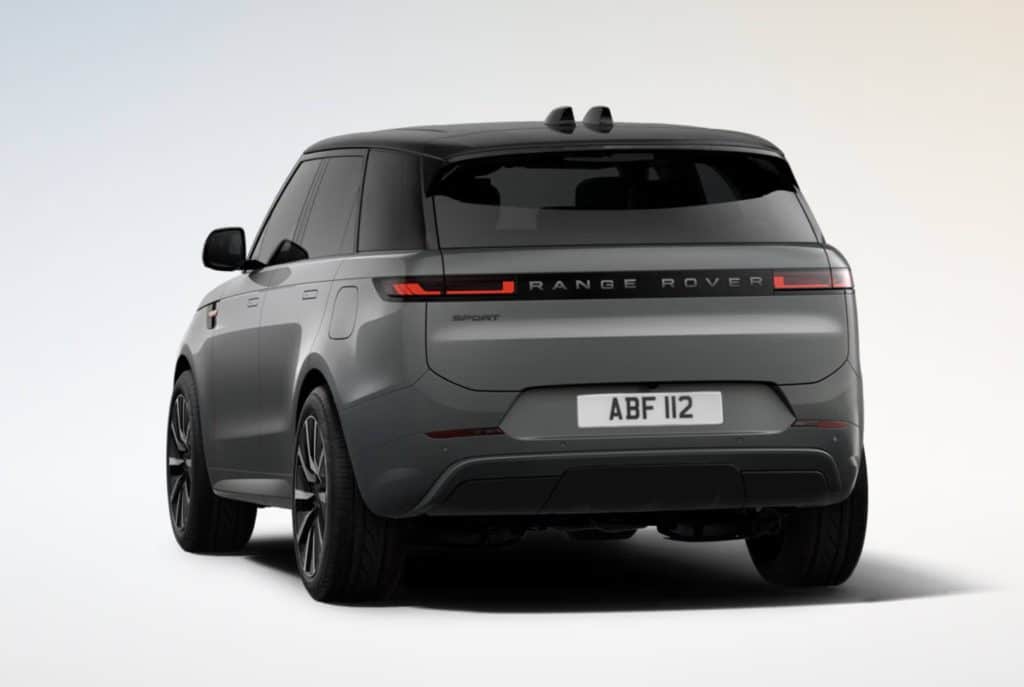
The Range Rover Sport Electric brings fully electric propulsion to a luxury SUV long associated with quiet cruising, confident all-terrain driving and a distinctly sporting character. It joins, rather than replaces, the petrol, diesel and plug-in hybrid Range Rover Sport family. For British buyers, its appeal lies in combining a familiar five-seat cabin and substantial towing ability with zero tailpipe emissions and the immediate response of a dual-motor electric drivetrain.
UK orders opened in September 2026 for the model-year 2027 Range Rover Sport Electric EV550. Range Rover quotes 550 PS and 850 Nm from its two-motor all-wheel-drive system, with a usable battery capacity of 118.5 kWh according to the UK technical data. The brand advertises up to 378 miles on its current electric model page, although a separate UK specification sheet cites 374 miles; equipment and the status of final certification matter when comparing these figures.
Three UK launch trims have separately published on-the-road prices: Range Rover Sport Electric Dynamic SE from £109,810, Range Rover Sport Electric Autobiography from £122,780 and Range Rover Sport Electric First Edition from £126,290. The wider manufacturer range description also mentions Dynamic HSE, but a separate UK price for that electric derivative was not confirmed during this research. Orders are open, while an individual vehicle’s delivery date, specification and final quotation require confirmation with the retailer.
The Range Rover Sport Electric competes for attention with the BMW iX, Polestar 3, Volvo EX90 and Mercedes-Benz EQS SUV. They differ meaningfully in seating, road manners, price and overall dimensions, and not every derivative is a like-for-like financial alternative. Range Rover’s distinctive selling point is the combination of luxury-SUV refinement, substantial off-road capability and a road-focused chassis tune.
This UK buying guide examines the EV550 powertrain, battery and charging claims, practical luggage and towing figures, technology, safety evidence and current trim pricing. It also distinguishes a manufacturer-estimated WLTP headline from independent driving estimates and explains why a 350 kW-rated charging station does not guarantee identical results on every visit. The aim is to help buyers assess the complete ownership proposition rather than rely on one impressive headline number.
At a glance
| Feature | Range Rover Sport Electric (2027) — UK overview |
|---|---|
| UK electric line-up | EV550 Dynamic SE, Autobiography and First Edition have published UK OTR prices; Dynamic HSE also named in wider manufacturer material |
| Starting UK price | From £109,810 OTR for EV550 Dynamic SE |
| Body / seats | Large luxury SUV; five seats |
| Battery capacity | 118.5 kWh usable (manufacturer UK data); gross capacity not formally specified in that document |
| Electric range | Up to 378 miles WLTP estimate on current UK model page; a separate technical sheet lists 374 miles |
| Electric motors / drive | Dual motor, all-wheel drive; 550 PS (approximately 405 kW), 850 Nm |
| Acceleration | 0–60 mph in 4.3 sec with Dynamic Launch; 0–62 mph in 4.5 sec |
| Maximum speed | 124 mph |
| DC rapid charging | 10–80% in approximately 22 minutes on a suitable 350 kW-rated charger, under manufacturer-specified conditions |
| Home AC charging | Under 7 hours at supported 22 kW AC; under 19 hours using a 7 kW domestic charger |
| Luggage space | 647 litres dry / 835 litres wet behind second row |
| Towing and wading | Up to 2,500 kg braked towing; up to 900 mm wading depth, subject to conditions |
| Safety assessment | 2022 non-electric Range Rover Sport Euro NCAP rating is not a confirmed EV550 test |
| Battery warranty | 8 years or 100,000 miles, subject to terms |
| Tailpipe CO₂ | 0 g/km |
These headline figures refer to the current UK EV550 model-year 2027 offering and reflect manufacturer information reviewed in November 2026. The 378-mile and 374-mile values come from different official published materials and should be confirmed against the particular order and final homologation. A 118.5 kWh usable capacity is stated in the UK EV550 technical sheet; approximately 125 kWh gross is an independent estimate, not a verified UK manufacturer gross figure.
Table of Contents
Pros & cons
| PROS | CONS |
|---|---|
| 1. Strong all-round capability: The blend of 550 PS, electric all-wheel drive and substantial towing capacity suits varied UK journeys. | 1. Premium purchase price: Even the least expensive published UK EV550 costs £109,810 OTR, before individual options. |
| 2. Large usable battery: 118.5 kWh of confirmed usable capacity and an advertised range approaching 380 miles support longer journeys. | 2. Heavy, wide vehicle: Almost five metres in length, more than 2.2 metres across the open mirrors and a high kerb mass complicate urban use. |
| 3. High-voltage charging potential: A claimed 22-minute 10–80% stop and advanced terrain control add versatility when suitable infrastructure is available. | 3. Important data caveats: Two different official range headlines and incomplete trim-level pricing require careful checking before ordering. |
Sign up to the e-zoomed Electric Living newsletter
About Range Rover: The company behind the Sport Electric
Range Rover began as a distinctive British luxury four-wheel-drive vehicle in 1970 and developed into a family of premium SUVs. The Range Rover Sport followed in 2005, with subsequent generations adding sophisticated on-road handling alongside the brand’s established all-terrain abilities. The Range Rover Sport Electric is the first battery-electric version of this particular model, offered alongside combustion and plug-in hybrid alternatives rather than replacing them.
The new electric Sport is engineered and built in Britain at Solihull, using an electrified form of JLR’s MLA-Flex architecture. It complements the larger Range Rover Electric, while remaining distinct from the Range Rover Plug-In Hybrid previously covered by e-zoomed. This is a meaningful distinction for drivers assessing charging frequency, tailpipe emissions and the ability to drive without petrol or diesel. Our guide to electric-vehicle types explains the difference.
For the model family’s historical background, the Range Rover Sport history on Wikipedia provides useful context. Its historical coverage should not be used as evidence for 2027 electric specifications.
Meet the Range Rover Sport Electric
Overview
The Range Rover Sport Electric retains the muscular, relatively upright proportions of its combustion-powered relatives rather than adopting an entirely new low-roof electric-SUV silhouette. Aerodynamically optimised details, including the grille and available wheel designs, help distinguish it. The battery installation lowers the centre of gravity relative to a comparable plug-in hybrid, but it remains a substantial luxury vehicle whose breadth and mass will be noticeable on narrow British roads.
Range Rover has concentrated on chassis responses as well as quietness and traction, using air suspension, sophisticated damping and electronically coordinated torque delivery. The manufacturer describes a stiffer body and a more immediate reaction to accelerator inputs than the larger Range Rover Electric. Some dynamic systems and the exact specification of convenience equipment depend on derivative and options, so the configuration should be checked rather than assuming all displayed features are standard.
Battery & range
The UK EV550 technical data explicitly describes the battery’s usable energy as 118.5 kWh, and Range Rover quotes an 800-volt electrical architecture. Independent EV data providers estimate roughly 125 kWh of gross capacity, but this is not a separately confirmed manufacturer figure for the UK version. That distinction matters because gross and usable capacities should never be interchanged when discussing range, charging cost or practical energy consumption.
Range Rover’s current UK electric page advertises up to 378 miles WLTP, while its EV550 technical sheet gives an electric-range figure of up to 374 miles. Both are manufacturer-published values; the difference may reflect configuration or the relevant certification status, but a trim-specific reconciliation was not confirmed. Buyers should treat the highest figure as an indicative ceiling, especially when assessing sustained motorway use, cold weather, larger wheels and towing. Our WLTP range explainer provides useful context.
Charging
The Range Rover Sport Electric supports rapid DC charging through an 800-volt architecture with split-charging technology. Range Rover quotes 10–80% in as little as 22 minutes using an appropriately capable 350 kW-rated public charger, and up to 136 miles of added WLTP range in ten minutes under the most favourable conditions. Neither claim is a constant charging rate: the result depends on battery temperature, arrival charge level, charger performance and the vehicle’s charging curve.
For AC charging, the UK manufacturer page quotes a full 0–100% recharge in less than seven hours with a compatible 22 kW supply, or less than 19 hours using a 7 kW home charger. A 22 kW commercial or three-phase supply is not available at every UK home, and the final installation and vehicle charging hardware must be confirmed. Drivers comparing charger capacities may find our electric-car charging-time guide useful.
The Range Rover App can help locate public chargers and schedule charging, while compatible navigation functions can support longer-distance planning. Owners should compare tariffs, reliability and connector access instead of simply choosing the highest advertised charging power, as slower equipment may make a journey stop longer. The DC charging guide explains how vehicle limits and station capabilities interact; our CCS charging explainer covers the relevant public-charging connector standard.
Practicality
According to the UK EV550 technical data, the vehicle is 4,946 mm long, 1,820 mm high and 2,209 mm wide with its mirrors extended; its wheelbase is 2,997 mm. Luggage room behind the second row is quoted as 647 litres using the dry measurement or 835 litres on the wet basis. The different measurement conventions must not be treated as interchangeable, particularly when comparing the boot with rival SUVs advertised using other standards.
With the rear seats folded, Range Rover gives 1,491 litres dry or 1,860 litres wet, while the maximum braked towing capability is 2,500 kg and the unbraked rating 750 kg. The manufacturer also quotes up to 900 mm of water-wading capability under its specified conditions, an unusual strength among luxury EVs. Towing, off-road driving and carrying a heavy load consume significantly more energy, so the range available on a real expedition may be substantially below the advertised upper WLTP result.
Technology & equipment
Technology is central to the electric Sport’s proposition, with coordinated control of the drive motors, suspension and braking rather than simply a large touchscreen. JLR describes intelligent traction management reacting within milliseconds, adaptive damping and electronic roll control intended to balance cornering response with long-distance comfort. All-wheel steering is identified in manufacturer technical material, but the exact equipment package and availability should be checked for the UK trim being configured.
Digital Twin battery monitoring is intended to support remote battery-health analysis and proactive maintenance, while over-the-air updates can change supported vehicle functions. Customers can choose more elaborate exterior and cabin finishes as they move up the trim hierarchy, and the First Edition is associated with a curated Zadar Grey specification and distinctive wheels. These are equipment descriptions rather than a guarantee that every option, upholstery finish or upgrade is included in the base OTR price.
Performance
The UK EV550 specification produces 550 PS, approximately 405 kW, and a quoted 850 Nm through two electric motors and all-wheel drive. Range Rover states that 0–60 mph takes 4.3 seconds when Dynamic Launch Mode is engaged, equivalent to a manufacturer-quoted 0–62 mph time of 4.5 seconds. Top speed is 124 mph; claims from the separately referenced EV450 found in some overseas material must not be imported into the UK EV550 review.
Independent early driving assessments suggest the steering, refinement and controlled body movements are more significant to the vehicle’s character than the initial burst of acceleration alone. The electric motors can vary torque quickly across the driven axles, which is relevant on a slippery road or loose ground as well as on a smooth motorway. The vehicle’s considerable weight still warrants attention to braking feel, tyres and ride comfort on the actual wheel specification chosen.
Safety
The conventional Range Rover Sport earned a five-star Euro NCAP result in 2022, but that assessment should not automatically be attributed to the 2027 battery-electric Range Rover Sport Electric. At the time of this review, a distinct published EV550 Euro NCAP result or an explicit EV applicability extension had not been established. It would therefore be misleading to claim that the new battery-electric version has independently received the same five-star assessment.
Range Rover describes sophisticated traction controls, stability systems, driver assistance and powerful electronically coordinated chassis technology, although specific safety equipment can vary with trim. The electric vehicle’s heavy battery and overall mass make suitable tyres, consistent braking and correct load management especially important, without implying a safety shortcoming that testing has not identified. Buyers should review the actual UK equipment list and the latest independent safety documentation before ordering.
The verdict
The Range Rover Sport Electric delivers a distinctive combination of British-made luxury, substantial electric performance and serious utility. Unlike some premium electric SUVs whose emphasis is primarily road comfort, it is designed to retain the Range Rover ability to tackle demanding terrain and tow a sizeable trailer. Its strongest argument is the breadth of that capability in a familiar, understated SUV form.
A genuinely large usable battery, rapid-charge potential and dual-motor drive give the EV550 credible long-distance ability for buyers able to charge regularly at home. The cabin and luggage dimensions also make it a practical five-seat family vehicle rather than merely an expensive performance statement. The all-electric powertrain removes tailpipe CO₂ emissions, although running costs will still depend heavily on charging tariffs and energy consumption.
The main drawbacks are its purchase price, physical size and weight, alongside uncertainty about how consistently drivers will achieve the most attractive publicised charging and range figures. The difference between the manufacturer’s 374-mile technical figure and 378-mile website headline deserves a clear dealer explanation for each selected specification. Drivers without convenient home charging may find ownership less economical and less convenient than the headline technology suggests.
The Range Rover Sport Electric Dynamic SE is the most defensible starting point financially because it offers the same stated UK EV550 powertrain as the more expensive launch editions. The Range Rover Sport Electric Autobiography may suit buyers prioritising richer cabin finishes and personalisation, while the Range Rover Sport Electric First Edition adds an exclusive preconfigured appearance. Check every item in a written build sheet; a higher trim does not automatically deliver a larger battery or greater rated motor output.
The e-zoomed view: We would prioritise charging access, realistic motorway efficiency, wheel specification and the equipment that genuinely improves daily comfort over paying primarily for a limited-edition appearance. The electric Sport is a serious alternative to traditional luxury SUVs for someone who values both paved-road refinement and genuine off-road engineering. Its price makes a thoughtful specification essential, rather than a decision driven solely by prestige.
Before ordering, test drive the EV550 on the types of roads you normally use, measure the vehicle against your garage and parking spaces, and obtain a confirmed UK on-the-road quotation for the exact trim. Check the manufacturer’s latest range certification and warranty conditions, then obtain insurance, tyre and home-charger installation estimates. A realistic journey plan and cost comparison against other premium EVs will reveal whether its particular strengths justify the outlay.
Gallery
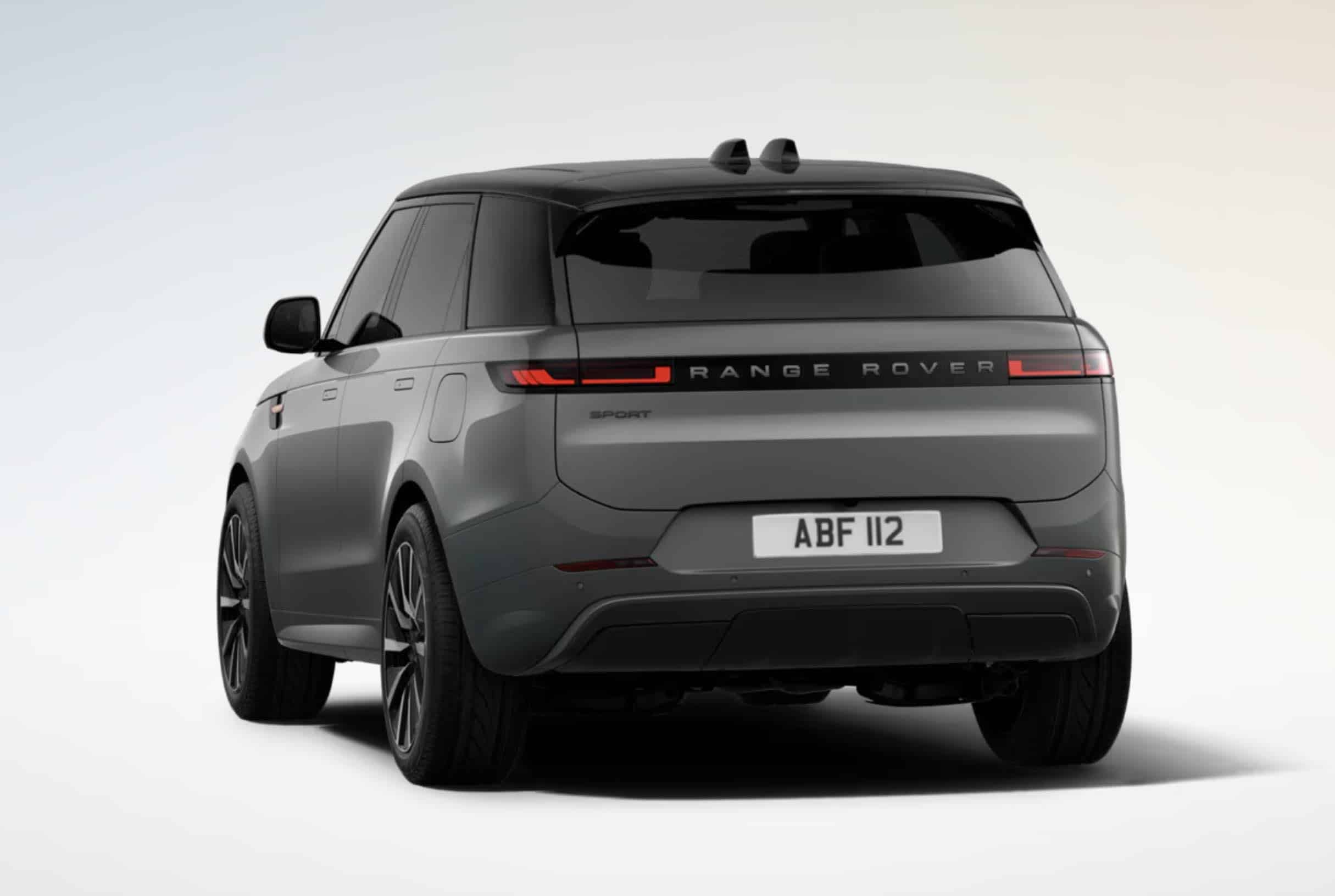
Range Rover Sport Electric SUV (Credit: Range Rover)
Pricing
Range Rover’s UK announcement dated 30 September 2026 gives three published EV550 starting on-the-road prices: £109,810 for Dynamic SE, £122,780 for Autobiography and £126,290 for First Edition. The price basis is OTR, not a bare pre-registration list price, and final figures may change with equipment, government charges or retailer terms. The supplied personalised configurator could not be independently rendered, so a specific saved build price has not been certified here.
| UK EV550 model-year 2027 derivative | Published starting UK price | Price basis / availability |
|---|---|---|
| Range Rover Sport Electric Dynamic SE | £109,810 | OTR; UK manufacturer launch information |
| Range Rover Sport Electric Autobiography | £122,780 | OTR; UK manufacturer launch information |
| Range Rover Sport Electric First Edition | £126,290 | OTR; UK manufacturer launch information |
| Range Rover Sport Electric Dynamic HSE | Not independently confirmed | Named in broader manufacturer specifications; distinct UK orderability/price requires retailer confirmation |
The published UK launch prices do not establish a separate UK list price excluding on-the-road charges, nor do they prove a final dealer quotation for an individually equipped car. Optional wheel, paint, interior and chassis selections can materially increase the cost, while finance offers are time limited and conditional. Compare total ownership costs, including electric charging, tyres, servicing, insurance and likely depreciation, rather than treating an advertised monthly payment as the entire commitment.
Specifications
The specifications below refer to the UK model-year 2027 EV550 powertrain, not an overseas EV450 derivative or an older petrol or plug-in hybrid Range Rover Sport. Manufacturer evidence establishes 118.5 kWh as usable capacity, while the gross value is independently estimated, and the WLTP figures published in different official sources are not identical. Three launch trims have verified UK OTR prices; the additional named Dynamic HSE trim remains qualified where UK-specific evidence is incomplete.
| Battery, Emissions, Charging and Warranty | UK EV550 information / qualification |
|---|---|
| Battery usable capacity | 118.5 kWh — explicitly described as usable energy in official UK technical data |
| Battery gross capacity | Not separately confirmed in the UK technical document; approximately 125 kWh independently estimated |
| Electrical architecture | 800 V high-voltage system with split-charging capability |
| Combined WLTP range on current UK page | Up to 378 miles (manufacturer estimate; specification dependent) |
| Electric-range figure in UK EV550 technical sheet | Up to 374 miles (separately published figure, subject to final retail confirmation) |
| Manufacturer real-world comparison figure | Up to approximately 333 miles on a defined route; not a guaranteed user result |
| Traction / motors | Dual electric motors; all-wheel drive, EV550 |
| DC rapid charging | Manufacturer quotes 10–80% in about 22 min using a suitable 350 kW-rated charger |
| Rapid top-up | Up to 136 miles WLTP-equivalent added in 10 min, only at optimal charging conditions |
| AC charging at 22 kW | Manufacturer states under 7 hours from 0–100% with compatible charger and vehicle configuration |
| AC charging at 7 kW | Manufacturer states under 19 hours 0–100% with compatible domestic charging |
| UK new vehicle manufacturer warranty | 3 years under UK manufacturer terms; precise mileage/exclusions should be checked in order documents |
| High-voltage battery warranty | 8 years / 100,000 miles, whichever is sooner; conditions and exclusions apply |
| Safety assessment | Non-EV Range Rover Sport tested by Euro NCAP in 2022; separate EV550 applicability unconfirmed |
| Tailpipe CO₂ | 0 g/km |
Charging results assume suitable infrastructure, battery temperature and state of charge; a charger rated at 350 kW does not mean that the vehicle sustains 350 kW throughout a charging session. The published electric range remains subject to variant and wheel selection, while the current website itself warns that some values are manufacturer estimates pending final certification. Written confirmation from the retailer is preferable to substituting a single unqualified range number.
| Illustrative UK Home-Charging Cost | Checked illustrative calculation |
|---|---|
| Energy added to traction battery | 118.5 kWh — example charge equal to published usable capacity |
| Assumed AC charging efficiency | 90% for illustration; actual losses may vary |
| Energy purchased at meter | 118.5 ÷ 0.90 = 131.67 kWh |
| Illustrative standard unit rate | 25p/kWh; assumed, not a current verified tariff |
| Illustrative standard-rate cost | 131.67 × £0.25 = £32.92 |
| Illustrative overnight unit rate | 7p/kWh; assumed, may require eligibility and tariff conditions |
| Illustrative overnight-rate cost | 131.67 × £0.07 = £9.22 |
| Not included | Standing charges, charger installation, preconditioning, tariff variation and other household use |
These costs are examples for replenishing energy equivalent to the nominal usable battery capacity, not an electricity bill prediction for an actual 0–100% charging session. Home electricity pricing, loss rates, preconditioning and battery conditions all influence the amount of energy purchased. Buyers should use their real tariffs and charger installation advice; a 22 kW charging capability may demand a three-phase supply that a typical British home does not have.
| Dimensions and Practicality | UK EV550 manufacturer technical data |
|---|---|
| Overall length | 4,946 mm |
| Overall height | 1,820 mm |
| Width / mirrors folded | 2,047 mm |
| Width / mirrors open | 2,209 mm |
| Wheelbase | 2,997 mm |
| Seating | Five seats |
| Rear loadspace, second row up | 647 litres dry; 835 litres wet (distinct measuring methods) |
| Maximum loadspace, rear seats folded | 1,491 litres dry; 1,860 litres wet |
| Maximum braked towing | 2,500 kg, subject to correct towing equipment and loading |
| Maximum unbraked trailer | 750 kg |
| Unladen weight | 2,695 kg DIN; 2,770 kg EU including driver allowance |
| Maximum wading depth | 900 mm under specified conditions |
| Roof load | Up to 100 kg with permitted roof equipment |
| Turning circle | 12.53 m conventional steering; 10.95 m with four-wheel steering, configuration dependent |
The vehicle’s near-five-metre length and 2,209 mm width with mirrors open matter in UK garages, older car parks and narrow lanes. Wet and dry luggage capacities are different measurement conventions, and neither should be silently compared with a rival figure using another standard. Roof and trailer loads, optional steering hardware and any fitted accessories affect practical capability; consult the actual vehicle limits before towing or travelling fully loaded.
| Powertrain and Performance by Variant | Drivetrain | Rated output | Maximum torque | 0–62 mph | Top speed |
|---|---|---|---|---|---|
| EV550 Dynamic SE | Dual-motor AWD | 550 PS / approx. 405 kW | 850 Nm | 4.5 sec | 124 mph |
| EV550 Autobiography | Dual-motor AWD | 550 PS / approx. 405 kW | 850 Nm | 4.5 sec | 124 mph |
| EV550 First Edition | Dual-motor AWD | 550 PS / approx. 405 kW | 850 Nm | 4.5 sec | 124 mph |
| EV550 Dynamic HSE (UK price unconfirmed) | EV550 AWD, if locally offered | 550 PS / approx. 405 kW (powertrain figure) | 850 Nm (powertrain figure) | 4.5 sec (EV550 claim) | 124 mph (EV550 claim) |
For all three verified priced UK trims, the quoted EV550 output is common; their published differences centre on equipment and personalisation rather than motor performance. The 4.3-second time often quoted by Range Rover is for 0–60 mph in Dynamic Launch Mode, not 0–62 mph, which the UK specification gives as 4.5 seconds. Dynamic HSE is included to disclose a discrepancy in wider manufacturer trim listings, not to claim that a separately priced UK EV550 Dynamic HSE configuration has been independently verified.
FAQs
| Question | Answer |
|---|---|
| Is the Range Rover Sport Electric on sale in the UK? | Orders opened on 30 September 2026; actual deliveries and final specification depend on the chosen UK retailer. |
| What does the Range Rover Sport Electric cost? | UK EV550 launch prices start at £109,810 OTR for Dynamic SE, £122,780 for Autobiography and £126,290 for First Edition. |
| What battery capacity does it have? | The official UK EV550 document states 118.5 kWh usable; an approximately 125 kWh gross figure is an independent estimate. |
| Does it have a confirmed 378-mile range? | The current UK model page advertises up to 378 miles; a separate UK technical document lists 374 miles and the website warns about manufacturer estimates. |
| How much power does it produce? | The UK EV550 has up to 550 PS (about 405 kW) and 850 Nm from its dual-motor AWD system. |
| How fast is the Range Rover Sport Electric? | 0–60 mph in 4.3 seconds with Dynamic Launch, or 0–62 mph in 4.5 seconds; top speed is 124 mph. |
| How quickly will it charge on the motorway? | Range Rover quotes approximately 22 minutes from 10–80% using a suitable 350 kW-rated DC charger under optimal conditions. |
| Can it charge at home? | Yes. Range Rover gives less than 19 hours with a compatible 7 kW supply and less than seven hours at supported 22 kW AC. |
| What is the maximum towing capacity? | 2,500 kg braked and 750 kg unbraked, subject to configuration and loading limits. |
| How big is the boot? | 647 litres dry or 835 litres wet behind the second row; the measurement basis makes a difference. |
| Is it a seven-seat SUV? | No. The UK EV550 technical specification covers a five-seat vehicle. |
| Can it wade through water? | Range Rover quotes up to 900 mm under specified off-road conditions; do not treat this as unrestricted flood-water safety. |
| Has the EV550 achieved five Euro NCAP stars? | No separate EV550 assessment or formal applicability extension was independently confirmed. The conventional Sport achieved five stars in 2022. |
| What battery warranty applies? | Eight years or 100,000 miles, whichever comes first, subject to the manufacturer’s conditions. |
| Is Dynamic HSE an available UK EV550 trim? | It appears in broader brand material, but a distinct UK launch price or confirmed UK order configuration was not independently established. |
| Does it have tailpipe emissions? | No. As a battery-electric vehicle it has zero tailpipe CO₂ emissions, although electricity generation and vehicle manufacture have environmental impacts. |
The figures in this guide reflect the UK manufacturer’s information available in November 2026, supplemented by independently identified technical estimates where clearly labelled. Before placing an order, verify the final EV550 specification, applicable certified range, equipment, warranty, charging hardware and on-the-road price in a written retailer quotation. Differences between early announcements, updated web pages and individual build configurations should be resolved by the supplying retailer.
While e-zoomed uses reasonable efforts to provide accurate and up-to-date information, some of the information provided is gathered from third parties and has not been independently verified by e-zoomed. While the information from the third party sources is believed to be reliable, no warranty, express or implied, is made by e-zoomed regarding the accuracy, adequacy, completeness, legality, reliability or usefulness of any information. This disclaimer applies to both isolated and aggregate uses of this information.
Featured Articles
<!–
Carousel
–>

Enphase IQ Battery 5P Home Battery Storage: UK Price, Specifications, Solar & EV Charging Guide
The Range Rover Sport Electric brings fully electric propulsion to a luxury SUV long associated with quiet cruising, confident all-terrain driving and a distinctly sporting character. It joins, rather…
Do Longer Length EV Cables For Charging An Electric Car Work?
The Range Rover Sport Electric brings fully electric propulsion to a luxury SUV long associated with quiet cruising, confident all-terrain driving and a distinctly sporting character. It joins, rather…
All-Electric BMW iX5 (2027): UK Prices, Specs, Range & Buying Guide
The Range Rover Sport Electric brings fully electric propulsion to a luxury SUV long associated with quiet cruising, confident all-terrain driving and a distinctly sporting character. It joins, rather…
Featured Products
-
<!–
–>Sale!
Best-In-Class Home Solar Bundle Offer (440W All Black Jinko Solar 8 Panels + Sungrow Hybrid Inverter 3.6 kW): price includes product supply only
<!– –>
Original price was: £2,205.95.£2,150.95Current price is: £2,150.95. (Including VAT)
<!–
–>
<!– Term:
NEDC range:
Model Year:
Deposit: £
Miles Per AnnumSubject to status and conditions –>
Brand:SungrowJinko SolarCategory:Solar<!– –>
-
<!–
–>Sale!
Best-In-Class Home Solar Bundle Offer (440W All Black Jinko Solar 8 Panels + Sungrow Battery Storage 6.4 kWh + Sungrow Hybrid Inverter 3.6 kW): price includes product supply only
<!– –>
Original price was: £5,010.95.£4,800.95Current price is: £4,800.95. (Including VAT)
<!–
–>
<!– Term:
NEDC range:
Model Year:
Deposit: £
Miles Per AnnumSubject to status and conditions –>
Brand:SungrowJinko SolarCategory:Solar<!– –>
-
<!–
–>Sale!

Bundle Offer: SUNSYNK LifePO4 Home Battery Storage (5.32 kWh) + SUNSYNK Hybrid Inverter (3.6 kW/Single-Phase): price includes product supply only
<!– –>
Original price was: £3,345.95.£3,299.95Current price is: £3,299.95. (Including VAT)
<!–
–>
<!– Term:
NEDC range:
Model Year:
Deposit: £
Miles Per AnnumSubject to status and conditions –>
Brand:Sun SynkCategory:Battery Storage<!– –>
-
Bundle Offer: Tesla Powerwall 3 Home Battery Storage (13.5 kWh) + Gateway: price includes product supply only
<!– –>
£8,559.95 (Including VAT)
<!–
–>
<!– Term:
NEDC range:
Model Year:
Deposit: £
Miles Per AnnumSubject to status and conditions –>
Brand:TeslaCategory:Battery Storage<!– –>
-
<!–
–>Sale!
Custom-Made Single-Phase EV Charging Cable Type 2 to Type 2 (2m to 50m, 7.4 kW, 32 amp, Black)
<!– –>
Price range: £99.95 through £670.95 (Including VAT)
<!–
–>
<!– Term:
NEDC range:
Model Year:
Deposit: £
Miles Per AnnumSubject to status and conditions –>
Category:CablesType:Type 2Length (m):5 m7.5 m10 m3.5 m12.5 m15 m20 m17.5 m2 m22.5 m25 m30 m35 m40 m45 m50 mCurrent (amp):32 ampPhase:Single Phase (7.2kW)<!– –>
This product has multiple variants. The options may be chosen on the product page -
Untethered Ohme ePod Home Smart EV Charger (7.4 kW): price includes product only
<!– –>
£645.95 (Including VAT)
<!–
–>
<!– Term:
NEDC range:
Model Year:
Deposit: £
Miles Per AnnumSubject to status and conditions –>
Brand:OhmeCategory:EV Charging PointsCustomer type:ResidentialPower:7.4 kWCable:UntetheredPhase:Single Phase<!– –>

The post Range Rover Sport Electric (2027): UK Prices, Specs, Range & Buying Guide appeared first on Ezoomed.