
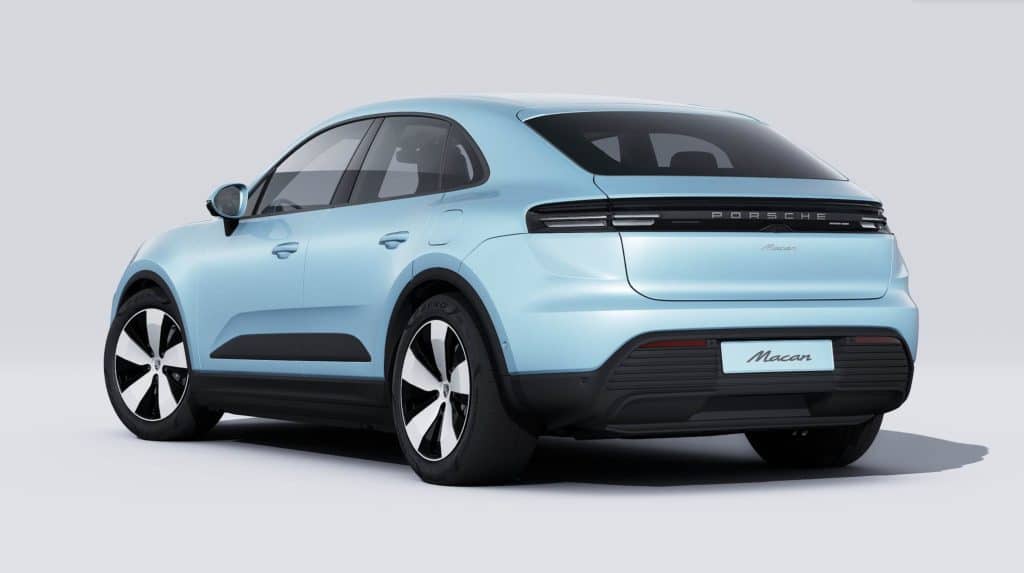
The Porsche Macan Electric brings the Stuttgart sports-car brand’s familiar driving focus into the premium electric-SUV market. The latest UK model, identified by Porsche as model year 2027, retains the Macan’s distinctive silhouette while replacing the combustion powertrain with a dedicated electric platform. It is a five-seat family SUV, with suspension tuning and steering precision that reflect Porsche’s sporting priorities. Its extensive options list also makes the buying decision rather different from that of a conventional family crossover.
The entry-level Porsche Macan Electric uses rear-wheel drive, delivers up to 265 kW (360 PS) with Launch Control and has an official combined WLTP range of 340–398 miles, depending on specification. Its 100 kWh gross battery supports an 800-volt electrical system and up to 270 kW DC charging, with Porsche quoting 21 minutes for a 10–80% recharge under ideal conditions. These figures put long-distance capability at the heart of the appeal.
The electric second-generation Macan arrived in 2024. Porsche has since continued to expand its equipment and derivative range. For the current UK model year, the starting list price is £69,800 including VAT, while Porsche’s linked configuration shows £69,865 on the road before optional extras. Buyers should treat the 2027 model-year designation as a specification and ordering reference, not assume that every car registered during 2026 has identical equipment.
Among the more natural British-market alternatives are the BMW iX3 Neue Klasse, Polestar 4 and Mercedes-Benz EQE SUV. These competitors offer different mixes of interior space, comfort, equipment and electric range, so they are worth considering alongside the Porsche rather than judging the Macan on acceleration alone. The more expensive all-wheel-drive Macan derivatives also compete with sportier premium SUVs.
This UK buying guide explains the current price and trim structure, battery and charging arrangements, realistic ownership considerations, passenger and luggage space, safety and warranty cover. Particular attention is paid to the differences between the rear-wheel-drive Porsche Macan Electric and the more powerful versions, and to the effect of optional equipment on the final invoice. The aim is to help readers identify a sensible specification before requesting a tailored quotation or booking a test drive.
At a glance
| Feature | UK Porsche Macan Electric (MY2027) |
|---|---|
| Vehicle type | Battery-Electric Vehicle (BEV); five-seat premium SUV |
| UK list price | From £69,800 including VAT; linked base configuration £69,865 OTR |
| Drivetrain | Rear-wheel drive; single-speed automatic |
| Battery | 100.0 kWh gross; approximately 94.9 kWh usable in independent technical listings |
| Electric range | 340–398 miles combined WLTP, configuration-dependent |
| Power and torque | 250 kW / 340 PS normally; up to 265 kW / 360 PS and 563 Nm with Launch Control |
| Acceleration and maximum speed | 0–62 mph in 5.7 seconds; 137 mph |
| AC / DC charging | 11 kW AC standard; up to 270 kW DC; optional 22 kW AC |
| Rapid-charge time | 10–80% in 21 minutes at a suitable high-power DC station under optimal conditions |
| Boot and towing | 518-litre rear boot in Porsche UK’s current standard-audio configuration; 84-litre front compartment; up to 2,000 kg braked towing with approved equipment |
| Safety | Five-star Euro NCAP result in 2024 for the tested Macan 4 Electric; not a separate 2027 test |
| Warranty | Three-year new-vehicle warranty; high-voltage battery eight years/100,000 miles, subject to terms |
| Tailpipe CO₂ | 0 g/km |
Figures refer primarily to the UK rear-wheel-drive MY2027 model. Porsche publishes specification-dependent WLTP ranges and a gross battery figure; the usable figure is independently reported rather than separately confirmed in the UK manufacturer table. Optional wheels, equipment, charging hardware and trim selection can affect the figures and final price.
Table of Contents
Pros & cons
| PROS | CONS |
|---|---|
| 1. Long certified range: Up to 398 miles WLTP gives the rear-wheel-drive model substantial claimed touring capability. | 1. Significant purchase price: A £69,800 list price is substantial before costly wheels, comfort features and other options. |
| 2. Excellent charging potential: The 800-volt system can achieve up to 270 kW DC and a 21-minute 10–80% stop in suitable conditions. | 2. Premium-option dependence: Adaptive suspension, rear-axle steering and the quicker AC charger need careful specification checks. |
| 3. Real everyday versatility: Five seats, separate front storage and up to 2,000 kg braked towing add usefulness beyond performance. | 3. Real-world range variability: Fast motorway use, winter temperatures, large wheels and towing can noticeably reduce distance per charge. |
Sign up to the e-zoomed Electric Living newsletter
About Porsche: The company behind the Macan Electric
Porsche is a German sports-car manufacturer with an engineering heritage that stretches back to the twentieth century. The brand’s modern electric-car programme began with the Porsche Taycan, and the Porsche Macan Electric extends that approach to a practical five-seat SUV. The electric Macan is produced in Leipzig and uses the Premium Platform Electric architecture developed within the Volkswagen Group.
The company’s engineering priorities combine performance, driver control and increasingly sophisticated electrical systems, but a Porsche badge also brings higher potential costs for wheels, tyres, servicing and personalisation. Buyers comparing a well-optioned Macan with a similarly priced rival should scrutinise the equipment actually supplied rather than relying on a headline power or range figure. More background on the manufacturer is available at Wikipedia.
Meet the Porsche Macan Electric (2027)
Overview
The Porsche Macan Electric is the entry point to Porsche’s current five-derivative electric Macan range. Its single rear motor is an important distinction: the more expensive Porsche Macan 4 Electric, Porsche Macan 4S Electric, Porsche Macan GTS and Porsche Macan Turbo Electric use all-wheel drive and offer progressively greater performance. The basic model is therefore the one most clearly oriented towards efficiency and day-to-day use, rather than the quickest sprint time.
Design details include the low bonnet, frameless side windows, distinctive daytime running lamps, full-width rear light strip and active aerodynamic features. The result is recognisably a Macan, although the electric architecture brings different proportions and packaging from the older petrol vehicle. Standard steel suspension offers a conventional set-up, while adaptive dampers and air suspension can change the ride-and-handling balance depending on the selected specification.
Battery & range
The Porsche Macan Electric has a 100.0 kWh gross battery and an 800-volt electrical architecture. Independent MY2027 technical listings put usable capacity at approximately 94.9 kWh, but Porsche’s current UK model page identifies the gross figure rather than specifying usable capacity. Porsche quotes 340–398 miles on the combined WLTP cycle for the rear-wheel-drive model, with wheel size and options affecting the certified result.
WLTP offers a consistent laboratory comparison, not a promise of motorway distance in every season. Consumption rises in cold weather, on prolonged motorway journeys and when climbing hills or towing. Gentler driving can improve efficiency. Readers unfamiliar with the certification method can consult the guide to WLTP electric-car range before comparing the Macan with other SUVs.
The standard heat pump uses available thermal energy to support cabin heating, helping reduce the energy demand of winter journeys. Nevertheless, prudent route planning should allow reserve charge on arrival, especially in poor weather or when travelling far from reliable rapid chargers. A home charging arrangement also matters, since it allows most daily journeys to begin with a comfortably charged battery without relying on expensive public rapid charging.
Charging
The Porsche Macan Electric supports up to 270 kW DC charging with a CCS connector and can replenish its battery from 10% to 80% in as little as 21 minutes under Porsche’s stated optimal high-voltage conditions. The peak figure is not maintained throughout the stop. On compatible 400-volt infrastructure, Porsche separately quotes about 33 minutes for the same charging window. The guide to DC charging explains why charger voltage and power matter.
For AC charging, the rear-wheel-drive Porsche Macan Electric has an 11 kW onboard charger as standard, with Porsche quoting approximately 10 hours from empty to full at a suitable three-phase supply. A 22 kW onboard charger is optional and can shorten the manufacturer’s stated 0–100% time to around 5.3 hours where compatible infrastructure is available. Typical UK single-phase home charging is slower, so check the domestic supply and the electric-car charging-time guide before interpreting published AC times.
Plug & Charge can simplify supported public charging sessions, and the Porsche Charging Planner can suggest stops on longer journeys. These functions depend on compatible networks, services and the vehicle’s configuration; an advertised 350 kW charger alone does not guarantee the car will reach its 270 kW peak. Battery temperature, state of charge and station availability influence the result. Sensible timing and route planning therefore matter more than a headline maximum-power figure.
Practicality
The Porsche Macan Electric measures 4,784 mm long, 1,938 mm wide without mirrors and 2,893 mm between the axles, giving it a substantial footprint for a five-seat SUV. Porsche’s current UK detail lists 518 litres of rear luggage space in the relevant standard-audio configuration. A separate 84-litre front compartment accommodates smaller belongings or charging cables. Certain upgraded audio systems reduce rear luggage volume, so the precise vehicle specification is important.
Folding the rear seats increases the manufacturer-listed rear capacity to about 1,326 litres in the stated configuration. The electric platform supports a useful cabin, but adults should still test rear headroom, entry and exit and the rear seat with their normal child seats before ordering. The broad body and 2,152 mm width including mirrors deserve particular attention on narrow UK roads and in older car parks.
Porsche lists up to 2,000 kg braked and 750 kg unbraked towing capacity for the current rear-wheel-drive model, subject to approved equipment, loading limits and correct configuration. The turning circle is 12.1 metres without rear-axle steering, with a lower manufacturer figure available where the relevant steering option is fitted. Buyers intending to tow should also budget for a material reduction in usable driving range, especially with a high-sided trailer or caravan.
Technology & equipment
The driver-oriented cabin includes a 12.6-inch curved digital instrument display and a 10.9-inch central touchscreen, with Apple CarPlay and Android Auto integration. Porsche also offers a wider array of passenger display, head-up display, lighting, sound and comfort choices, although not every feature is standard on the entry-level model. The configurator is essential for comparing what an individual UK build includes rather than assuming all publicity images represent the base car.
Porsche’s newer model-year equipment update makes adaptive cruise control and automated parking with 2D Surround View part of the expanded standard specification. Wireless smartphone charging now supports up to 25 W with compatible devices, while more elaborate remote parking features require suitable options. The car’s digital services and My Porsche connectivity may have inclusion periods, activation requirements and continuing subscription conditions that should be reviewed when taking delivery.
The Porsche Macan Electric also incorporates a heat pump, charging-route planning and the ability to use supported Plug & Charge stations. For an owner new to battery-electric driving, the practical differences between home charging, Type 2 AC charging and CCS rapid charging are explained in the beginner’s EV charging guide. An equipment check should cover the charging cable supplied, supported charging speeds and whether a three-phase supply is actually available.
Performance
In normal operation the Porsche Macan Electric is rated at 250 kW (340 PS), rising to 265 kW (360 PS) with Launch Control, accompanied by up to 563 Nm of torque. Porsche quotes 0–62 mph in 5.7 seconds and a maximum of 137 mph, performance that should feel suitably brisk for a premium family SUV. On ordinary roads, the instantaneous delivery of electric torque will often matter more than the peak power figure.
Independent reviews of the electric Macan generally praise its steering accuracy, body control and composed road manners, although ride comfort varies with wheel and suspension choices. The rear-wheel-drive version provides a different balance from the all-wheel-drive versions and is likely to appeal to buyers prioritising efficiency over extreme acceleration. Optional Porsche Active Suspension Management and air suspension merit a direct back-to-back test because their value is experienced rather than captured by a single specification figure.
The Porsche Macan 4 Electric reduces the published 0–62 mph time to 5.2 seconds, while the Porsche Macan 4S Electric, Porsche Macan GTS and Porsche Macan Turbo Electric reach 4.1, 3.8 and 3.3 seconds respectively under Porsche’s stated conditions. These derivatives can be compelling for keen drivers, but their higher prices and potentially shorter WLTP ranges should be weighed against actual driving needs. The basic rear-drive car already offers enough speed for virtually all UK road conditions.
Safety
The second-generation electric Macan earned five stars in Euro NCAP testing published in 2024, with 90% adult-occupant protection, 90% child-occupant protection, 83% vulnerable-road-user protection and 78% safety assistance. The tested vehicle was a Macan 4 Electric, so that assessment should be described by its actual test year and derivative rather than as a new MY2027 crash test. Buyers should consult current applicability information for their exact configuration.
Porsche lists active safety equipment including warning and brake assistance, intersection assistance, driver-awareness detection and adaptive cruise control, subject to system limitations. Such functions can help reduce certain collision risks but cannot replace an attentive driver, and optional assistance packages may alter what is available. It is worth checking child-seat fit, visibility and parking assistance personally, because a strong crash-test result does not answer every everyday-family safety question.
The verdict
The Porsche Macan Electric is one of the more persuasive premium electric SUVs for buyers who place real value on steering feel and road manners. It pairs substantial certified range and genuinely quick charging with the practical benefits of five seats, a useful boot and a separate front storage area. It succeeds best when treated as a carefully specified everyday Porsche rather than simply the cheapest way into the badge.
Its strongest advantages are the broad 340–398-mile WLTP range, the potential for a short 800-volt rapid-charging stop and a powertrain that is already more than adequate for UK roads. The standard heat pump, useful connectivity and expanded driver-assistance specification add everyday appeal. They make the rear-wheel-drive model a convincing proposition without automatically stepping up to an all-wheel-drive version.
There are important compromises. The starting price is high, Porsche options can add significantly to the final invoice, and the certified range will not be repeated on every cold-weather motorway journey. Wheel and suspension choices can also change comfort, while buyers of audio upgrades need to check the impact on luggage capacity and the details of the equipment actually fitted.
For many households, the entry-level Porsche Macan Electric is the rational choice: rear-wheel drive, 360 PS on Launch Control and up to 398 miles WLTP are a strong combination. The Porsche Macan 4 Electric is more attractive to buyers who specifically value all-wheel-drive traction, while the Porsche Macan 4S Electric and higher models make sense mainly where increased performance is a genuine priority. Choosing the most expensive derivative is not inherently the best ownership decision.
On value, the Porsche Macan Electric should be driven alongside other premium SUVs rather than chosen from the specification sheet. Some rivals offer greater equipment or cabin space for similar money, and the Porsche’s advantages are often most apparent in its driving responses. Finance costs, tyres, insurance, public-charging habits and optional equipment belong in the same calculation as the initial purchase price.
The e-zoomed view: The rear-wheel-drive electric Macan is our most compelling starting point for an efficient, long-range Porsche SUV, subject to confirming the equipment important to the buyer. Arrange a UK test drive on representative roads, inspect rear-seat and luggage practicality, confirm the current OTR quotation and charging arrangements, and compare standard and optional suspension specifications before committing. The result should be a car selected for the way it will actually be used, not simply for the badge or quickest acceleration time.
Gallery
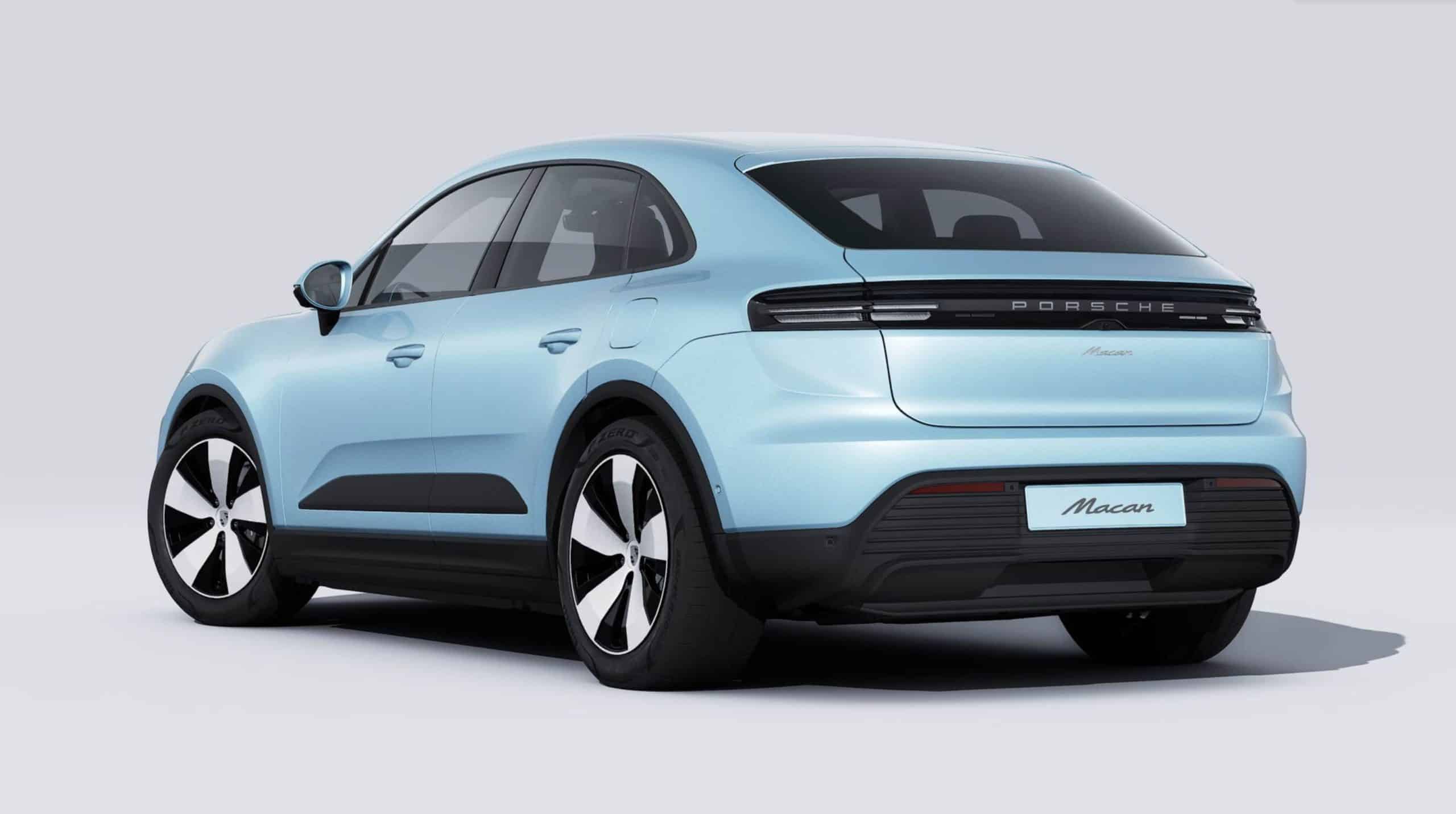
Porsche Macan Electric SUV (Credit: Porsche)
Pricing
Porsche’s UK website lists the MY2027 Porsche Macan Electric from £69,800 including VAT, while the linked base-model configurator currently totals £69,865 on the road. The £65 difference reflects the different displayed price bases and must not be treated as a specification dispute or silently rounded away. The amounts below are Porsche’s published starting prices including VAT; only the base-model OTR total has been independently checked in the supplied configurator.
| UK MY2027 derivative | Published from-price (incl. VAT) | Driven wheels | 0–62 mph (Launch Control) | Combined WLTP range |
|---|---|---|---|---|
| Porsche Macan Electric | £69,800 | Rear-wheel drive | 5.7 sec | 340–398 miles |
| Porsche Macan 4 Electric | £73,100 | All-wheel drive | 5.2 sec | 327–379 miles |
| Porsche Macan 4S Electric | £78,300 | All-wheel drive | 4.1 sec | 325–379 miles |
| Porsche Macan GTS | £90,800 | All-wheel drive | 3.8 sec | 329–363 miles |
| Porsche Macan Turbo Electric | £99,300 | All-wheel drive | 3.3 sec | 328–366 miles |
These are manufacturer-listed starting prices, not fully equipped drive-away quotations for every derivative. Paint, wheels, assistance packages, comfort equipment, charging upgrades and finance terms can materially change the amount payable. The optional 22 kW AC charger is particularly relevant only if the owner can use compatible charging infrastructure; otherwise the standard 11 kW capability may be entirely sufficient.
Specifications
| Battery, Emissions, Charging and Warranty | Rear-wheel-drive Porsche Macan Electric (MY2027) |
|---|---|
| Gross / usable battery capacity | 100 kWh gross; approximately 94.9 kWh usable in independent MY2027 technical listings |
| Combined electric range (WLTP) | 340–398 miles; varies by wheels and selected equipment |
| Combined electricity consumption (WLTP) | 3.2–3.7 miles/kWh across Porsche’s UK model range |
| AC charging, standard | 11 kW onboard charger; about 10 hours from 0–100% on suitable three-phase equipment |
| AC charging, optional | 22 kW onboard charger; Porsche quotes about 5.3 hours from 0–100% at a compatible supply |
| DC charging, maximum | Up to 270 kW under optimal 800 V conditions; 10–80% in about 21 minutes |
| DC charging, 400 V | Porsche quotes approximately 33 minutes from 10–80% on compatible 400 V DC infrastructure |
| Euro NCAP | Five stars (2024 assessment of Macan 4 Electric, not a separate 2027 test) |
| New-vehicle warranty | Three years, subject to Porsche UK conditions |
| High-voltage battery warranty | Eight years or 100,000 miles; at least 80% capacity through three years/38,000 miles and at least 70% thereafter, subject to conditions |
| Tailpipe emissions | 0 g CO₂/km |
The first technical table refers to the rear-wheel-drive UK MY2027 model unless otherwise stated. Battery usable capacity is independently reported, while charging times are manufacturer claims under specified conditions. The separately tested Euro NCAP derivative and optional charging equipment are identified explicitly rather than assumed to apply to every configuration.
| Illustrative home-charging calculation | Assumption / estimated cost |
|---|---|
| Usable battery energy | 94.9 kWh (independent current technical listing) |
| Electricity tariff | 25p/kWh assumed for illustration, not a quoted market tariff |
| Charging efficiency | 90% assumed overall; actual losses vary |
| Approximate 0–100% electricity cost | 94.9 ÷ 0.90 × £0.25 = £26.36 |
| Approximate 10–80% electricity cost | 94.9 × 0.70 ÷ 0.90 × £0.25 = £18.45 |
These calculations model electricity bought from the grid, including an illustrative 10% charging loss, rather than simply multiplying the battery’s nominal gross capacity by the tariff. Actual billing will vary with charging losses, temperature, the chosen tariff and starting state of charge. For normal public AC charging, select equipment appropriate for the car’s onboard charger. Consult the Type 2 charging cable compatibility guide when planning accessories.
| Dimensions and Practicality | Rear-wheel-drive Porsche Macan Electric (MY2027) |
|---|---|
| Length / width (excluding mirrors) / height | 4,784 / 1,938 / 1,623 mm (height for stated suspension specification) |
| Width including mirrors / wheelbase | 2,152 / 2,893 mm |
| Passenger capacity | Five seats |
| Rear luggage compartment | 518 litres in the stated standard-audio configuration; certain audio upgrades reduce capacity |
| Rear luggage compartment, rear seats folded | Approximately 1,326 litres in the manufacturer’s stated configuration |
| Front storage compartment | 84 litres |
| Braked / unbraked towing | Up to 2,000 kg / 750 kg, subject to approved towing equipment and loading limits |
| Turning circle | 12.1 m normally; manufacturer lists 11.1 m with the relevant rear-axle-steering option |
| Powertrain and Performance | Drivetrain | Overboost with Launch Control | 0–62 mph | Top speed |
|---|---|---|---|---|
| Porsche Macan Electric | Rear-wheel drive | 265 kW / 360 PS | 5.7 sec | 137 mph |
| Porsche Macan 4 Electric | All-wheel drive | 300 kW / 408 PS | 5.2 sec | 137 mph |
| Porsche Macan 4S Electric | All-wheel drive | 380 kW / 516 PS | 4.1 sec | 149 mph |
| Porsche Macan GTS | All-wheel drive | 420 kW / 571 PS | 3.8 sec | 155 mph |
| Porsche Macan Turbo Electric | All-wheel drive | 470 kW / 639 PS | 3.3 sec | 162 mph |
The performance table compares all five UK MY2027 derivatives using Porsche’s published Launch Control overboost outputs, acceleration times and maximum speeds. These overboost figures are not continuous motor ratings; for example, the standard rear-wheel-drive Porsche Macan Electric produces 250 kW (340 PS) outside its temporary Launch Control overboost rating. Derivative-specific range and UK starting prices are set out separately in Pricing.
FAQs
| Question | Answer |
|---|---|
| What is the UK price of the Porsche Macan Electric? | Porsche lists the base MY2027 model from £69,800 including VAT; the supplied linked configuration shows £69,865 OTR before optional extras. |
| Is the electric Macan sold as a 2026 or 2027 model? | The currently linked UK Porsche listing and configurator identify MY2027, even though orders and registrations may take place during 2026. |
| Is the standard Porsche Macan Electric all-wheel drive? | No. The entry-level model is rear-wheel drive; the Porsche Macan 4 Electric, Porsche Macan 4S Electric, Porsche Macan GTS and Porsche Macan Turbo Electric derivatives use all-wheel drive. |
| How big is the battery? | Porsche quotes 100 kWh gross; independent current listings identify approximately 94.9 kWh usable. |
| What is the official electric range? | The rear-wheel-drive model has a UK combined WLTP range of 340–398 miles depending on its specification. |
| What is the difference between WLTP and real-world range? | WLTP is a standardised laboratory comparison. Weather, speed, driving style, wheel specification and towing can reduce actual range. |
| How quickly can it charge on a DC rapid charger? | Porsche quotes up to 270 kW and around 21 minutes from 10% to 80% under specified optimal 800-volt conditions. |
| Can it use 400-volt public DC chargers? | Yes. Porsche separately quotes about 33 minutes for 10–80% charging on its stated compatible 400-volt infrastructure. |
| How long does AC charging take? | Porsche quotes about 10 hours from 0% to 100% at 11 kW; a suitable optional 22 kW charger can reduce this to roughly 5.3 hours. |
| Is the heat pump standard? | Yes. Porsche includes a heat pump in the current UK standard-equipment listing for the entry-level model. |
| How much boot space is available? | The current UK specification lists 518 litres at the rear in its stated configuration, plus an 84-litre front compartment; some audio upgrades reduce rear boot capacity. |
| Can the rear-wheel-drive Macan tow a trailer? | Porsche lists up to 2,000 kg braked towing, subject to the approved equipment, vehicle limits and loading conditions. |
| Has Euro NCAP tested the electric Macan? | Yes. The Macan 4 Electric was tested in 2024 and achieved five stars; this must not be labelled a separate MY2027 test. |
| How long is the vehicle and battery warranty? | The Porsche UK new-car warranty is three years, while the high-voltage battery warranty lasts eight years or 100,000 miles, with stated capacity safeguards and conditions. |
| Should I choose the Macan Electric or Macan 4? | The rear-wheel-drive model is the efficiency-focused starting point; the Macan 4 adds all-wheel drive and more acceleration. Test both before paying more. |
| Where can I learn about EVs before buying? | The types of electric vehicles guide explains the different powertrain categories and their ownership implications. |
While e-zoomed uses reasonable efforts to provide accurate and up-to-date information, some of the information provided is gathered from third parties and has not been independently verified by e-zoomed. While the information from the third party sources is believed to be reliable, no warranty, express or implied, is made by e-zoomed regarding the accuracy, adequacy, completeness, legality, reliability or usefulness of any information. This disclaimer applies to both isolated and aggregate uses of this information.
Featured Articles
<!–
Carousel
–>
myenergi zappi GLO EV Charger: UK Price, Specifications & Solar Charging Guide
The Porsche Macan Electric brings the Stuttgart sports-car brand’s familiar driving focus into the premium electric-SUV market. The latest UK model, identified by Porsche as model year 2027, retains…
Fox ESS EQ5000 Home Battery Storage: UK Price, Specifications, Solar & EV Charging Guide
The Porsche Macan Electric brings the Stuttgart sports-car brand’s familiar driving focus into the premium electric-SUV market. The latest UK model, identified by Porsche as model year 2027, retains…
All-Electric XPENG X9 (2026): UK Prices, Specs, Range & Buying Guide
The Porsche Macan Electric brings the Stuttgart sports-car brand’s familiar driving focus into the premium electric-SUV market. The latest UK model, identified by Porsche as model year 2027, retains…
Featured Products
-
<!–
–>Sale!
Best-In-Class Home Solar Bundle Offer (440W All Black Jinko Solar 8 Panels + Sungrow Hybrid Inverter 3.6 kW): price includes product supply only
<!– –>
Original price was: £2,205.95.£2,150.95Current price is: £2,150.95. (Including VAT)
<!–
–>
<!– Term:
NEDC range:
Model Year:
Deposit: £
Miles Per AnnumSubject to status and conditions –>
Brand:SungrowJinko SolarCategory:Solar<!– –>
-
<!–
–>Sale!
Best-In-Class Home Solar Bundle Offer (440W All Black Jinko Solar 8 Panels + Sungrow Battery Storage 6.4 kWh + Sungrow Hybrid Inverter 3.6 kW): price includes product supply only
<!– –>
Original price was: £5,010.95.£4,800.95Current price is: £4,800.95. (Including VAT)
<!–
–>
<!– Term:
NEDC range:
Model Year:
Deposit: £
Miles Per AnnumSubject to status and conditions –>
Brand:SungrowJinko SolarCategory:Solar<!– –>
-
<!–
–>Sale!
Bundle Offer: SUNSYNK LifePO4 Home Battery Storage (5.32 kWh) + SUNSYNK Hybrid Inverter (3.6 kW/Single-Phase): price includes product supply only
<!– –>
Original price was: £3,345.95.£3,299.95Current price is: £3,299.95. (Including VAT)
<!–
–>
<!– Term:
NEDC range:
Model Year:
Deposit: £
Miles Per AnnumSubject to status and conditions –>
Brand:Sun SynkCategory:Battery Storage<!– –>
-
Bundle Offer: Tesla Powerwall 3 Home Battery Storage (13.5 kWh) + Gateway: price includes product supply only
<!– –>
£8,559.95 (Including VAT)
<!–
–>
<!– Term:
NEDC range:
Model Year:
Deposit: £
Miles Per AnnumSubject to status and conditions –>
Brand:TeslaCategory:Battery Storage<!– –>
-
<!–
–>Sale!
Custom-Made Single-Phase EV Charging Cable Type 2 to Type 2 (2m to 50m, 7.4 kW, 32 amp, Black)
<!– –>
Price range: £99.95 through £670.95 (Including VAT)
<!–
–>
<!– Term:
NEDC range:
Model Year:
Deposit: £
Miles Per AnnumSubject to status and conditions –>
Category:CablesType:Type 2Length (m):5 m7.5 m10 m3.5 m12.5 m15 m20 m17.5 m2 m22.5 m25 m30 m35 m40 m45 m50 mCurrent (amp):32 ampPhase:Single Phase (7.2kW)<!– –>
This product has multiple variants. The options may be chosen on the product page -
Untethered Ohme ePod Home Smart EV Charger (7.4 kW): price includes product only
<!– –>
£645.95 (Including VAT)
<!–
–>
<!– Term:
NEDC range:
Model Year:
Deposit: £
Miles Per AnnumSubject to status and conditions –>
Brand:OhmeCategory:EV Charging PointsCustomer type:ResidentialPower:7.4 kWCable:UntetheredPhase:Single Phase<!– –>

The post Porsche Macan Electric (2027): UK Prices, Specs, Range & Buying Guide appeared first on Ezoomed.