
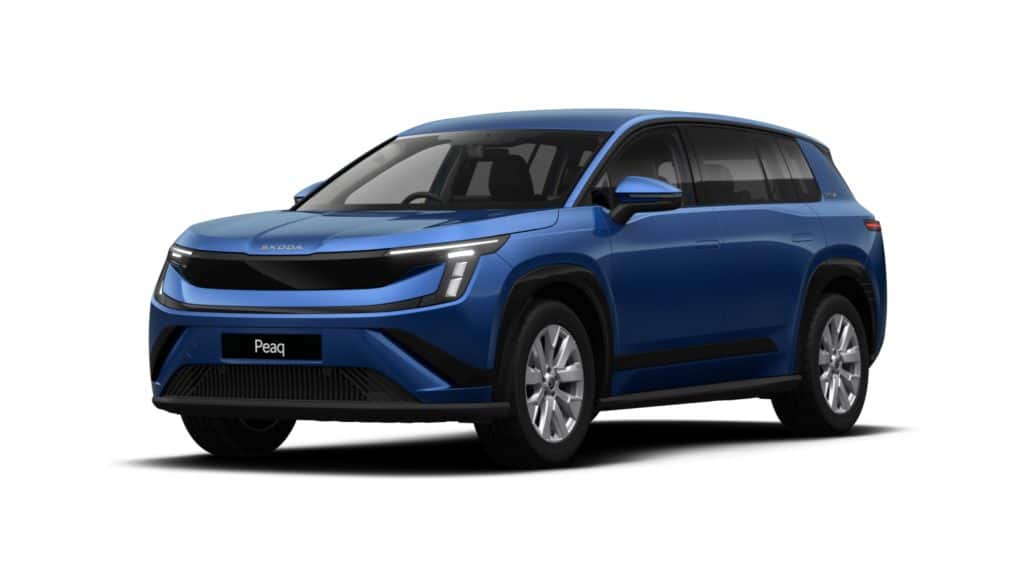
The Škoda Peaq is a fully electric, seven-seat family SUV and the largest vehicle in Škoda’s passenger-car range. With UK on-the-road prices starting from £51,980, a 91 kWh battery and an official WLTP driving range of up to 395 miles, the Peaq combines long-distance capability with substantial passenger accommodation and practical family features.
Available in three UK equipment trims — SE L, Edition and SportLine — the Peaq offers five combinations of specification and drivetrain. Buyers can choose between the rear-wheel-drive Peaq 90 and the more powerful all-wheel-drive Peaq 90x, depending on their preferred trim.
Designed as Škoda’s flagship electric SUV, the Peaq introduces a 13.6-inch vertical infotainment display, generous luggage capacity, new connected technologies and a range of premium comfort options. It also offers braked towing capacities of up to 2,000 kg, depending on drivetrain.
The Peaq competes in the growing seven-seat electric SUV segment alongside vehicles such as the Kia EV9, Hyundai IONIQ 9, Peugeot E-5008 and Mercedes-Benz GLB Electric. Its combination of space, range and competitive equipment is intended to appeal to families and drivers who regularly undertake longer journeys.
In this e-zoomed guide, we examine the Škoda Peaq’s UK prices, battery technology, electric driving range, charging performance, practicality, equipment, safety and ownership costs. We also compare the five UK configurations to assess which offers the most suitable balance of value, driving range and performance.
At a glance
| Feature | Škoda Peaq |
|---|---|
| Vehicle type | Battery electric vehicle (BEV) |
| Body type | Large seven-seat electric SUV |
| UK availability | Available to order through Škoda’s UK retail network |
| Published UK starting price | From £51,980 OTR |
| UK equipment trims | SE L, Edition, SportLine |
| UK configurations | Five, covering Peaq 90 and Peaq 90x |
| Seating capacity | 7 |
| Battery capacity (gross) | 91 kWh |
| Battery capacity (usable) | Approximately 86 kWh |
| Battery chemistry | Lithium-ion NMC |
| Electric range (WLTP combined) | 370–395 miles |
| Electric motor power | 210 kW / 220 kW |
| Maximum torque | 545 Nm / 512 Nm |
| Drivetrain | Rear-wheel drive / all-wheel drive |
| Acceleration (0–62 mph) | 7.1 / 6.8 seconds |
| Top speed | 111 mph |
| Maximum AC charging | 11 kW |
| Maximum DC charging | 199 kW |
| DC charging (10–80%) | Approximately 28 minutes |
| Boot capacity, seven seats in use | 299 litres |
| Boot capacity, third row folded | 890 litres |
| Maximum braked towing capacity | 1,800 / 2,000 kg |
| Independent crash-test rating | No verified Peaq-specific rating established |
| Tailpipe CO₂ emissions | 0 g/km |
Figures are based on Škoda’s published UK technical specifications and manufacturer information reviewed in November 2026. The battery’s 91 kWh gross capacity is different from its approximately 86 kWh usable capacity. Prices, equipment, driving range and performance vary by version. The 0–62 mph figures are from Škoda’s UK website; the UK technical brochure separately lists 0–60 mph times. WLTP range is measured under standardised conditions and does not guarantee real-world results.
Table of Contents
Pros & cons
| Pros | Cons |
|---|---|
| 1. Excellent family practicality: Seven seats, a 299-litre boot with all seats occupied, up to 890 litres with the third row folded and substantial towing capability make the Peaq particularly versatile. | 1. Substantial dimensions: At almost 4.9 metres long and over 2.1 metres wide including mirrors, the Peaq can be challenging in narrow garages, older parking spaces and confined urban streets. |
| 2. Impressive driving range: The 91 kWh battery offers up to 395 miles WLTP, making the Peaq attractive for longer family journeys and motorway travel. | 2. Costly additional equipment: Features such as the heat pump, panoramic roof and premium relaxation package are optional rather than standard, increasing the final purchase price. |
| 3. Spacious, comfortable interior: Heated seating, generous passenger accommodation, modern infotainment and a broad range of practical features strengthen its family appeal. | 3. Driving and charging compromises: Independent assessments suggest that handling prioritises comfort over engagement, while the 199 kW DC charging capability is less impressive than that of some newer premium electric vehicles. |
Sign up to the e-zoomed Electric Living newsletter
About Škoda: The company behind the Peaq
Škoda Auto is a Czech automotive manufacturer headquartered in Mladá Boleslav. Its origins date to 1895, when Václav Laurin and Václav Klement established a business initially manufacturing bicycles before expanding into motorcycles and automobiles.
Today, Škoda forms part of the Volkswagen Group and produces a broad range of passenger vehicles, including petrol, diesel, hybrid and battery-electric models. The company has developed a strong reputation for practicality, interior accommodation and its Simply Clever convenience features.
Škoda’s modern electric vehicle range includes the Elroq and Enyaq, alongside newer models such as the compact Epiq and flagship Peaq. These vehicles represent the manufacturer’s expansion into different electric-car market segments.
The Peaq’s design was influenced by the Vision 7S concept unveiled in 2022, which introduced Škoda’s Modern Solid design direction. The production Peaq subsequently made its public debut in 2026, with manufacturing commencing at the company’s Mladá Boleslav plant.
As Škoda’s largest electric SUV, the Peaq introduces a new level of passenger space, comfort and technology to the brand. It is also the first fully electric Škoda designed to accommodate seven occupants.
For UK buyers, the Peaq’s key attractions are likely to be its practical seven-seat configuration, long driving range, familiar retail and servicing network, and extensive opportunities for personalisation.
Meet the Škoda Peaq
Overview
The Škoda Peaq is a large, five-door electric SUV measuring 4,874 mm in length, 1,867 mm in width excluding mirrors and 1,664 mm in height. Its 2,965 mm wheelbase provides substantial space for three rows of seating.
The exterior follows Škoda’s Modern Solid design philosophy, incorporating clean body surfaces, pronounced proportions, flush door handles and a distinctive Tech-Deck front panel. The front and rear lighting designs reinforce the vehicle’s modern appearance.
Inside, the Peaq combines a minimalistic dashboard with a large 13.6-inch vertically mounted infotainment display, digital instruments and a range of practical storage solutions.
The UK range includes three equipment trims and two principal powertrain configurations. The rear-wheel-drive Peaq 90 produces 210 kW, while the all-wheel-drive Peaq 90x provides 220 kW.
Unlike the wider European range, which also includes a smaller-battery Peaq 60, the five configurations detailed in the UK price list reviewed all use the larger 91 kWh battery.
Independent driving assessments generally describe the Peaq as spacious, refined and comfortable, with particular praise for rear passenger accommodation and overall practicality. The vehicle’s suspension and steering have been configured primarily for relaxed family driving rather than sporting performance.
Some independent assessments have also highlighted the relatively soft brake-pedal response and the transition between regenerative and conventional braking. These characteristics are worth evaluating during a test drive.
Overall, the Peaq aims to provide an attractive alternative to large seven-seat SUVs powered by petrol or diesel engines, while offering the benefits of electric propulsion and substantial long-distance capability.
Battery & range
The five Škoda Peaq configurations listed in the reviewed UK price list use a high-voltage lithium-ion battery with a manufacturer-published gross capacity of 91 kWh and approximately 86 kWh of usable capacity.
The battery uses nickel-manganese-cobalt (NMC) chemistry. NMC batteries can provide relatively high energy density, making them suitable for larger vehicles requiring substantial battery capacity and long driving range.
The battery is positioned beneath the passenger compartment as part of the vehicle’s electric platform. This arrangement supports efficient packaging and contributes to the Peaq’s spacious interior.
According to Škoda’s detailed UK data, the Edition 90 achieves the longest official WLTP combined range at 395 miles. The SE L 90 and SportLine 90 each offer 391 miles, while the Edition 90x and SportLine 90x provide 373 and 370 miles respectively.
| Variant | Battery capacity (gross) | WLTP combined range | Drive |
|---|---|---|---|
| SE L 90 | 91 kWh | 391 miles | RWD |
| Edition 90 | 91 kWh | 395 miles | RWD |
| Edition 90x | 91 kWh | 373 miles | AWD |
| SportLine 90 | 91 kWh | 391 miles | RWD |
| SportLine 90x | 91 kWh | 370 miles | AWD |
The rear-wheel-drive versions generally achieve higher official range figures than the all-wheel-drive models. This reflects differences in vehicle weight, drivetrain efficiency and equipment configuration.
It is also important to distinguish between the battery’s gross and usable capacities. The 91 kWh figure represents the total published battery capacity, whereas approximately 86 kWh is available for normal vehicle operation.
The Worldwide Harmonised Light Vehicle Test Procedure (WLTP) measures electric vehicle range and consumption under standardised conditions. These figures are useful for comparison but do not guarantee the distance achievable in everyday driving.
Actual range depends on outside temperature, motorway speed, driving style, heating and air-conditioning use, road gradients and vehicle load. The latter is particularly relevant to the Peaq because it can accommodate seven passengers and substantial luggage.
Independent road tests suggest that the Peaq provides comfortable and efficient long-distance cruising, although some real-world range observations have fallen noticeably below official WLTP figures, particularly at sustained higher speeds.
Motorists should therefore plan longer journeys using realistic energy consumption and an appropriate battery reserve rather than assuming they will always achieve the maximum certified range.
For buyers who prioritise driving range, the rear-wheel-drive Edition 90 offers the highest official figure, while the more affordable SE L 90 provides almost the same certified range.
Charging
The Škoda Peaq supports alternating-current (AC) charging at home, workplaces and destination charging points, together with direct-current (DC) rapid charging for longer journeys. For readers new to electric driving, our beginner’s guide to charging an electric car explains the main charging methods and equipment.
According to the manufacturer’s technical information, the 91 kWh Peaq 90 and Peaq 90x support up to 11 kW AC charging and a maximum DC charging power of 199 kW.
Škoda quotes a 10–80% DC charging time of approximately 28 minutes under suitable conditions. Charging power and time depend on the charger, battery temperature, battery state of charge and other operating conditions. Our guide explaining how long it takes to charge an electric car provides additional context.
| Charging specification | Peaq 90 | Peaq 90x |
|---|---|---|
| Gross battery capacity | 91 kWh | 91 kWh |
| Usable battery capacity | Approximately 86 kWh | Approximately 86 kWh |
| Maximum AC charging | 11 kW | 11 kW |
| AC charging (0–100%, 11 kW) | Approximately 9 hours | Approximately 9 hours |
| Maximum DC charging | 199 kW | 199 kW |
| DC charging (10–80%) | Approximately 28 minutes | Approximately 28 minutes |
| AC charging connector | Type 2 | Type 2 |
| DC charging connector | CCS2 | CCS2 |
Manufacturer-published charging capabilities and estimates. The approximately nine-hour AC charging figure assumes a compatible 11 kW supply. Actual charging times and peak power vary with temperature, battery condition, charger capability and other operating factors. Maximum DC charging power is not sustained throughout an entire charging session.
Most UK homes use a single-phase electricity supply, with dedicated domestic EV chargers commonly providing up to approximately 7.4 kW, depending on the installation. The Peaq’s maximum 11 kW AC capability generally requires suitable three-phase electrical infrastructure.
For regular use, owners may find it convenient to recharge overnight using a dedicated home charger. Those with compatible off-peak electricity tariffs may be able to reduce the cost of routine charging.
During longer journeys, the Peaq can use public CCS-compatible DC rapid chargers. Its 199 kW maximum charging capability is substantial, although some newer premium electric vehicles support significantly higher peak charging rates.
The time required at a public charging station will depend on the charger’s actual available power. Charging beyond approximately 80% can be slower because the vehicle progressively reduces charging power as the battery approaches a high state of charge.
The Peaq also introduces support for energy export from its high-voltage battery. Škoda has described Vehicle-to-Load (V2L) functionality for powering compatible external devices. However, its UK technology information indicates that this capability is scheduled for availability from late 2027. UK buyers should therefore not assume V2L is active on vehicles delivered in 2026.
Vehicle-to-Home functionality has also been described in the manufacturer’s broader technical information, but it requires compatible bidirectional charging equipment and the relevant market support. Availability and installation requirements for UK owners must be confirmed separately.
Owners should use compatible charging equipment, follow the manufacturer’s charging recommendations and ensure that any domestic electrical installation is suitable for sustained EV charging.
Practicality
Practicality is one of the Škoda Peaq’s strongest attributes. Its seven-seat configuration provides three rows of passenger accommodation, making it particularly relevant to larger families and drivers who occasionally transport additional passengers. Our existing guide to seven-seater electric cars explains the main considerations when choosing this type of vehicle.
With an overall length of 4,874 mm and a wheelbase of 2,965 mm, the Peaq offers generous interior space. Its relatively upright SUV design and long wheelbase support useful passenger legroom and luggage accommodation.
The vehicle has a 2+3+2 seating configuration, with two front seats, three second-row positions and two seats in the third row.
The rear boot holds 299 litres with all seven seats in use. Folding the third row increases luggage capacity to 890 litres, while folding the remaining rear seating provides up to 2,075 litres of space.
Škoda also provides a 37-litre front luggage compartment beneath the bonnet, which can be useful for charging equipment and smaller accessories.
| Luggage configuration | Capacity |
|---|---|
| All seven seats in use | 299 litres |
| Third row folded | 890 litres |
| Second and third rows folded | Up to 2,075 litres |
| Front luggage compartment | 37 litres |
These figures make the Peaq particularly versatile for everyday shopping, family holidays and transporting bulky items. However, buyers who regularly travel with all seven seats occupied should assess the remaining 299-litre boot space against their normal luggage requirements.
The Peaq also incorporates practical storage features associated with Škoda’s Simply Clever philosophy, including hooks, compartments, storage organisers and other convenience solutions.
Some configurations offer relaxation seats with electrically adjustable leg rests and massage functions, helping to improve comfort during longer journeys. These features are part of optional equipment packages rather than universal standard equipment.
Towing capability is another important advantage. The Peaq 90 is rated for braked trailers weighing up to 1,800 kg, while the all-wheel-drive Peaq 90x increases the limit to 2,000 kg. The maximum unbraked towing capacity is 750 kg.
Owners must comply with the vehicle’s permitted towing limits and should confirm towbar compatibility before purchasing. Towing a trailer or caravan can materially increase electricity consumption and reduce driving range.
The Peaq’s dimensions also require consideration. Its width increases to 2,119 mm when the mirrors are included, which may be relevant to narrow garages, older parking bays and restricted roads.
Independent assessments generally identify the Peaq’s interior space, comfortable seating and flexible luggage accommodation as major strengths, although its size can make it less convenient for frequent driving in confined urban environments.
Technology & equipment
The Škoda Peaq introduces an updated digital cabin with a 13.6-inch vertically mounted central infotainment display, digital driver instrumentation and connected vehicle technology.
The infotainment system supports navigation and compatible connected applications, while smartphone integration includes Apple CarPlay and Android Auto. Selected vehicle functions can also be accessed through the MyŠkoda application.
A mobile digital key allows compatible devices to be used for certain vehicle access functions. Physical keys are also supplied with the vehicle.
The entry-level SE L includes 19-inch alloy wheels, heated front and rear seats, electrically adjustable front seats, dual wireless smartphone charging, keyless entry and an electrically operated tailgate.
Safety and driver-assistance equipment includes predictive adaptive cruise control, a reversing camera, blind-spot monitoring, lane assistance, traffic-sign recognition and a range of collision-avoidance technologies.
The Edition adds a more luxurious interior specification, 19-inch Whale alloy wheels, Matrix LED headlights, an illuminated Tech-Deck front panel, enhanced ambient lighting, surround-view parking technology and additional automated parking functions.
The SportLine introduces sportier exterior styling, 20-inch alloy wheels, distinctive upholstery, sports front seats and Dynamic Chassis Control. The latter adjusts the suspension response to suit driving conditions and selected driving modes.
Škoda also offers a range of optional equipment packages. The Relax Package provides enhanced seating features, including massage functions and electrically adjustable leg rests, together with an upgraded audio system and other comfort equipment.
The optional panoramic roof offers electronically adjustable shading, allowing different sections of the glass to change their transparency. This is designed to manage the amount of light entering the cabin without relying on a conventional roof blind.
Other optional equipment includes a heat pump, upgraded driver-assistance functions, alternative alloy wheels and additional interior design selections.
It is worth noting that Škoda’s UK price list identifies the heat pump as an additional-cost option across the published trim range. Buyers should not assume it is standard simply because the Peaq is a premium electric SUV.
Independent assessments generally praise the Peaq’s new infotainment system, cabin materials and practical control layout. Nevertheless, some everyday functions remain dependent on digital interfaces, and buyers should assess the system’s usability during a test drive.
Equipment availability can vary according to trim, selected packages and production configuration. Prospective buyers should carefully review the specific vehicle’s build specification before ordering.
Performance
The Škoda Peaq is available in rear-wheel-drive and all-wheel-drive configurations, both using a single-speed automatic transmission.
The rear-wheel-drive Peaq 90 uses a rear-mounted permanent magnet synchronous electric motor producing 210 kW and 545 Nm of maximum torque.
The Peaq 90x adds an electric motor at the front axle, producing a combined maximum output of 220 kW and 512 Nm. The resulting all-wheel-drive arrangement provides additional traction in suitable conditions.
Škoda’s UK website quotes a 0–62 mph acceleration time of 7.1 seconds for the Peaq 90 and 6.8 seconds for the Peaq 90x. Its detailed UK technical brochure separately lists 0–60 mph times of 6.9 and 6.6 seconds respectively. Both versions have a manufacturer-quoted top speed of 111 mph.
The Peaq delivers smooth electric motor power and responsive acceleration without conventional gear changes. Although its performance is substantial for a seven-seat SUV, the vehicle has been developed primarily around comfort, stability and practicality rather than outright sportiness.
Independent road tests generally describe the Peaq as quiet, composed and comfortable on longer journeys, with stable motorway behaviour and sufficient acceleration for everyday driving.
However, some assessments highlight relatively limited steering feedback and less engaging handling through demanding corners. The behaviour of the brake pedal when transitioning between regenerative and conventional braking has also received mixed feedback.
The Peaq offers regenerative braking, allowing the electric powertrain to recover energy during deceleration. Selected operating modes can provide stronger regenerative braking and allow the vehicle to slow to a complete stop in suitable conditions.
The SportLine’s Dynamic Chassis Control provides additional suspension adjustment, helping drivers select settings suited to different roads and preferences.
For most motorists, the rear-wheel-drive Peaq 90 is likely to provide ample performance. The all-wheel-drive Peaq 90x may appeal to buyers who prioritise additional traction, towing capability or more powerful acceleration.
Safety
The Škoda Peaq incorporates a comprehensive range of passive safety equipment and electronic driver-assistance features.
According to the UK manufacturer specification, standard driver-assistance technology includes automatic emergency braking, lane assistance, blind-spot detection, traffic-sign recognition, predictive adaptive cruise control and systems intended to assist with particular junction and collision scenarios.
The Peaq also includes occupant-protection systems, ISOFIX child-seat mounting provisions and electronic vehicle-stability technology. Buyers should confirm the exact airbag configuration and child-seat mounting locations for their chosen UK vehicle.
Additional technologies include door-exit warnings, parking assistance and a reversing camera. The Edition and SportLine provide or offer more advanced parking and driver-assistance functions depending on their equipment configuration.
These systems can help identify hazards and assist with vehicle control under suitable conditions. They are not autonomous-driving systems, and the driver remains responsible for operating the vehicle safely.
At the time of this review, a verified independent European crash-test rating specifically awarded to the Škoda Peaq has not been established. Although other Škoda electric SUVs have received strong safety assessments, their results should not automatically be applied to the Peaq.
The vehicle’s seven-seat design also makes child-seat compatibility important. Families should verify the available ISOFIX positions, seat dimensions and access to the third row before purchase.
As with all vehicles equipped with electronic driver assistance, owners should familiarise themselves with the systems’ capabilities and limitations rather than relying solely on their presence in the equipment specification.
The verdict
The Škoda Peaq is an important addition to the UK electric vehicle market, combining genuine seven-seat practicality with substantial driving range, modern technology and a comfortable family-focused interior.
Its principal strengths include the flexible seating configuration, generous luggage accommodation, long-distance capability and extensive standard equipment. The official WLTP range of up to 395 miles makes it particularly attractive for motorists who regularly undertake longer journeys.
The Peaq also offers useful towing capability, with braked towing limits of up to 2,000 kg for the all-wheel-drive versions. This increases its versatility compared with electric family vehicles that offer limited or no towing capability.
There are, however, some compromises. Its large exterior dimensions may make it inconvenient in certain urban environments, while independent assessments suggest the driving experience prioritises comfort over handling engagement.
The absence of a standard heat pump and the additional cost of several premium comfort features are also worth considering. Although the 199 kW DC charging capability is competitive, some newer electric SUVs offer faster maximum charging rates.
The SE L 90 provides the lowest purchase price and a strong 391-mile WLTP range, making it an attractive starting point for buyers who prioritise practicality and value.
The Edition 90 provides the highest official range of 395 miles together with additional equipment. Its combination of comfort, technology and driving range may make it the most balanced option for many buyers.
The SportLine offers sportier styling and adjustable suspension characteristics, while the 90x versions introduce all-wheel drive and increased towing capacity in exchange for a higher price and shorter official driving range.
The e-zoomed view: The Škoda Peaq deserves serious consideration from UK motorists seeking a spacious, capable and comfortable seven-seat electric SUV. The SE L 90 offers an attractive combination of price and practicality, while the Edition 90 appears to provide the strongest overall balance of equipment, range and value. Buyers who frequently tow or require all-wheel drive should consider the 90x configurations.
Prospective owners should compare the Peaq with competing seven-seat electric vehicles and carefully assess their requirements for passenger accommodation, charging, towing, optional equipment and total ownership costs before making a final decision.
Gallery
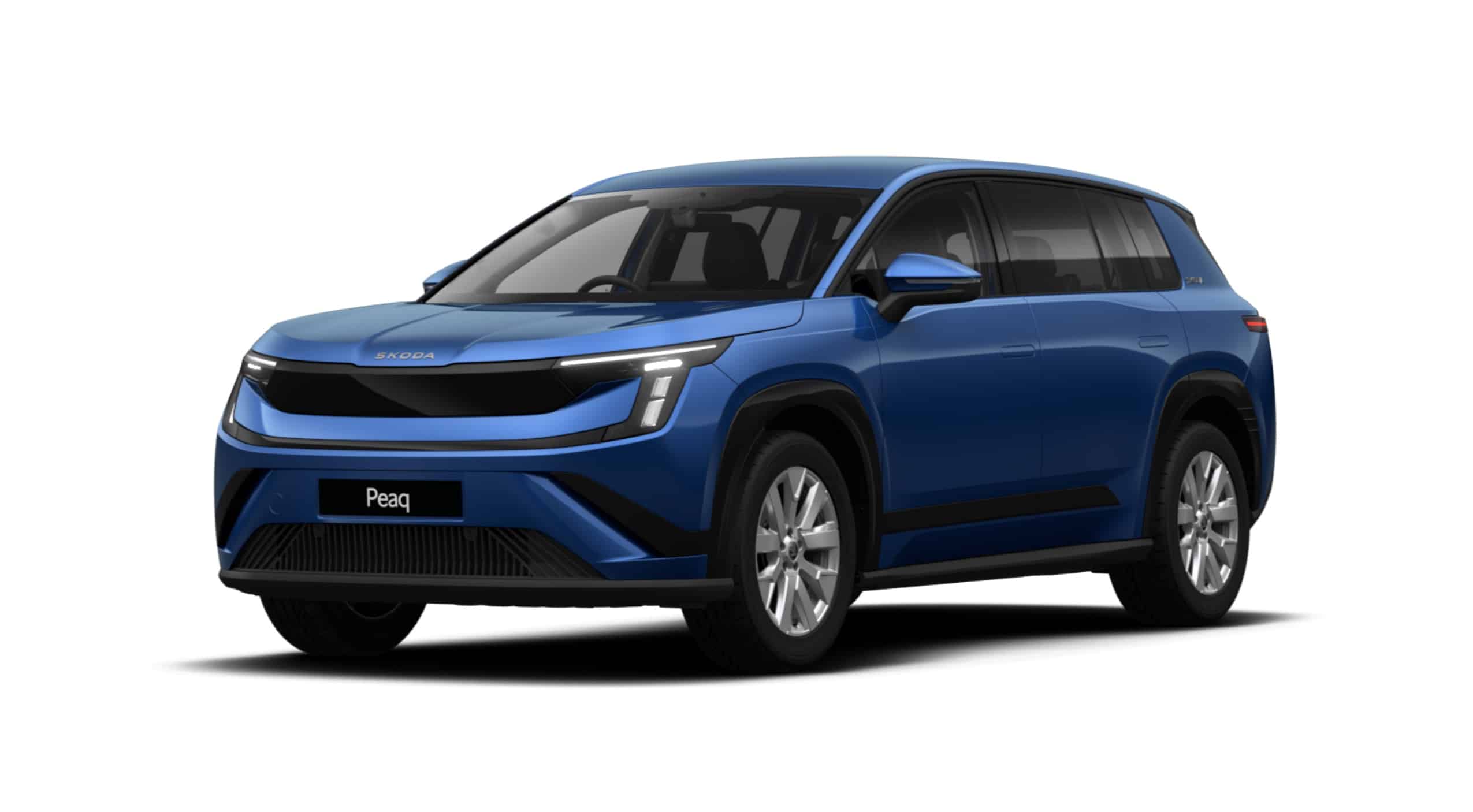
All-Electric Škoda Peaq
Pricing
The Škoda Peaq is offered in five configurations across the SE L, Edition and SportLine equipment trims. The manufacturer’s UK brochure lists on-the-road prices starting from £51,980 for the SE L 90 and rising to £60,380 for the SportLine 90x.
| Škoda Peaq version | Published UK OTR price |
|---|---|
| SE L 90 | £51,980 |
| Edition 90 | £55,130 |
| Edition 90x | £57,230 |
| SportLine 90 | £58,280 |
| SportLine 90x | £60,380 |
Manufacturer-published UK recommended on-the-road prices from the September 2026 brochure, with pricing valid from 20 August 2026. Individual manufacturer website panels or retailer quotations may display different prices; the Edition trim has appeared with differing manufacturer-advertised starting figures. Buyers should obtain a current written quotation for their chosen configuration. The figures exclude optional equipment and temporary promotions.
The SE L offers a generous equipment package, including heated seating, digital infotainment, keyless access, a reversing camera and modern driver-assistance systems.
The Edition costs more but adds features including Matrix LED headlights, enhanced interior finishes, additional parking assistance and the illuminated Tech-Deck front design.
The SportLine is positioned at the top of the published UK range, offering distinctive styling, 20-inch alloy wheels, sports seating and Dynamic Chassis Control.
For buyers considering the more expensive configurations, optional equipment can materially increase the final purchase price. Škoda’s published UK pricing identifies a heat pump at £1,115, a panoramic roof at £1,910 and various relaxation and assistance packages at additional cost.
Owners should consider the total cost of ownership, including insurance, depreciation, Vehicle Excise Duty, electricity, maintenance, tyres and finance charges.
The Peaq’s purchase price also makes the UK’s applicable vehicle taxation rules important. Buyers should check the relevant Vehicle Excise Duty and expensive-car supplement conditions according to the vehicle’s final list price and registration date.
Eligible employees may wish to consider electric company-car or salary-sacrifice arrangements. e-zoomed also provides information about electric-car leasing, including business leasing and salary-sacrifice options. The financial benefits depend on the employer’s scheme, individual circumstances and applicable tax rules.
When comparing finance agreements, buyers should examine the deposit, monthly payments, interest rate, agreement term, annual mileage allowance and any optional final payment, rather than relying exclusively on the advertised monthly cost.
Specifications
The following tables summarise the manufacturer-published UK specifications for the Škoda Peaq. Values may differ according to trim, drivetrain, wheels and optional equipment.
Battery, emissions, charging and warranty
| Specification | Peaq 90 | Peaq 90x |
|---|---|---|
| Battery chemistry | NMC | NMC |
| Battery capacity (gross) | 91 kWh | 91 kWh |
| Battery capacity (usable) | 86 kWh | 86 kWh |
| WLTP combined range | 391–395 miles | 370–373 miles |
| Maximum AC charging | 11 kW | 11 kW |
| Maximum DC charging | 199 kW | 199 kW |
| DC charging (10–80%) | 28 minutes | 28 minutes |
| Tailpipe CO₂ emissions | 0 g/km | 0 g/km |
| Basic vehicle warranty | 3 years / 60,000 miles, subject to terms | 3 years / 60,000 miles, subject to terms |
| High-voltage battery warranty | 8 years / 100,000 miles, subject to terms | 8 years / 100,000 miles, subject to terms |
Warranty clarification: Škoda’s UK warranty information provides three years of vehicle coverage, with the first two years offering unlimited mileage and the third year limited to 60,000 miles, subject to the applicable conditions. The high-voltage battery is covered for eight years or 100,000 miles, whichever comes first, with capacity-related conditions including a 70% threshold. Buyers should obtain the latest written warranty terms and exclusions for their vehicle.
Škoda also offers extended-warranty products and servicing packages. These should be assessed separately because they may involve additional charges and different terms.
Although battery-electric vehicles generally have fewer conventional engine-related maintenance requirements than petrol and diesel vehicles, components including tyres, brakes, suspension, filters and cooling systems still require servicing and inspection.
Owners should confirm the applicable service schedule, maintenance requirements and relevant warranty conditions with an authorised Škoda retailer.
Illustrative UK home charging cost
Electric vehicle charging costs depend on the electricity tariff, energy added and charging losses. Our separate guide to the cost of charging an electric car at home explains the factors that influence household charging expenditure.
The following calculation uses a hypothetical electricity price of 25p per kWh and assumes overall charging efficiency of 90%.
For consistency with the other e-zoomed electric-car guides, the illustration uses the manufacturer’s stated gross battery capacity of 91 kWh as its modelled energy basis. Actual usable battery capacity is approximately 86 kWh, so the calculation should not be interpreted as a precise empty-to-full charging bill.
| Illustrative calculation | Peaq 90 / 90x |
|---|---|
| Published gross battery capacity | 91 kWh |
| Assumed electricity tariff | £0.25/kWh |
| Assumed charging efficiency | 90% |
| Modelled electricity drawn | 101.1 kWh |
| Illustrative charging cost | £25.28 |
Illustrative calculation only. Gross battery capacity is divided by the assumed 90% charging efficiency and multiplied by £0.25/kWh. Actual charging expenditure depends on usable capacity, charging losses, electricity tariffs, temperature and energy delivered. This calculation is not a manufacturer charging-cost quotation or a guaranteed real-world charging bill.
Owners with access to a suitable off-peak home electricity tariff may be able to reduce routine charging expenditure. Motorists who depend mainly on public rapid charging should consider local tariffs, which may be substantially higher than domestic electricity prices.
Dimensions and practicality
| Specification | Škoda Peaq |
|---|---|
| Length | 4,874 mm |
| Width (excluding mirrors) | 1,867 mm |
| Width (including mirrors) | 2,119 mm |
| Height | 1,664 mm |
| Wheelbase | 2,965 mm |
| Seating capacity | 7 |
| Boot capacity, seven seats in use | 299 litres |
| Boot capacity, third row folded | 890 litres |
| Maximum luggage capacity | 2,075 litres |
| Front luggage compartment | 37 litres |
| Maximum braked towing capacity, Peaq 90 | 1,800 kg |
| Maximum braked towing capacity, Peaq 90x | 2,000 kg |
| Maximum unbraked towing capacity | 750 kg |
| Wheel sizes | 19–21 inches, depending on configuration and options |
Dimensions and capacities are based on the UK manufacturer technical data. Luggage capacities depend on the seating arrangement and measurement conditions. Towing limits must be confirmed for the individual vehicle and any selected towing equipment.
Performance by variant
| Specification | Peaq 90 | Peaq 90x |
|---|---|---|
| Motor configuration | Single rear motor | Dual motor |
| Maximum power | 210 kW | 220 kW |
| Maximum torque | 545 Nm | 512 Nm |
| Drivetrain | Rear-wheel drive | All-wheel drive |
| Transmission | Single-speed automatic | Single-speed automatic |
| Acceleration (0–62 mph, UK website) | 7.1 seconds | 6.8 seconds |
| Acceleration (0–60 mph, UK brochure) | 6.9 seconds | 6.6 seconds |
| Top speed | 111 mph | 111 mph |
| Maximum braked towing capacity | 1,800 kg | 2,000 kg |
| WLTP combined range | 391–395 miles | 370–373 miles |
Manufacturer-published performance data. The 0–60 mph and 0–62 mph tests use different target speeds and are not directly interchangeable. Actual acceleration, electricity consumption and driving range depend on battery state of charge, temperature, road conditions, vehicle load and other factors.
FAQs
| Question | Answer |
|---|---|
| How much does the Škoda Peaq cost in the UK? | The manufacturer’s September 2026 UK brochure lists on-the-road starting prices from £51,980 for the SE L 90 to £60,380 for the SportLine 90x. Current retailer quotations may differ. |
| What is the range of the Škoda Peaq? | The official UK WLTP combined range varies from 370 to 395 miles, depending on trim and drivetrain. The Edition 90 offers the highest published range at 395 miles. |
| What is the real-world range? | Actual range depends on motorway speed, weather, heating, terrain, driving style and vehicle load. Independent assessments have reported varying results, so WLTP figures should not be treated as guaranteed everyday range. |
| What battery does the Škoda Peaq use? | The five configurations in the reviewed UK range use a 91 kWh gross-capacity lithium-ion NMC battery with approximately 86 kWh of usable capacity. |
| How quickly can the Škoda Peaq charge? | The Peaq 90 and Peaq 90x support up to 199 kW DC charging. Škoda quotes approximately 28 minutes for a 10–80% charging session using suitable equipment. |
| Can the Škoda Peaq charge at home? | Yes. It supports up to 11 kW AC charging. The charging power available at home depends on the electrical installation and charger capability. |
| How many seats does the Škoda Peaq have? | The UK Peaq has seven seats arranged across three rows in a 2+3+2 configuration. |
| How large is the Škoda Peaq boot? | The boot has 299 litres with all seven seats in use, 890 litres with the third row folded and up to 2,075 litres with both rear rows folded. |
| Does the Škoda Peaq have a front luggage compartment? | Yes. The manufacturer lists a 37-litre front luggage compartment. |
| Does the Škoda Peaq have a heat pump? | A heat pump is available as an optional extra in the reviewed UK price list, with a published price of £1,115. It is not listed as standard across the range. |
| Does the Škoda Peaq support Vehicle-to-Load? | Škoda has announced V2L functionality, but its UK technology information indicates availability from late 2027. Buyers should confirm the activation date and equipment requirements. |
| Is the Škoda Peaq available with all-wheel drive? | Yes. The Peaq 90x uses two electric motors and all-wheel drive. The Peaq 90 is rear-wheel drive. |
| What is the towing capacity of the Škoda Peaq? | The Peaq 90 has a maximum braked towing capacity of 1,800 kg, while the all-wheel-drive Peaq 90x can tow up to 2,000 kg, subject to the relevant vehicle and towing limits. |
| How fast is the Škoda Peaq? | According to the UK website, the Peaq 90 accelerates from 0 to 62 mph in 7.1 seconds and the Peaq 90x in 6.8 seconds. Both have a quoted top speed of 111 mph. |
| Has the Škoda Peaq received an independent crash-test rating? | A verified Peaq-specific independent European crash-test rating was not established during this review. Ratings awarded to other Škoda models should not automatically be applied to the Peaq. |
| What is the Škoda Peaq vehicle warranty? | The UK manufacturer information provides three years of vehicle coverage, with the first two years unlimited mileage and the third year subject to a 60,000-mile limit and the applicable conditions. |
| What is the Škoda Peaq battery warranty? | The high-voltage battery has an eight-year or 100,000-mile warranty, whichever comes first, subject to the applicable conditions, including battery-capacity requirements. |
| What is the difference between SE L, Edition and SportLine? | SE L provides generous standard family equipment; Edition adds additional technology and premium interior features; SportLine offers sportier styling, larger standard wheels and Dynamic Chassis Control. |
| Which Škoda Peaq offers the best value? | The SE L 90 offers the lowest purchase price and a strong 391-mile WLTP range. The Edition 90 offers the longest certified range together with more equipment. Buyers requiring all-wheel drive or higher towing capacity should consider a 90x version. |
Information is based on published UK manufacturer specifications, prices, current model information and independently researched vehicle assessments reviewed in November 2026. Prices, equipment, driving range, charging capabilities, software availability and warranty conditions may change. Buyers should confirm all relevant vehicle-specific details with Škoda or an authorised UK retailer before purchasing.
Featured Articles
<!–
Carousel
–>
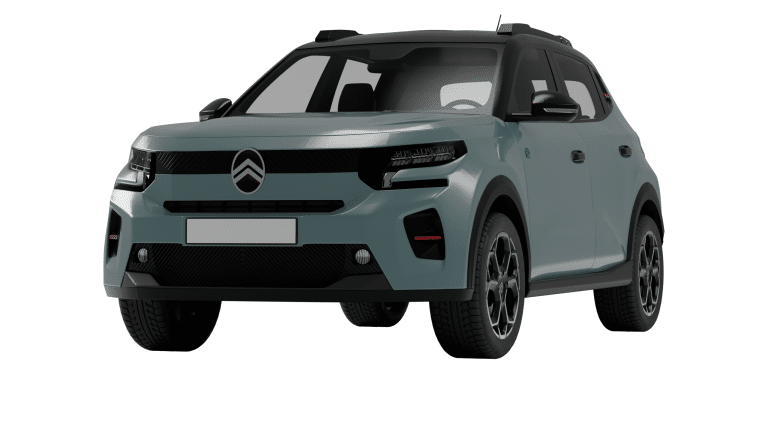
All-Electric Citroën ë-C3: UK Prices, Specs, Range & Buying Guide
The Škoda Peaq is a fully electric, seven-seat family SUV and the largest vehicle in Škoda’s passenger-car range. With UK on-the-road prices starting from £51,980, a 91 kWh battery…
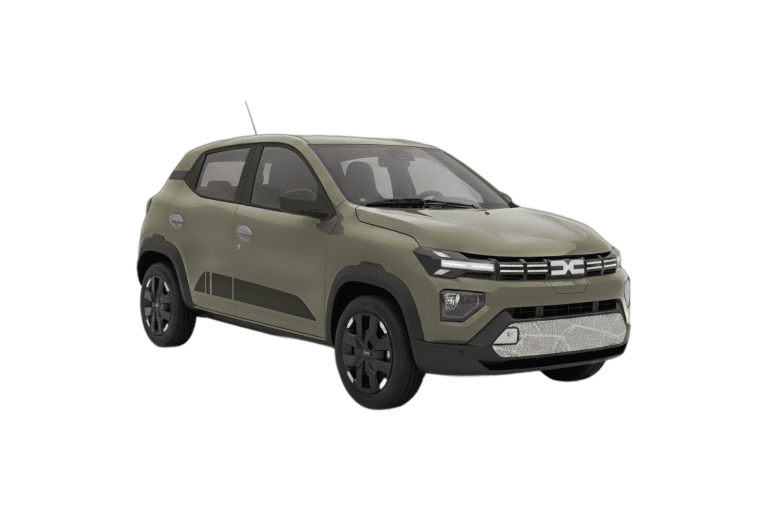
All-Electric Dacia Spring: UK Prices, Specs, Range & Buying Guide
The Škoda Peaq is a fully electric, seven-seat family SUV and the largest vehicle in Škoda’s passenger-car range. With UK on-the-road prices starting from £51,980, a 91 kWh battery…

All-Electric Hyundai INSTER: UK Prices, Specs, Range & Buying Guide
The Škoda Peaq is a fully electric, seven-seat family SUV and the largest vehicle in Škoda’s passenger-car range. With UK on-the-road prices starting from £51,980, a 91 kWh battery…
All-Electric Skoda Elroq: UK Prices, Specs, Range & Buying Guide
The Škoda Peaq is a fully electric, seven-seat family SUV and the largest vehicle in Škoda’s passenger-car range. With UK on-the-road prices starting from £51,980, a 91 kWh battery…
All-Electric Smart #3: UK Prices, Specs, Range & Buying Guide
The Škoda Peaq is a fully electric, seven-seat family SUV and the largest vehicle in Škoda’s passenger-car range. With UK on-the-road prices starting from £51,980, a 91 kWh battery…
Featured Products
-
<!–
–>Sale!

Best-In-Class Home Solar Bundle Offer (440W All Black Jinko Solar 8 Panels + Sungrow Hybrid Inverter 3.6 kW): price includes product supply only
<!– –>
Original price was: £2,205.95.£2,150.95Current price is: £2,150.95. (Including VAT)
<!–
–>
<!– Term:
NEDC range:
Model Year:
Deposit: £
Miles Per AnnumSubject to status and conditions –>
Brand:SungrowJinko SolarCategory:Solar<!– –>
-
<!–
–>Sale!
Best-In-Class Home Solar Bundle Offer (440W All Black Jinko Solar 8 Panels + Sungrow Battery Storage 6.4 kWh + Sungrow Hybrid Inverter 3.6 kW): price includes product supply only
<!– –>
Original price was: £5,010.95.£4,800.95Current price is: £4,800.95. (Including VAT)
<!–
–>
<!– Term:
NEDC range:
Model Year:
Deposit: £
Miles Per AnnumSubject to status and conditions –>
Brand:SungrowJinko SolarCategory:Solar<!– –>
-
<!–
–>Sale!

Bundle Offer: SUNSYNK LifePO4 Home Battery Storage (5.32 kWh) + SUNSYNK Hybrid Inverter (3.6 kW/Single-Phase): price includes product supply only
<!– –>
Original price was: £3,345.95.£3,299.95Current price is: £3,299.95. (Including VAT)
<!–
–>
<!– Term:
NEDC range:
Model Year:
Deposit: £
Miles Per AnnumSubject to status and conditions –>
Brand:Sun SynkCategory:Battery Storage<!– –>
-
Bundle Offer: Tesla Powerwall 3 Home Battery Storage (13.5 kWh) + Gateway: price includes product supply only
<!– –>
£8,559.95 (Including VAT)
<!–
–>
<!– Term:
NEDC range:
Model Year:
Deposit: £
Miles Per AnnumSubject to status and conditions –>
Brand:TeslaCategory:Battery Storage<!– –>
-
<!–
–>Sale!
Custom-Made Single-Phase EV Charging Cable Type 2 to Type 2 (2m to 50m, 7.4 kW, 32 amp, Black)
<!– –>
Price range: £99.95 through £670.95 (Including VAT)
<!–
–>
<!– Term:
NEDC range:
Model Year:
Deposit: £
Miles Per AnnumSubject to status and conditions –>
Category:CablesType:Type 2Length (m):5 m7.5 m10 m3.5 m12.5 m15 m20 m17.5 m2 m22.5 m25 m30 m35 m40 m45 m50 mCurrent (amp):32 ampPhase:Single Phase (7.2kW)<!– –>
This product has multiple variants. The options may be chosen on the product page -
Untethered Ohme ePod Home Smart EV Charger (7.4 kW): price includes product only
<!– –>
£645.95 (Including VAT)
<!–
–>
<!– Term:
NEDC range:
Model Year:
Deposit: £
Miles Per AnnumSubject to status and conditions –>
Brand:OhmeCategory:EV Charging PointsCustomer type:ResidentialPower:7.4 kWCable:UntetheredPhase:Single Phase<!– –>

The post All-Electric Škoda Peaq (2026): UK Prices, Specs, Range & Buying Guide appeared first on Ezoomed.