
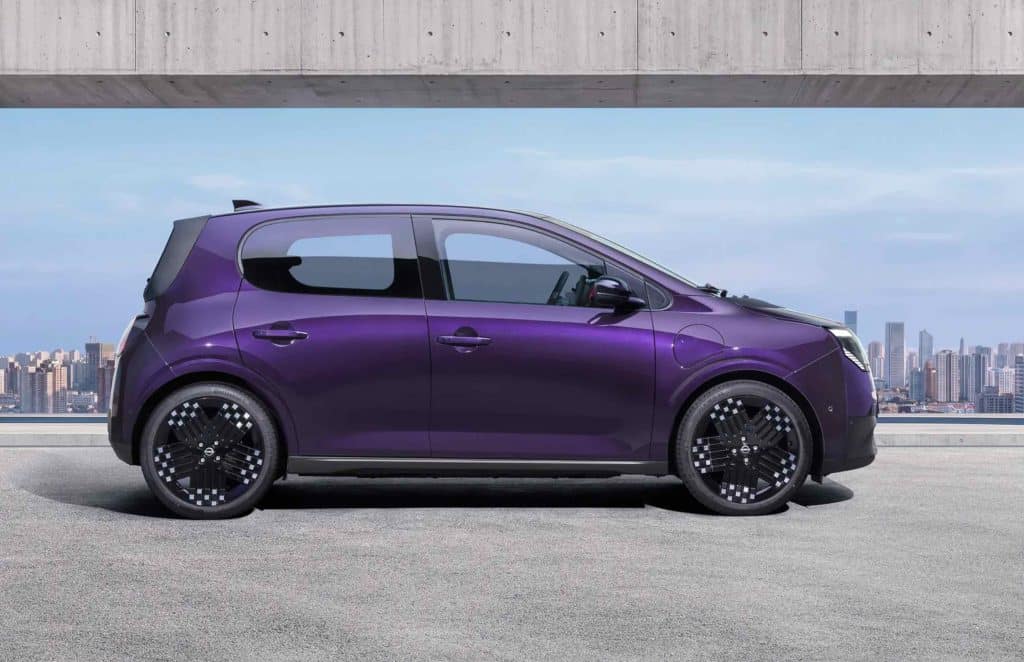
The all-electric Nissan PIXO is a small city car designed to make everyday electric driving practical rather than extravagant. Unveiled in September 2026 and expected to reach UK customers in early 2027, it combines a compact five-door body with four seats and a surprisingly generous luggage compartment. Its appeal should be strongest among urban commuters, smaller households and drivers wanting an easy-to-park electric car without the size or cost of a large family SUV.
Nissan has announced one standard-range electric powertrain for the Nissan PIXO, using a 27.5 kWh lithium iron phosphate (LFP) battery, a 60 kW front-mounted motor and 175 Nm of torque. Its provisional WLTP combined range is up to 161 miles, with 50 kW DC rapid charging and an 11 kW AC capability stated for the model. UK equipment grades and a final on-the-road price have not yet been published, so buyers should treat any quoted price estimates as speculation rather than an offer.
The new Nissan PIXO is part of a wider electric-car collaboration, with Nissan responsible for its styling and Renault producing the vehicle in Novo Mesto, Slovenia. It shares underlying engineering with the Renault Twingo E-Tech, while its design was developed at Nissan Design Europe in London. The PIXO name previously appeared on a petrol-powered city car, but the 2027 model is a new battery-electric offering rather than an updated version of that older vehicle.
Its most direct alternatives include the Dacia Spring and Renault Twingo E-Tech, while the Hyundai INSTER offers another compact electric choice with different dimensions and equipment. Within Nissan’s own range, the larger Nissan MICRA sits above the PIXO. Exact price comparisons should wait until Nissan publishes the UK PIXO list, because its expected affordability is not yet a verified transaction price.
The most interesting questions are whether 161 miles of provisional range is enough for a buyer’s routines, how the four-seat cabin works in practice and whether the useful charging specification justifies the eventual purchase price. This guide examines Nissan’s UK technical data, connected features, driving performance, practicality, safety and likely charging costs, distinguishing confirmed facts from details still awaiting approval. For prospective owners, the key decision is whether the car’s flexibility, charging requirements and running costs fit the journeys they make most often.
At a glance: Nissan PIXO (2027)
| Specification | Nissan PIXO — announced UK data |
|---|---|
| Launch | Customer deliveries expected early 2027 |
| UK OTR price | N/A — not yet announced |
| EV type | Battery-Electric Vehicle (BEV) |
| Body style / seating | Five-door city hatchback / four seats |
| Battery | 27.5 kWh LFP; gross/net basis unspecified |
| WLTP combined range | Up to 161 miles, subject to final homologation |
| Motor / drivetrain | 60 kW (approximately 82 PS) / front-wheel drive |
| Maximum torque | 175 Nm |
| 0–62 mph / maximum speed | 11.9 seconds / 81 mph |
| AC charging | Up to 11 kW; 10–100% in about 2 h 35 min |
| DC charging | 50 kW CCS2; 10–80% in about 30 minutes |
| Length / width / height | 3,796 / 1,790 (without mirrors) / 1,512 mm |
| Turning circle | 9.9 metres, kerb to kerb |
| Boot / expanded capacity | 356 / 1,221 litres |
| Tailpipe CO₂ emissions | 0 g/km |
| Euro NCAP | No model-specific published rating established |
Source: Nissan’s UK technical specifications and 23 September 2026 launch data, checked on 18 November 2026. The technical document explicitly states that WLTP and related figures are subject to final homologation. The 356-litre boot measurement includes underfloor storage, and 1,790 mm is the width excluding mirrors; the manufacturer separately lists 1,953 mm with mirrors unfolded.
Table of Contents
Pros & cons
| Pros | Cons |
|---|---|
| 1. City-friendly dimensions. At less than 3.8 metres long, the Nissan PIXO should be easier to park and manoeuvre than many larger electric hatchbacks. | 1. Limited touring range. Up to 161 miles WLTP is provisional and will not suit everyone who regularly drives long motorway distances. |
| 2. Flexible interior. Four seats, independent sliding rear seats and a 356-litre boot offer useful versatility in a compact car. | 2. Only four seats. Families needing five seatbelts will have to look elsewhere, regardless of the generous boot. |
| 3. Standard rapid charging. Nissan quotes 50 kW DC charging and approximately 30 minutes from 10–80% for the single announced battery. | 3. Price still unknown. UK OTR pricing, individual trim content and PIXO-specific warranty terms remain unconfirmed. |
Sign up to the e-zoomed Electric Living newsletter
About Nissan: The company behind the Nissan PIXO
Nissan is a Japanese car manufacturer with a long history of building small hatchbacks, family vehicles, sports cars and electric models for international markets. Its early mainstream battery-electric work helped establish the Nissan LEAF, while newer European products broaden the company’s offering across different budgets and body sizes. Background on the manufacturer is available through Nissan; current UK technical documents and contractual information, rather than company history, should guide an actual purchase.
The Nissan PIXO extends Nissan’s European electric range below the larger Nissan MICRA and Nissan LEAF, targeting buyers who value convenience in congested towns and cities. Nissan designed its exterior in London and has partnered with Renault for production in Slovenia, while sharing selected technology with the newest electric city-car family. The approach aims to make advanced connectivity and everyday practicality available in a smaller vehicle, although UK prices and some equipment details have still to be confirmed.
Meet the Nissan PIXO
Overview
The new Nissan PIXO is a compact five-door electric hatchback with upright proportions, short overhangs and a clear emphasis on urban use. Nissan describes pixel-inspired lighting, a distinctive front expression and playful exterior details, including hidden numerical references incorporated into the design. The result is more expressive than many conventional small cars, but the appeal will depend on whether the cabin, controls and visibility work as well in daily traffic as the styling does in photographs.
At launch, Nissan has described one standard-range battery and front-wheel-drive powertrain rather than a collection of independently priced UK variants. Its quoted performance should be sufficient for joining urban traffic and ordinary suburban journeys without pretending to be a high-speed grand tourer. The short body, four-seat arrangement and configurable rear seats are more central to its character than outright acceleration, while final UK equipment-grade distinctions and list prices remain to be published.
Independent launch assessments have highlighted the close technical relationship with the electric Renault Twingo E-Tech, while noting the different Nissan styling and connected technology emphasis. That relationship provides useful context but does not establish identical UK equipment, warranties or transaction prices. The Nissan PIXO should be judged on its own driving position, cabin layout, charging access and final price once British production vehicles become available for comparison.
Battery & range
Nissan specifies a 27.5 kWh lithium iron phosphate battery for the Nissan PIXO, its first European passenger model announced with this chemistry. LFP cells are commonly used where durability and cost discipline are important, although the chemistry alone does not establish the car’s long-term degradation performance. The UK technical document does not clearly identify whether 27.5 kWh is gross or usable capacity, so that distinction should be confirmed rather than inferred from the range figure.
The stated combined WLTP range is up to 161 miles, equivalent to the 259 km given in the European launch information. Nissan explicitly labels the figures as subject to final homologation, meaning the production-car result could change with approval, tyres and specification. A buyer should therefore regard 161 miles as a preliminary comparison number rather than a guaranteed motorway distance or an assurance that every eventual UK trim will have the same certified range.
For commuting, school journeys, shopping and occasional local trips, the proposed range could be entirely adequate for a household that can charge regularly. A driver routinely travelling long distances at motorway speeds, particularly in winter, should allow for a sizeable reduction in achievable range and the need for more frequent stops. Heating, speed, weather, hills and passenger load all affect consumption, and no independent production-vehicle range test was available to replace those uncertainties.
Nissan’s technical sheet separately mentions electricity consumption of up to five miles per kWh, but it does not provide enough test-method detail to derive a reliable real-world cost-per-mile claim from that figure. Similarly, dividing the stated WLTP range by a nominal battery capacity is not a substitute for a certified efficiency result when the gross/net basis remains unclear. For purchasing decisions, the final WLTP certificate and the driver’s ordinary journey pattern matter more than an isolated theoretical efficiency calculation.
Charging
The Nissan PIXO is specified with an 11 kW AC charger and 50 kW CCS2 DC rapid-charging capability, both included in Nissan’s announced standard-range technical information. The manufacturer quotes approximately 28 minutes for DC charging from 15% to 80%, or about 30 minutes from 10% to 80%, under suitable conditions. These are different charging windows and must not be presented as interchangeable figures; actual time varies with charger output, battery temperature and state of charge.
At home, Nissan states approximately two hours and 35 minutes for AC charging from 10% to 100% when a suitable 11 kW supply is available. Most UK residential chargers operate on single-phase power at up to approximately 7.4 kW, so the same replenishment will normally take longer. The guide to electric-car charging times explains why the car’s onboard charger and the property’s supply must both support the advertised rate.
The relatively small battery helps keep energy replenishment manageable, but a 50 kW maximum is modest compared with many larger modern electric cars. Nissan’s 28-minute figure refers to a partial charge, not an empty-to-full session, and the vehicle will not hold its rated peak throughout every charging curve. Our AC and DC charging explainer provides additional context for choosing suitable public charging points and interpreting manufacturer charging claims.
Nissan also describes 11 kW bidirectional AC capability, although its availability for home energy export, vehicle-to-load functions and UK-approved equipment has not been established for the PIXO. Owners should not assume that the vehicle can power a house simply because an electrical specification mentions bidirectionality. For everyday convenience, suitable overnight charging and a dependable local public network will be more important than unconfirmed future energy-sharing features, especially for households without off-street parking.
Practicality
At 3,796 mm long, 1,790 mm wide without mirrors and 1,512 mm tall, the Nissan PIXO is designed for urban roads and tight parking spaces. Its 2,492 mm wheelbase supports a surprisingly useful cabin for this segment, while the kerb-to-kerb turning circle is quoted at 9.9 metres. Nissan’s separate mirror-unfolded measurement is 1,953 mm, a distinction worth checking when assessing a garage, narrow driveway or older multistorey car park.
The Nissan PIXO has four seats rather than five, which is a decisive limitation for some families even though the body has five doors. Nissan describes independently sliding rear seats that allow passengers and luggage to share the available space more flexibly. The manufacturer quotes 356 litres of luggage capacity with the seats raised, including a dedicated 50-litre cable-storage area, and up to 1,221 litres with the rear seats folded.
Additional cabin storage is quoted at approximately 18 litres, giving drivers places for small everyday items without cluttering the passenger area. Buyers should nevertheless inspect the actual boot shape, rear-seat legroom, child-seat access and the position of charging cables, because published litres do not explain every loading compromise. The Nissan PIXO could work very well as a second household car, but its four-seat limit and modest battery make it less universal than a larger family hatchback.
Technology & equipment
Despite its compact dimensions, Nissan is positioning the Nissan PIXO as a connected city car rather than a bare-bones electric runabout. The announced equipment includes a seven-inch driver display, a ten-inch central touchscreen and Google built-in services for navigation and other functions. Nissan also describes Gemini voice interaction in multiple languages, although real-world service availability may depend on market, software version, connectivity and the precise final UK specification.
Face ID technology is described as recognising a driver and restoring personalised settings, while MyNissan connected services are intended to help with charging and other vehicle functions. The features sound useful for households sharing one car, but voice and biometric systems should be tested for ease of use rather than assessed from a specification list alone. Prospective owners should also ask about data permissions, subscriptions and any functions that need an active mobile connection after the initial purchase.
Nissan says One-Pedal technology and a range of assistance functions are part of the PIXO’s urban-driving proposition, including adaptive cruise control, lane-departure warnings and assisted parking. The manufacturer presents several of these features as standard in its European announcement, but final UK grade-by-grade inclusion still needs confirmation. Those new to electric motoring may find our beginner’s EV charging guide helpful alongside a proper dealer demonstration of the vehicle’s own displays and controls.
Performance
The front-wheel-drive Nissan PIXO is rated at 60 kW, or approximately 82 metric horsepower, with 175 Nm of maximum torque. Nissan quotes 0–62 mph in 11.9 seconds and a maximum speed of 81 mph, figures consistent with a vehicle primarily developed for urban journeys. The instantaneous response of an electric motor should help with low-speed traffic, but the modest top-end performance confirms that this is not designed as a rapid motorway overtaking car.
A small turning circle and short body should make the Nissan PIXO relatively easy to place on narrow streets, while regenerative one-pedal control may reduce the need to move repeatedly between accelerator and brake in congestion. How natural that system feels will depend on pedal calibration and driving conditions, which require evaluation in a production UK example. Manufacturer figures alone cannot settle ride comfort, braking feel, motorway refinement or the effects of different tyres.
Independent early assessments have generally treated the PIXO as a city-focused car whose practicality matters more than acceleration, a sensible frame for comparing it with alternatives. Drivers who frequently carry four adults or use steep roads should arrange a test drive with their typical passenger load rather than relying solely on manufacturer performance figures. Its efficient footprint could be an advantage in town, but buyers requiring effortless high-speed travel will probably prefer a larger electric hatchback.
Safety
Nissan’s launch material describes assistance equipment intended to make the Nissan PIXO reassuring to drive in traffic, including adaptive cruise control, lane-departure warnings and hands-free parking assistance. These systems may reduce workload when used correctly, but they are not substitutes for an attentive driver and may behave differently in poor weather or unusual road conditions. The final UK equipment list should be checked for precisely which functions and sensors are supplied with each grade.
No completed model-specific Euro NCAP assessment for the 2027 Nissan PIXO was independently established from the safety information available on 18 November 2026. The rating of the related Renault Twingo E-Tech or another Nissan model cannot simply be transferred across different vehicles, specifications and test dates. Buyers who place particular weight on crash-test performance should review the official PIXO result when published, including its individual occupant and active-safety scores.
The four-seat layout also means that every occupant must have a correctly fitted seating and restraint position, especially when transporting children or moving the independent rear seats. Buyers should check rear-seat belt arrangements, child-seat fittings and the availability of suitable driver-assistance settings in the final UK handbook. A Nissan dealer handover should explain the limits of One-Pedal driving, parking assistance and any semi-automated functions before the car is used routinely.
The verdict
The Nissan PIXO looks well suited to the role Nissan has chosen for it: a small battery-electric city car with generous storage and modern connected technology. It is not being presented as a long-range family cruiser, and that clarity is welcome in an increasingly diverse electric market. The key purchasing question is whether its compact four-seat package and eventual UK price suit the journeys the owner actually makes.
The most persuasive features are its small footprint, sliding rear seating and 356-litre boot, together with a practical 50 kW DC charging specification. The LFP battery and up-to-161-mile provisional WLTP range could cover many normal weekly driving routines without requiring an oversized or heavy vehicle. Its seven-inch and ten-inch displays, voice features and promised driver assistance also suggest a more modern experience than the most basic small-car alternatives.
The trade-offs are equally clear: it seats only four, its maximum range is limited compared with larger EVs, and the strongest quoted technical figures still await final homologation. Public rapid charging will be useful on occasional trips, but the small battery does not make motorway travel effortless in every season. Most importantly, UK purchase prices, trim allocations and the model-specific warranty documents remain unpublished, preventing a reliable judgement of outright value.
For the single 27.5 kWh standard-range version announced so far, the appeal is likely to be strongest among buyers who can charge at home or near work. A modest daily mileage and easy parking requirements make the car’s dimensions and luggage flexibility particularly attractive. Households without reliable charging, or those frequently travelling with five people, should consider whether a different electric car would better meet their needs.
Once Nissan publishes UK grades, the equipment included at the entry price will matter as much as the headline sticker figure. The company has promoted advanced infotainment, sliding seats and assistance features, but customers should request a detailed written specification for the precise version they want. A comparison with the Dacia Spring, Renault Twingo E-Tech and Hyundai INSTER will then be more meaningful, using actual UK offers rather than pre-launch expectations.
The e-zoomed view: The Nissan PIXO has the ingredients of a convincing small electric commuter car, especially where its useful boot and five-door access are more important than maximum driving range. We particularly welcome clear 10–80% charging information and a straightforward single-battery proposition, but the eventual UK price remains central to any recommendation. Until Nissan confirms that price and final warranty terms, the vehicle deserves informed interest rather than an unconditional buying endorsement.
Before ordering, compare the certified WLTP value with your normal journeys, check access to a suitable home or local public charger and test the rear-seat arrangement with typical passengers. Confirm the dealer’s written OTR quotation, final equipment list, warranty, connected-service charges and actual delivery date when UK ordering opens. A test drive in a finished UK vehicle should determine whether the steering, ride comfort, braking and interface suit the way you intend to use the Nissan PIXO.
Gallery
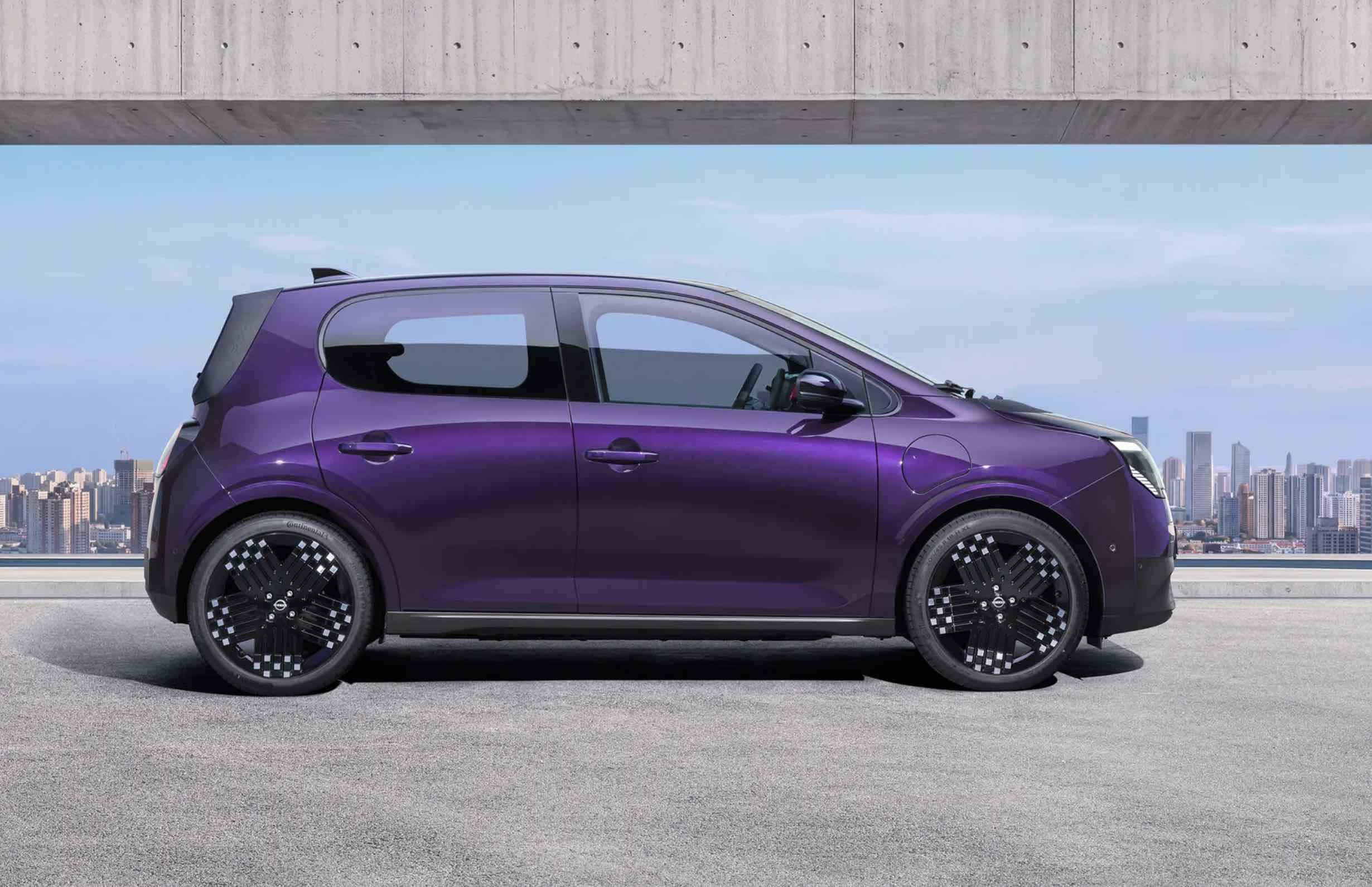
All-Electric Nissan PIXO (Credit: Nissan)
Pricing
Nissan’s 23 September 2026 announcement does not contain a confirmed UK recommended retail or on-the-road price for the Nissan PIXO. The company said market-specific prices, equipment and pre-order arrangements would be announced subsequently, ahead of expected early-2027 customer deliveries. Some independent reports have suggested an affordable entry point, but those estimates are not a Nissan UK quotation and should not be entered as an unconditional starting price in the WordPress vehicle panel.
Until a dated UK price list appears, comparisons with rival small EVs should focus on verified specifications rather than hypothetical savings or grant eligibility. A retailer quote will need to state VAT, first registration, delivery charges and any financial or promotional conditions separately. Buyers should also consider insurance, annual tax, charging access and the value of fitted safety technology, because the cheapest list price does not automatically produce the lowest ownership cost.
| UK commercial information | Status at 18 November 2026 |
|---|---|
| Starting RRP / OTR | Not officially published — N/A |
| Equipment grades | UK grade names and prices not yet confirmed |
| Available powertrain | Announced 27.5 kWh LFP, 60 kW front-wheel drive |
| Pre-orders | Further information expected after launch announcement |
| Customer deliveries | Expected early 2027, subject to UK availability |
Specifications
The following tables bring together Nissan’s two-page UK technical document and its September 2026 European unveiling information, with important qualifications retained. The release provides one standard-range drivetrain and does not establish a definitive gross-versus-usable battery-capacity distinction, individual UK equipment-grade prices or a PIXO-specific warranty contract. Figures explicitly labelled as provisional should be checked again when UK homologation and final order documents are available.
| Battery, range and ownership | Current manufacturer information |
|---|---|
| Battery chemistry | Lithium iron phosphate (LFP) |
| Capacity | 27.5 kWh; usable/gross classification not explicitly confirmed |
| Provisional WLTP combined range | Up to 161 miles (259 km) |
| Manufacturer consumption indicator | Up to 5 miles/kWh; methodology and homologation pending |
| Tailpipe CO₂ emissions | 0 g/km |
| New-vehicle warranty | PIXO-specific UK terms not confirmed |
| High-voltage battery warranty | PIXO-specific UK terms not confirmed; do not assume terms for other Nissan EVs |
| Euro NCAP rating | No model-specific rating independently established |
| Charging specification | Published value / condition |
|---|---|
| AC charging connector | Type 2 |
| AC power | Up to 11 kW |
| AC 10–100% | Approximately 2 hours 35 minutes at compatible 11 kW supply |
| DC connector | CCS2 |
| Maximum DC power | 50 kW |
| DC 15–80% | Approximately 28 minutes under suitable conditions |
| DC 10–80% | Approximately 30 minutes under suitable conditions |
| UK single-phase home charger | Typically up to about 7.4 kW, installation dependent |
| Bidirectional AC | Announced in European material; UK operation and equipment not verified |
| Dimensions and capacity | Published manufacturer figure |
|---|---|
| Overall length | 3,796 mm |
| Width, without mirrors | 1,790 mm |
| Width, mirrors unfolded | 1,953 mm |
| Height | 1,512 mm |
| Wheelbase | 2,492 mm |
| Ground clearance | 140 mm |
| Turning circle, kerb to kerb | 9.9 m |
| Doors / seats | 5 / 4 |
| Boot, seats raised | 356 litres, including 50-litre cable-storage area |
| Boot, seats folded | 1,221 litres |
| Additional cabin storage | Approximately 18 litres |
| Performance | Standard Range |
|---|---|
| Driven wheels | Front-wheel drive |
| Maximum power | 60 kW (approximately 82 PS) |
| Maximum torque | 175 Nm |
| 0–62 mph | 11.9 seconds |
| Maximum speed | 81 mph |
| One-Pedal functionality | Nissan-announced feature; confirm final UK calibration |
A compact battery may make home energy costs manageable, but a realistic illustration should include charging losses rather than multiply the battery rating by the tariff alone. The figures below assume the stated 27.5 kWh battery capacity as a nominal energy basis, a hypothetical UK electricity price of 25p/kWh and an assumed 90% wall-to-battery efficiency. They are calculation examples, not a Nissan charging quotation, and may differ from actual costs if the final usable capacity is different.
| Illustrative home charging calculation | Estimated cost at 25p/kWh, 90% efficiency |
|---|---|
| 0–100% of nominal 27.5 kWh | 30.56 kWh from the grid; £7.64 |
| 10–100% of nominal 27.5 kWh | 27.50 kWh from the grid; £6.88 |
| Assumed tariff | £0.25 per kWh |
| Assumed charging efficiency | 90% |
For an illustrative full refill, dividing 27.5 kWh by 0.90 gives about 30.56 kWh from the supply, which costs £7.64 at the assumed tariff. Charging from 10% to 100% replaces an illustrative 24.75 kWh of battery energy and requires 27.50 kWh from the supply, costing £6.88. Owners should compare their own peak, off-peak and public charging prices using the UK EV charging tariff guide before budgeting.
FAQs
| Question | Answer |
|---|---|
| How much does the Nissan PIXO cost in the UK? | Nissan had not officially published a UK RRP or OTR price as of 18 November 2026. |
| When can UK customers buy the Nissan PIXO? | The manufacturer expects deliveries from early 2027; final order and delivery dates remain subject to confirmation. |
| What is the official range? | Up to 161 miles WLTP combined, a provisional value subject to final homologation. |
| How large is the battery? | 27.5 kWh lithium iron phosphate; the UK sheet does not explicitly state gross or usable basis. |
| How long does rapid charging take? | Approximately 30 minutes from 10–80% at a suitable DC charger, or about 28 minutes from 15–80%. |
| Can I charge at home? | Yes, with a compatible home charger; 11 kW AC requires appropriate supply, while many UK homes offer up to about 7.4 kW. |
| How many people can it carry? | Four people in a five-door body; it is not a five-seat hatchback. |
| How large is the boot? | 356 litres with rear seats up, including underfloor cable storage, or up to 1,221 litres with the rear seats folded. |
| Has the Nissan PIXO been Euro NCAP tested? | No published model-specific rating was independently verified at the 18 November 2026 research date. |
| What is the PIXO battery warranty? | PIXO-specific UK warranty terms have not been verified; obtain written confirmation before ordering. |
The published UK technical figures are promising for a compact electric city car, but the final production range, equipment grades, prices and model-specific warranty have not yet been fully documented. Buyers should check Nissan’s current UK ordering information when it becomes available rather than relying on early estimates or specifications for related vehicles. The home EV charging point guide also provides practical background for households preparing an appropriate installation.
While e-zoomed uses reasonable efforts to provide accurate and up-to-date information, some of the information provided is gathered from third parties and has not been independently verified by e-zoomed. While the information from the third party sources is believed to be reliable, no warranty, express or implied, is made by e-zoomed regarding the accuracy, adequacy, completeness, legality, reliability or usefulness of any information. This disclaimer applies to both isolated and aggregate uses of this information.
Featured Articles
<!–
Carousel
–>
All-Electric Citroën ë-C3: UK Prices, Specs, Range & Buying Guide
The all-electric Nissan PIXO is a small city car designed to make everyday electric driving practical rather than extravagant. Unveiled in September 2026 and expected to reach UK customers…
All-Electric Skoda Elroq: UK Prices, Specs, Range & Buying Guide
The all-electric Nissan PIXO is a small city car designed to make everyday electric driving practical rather than extravagant. Unveiled in September 2026 and expected to reach UK customers…
All-Electric Smart #3: UK Prices, Specs, Range & Buying Guide
The all-electric Nissan PIXO is a small city car designed to make everyday electric driving practical rather than extravagant. Unveiled in September 2026 and expected to reach UK customers…
Featured Products
-
<!–
–>Sale!

Best-In-Class Home Solar Bundle Offer (440W All Black Jinko Solar 8 Panels + Sungrow Hybrid Inverter 3.6 kW): price includes product supply only
<!– –>
Original price was: £2,205.95.£2,150.95Current price is: £2,150.95. (Including VAT)
<!–
–>
<!– Term:
NEDC range:
Model Year:
Deposit: £
Miles Per AnnumSubject to status and conditions –>
Brand:SungrowJinko SolarCategory:Solar<!– –>
-
<!–
–>Sale!
Best-In-Class Home Solar Bundle Offer (440W All Black Jinko Solar 8 Panels + Sungrow Battery Storage 6.4 kWh + Sungrow Hybrid Inverter 3.6 kW): price includes product supply only
<!– –>
Original price was: £5,010.95.£4,800.95Current price is: £4,800.95. (Including VAT)
<!–
–>
<!– Term:
NEDC range:
Model Year:
Deposit: £
Miles Per AnnumSubject to status and conditions –>
Brand:SungrowJinko SolarCategory:Solar<!– –>
-
<!–
–>Sale!
Bundle Offer: SUNSYNK LifePO4 Home Battery Storage (5.32 kWh) + SUNSYNK Hybrid Inverter (3.6 kW/Single-Phase): price includes product supply only
<!– –>
Original price was: £3,345.95.£3,299.95Current price is: £3,299.95. (Including VAT)
<!–
–>
<!– Term:
NEDC range:
Model Year:
Deposit: £
Miles Per AnnumSubject to status and conditions –>
Brand:Sun SynkCategory:Battery Storage<!– –>
-
Bundle Offer: Tesla Powerwall 3 Home Battery Storage (13.5 kWh) + Gateway: price includes product supply only
<!– –>
£8,559.95 (Including VAT)
<!–
–>
<!– Term:
NEDC range:
Model Year:
Deposit: £
Miles Per AnnumSubject to status and conditions –>
Brand:TeslaCategory:Battery Storage<!– –>
-
<!–
–>Sale!
Custom-Made Single-Phase EV Charging Cable Type 2 to Type 2 (2m to 50m, 7.4 kW, 32 amp, Black)
<!– –>
Price range: £99.95 through £670.95 (Including VAT)
<!–
–>
<!– Term:
NEDC range:
Model Year:
Deposit: £
Miles Per AnnumSubject to status and conditions –>
Category:CablesType:Type 2Length (m):5 m7.5 m10 m3.5 m12.5 m15 m20 m17.5 m2 m22.5 m25 m30 m35 m40 m45 m50 mCurrent (amp):32 ampPhase:Single Phase (7.2kW)<!– –>
This product has multiple variants. The options may be chosen on the product page -
Untethered Ohme ePod Home Smart EV Charger (7.4 kW): price includes product only
<!– –>
£645.95 (Including VAT)
<!–
–>
<!– Term:
NEDC range:
Model Year:
Deposit: £
Miles Per AnnumSubject to status and conditions –>
Brand:OhmeCategory:EV Charging PointsCustomer type:ResidentialPower:7.4 kWCable:UntetheredPhase:Single Phase<!– –>

The post All-Electric Nissan PIXO (2027): UK Prices, Specs, Range & Buying Guide appeared first on Ezoomed.